
Close Menu
    Facebook X (Twitter) Instagram
    SciTechDaily
    • Biology
    • Chemistry
    • Earth
    • Health
    • Physics
    • Science
    • Space
    • Technology
    Facebook X (Twitter) Pinterest YouTube RSS
    SciTechDaily
    Home»Space»New Innovative System Evaluates the Habitability of Distant Planets
    Space

    New Innovative System Evaluates the Habitability of Distant Planets

    By The Hebrew University of JerusalemDecember 3, 2022No Comments3 Mins Read
    Facebook Twitter Pinterest Telegram LinkedIn WhatsApp Email Reddit
    Share
    Facebook Twitter LinkedIn Pinterest Telegram Email Reddit
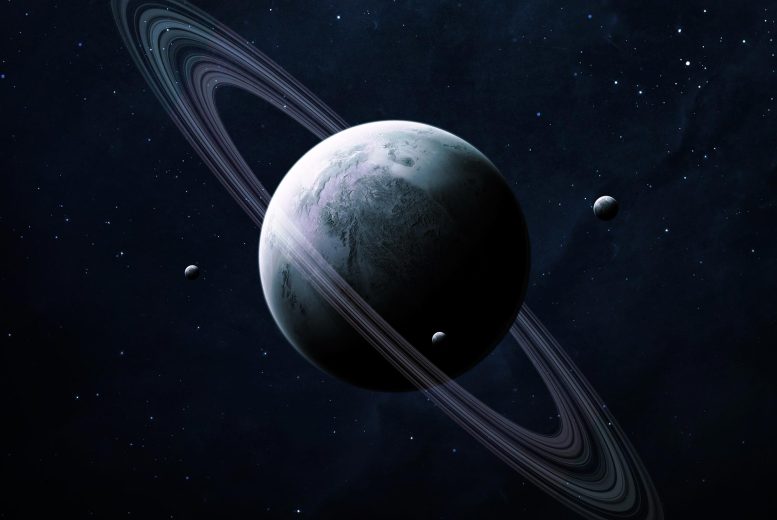
    Exoplanet With Rings
    The authors’ findings will make it possible for scientists to evaluate the atmospheres of many other planets efficiently without having to send a space crew to physically visit them.

    A computerized system categorizes planet atmospheres and determines which are viable for future settlement by humans.

    The climate crisis poses a significant challenge to all humans on Earth. Many scientists have been inspired by it to search for exoplanets—planets outside of our solar system where humans could one day settle. As part of this quest, the James Webb Space Telescope was built to provide detailed observational data regarding Earth-like exoplanets in the coming years.

    New Framework for Studying Distant Planetary Atmospheres

    In a recent project, Dr. Assaf Hochman of the Hebrew University of Jerusalem’s (HU) Fredy & Nadine Herrmann Institute of Earth Sciences, along with Drs. Thaddeus D. Komacek of the University of Maryland and Paolo De Luca of the Barcelona Supercomputing Center, successfully developed a framework to study the atmospheres of far-off planets and find the planets suitable for human habitation without having to physically visit them. Their findings were recently published in the Astrophysical Journal.

    A key component of determining whether exoplanets are suitable for human life is classifying climate conditions and measuring climate sensitivity. The latest study focused on TRAPPIST-1e, a planet that will be observed by the James Webb Space Telescope next year and is situated around 40 light years from Earth. The researchers looked at the sensitivity of the planet’s climate to increases in greenhouse gases and compared it with conditions on Earth. Using a computerized simulation of the climate on TRAPPIST-1e, they could assess the impact of changes in greenhouse gas concentration.

    Comparing Earth and TRAPPIST-1e: Greenhouse Gas Impacts

    The study focused on the effect of an increase in carbon dioxide on extreme weather conditions, and on the rate of changes in weather on the planet. “These two variables are crucial for the existence of life on other planets, and they are now being studied in depth for the first time in history,” explained Hochman.

    According to the research team, studying the climate variability of earth-like exo-planets provides a better understanding of the climate changes we are currently experiencing on Earth. Additionally, this kind of research offers a new understanding of how planet Earth’s atmosphere might change in the future.

    Hochman and his research partners found that planet TRAPPIST-1e has a significantly more sensitive atmosphere than planet Earth. They estimate that an increase in greenhouse gases there could lead to more extreme climate changes than we would experience here on Earth because one side of TRAPPIST-1e constantly faces its own sun, in the same way, that our moon always has one side facing the Earth.

    As Hochman concluded, “the research framework we developed, along with observational data from the Webb Space Telescope, will enable scientists to efficiently assess the atmospheres of many other planets without having to send a space crew to visit them physically. This will help us make informed decisions in the future about which planets are good candidates for human settlement and perhaps even to find life on those planets.”

    Reference: “Greater Climate Sensitivity and Variability on TRAPPIST-1e than Earth” by Assaf Hochman, Paolo De Luca and Thaddeus D. Komacek, 19 October 2022, The Astrophysical Journal.
    DOI: 10.3847/1538-4357/ac866f

    Never miss a breakthrough: Join the SciTechDaily newsletter.
    Follow us on Google and Google News.

    Astronomy Atmosphere Exoplanet James Webb Space Telescope Popular The Hebrew University of Jerusalem University of Maryland
    Share. Facebook Twitter Pinterest LinkedIn Email Reddit

    Related Articles

    JWST Reveals a 3D Map of a Planet So Hot It Destroys Water

    TRAPPIST-1b: Bare Rock or Hazy Alien World? Webb’s Surprising Discovery

    Remarkable Webb Telescope Find: Mysterious Dust Clouds on an Alien World

    Eternal Day and Night: Webb’s Journey To Understand a Distant World’s Bizarre Atmosphere

    Webb Telescope’s Breakthrough: First Atmospheric Discovery on a Rocky Super-Earth

    Super-Earth Surprise: Webb Finds Atmosphere on Rocky Exoplanet For the First Time

    Fiery 5,000 MPH Winds: Webb Maps Weather on Extreme Exoplanet WASP-43 b

    Coolest Rocky Exoplanet Ever: James Webb Reveals Surprising Atmosphere of TRAPPIST-1 C

    Steamy Space Mystery: Webb Telescope Finds Water Vapor, But From a Rocky Planet or Its Star?

    Leave A Reply Cancel Reply

    • Facebook
    • Twitter
    • Pinterest
    • YouTube

    Don't Miss a Discovery

    Subscribe for the Latest in Science & Tech!

    Trending News

    Scientists May Have Found the Key to Jupiter and Saturn’s Moon Mystery

    Scientists Uncover Brain Changes That Link Pain to Depression

    Saunas May Do More Than Raise Body Temperature – They Activate Your Immune System

    Exercise in a Pill? Metformin Shows Surprising Effects in Cancer Patients

    Hidden Oceans of Magma Could Be Protecting Alien Life

    New Study Challenges Alzheimer’s Theories: It’s Not Just About Plaques

    Artificial Sweeteners May Harm Future Generations, Study Suggests

    Splashdown! NASA Artemis II Returns From Record-Breaking Moon Mission

    Follow SciTechDaily
    • Facebook
    • Twitter
    • YouTube
    • Pinterest
    • Newsletter
    • RSS
    SciTech News
    • Biology News
    • Chemistry News
    • Earth News
    • Health News
    • Physics News
    • Science News
    • Space News
    • Technology News
    Recent Posts
    • Ancient DNA Reveals Irish Goats Have a 3,000-Year-Old Lineage Still Alive Today
    • Historians Reveal Secrets of the Strange Hat Wars That Shook Early Modern England
    • “A Plague Is Upon Us”: The Mass Death That Changed an Ancient City Forever
    • This Strange Material Can Turn Superconductivity on and off Like a Switch
    • Scientists Discover Game-Changing New Way To Treat High Cholesterol
    Copyright © 1998 - 2026 SciTechDaily. All Rights Reserved.
    • Science News
    • About
    • Contact
    • Editorial Board
    • Privacy Policy
    • Terms of Use

    Type above and press Enter to search. Press Esc to cancel.