

Close Menu
    Facebook X (Twitter) Instagram
    SciTechDaily
    • Biology
    • Chemistry
    • Earth
    • Health
    • Physics
    • Science
    • Space
    • Technology
    Facebook X (Twitter) Pinterest YouTube RSS
    SciTechDaily
    Home»Technology»New Materials and Manufacturing Methods Offer Improved Helmet Padding for Future Soldiers
    Technology

    New Materials and Manufacturing Methods Offer Improved Helmet Padding for Future Soldiers

    By U.S. Army Research LaboratoryFebruary 21, 2020No Comments4 Mins Read
    Facebook Twitter Pinterest Telegram LinkedIn WhatsApp Email Reddit
    Share
    Facebook Twitter LinkedIn Pinterest Telegram Email Reddit
    Improved Soldier Helmet Padding
    Sgt. Johnny Bonilla, a gunner and cannon crewmember with the173rd Airborne Brigade, wears a combat helmet first fielded in the 1980s. Army researchers explore 3-D printing and new materials with the goal even greater performance for reducing blunt impact injury. Credit: U.S. Army photo by Sgt. Thomas Mort

    Army researchers and industry partners recently published a study showing how they developed new materials and manufacturing methods to create higher-performing helmet padding that reduces the likelihood of head injury in combat and recreational helmets.

    A team from the U.S. Army Combat Capabilities Development Command’s Army Research Laboratory and its HRL Laboratories partners used advances in 3-D printing to create new helmet padding that consists of highly-tuned open-cell lattice structures.

    “Careful control of the lattice design imparts novel compression characteristics to the padding that reduce peak head acceleration during blunt impact events compared to existing state-of-the-art foam padding,” said Dr. Thomas Plaisted, the lab’s project lead. “Testing demonstrated a 27% increase in energy attenuation efficiency when inserted into a combat helmet compared to current best-performing foam pads.”
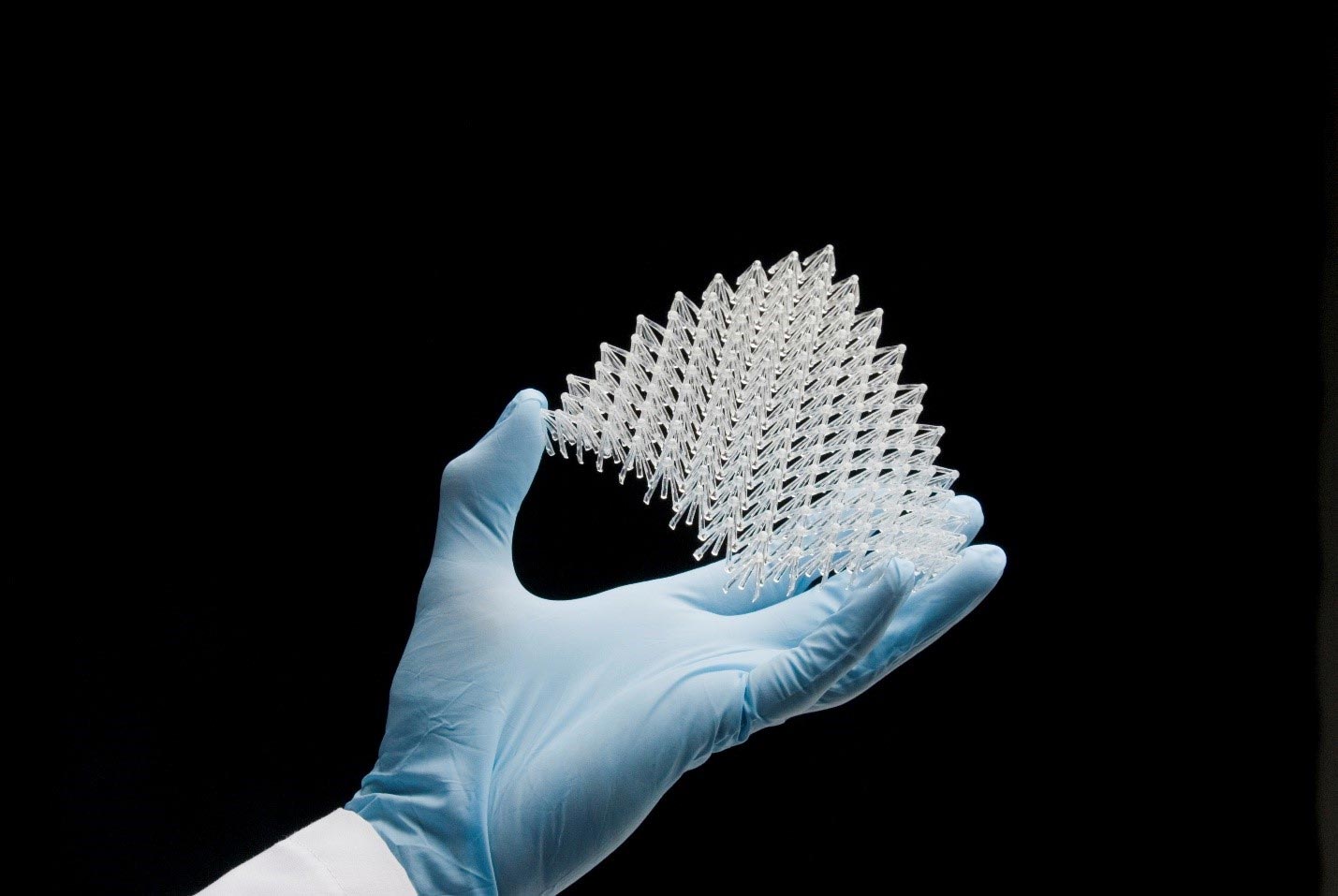
    Soldier Helmet Impact Protection
    Additive manufacturing enables creation of flexible lattice architectures for impact protection. Credit: Photo courtesy of HRL Laboratories

    A significant challenge for the design of protective padding is providing the highest level of impact protection while minimizing the weight and space it occupies inside the helmet, Plaisted said. The padding must be comfortable to allow a Soldier to wear a combat helmet for extended periods.

    “Typical multi-impact attenuating materials include expanded polypropylene and vinyl nitrile closed-cell foams, which absorb impact energy through the collapse of internal pores when compressed,” he said. “The material is carefully tuned to yield at a threshold force, or acceleration, specific to the tolerance of the head, thereby mitigating injury.”

    Recent advances in additive manufacturing techniques have enabled the fabrication of cellular materials with architected lattice topology.

    “We demonstrated, via design of the cellular architecture, improved control over the collapse process in elastomeric lattices that enables impact-attenuation performance exceeding state-of-the-art foams for both single- and multi-hit scenarios,” Plaisted said. “An improvement over state-of-the-art vinyl-nitrile foam helmet pads was achieved during a standard helmet test, leading to lower head acceleration. This breakthrough could pave the way to helmets with improved injury protection. The open cell design of the lattice further aids in comfort and breathability to dissipate heat away from the head.”
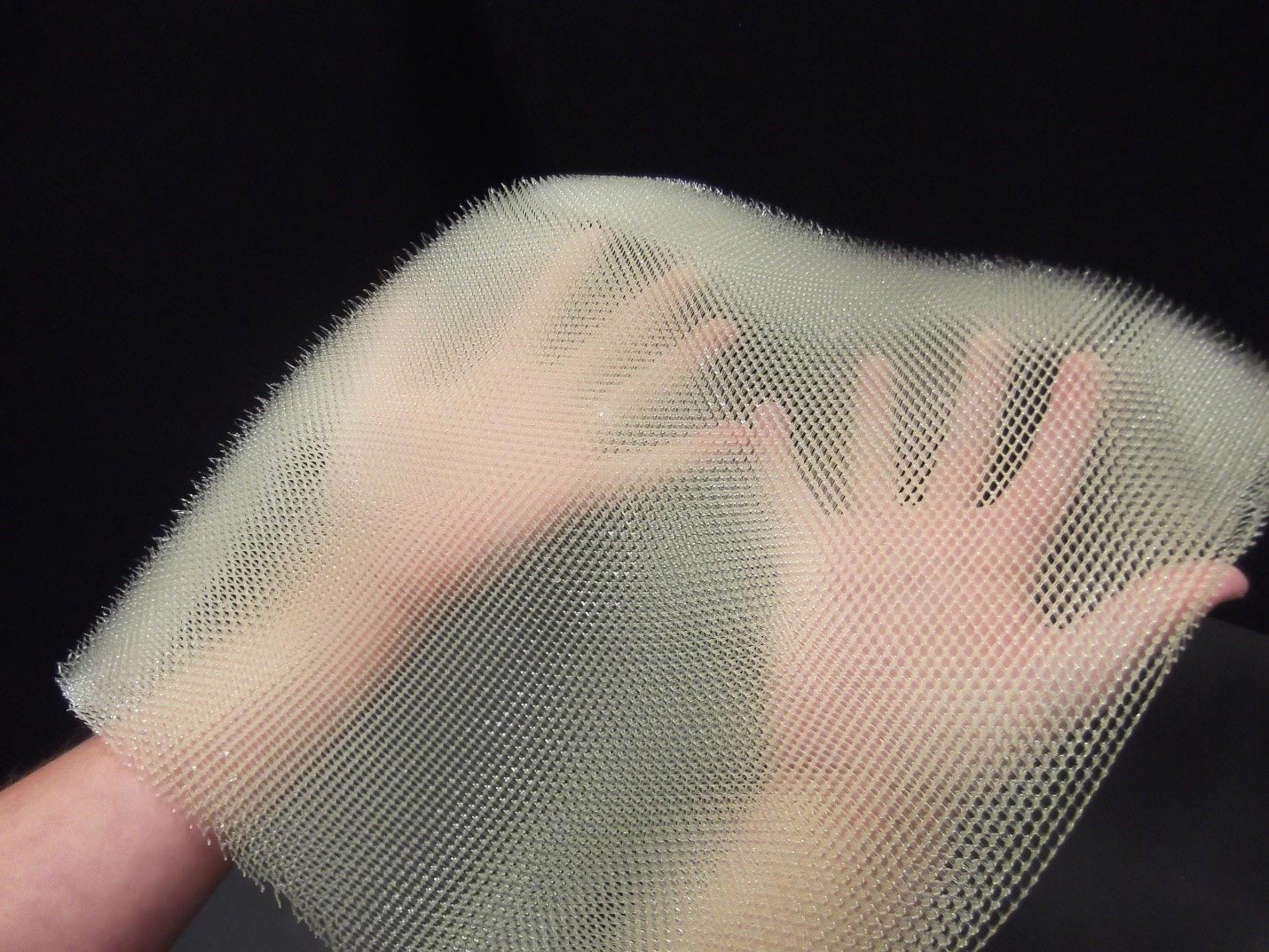
    Elastomeric LatticePadding
    Elastomeric lattice padding can be fabricated in large sheets that conforms to the curvature of a helmet. Credit: U.S. Army photo

    Researchers recently briefed their transition partners at CCDC Soldier Center on the performance of the new padding materials and helmet suspension technologies to mitigate blunt impact head injury. The laboratory is transitioning this technology to the center for further evaluation and implementation in future helmet systems.

    “Building on this work, CCDC SC has initiated its own research efforts to develop and evaluate additive manufactured helmet pads,” Plaisted said. “Concurrently, we provided updates on an alternative helmet suspension technology, rate-activated tethers, invented at ARL that have demonstrated even greater performance for reducing blunt impact injury. We are working with the center to identify helmet industry partners to integrate the new rate-activated tether technology.”

    The Army’s fundamental responsibility is to equip, train, and field Soldiers with the tools and resources to engage with and destroy the enemy, while providing world-class protection, according to Army officials. As an Army Modernization priority, Soldier Lethality narrows the capability gaps to enhance a Soldier’s ability to fight, win and survive through increased lethality, mobility, protection, and situational awareness in order to facilitate rapid acquisition of increased capabilities.

    Reference: “Elastomeric Microlattice Impact Attenuators” by Eric C. Clough, Thomas A. Plaisted, Zak C. Eckel, Kenneth Cante, Jacob M. Hundley and Tobias A. Schaedler, 27 November 2019, Matter.
    DOI: 10.1016/j.matt.2019.10.004

    Never miss a breakthrough: Join the SciTechDaily newsletter.
    Follow us on Google and Google News.

    HRL Laboratories Materials Science U.S. Army Research Laboratory Weapons
    Share. Facebook Twitter Pinterest LinkedIn Email Reddit

    Related Articles

    Discovery Could Lead to Self-Propelled Robots – Using Only Energy Flow From Their Environment

    Forging High-Tech Armor From Shock-Dissipating Fractal Cubes

    New Army Multi-Polymer Filament Tech Turns Low-Cost 3D Printers Into High-Tech Producers

    New Method for Analyzing Metal Developed by U.S. Army Researchers

    U.S. Army’s Top 10 Science and Technology Advances of 2019 [Video]

    Elastomeric “Soft” Robots Running on Pneumatic Actuators

    Self-Guided Bullet Accurate From One Mile Away

    Riot Shields That Create a “Wall of Sound” Patented

    Researchers Develop World’s Lightest Material

    Leave A Reply Cancel Reply

    • Facebook
    • Twitter
    • Pinterest
    • YouTube

    Don't Miss a Discovery

    Subscribe for the Latest in Science & Tech!

    Trending News

    Researchers Have Found a Dietary Compound That Increases Longevity

    Scientists Baffled by Bizarre “Living Fossil” From 275 Million Years Ago

    Your IQ at 23 Could Predict Your Wealth at 27, Study Finds

    320 Light-Years Away, a Planet Confirms a Fundamental Cosmic Assumption

    The Crown Jewel of Dentistry? Breakthrough Tech Could Transform Tooth Repair

    Python Blood Could Hold the Secret to Weight Loss Without Side Effects

    Naturally Occurring Bacteria Completely Eradicate Tumors in Mice With a Single Dose

    New “Nanozyme Hypothesis” Could Rewrite the Story of Life’s Origins

    Follow SciTechDaily
    • Facebook
    • Twitter
    • YouTube
    • Pinterest
    • Newsletter
    • RSS
    SciTech News
    • Biology News
    • Chemistry News
    • Earth News
    • Health News
    • Physics News
    • Science News
    • Space News
    • Technology News
    Recent Posts
    • How Quantum Mechanics Went From Baffling Theory to Revolutionizing Modern Technology
    • Scientists May Have Found the Key to Jupiter and Saturn’s Moon Mystery
    • Scientists Uncover Hidden Clues to the Origin of the Genetic Code
    • Scientists Discover Unexpected Role of Alzheimer’s Protein in Cell Division
    • Scientists Uncover Brain Changes That Link Pain to Depression
    Copyright © 1998 - 2026 SciTechDaily. All Rights Reserved.
    • Science News
    • About
    • Contact
    • Editorial Board
    • Privacy Policy
    • Terms of Use

    Type above and press Enter to search. Press Esc to cancel.