
Close Menu
    Facebook X (Twitter) Instagram
    SciTechDaily
    • Biology
    • Chemistry
    • Earth
    • Health
    • Physics
    • Science
    • Space
    • Technology
    Facebook X (Twitter) Pinterest YouTube RSS
    SciTechDaily
    Home»Space»New MRO HiRISE Image Reveals Windblown Sand in Ganges Chasma
    Space

    New MRO HiRISE Image Reveals Windblown Sand in Ganges Chasma

    By NASA/JPL-Caltech/Univ. of ArizonaApril 27, 2017No Comments1 Min Read
    Facebook Twitter Pinterest Telegram LinkedIn WhatsApp Email Reddit
    Share
    Facebook Twitter LinkedIn Pinterest Telegram Email Reddit
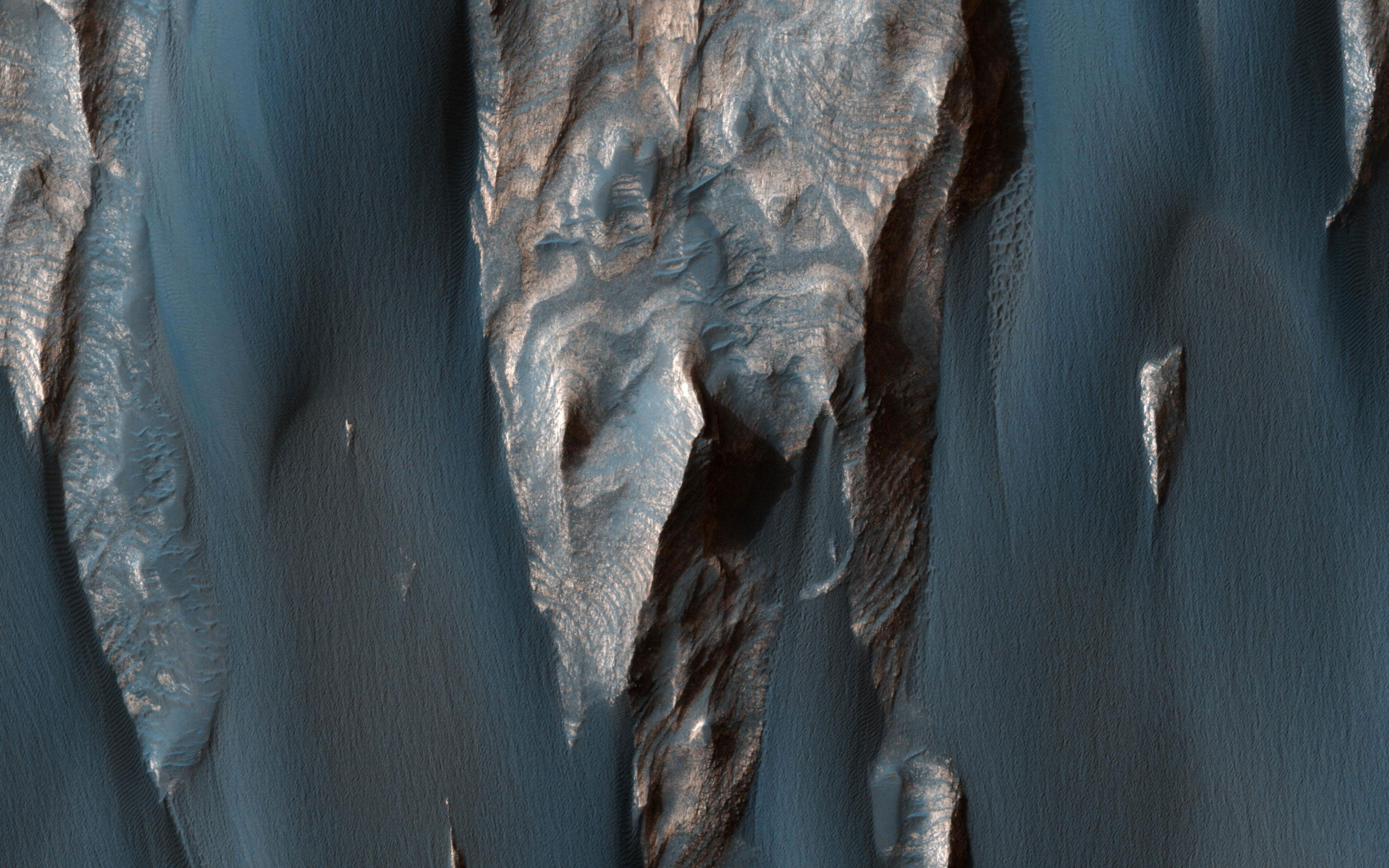
    New HiRISE Image Reveals Windblown Sand in Ganges Chasma
    Dark sand covers intricate sedimentary rock layers in Ganges Chasma, a Martian canyon, and it’s composed of iron and magnesium-rich sand, unlike Earth’s silica-rich sand.

    This new image from NASA’s Mars Reconnaissance Orbiter reveals dark, windblown sand covering intricate sedimentary rock layers in Ganges Chasma, a canyon in the Valles Marineris system.

    These features are at once familiar and unusual to those familiar with Earth’s beaches and deserts. Most sand dunes on Earth are made of silica-rich sand, giving them a light color; these Martian dunes owe their dark color to the iron and magnesium-rich sand found in the region.

    The map is projected here at a scale of 25 centimeters (9.8 inches) per pixel. The original image scale is 26.7 centimeters (10.5 inches) per pixel (with 1 x 1 binning); objects on the order of 80 centimeters (31.5 inches) across are resolved. North is up.

    Never miss a breakthrough: Join the SciTechDaily newsletter.
    Follow us on Google and Google News.

    Astronomy HiRISE Mars Planetary Science
    Share. Facebook Twitter Pinterest LinkedIn Email Reddit

    Related Articles

    New HiRISE Image of Layered Bedrock in the Volcanic Plains of Lunae Planum

    New HiRISE View of the Changing Dunes of Wirtz Crater

    Mars Orbiter Shows Gullies on Mars Not Likely Formed by Liquid Water

    Mars Reconnaissance Orbiter Reveals Frosted Dunes on Mars

    New HiRISE Image of a “Fresh” Crater Near Sirenum Fossae

    Orbiter Examines Clues to Possible Water Flows on Mars

    Linear Gullies on Mars Caused by Sliding Dry-Ice

    Color HiRISE Image of Curiosity Rover on Mars

    A Connection Between Volatiles in the Subsurface of Mars and the Impact Process

    Leave A Reply Cancel Reply

    • Facebook
    • Twitter
    • Pinterest
    • YouTube

    Don't Miss a Discovery

    Subscribe for the Latest in Science & Tech!

    Trending News

    One of Earth’s Driest Deserts Just Turned White

    A Century-Old Mystery in Cat Kidneys May Finally Have an Answer

    Black Hole Winds Are 100 Times More Powerful Than Astronomers Thought

    “Cancer Melted Away”: Immunotherapy Delivers Striking Results in Bowel Cancer Trial

    Captive Crocodiles Released Into the Wild Did Something Researchers Didn’t Expect

    A Massive 29-Square-Mile Iceberg Hit an Island and Kept Going

    New Mexico’s Largest Reservoir Was Nearly Full. Now It’s at 1.4%

    This Southern-Style Mediterranean Diet Helped People Lose 10 Pounds

    Follow SciTechDaily
    • Facebook
    • Twitter
    • YouTube
    • Pinterest
    • Newsletter
    • RSS
    SciTech News
    • Biology News
    • Chemistry News
    • Earth News
    • Health News
    • Physics News
    • Science News
    • Space News
    • Technology News
    Recent Posts
    • UCLA Scientists Develop Cancer-Fighting Cells That Tumors Struggle to Escape
    • Healthy Foods Like Spinach May Worsen Gut Inflammation in IBD
    • Could a Decades-Old Diabetes Drug Help the Body Age More Slowly?
    • Scientists Say the Universe Isn’t Slowing Down After All
    • A Century-Old Mystery in Venus’s Clouds Just Got Even Stranger
    Copyright © 1998 - 2026 SciTechDaily. All Rights Reserved.
    • Science News
    • About
    • Contact
    • Editorial Board
    • Privacy Policy
    • Terms of Use

    Type above and press Enter to search. Press Esc to cancel.