
Study could lead to an effective new option to reduce the risk of heart attacks and strokes for millions who cannot control their cholesterol.
A new experimental medication called enlicitide has shown powerful cholesterol-lowering effects in a large clinical study. In a phase three trial reported in The New England Journal of Medicine, the once-daily pill reduced levels of low-density lipoprotein (LDL) cholesterol, often called “bad” cholesterol, by as much as 60%.
If the Food and Drug Administration eventually approves the drug, it could offer a new way for millions of people in the United States to lower their chances of heart attacks and strokes.
Many patients still miss cholesterol targets
“Fewer than half of patients with established atherosclerotic cardiovascular disease currently reach LDL cholesterol goals. An oral therapy this effective has the potential to dramatically improve our ability to prevent heart attacks and strokes on a population level,” said Ann Marie Navar, M.D., Ph.D., a cardiologist and Associate Professor of Internal Medicine and in the Peter O’Donnell Jr. School of Public Health at UT Southwestern Medical Center. Dr. Navar led the study, which was sponsored by the drugmaker Merck & Co. Inc.
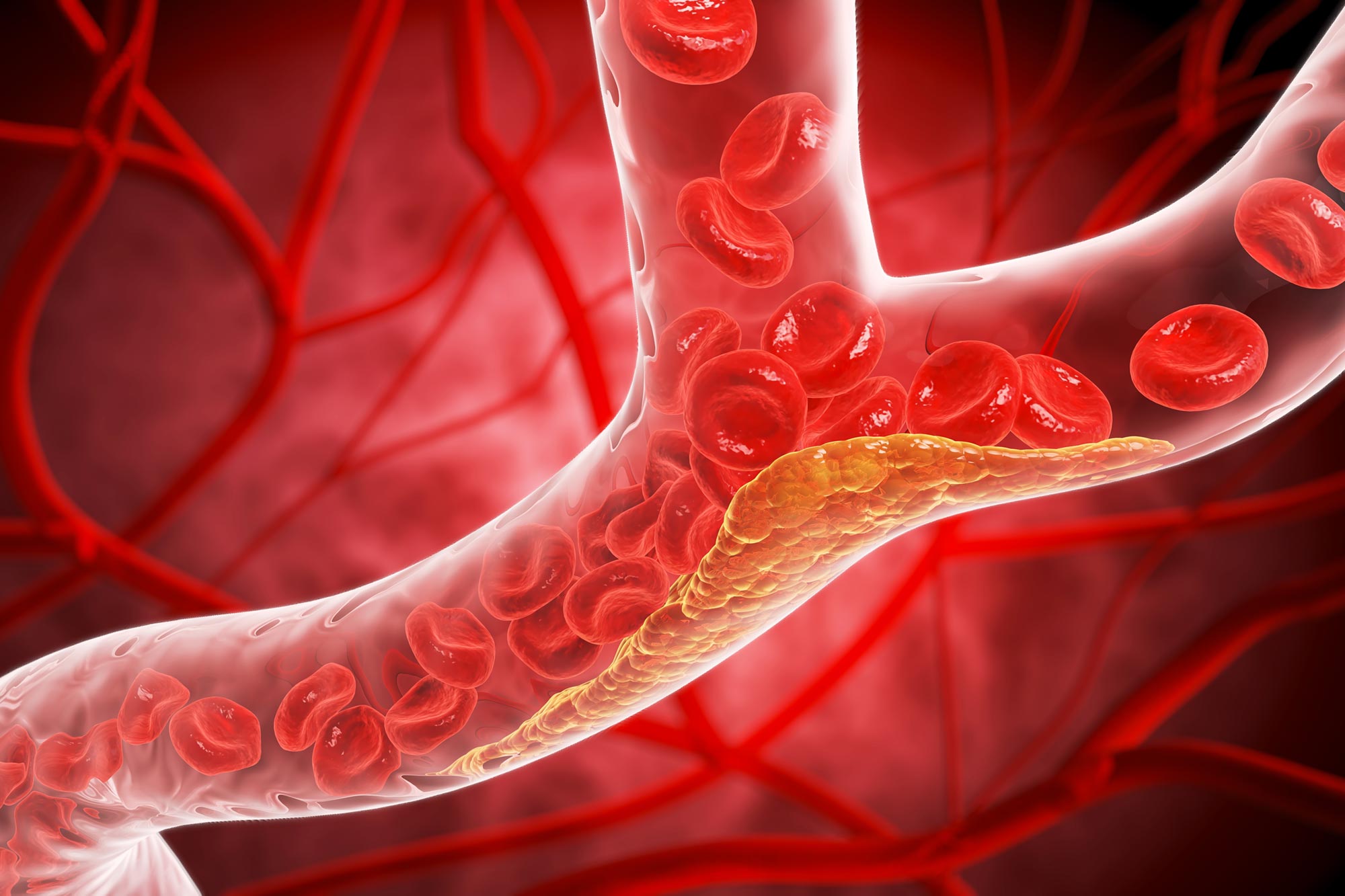
Scientists have long recognized that LDL cholesterol plays a central role in cardiovascular disease. These cholesterol-carrying particles can accumulate within the walls of blood vessels, gradually forming fatty deposits known as plaques. This process, called atherosclerosis, can narrow arteries and eventually trigger heart attacks or strokes. Because of this link, reducing LDL cholesterol remains one of the most important strategies for preventing cardiovascular disease and lowering risk in people who already have it.
Decades of discovery behind the drug
According to Dr. Navar, the science behind enlicitide traces back to foundational research carried out at UT Southwestern. Several decades ago, Michael Brown, M.D., Professor of Molecular Genetics and Internal Medicine, and Joseph Goldstein, M.D., Chair and Professor of Molecular Genetics and Professor of Internal Medicine, identified the LDL receptor on liver cells.
This receptor removes LDL cholesterol from the bloodstream. Their discovery earned the pair the Nobel Prize in Physiology or Medicine in 1985 and opened the door to the development of statins, which later became the most widely used medications for lowering cholesterol.

Later work from the Dallas Heart Study at UT Southwestern provided another key insight. The research team, led by Helen Hobbs, M.D., Professor in the Eugene McDermott Center for Human Growth and Development and of Internal Medicine and Molecular Genetics, and Jonathan Cohen, Ph.D., Professor in the Center for Human Nutrition, the Eugene McDermott Center for Human Growth and Development, and of Internal Medicine, identified people with naturally low LDL cholesterol levels caused by genetic changes that reduce production of the PCSK9 protein. PCSK9 normally decreases the number of LDL receptors on liver cells, which slows the body’s ability to clear LDL cholesterol from circulation.
These findings ultimately led to the creation of drugs that block PCSK9. The first versions were monoclonal antibody injections, followed by treatments using small interfering RNA that suppress PCSK9 production. The monoclonal antibodies evolocumab and alirocumab can lower circulating LDL cholesterol levels by roughly 60%.
Why injectable treatments remain underused
Even though these medications are highly effective, Dr. Navar said research from her team and others shows they are still prescribed infrequently. Early challenges included high prices and insurance coverage barriers. Although costs have declined and coverage has improved, most primary care physicians and many cardiologists still do not prescribe them regularly. Dr. Navar suggested that one reason may be that these treatments must be given as injections rather than pills.
Enlicitide works in a similar fashion to the monoclonal antibodies by binding to PCSK9 in the bloodstream. However, instead of requiring injections, it is taken as a pill once each day.
Trial shows strong cholesterol reduction
In the phase three clinical trial, scientists evaluated enlicitide in 2,909 patients who either had atherosclerosis or faced a higher risk of developing it because of related health conditions. About two-thirds of the participants received enlicitide while the remaining third were given a placebo. Most participants were already taking statin medications, yet their average LDL cholesterol level was still 96 milligrams per deciliter (mg/dl). This level is well above the recommended target of 70 mg/dl for people with atherosclerosis and 55 mg/dl for those at elevated cardiovascular risk.
“The study population reflects what we see in clinical practice,” Dr. Navar said. “Even the highest intensity statins are often not enough to get people to their cholesterol goals.”
After 24 weeks of treatment, participants who received enlicitide lowered their LDL cholesterol levels by roughly 60% compared with those given a placebo. The medication also reduced several other blood markers linked to cardiovascular risk, including non-HDL lipoprotein cholesterol, apolipoprotein B, and lipoprotein(a). These improvements were maintained throughout a follow-up period that lasted one year.
“These reductions in LDL cholesterol are the most we have ever achieved with an oral drug by far since the development of statins,” Dr. Navar said.
Researchers are now conducting another clinical trial to determine whether these large reductions in LDL cholesterol lead directly to fewer heart attacks and strokes.
Reference: “A Placebo-Controlled Trial of the Oral PCSK9 Inhibitor Enlicitide” by Ann Marie Navar, Elina Mikhailova, Alberico L. Catapano, Puja Banka, Dirk J. Blom, Alberto Cadena, Susan Kourpanidis, Norman E. Lepor, Kazuhisa Tsukamoto, Geraldine Mendizabal, Julio Nunez, Wenjuan Zhang, Pengfei Zhu, Min Zhuo and Christie M. Ballantyne, 4 February 2026, New England Journal of Medicine.
DOI: 10.1056/NEJMoa2511002
This study was funded by Merck Sharp & Dohme, a subsidiary of Merck.
Disclosure: Dr. Navar received consulting fees from Merck for part of the work on this study. She also received fees for other consulting work from Merck and from other pharmaceutical companies that make lipid-lowering drugs (as disclosed in the study).
Never miss a breakthrough: Join the SciTechDaily newsletter.
Follow us on Google and Google News.
16 Comments
Keep it up. Thank you.
yes, thank you!
Just like Statins they are harming you, so hear the real results won’t be known for many years after some bloke says …nope it’s not for me
Still, the body, especially the brain requires cholesterol, it’s extremely important for brain function and many other processes in the human body. All this study and projections are only eliminating cholesterol and LDL. Nothing was noted about effects on HDL or oxidative stress.
Whenever there’s a new trial done with new pharmaceutical drugs and there is a drug company involved, its results are always going to be presented in the terms that ultimately lead to more money in their pockets. Just as with statins and their side effects, and also not addressing the Oxidative Stress component of atherosclerosis in the blood vessels. All statins and now this new drug have or will do is reduce the supply of materials to produce the plaque. It does nothing for stopping or reducing the plaque that already exists. I see no investigation, nor trials being done on Molecular Hydrogen for example, which shows some progress on reducing oxidative stress and also reducing some of the plaque that was produced earlier. This is what leads me to believe that this is money motivated and not patient oriented for their “best” heart care.
Not very accurate.and researched.lack real data
I am surprised you publish these.
And when will all side effects from this be posted and where can I find it?
I agree 👍
Agree…. my RECENT CAC SCORE WAS 1855. Was on 80 mg atorvastatin, after 2 years, developed, pain and weakness in leg muscles , and left shoulder, and brain fog.. CUT DOSAGE TO 40 MG, HELPED IMMENSELY, BUT NOW HIGHER RISK OF STROKE OR HEART ATTACK AT 70??????? WAS TAKING D3 AND K2 MK7 OVER 2 YEARS, DIDNT HELP AND MY CAC SCORE WENT UO FROM 1533 TO 1855 YOUCH!!!!!!!
Its your diet.
cholesterol does not cross the blood brain barrier. The brain makes its own cholesterol.
Any new drug must first be proven to cause harm to the patient, or the FDA won’t approve it. So if this drug is approved, it means it fits that criteria.
Wrong.
Won’t matter, while big pharma and insurance dick around people are struggling with cardiovascular issues. In my case its genetic, but I’m sure I won’t see this drug until pharm and insurance ensure they get properly paid out, because that is what is truly important.
You don’t want to lower your cholesterol.
I might have overlooked the name of the drug or due to poor eyesight skipped a line or 2. What is the name of the drug for LDL cholesterol, please?
Enlicitide