
Short, Repeated Bouts of Restricted Circulation Using a Blood Pressure Cuff May Be Beneficial to One’s Health
The majority of heart attacks and strokes worldwide are ischemic, meaning that a clot or accumulation of plaque in an artery stops oxygen-rich blood from getting to the cells in the heart or brain. When blocked for too long, tissues die.
But an increasing number of studies suggest that brief, repeated periods of reduced circulation using a blood pressure cuff may help minimize tissue damage and avoid the worst consequences of heart attacks and strokes, similar to how exercising helps muscles adapt to more rigorous workouts. According to the research, the straightforward, noninvasive surgery may improve heart and vascular function, slightly decrease blood pressure, and lessen the workload of the heart.
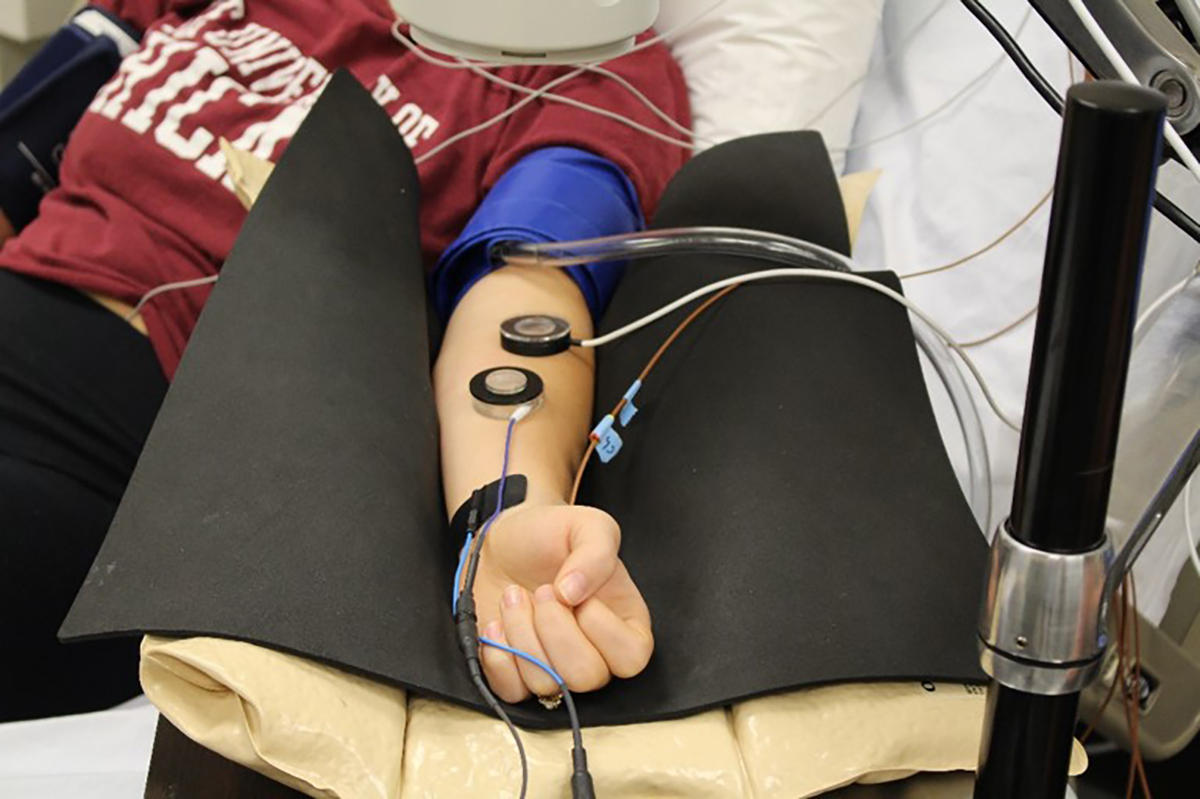
In a recent review study that was published in the Journal of Physiology, James Lang, an assistant professor of kinesiology at Iowa State University, compiled the results of roughly 100 studies, some of which were his own. He said that “remote ischemic preconditioning” (RIPC) typically comprises five minutes of high pressure on a person’s arm followed by five minutes of relaxation, repeated three to four times.
Numerous studies have demonstrated that a single RIPC session creates a protective window that peaks 48 hours later, but research from Lang’s team and other scientists has shown that preconditioning several days in a row may enhance the protection and support additional health benefits.
“I think there are a lot of possible applications and potential with RIPC: someone preparing for an upcoming surgery; people who have already had a heart attack or stroke, which puts them at higher risk of it happening again; people who can’t exercise, are pre-hypertensive or have sleep apnea,” said Lang.
RIPC could be helpful even for astronauts as well. To prevent cardiac and muscle atrophy brought on by microgravity in space, they often exercise for up to two hours every day, according to Lang. It could be a good idea to include blood pressure cuff sessions into their fitness routines.
Filling the Gap
However, Lang noted that much more research is required to ensure that RIPC is effective in different contexts and for various population subgroups. Animal models from the 1980s and 1990s provide the majority of the knowledge on the underlying mechanisms and duration of protective effects.
“Unfortunately, a lot of researchers jumped quickly to large clinical studies in the early 2000s, and their results were inconsistent due to a host of outside influences like the participants’ medications, physical and genetic factors, age, and sex,” said Lang, adding a follow-up study from other researchers found propofol, a common form of anesthesia used in surgeries, suppresses the effects of RIPC, as well.
Since then, researchers like Lang have been working to fill the gap between animal research and big clinical trials.
“In the lab, we can do more controlled studies with human participants, try to figure out what factors influence RIPC and when the best time is to administer RIPC.”
Lang’s Lab
In one study, Lang and his research team found a week of RIPC increased participants’ micro-circulatory capacity by as much as 50%. In another, they measured a modest blood pressure drop and a less active “fight or flight” response while the participants were resting.
“Together, it was improving the participants’ blood vessels and potentially reducing the workload of the heart.”
One of the ways Lang tests the effect of RIPC is by measuring how well a study participant’s blood vessels dilate when their skin is warm. Before and after RIPC, Lang attaches a small, nickel-sized device to a participant’s arm. A tiny heater warms up the skin while a doppler bounces a laser light into the micro-vessels below.
Like a weather radar picking up changes in the atmosphere, the doppler Lang uses in his lab measures changes in the flow of red blood cells as the participant’s blood vessel widens in response to the heat.
Lang explained a loss of blood vessel elasticity (i.e., the extent to which arteries can constrict or dilate) increases the risk of high blood pressure, heart attacks, and strokes, as well as dementia.
Currently, Lang is working with a researcher at Des Moines University to study how RIPC could help people with diabetes struggling with slow-healing wounds. High blood glucose levels can damage small blood vessels and nerves, and coat arteries with plaque, making it harder to get white blood cells and nutrients to cuts and sores.
While the side effects from RIPC are very low, Lang says anyone interested in trying it on their own, outside a research study, should talk to their physician first.
Reference: “Remote ischaemic preconditioning – translating cardiovascular benefits to humans” by James A. Lang and Jahyun Kim, 21 May 2022, The Journal of Physiology.
DOI: 10.1113/JP282568
Never miss a breakthrough: Join the SciTechDaily newsletter.
Follow us on Google and Google News.
9 Comments
New experiences good topic
New experiences good topic heart topic very knowledgeable about learn more
How do the effects of this procedure differ from the effects on one’s body of moderate exercise interspersed with bouts of greater exertion? Thanks.
My pressure is within the 150/70 range. Do I need pressure medication. I’m 58 yrs old
I’m 58 years old and i don’t know anything about the heart beneficials or cautions so far, but i am experiencing chest pain sometimes since last month. Can you help me?
Just don’t take the death jab and you’ll be fine COVID 19 was the greatest Hoax of the Century and DR , should be , ashamed for not researching the Data 26 Doctor,s in Canada died of UNKNOWN CAUSES ,,We now the cause.!!!
Weird youd list the old major cause of blood clots n not mention the current situation where enbalmers are finding massive blood clots that are “unknown” cause nobody will look into it even though the enbalmers are saying they think its related to a nono topic. You corrupt scientisimists
The COVID 19 “vaccine” (which changed the vaccine definition for this shot) is an. MNRA treatment that has myocarditis and clots, among others serious adverse effect. The suggested mechanism to control one’s breathing to minimize heart problems is avoiding the premise of the problem. If you took the untested vaccine, you are likely to have increase heart problems.
BS. You’ve gotta be kidding. This is absolute made up garbage.