
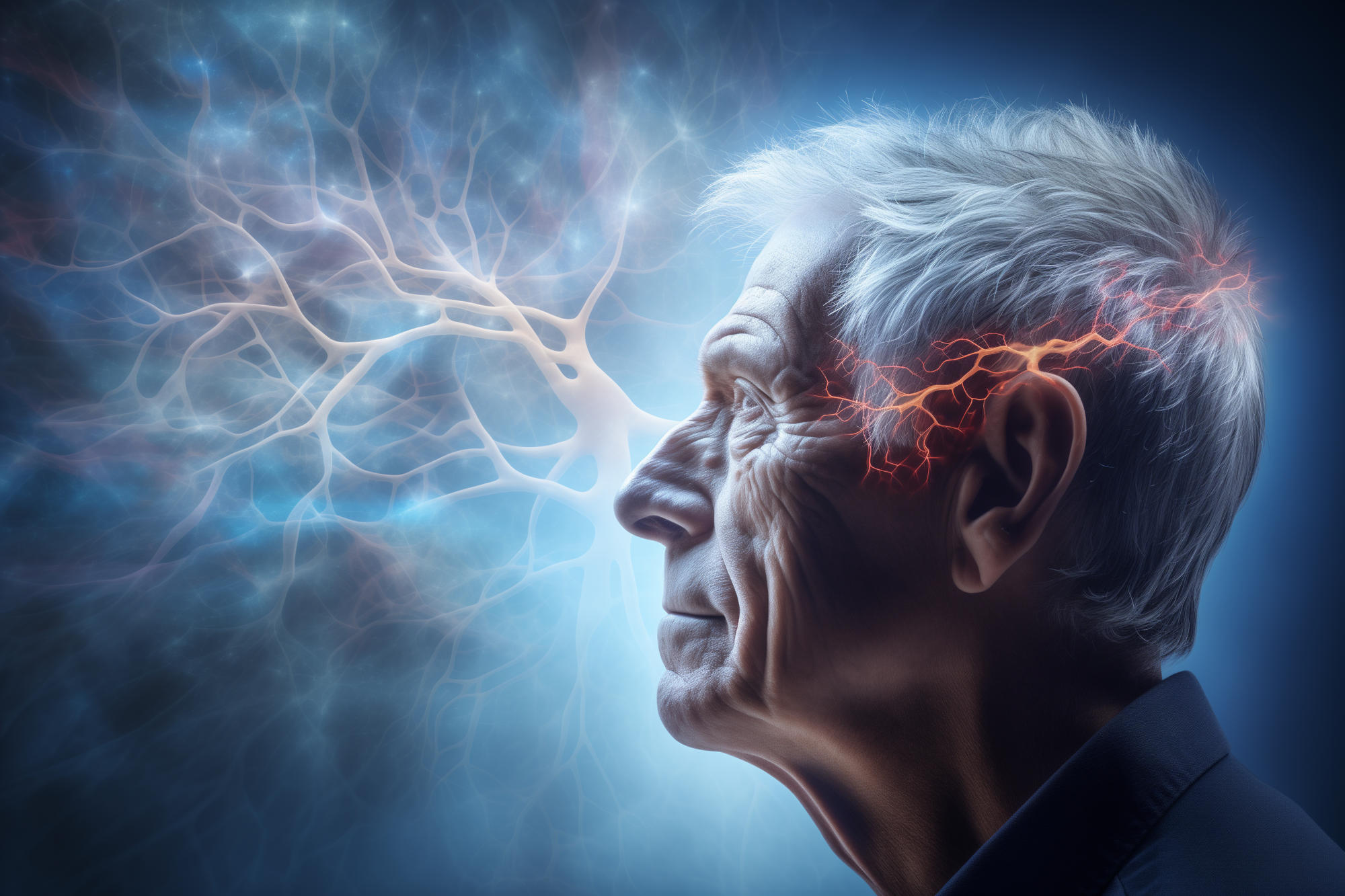
University of Arizona researchers revealed that dyskinesia in Parkinson’s patients stems from a disconnect in the motor cortex, not direct causation. Ketamine shows promise as a treatment by disrupting abnormal brain activity and promoting long-term neuroplasticity.
Researchers at the University of Arizona have provided valuable insights into one of the most common complications faced by Parkinson’s disease patients: involuntary movements that arise after prolonged treatment.
Parkinson’s disease, a neurological disorder affecting movement, occurs when dopamine levels in the brain decline. Dopamine, a critical chemical for controlling bodily movements, is replenished in part by administering levodopa, a medication that converts to dopamine in the brain. However, extended use of levodopa can lead to a condition called levodopa-induced dyskinesia, characterized by uncontrollable, involuntary movements.
A study published in the journal Brain sheds light on the underlying mechanisms of levodopa-induced dyskinesia and explores how ketamine, an anesthetic, could offer potential relief for this debilitating condition.
Over the years, the brain of a Parkinson’s patient adapts to the levodopa treatment, which is why levodopa causes dyskinesia in the long term, said Abhilasha Vishwanath, the study’s lead author and a postdoctoral research associate in the U of A Department of Psychology.
In the new study, the research team found that the motor cortex – the brain region responsible for controlling movement – becomes essentially “disconnected” during dyskinetic episodes. This finding challenges the prevailing view that the motor cortex actively generates these uncontrollable movements.
Because of the disconnect between motor cortical activity and these uncontrollable movements, there’s probably not a direct link, but rather an indirect way in which these movements are being generated, Vishwanath said.
The researchers recorded activity from thousands of neurons in the motor cortex.
“There are about 80 billion neurons in the brain, and they hardly shut up at any point. So, there are a lot of interactions between these cells that are ongoing all the time,” Vishwanath said.
The research group found that these neurons’ firing patterns showed little correlation with the dyskinetic movements, suggesting a fundamental disconnection rather than direct causation.
A “Conductorless Orchestra”
“It’s like an orchestra where the conductor goes on vacation,” said Stephen Cowen, senior author of the study and an associate professor in the Department of Psychology. “Without the motor cortex properly coordinating movement, downstream neural circuits are left to spontaneously generate these problematic movements on their own.”
This new understanding of dyskinesia’s underlying mechanism is complemented by the team’s findings regarding the therapeutic potential of ketamine, a common anesthetic. The research demonstrated that ketamine could help disrupt abnormal repetitive electrical patterns in the brain that occur during dyskinesia. This could potentially help the motor cortex to regain some control over movement.
Ketamine works like a one-two punch, Cowen said. It initially disrupts these abnormal electrical patterns occurring during dyskinesia. Then, hours or days later, ketamine triggers much slower processes that allow for changes in the connectivity and activity of brain cells over time, known as neuroplasticity, that last much longer than ketamine’s immediate effects. Neuroplasticity is what enables neurons to form new connections and strengthen existing ones.
With one dose of ketamine, beneficial effects can be seen even after a few months, Vishwanath said.
These findings gain additional significance in light of an ongoing Phase 2 clinical trial at the U of A, where a group of researchers from the Department of Neurology are testing low doses of ketamine infusions as a treatment for dyskinesia in Parkinson’s patients. Early results from this trial appear promising, Vishwanath said, with some patients experiencing benefits that last for weeks after a single course of treatment.
Ketamine doses could be tweaked in a way such that the therapeutic benefits are maintained with minimized side effects, Cowen said. Entirely new therapeutic approaches may also be developed based on the study’s findings about motor cortex involvement in dyskinesia.
“By understanding the basic neurobiology underlying how ketamine helps these dyskinetic individuals, we might be able to better treat levodopa-induced dyskinesia in the future,” Cowen said.
Reference: “Decoupling of motor cortex to movement in Parkinson’s dyskinesia rescued by sub-anaesthetic ketamine” by Abhilasha Vishwanath, Mitchell J Bartlett, Torsten Falk and Stephen L Cowen, 25 November 2024, Brain.
DOI: 10.1093/brain/awae386
The study received funding from the National Institute of Neurological Disorders and Stroke (grants R56 NS109608 and R01 NS122805) and the Arizona Biomedical Research Commission (grant ADHS18-198846).
Never miss a breakthrough: Join the SciTechDaily newsletter.
Follow us on Google and Google News.