
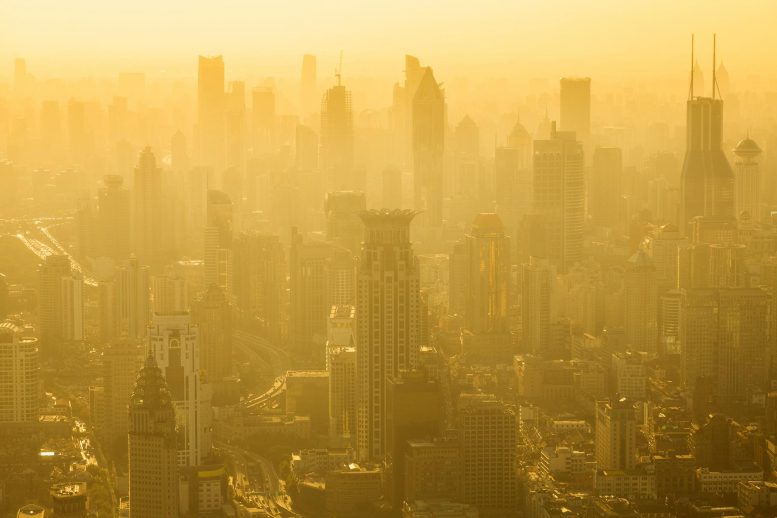
New research published by the open access publisher Frontiers inventories greenhouse gas emissions of 167 globally distributed cities. The study shows that just 25 mega-cities produce 52% of the greenhouse gas emissions from the studied cities.
In 2015, 170 countries worldwide adopted the Paris Agreement, with the goal limiting the average global temperature increase to 1.5°C (2.7°F). Following the agreement, many countries and cities proposed targets for greenhouse gas mitigation. However, the UNEP Emissions Gap Report 2020 shows that, without drastic and strict actions to mitigate the climate crisis, we are still heading for a temperature increase of more than 3°C (5.4°F) by the end of the 21st century.
A new study published in the journal Frontiers in Sustainable Cities presents the first global balance sheet of greenhouse gasses (GHGs) emitted by major cities around the world. The aim was to research and monitor the effectiveness of historical GHG reduction policies implemented by 167 globally distributed cities that are at different developmental stages.
While only covering 2% of the Earth’s surface, cities are big contributors to the climate crisis. But current urban GHG mitigation targets are not sufficient to achieve global climate change targets by the end of this century. “Nowadays, more than 50% of the global population resides in cities. Cities are reported to be responsible for more than 70% of GHG emissions, and they share a big responsibility for the decarbonization of the global economy. Current inventory methods used by cities vary globally, making it hard to assess and compare the progress of emission mitigation over time and space,” says co-author Dr Shaoqing Chen, of Sun Yat-sen University, China.
Key Findings
- The top 25 cities accounted for 52% of the total urban GHG emissions.
- Cities in Europe, Australia, and the US had significantly higher per capita emissions than cities in developing areas.
- Stationary energy and transportation were the two main sources of emissions.
- Of the 42 cities that had time-series traceable data, 30 decreased the annual GHG emissions over the study period. Though in several cities, there was an increase in emissions.
- 113 out of the 167 set varying types of GHG emission reduction targets, while 40 have set carbon neutrality goals.
The Biggest Polluters
First, the authors conducted sector-level GHG emission inventories of the 167 cities — from metropolitan areas such as Durban, South Africa, to cities such as Milan, Italy. Then, they analyzed and compared the carbon reduction progresses of the cities based on the emission inventories recorded in different years (from 2012 to 2016). Lastly, they assessed the cities’ short-, mid-, and long-term carbon mitigation goals. The cities were chosen from 53 countries (in North and South America, Europe, Asia, Africa, and Oceania) and were selected based on representativeness in urban sizes and regional distribution. The degree of development was distinguished based on whether they belonged to developed and developing countries according to the UN classification criteria.
The results showed that both developed and developing countries have cities with high total GHG emissions, but that megacities in Asia (such as Shanghai in China and Tokyo in Japan) were especially important emitters. The inventory of per capita emissions showed that cities in Europe, the US, and Australia had significantly higher emissions than most cities in developing countries. China, classified here as a developing country, also had several cities where per capita emissions matched those of developed countries. It is important to note that many developed countries outsource high carbon production chains to China, which increases export-related emissions for the latter.
The researchers also identified some of the most important sources of greenhouse gas emissions. “Breaking down the emissions by sector can inform us what actions should be prioritized to reduce emissions from buildings, transportation, industrial processes, and other sources,” says Chen. Stationary energy — which includes emissions from fuel combustion and electricity use in residential and institutional buildings, commercial buildings, and industrial buildings — contributed between 60 and 80% of total emissions in North American and European cities. In one third of the cities, more than 30% of total GHG emissions were from on-road transportation. Meanwhile, less than 15% of total emissions came from railways, waterways, and aviation.
Lastly, the findings show that the levels of emissions increase and decrease varied between the cities over the study period. For 30 cities, there was a clear emission decrease between 2012 and 2016. The top four cities with the largest per capita reduction were Oslo, Houston, Seattle, and Bogotá. The top four cities with the largest per capita emissions increase were Rio de Janeiro, Curitiba, Johannesburg, and Venice.
Policy Recommendations
Of the 167 cities, 113 have set varying types of GHG emission reduction targets, while 40 have set carbon neutrality goals. But this study joins many other reports and research that show that we are a long way off achieving the goals set by the Paris Agreement.
Chen and colleagues make three key policy recommendations. First: “Key emitting sectors should be identified and targeted for more effective mitigation strategies. For example, the differences in the roles that stationary energy use, transportation, household energy use, and waste treatments play for cities should be assessed.”
Second, development of methodologically consistent global GHG emission inventories is also needed, to track the effectiveness of urban GHG reduction policies. Lastly: “Cities should set more ambitious and easily-traceable mitigation goals. At a certain stage, carbon intensity is a useful indicator showing the decarbonization of the economy and provides better flexibility for cities of fast economic growth and increase in emission. But in the long run, switching from intensity mitigation targets to absolute mitigation targets is essential to achieve global carbon neutrality by 2050.”
Reference: “Keeping Track of Greenhouse Gas Emission Reduction Progress and Targets in 167 Cities Worldwide” by Ting Wei, Junliang Wu and Shaoqing Chen, 12 July 2021, Frontiers in Sustainable Cities.
DOI: 10.3389/frsc.2021.696381
Never miss a breakthrough: Join the SciTechDaily newsletter.
Follow us on Google and Google News.
1 Comment
PR China is not a developing nation by any stretch of the imagination. It is a developed nation.