
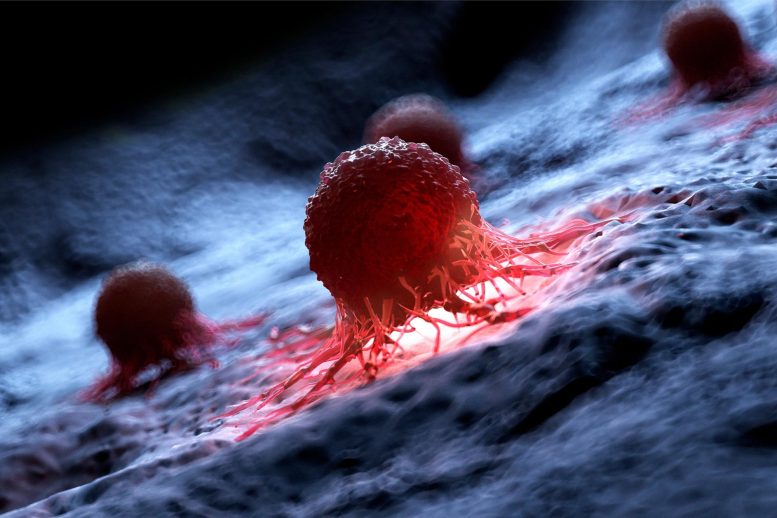
Exercise Defeats Cancer by Increasing Glucose Consumption
According to recent Tel Aviv University research, aerobic exercise can significantly lower the chance of developing metastatic cancer by 72%. The researchers found that high-intensity aerobic exercise increased internal organs’ consumption of glucose (sugar), decreasing the amount of energy available to the tumor.

Professor Carmit Levy from the Department of Human Genetics and Biochemistry and Dr. Yftach Gepner from the School of Public Health and the Sylvan Adams Sports Institute at TAU’s Sackler Faculty of Medicine conducted the study. Prof. Levy notes that the new research has resulted in a very important discovery by merging scientific know-how from different schools at TAU, which may help avoid metastatic cancer, Israel’s top cause of death. The study was recently published on the cover of the journal of Cancer Research.
How High-Intensity Exercise Impacts Glucose Consumption
Prof. Levy and Dr. Gepner: “Studies have demonstrated that physical exercise reduces the risk for some types of cancer by up to 35%. This positive effect is similar to the impact of exercise on other conditions, such as heart disease and diabetes. In this study we added new insight, showing that high-intensity aerobic exercise, which derives its energy from sugar, can reduce the risk of metastatic cancer by as much as 72%. If so far the general message to the public has been ‘be active, be healthy’, now we can explain how aerobic activity can maximize the prevention of the most aggressive and metastatic types of cancer.”
The research combined an animal model in which mice were trained under a strict exercise routine with data from healthy human volunteers who were evaluated before and after running. The human data, obtained from an epidemiological study that monitored 3,000 individuals for about 20 years, indicated 72% less metastatic cancer in participants who reported regular aerobic activity at high intensity, compared to those who did not engage in physical exercise.
The animal model exhibited a similar outcome, also enabling the researchers to identify its underlying mechanism. Sampling the internal organs of the physically fit animals, before and after physical exercise, and also following the injection of cancer, they found that aerobic activity significantly reduced the development of metastatic tumors in the lymph nodes, lungs, and liver. The researchers hypothesized that in both humans and model animals, this favorable outcome is related to the enhanced rate of glucose consumption induced by exercise.
Mechanism Behind Cancer Prevention
Prof. Levy: “Our study is the first to investigate the impact of exercise on the internal organs in which metastases usually develop, like the lungs, liver, and lymph nodes. Examining the cells of these organs we found a rise in the number of glucose receptors during high-intensity aerobic activity – increasing glucose intake and turning the organs into effective energy-consumption machines, very much like the muscles.”

She continues, “We assume that this happens because the organs must compete for sugar resources with the muscles, known to burn large quantities of glucose during physical exercise. Consequently, if cancer develops, the fierce competition over glucose reduces the availability of energy that is critical to metastasis. Moreover, when a person exercises regularly, this condition becomes permanent: the tissues of internal organs change and become similar to muscle tissue. We all know that sports and physical exercise are good for our health. Our study, examining the internal organs, discovered that exercise changes the whole body so that the cancer cannot spread, and the primary tumor also shrinks in size.”
High-Intensity Intervals for Optimal Benefits
Dr. Gepner adds: “Our results indicate that unlike fat-burning exercise, which is relatively moderate, it is a high-intensity aerobic activity that helps in cancer prevention. If the optimal intensity range for burning fat is 65-70% of the maximum pulse rate, sugar burning requires 80-85% – even if only for brief intervals. For example, a one-minute sprint followed by walking, then another sprint. In the past, such intervals were mostly typical of athletes’ training regimens, but today we also see them in other exercise routines, such as heart and lung rehabilitation. Our results suggest that healthy individuals should also include high-intensity components in their fitness programs.”
He concludes, “We believe that future studies will enable personalized medicine for preventing specific cancers, with physicians reviewing family histories to recommend the right kind of physical activity. It must be emphasized that physical exercise, with its unique metabolic and physiological effects, exhibits a higher level of cancer prevention than any medication or medical intervention to date.”
Reference: “An Exercise-Induced Metabolic Shield in Distant Organs Blocks Cancer Progression and Metastatic Dissemination” by Danna Sheinboim, Shivang Parikh, Paulee Manich, Irit Markus, Sapir Dahan, Roma Parikh, Elisa Stubbs, Gali Cohen, Valentina Zemser-Werner, Rachel E. Bell, Sara Arciniegas Ruiz, Ruth Percik, Ronen Brenner, Stav Leibou, Hananya Vaknine, Gali Arad, Yariv Gerber, Lital Keinan-Boker, Tal Shimony, Lior Bikovski, Nir Goldstein, Keren Constantini, Sapir Labes, Shimonov Mordechai, Hila Doron, Ariel Lonescu, Tamar Ziv, Eran Nizri, Guy Choshen, Hagit Eldar-Finkelman, Yuval Tabach, Aharon Helman, Shamgar Ben-Eliyahu, Neta Erez, Eran Perlson, Tamar Geiger, Danny Ben-Zvi, Mehdi Khaled, Yftach Gepner and Carmit Levy, 15 November 2022, Cancer Research.
DOI: 10.1158/0008-5472.CAN-22-0237
Never miss a breakthrough: Join the SciTechDaily newsletter.
Follow us on Google and Google News.
10 Comments
Interesting study, it seems to go along with High intensity training would be to lower if not completely get rid of any added sugar in our diet. I believe KETO diet will help tremendously in this area.
Most profoundly encouraging research findings ever put in print and again confirming simplicity as the impetus of longevity
I wonder if the article mixed up aerobic with anaerobic. Description of HITT like exercises would be anaerobic….
The difference between aerobic and anaerobic exercise:
Slower-paced exercises like jogging or endurance cycling are examples of aerobic exercise. Fast-paced workouts like sprinting, high-intensity interval training (HIIT), jumping rope, and interval training take the more intense approach of anaerobic exercise.
It would be interesting if the researchers compared the incidence of metastatic cancer against people with type 1 and type 2 diabetes.
Or don’t eat sugar…this article isn’t going to make women go to the gym. Why don’t you say cancer cells feed off of glucose?
Yes it confirms the link between more challenging life style choices and healthy living. When and if available
This is wonderful information. And I daresay men and women will make adjustments to their workout regime knowing interval and high paced aerobics have this sort of impact on cancer!
It is pretty clear that mall walking is not enough. Also gentle yoga or chair exercises. Getting to 80% of your heart beat capacity is probably unreachable for many but perhaps the way to start is to do short burst of faster paces.
To people who say just don’t eat sugar, our bodies are going to convert food into glucose, and fat as energy will still feed cancer. Carbohydrates, even complex ones, break down into glucose. I have recently had surgery for a malignant tumor that was the worst kind. Since the surgery was very successful and appears to have removed the entire tumor, I am just being monitored for metastasis. This article is one of the first I’ve read that gives me something concrete I can do to help prevent metastasis, beyond “eat healthy and exercise.”
Is the state of ketosis produced by an Atkins-style diet also anti-metastatic?