
A new technique stabilizes a metastable form of sodium solid electrolyte, enabling all-solid-state sodium batteries to maintain performance even at subzero temperatures.
All-solid-state batteries are considered a safe and powerful option for running electric vehicles, electronics, and even storing energy from the power grid. However, producing them relies heavily on lithium, a metal that is costly, difficult to source, and damaging to the environment when mined.
Sodium offers a cheaper, more abundant, and less harmful alternative, but sodium-based all-solid-state batteries have struggled to operate efficiently at room temperature.
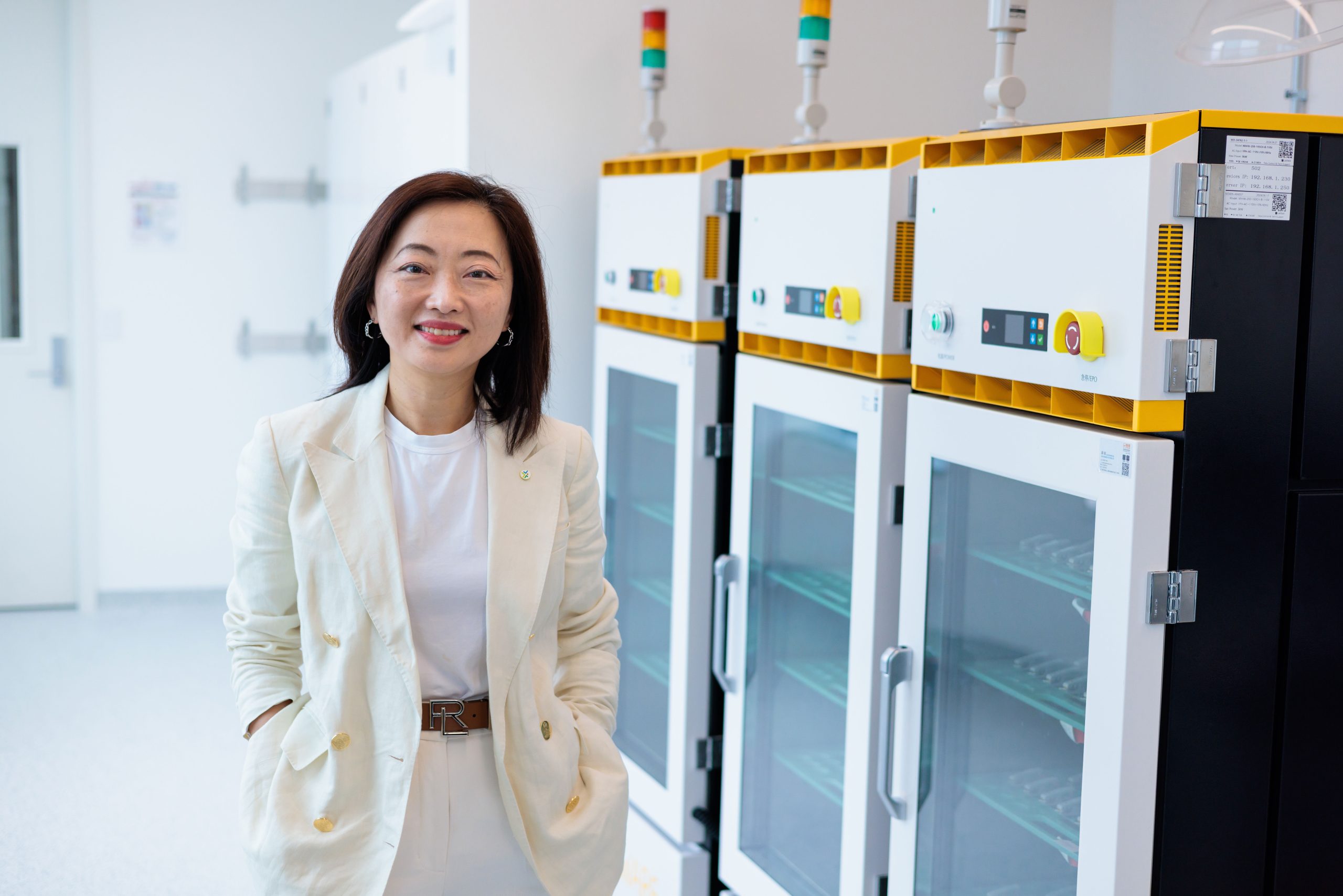
“It’s not a matter of sodium versus lithium. We need both. When we think about tomorrow’s energy storage solutions, we should imagine the same gigafactory can produce products based on both lithium and sodium chemistries,” said Y. Shirley Meng, Liew Family Professor in Molecular Engineering at the UChicago Pritzker School of Molecular Engineering (UChicago PME). “This new research gets us closer to that ultimate goal while advancing basic science along the way.”
Meng’s lab recently published findings in Joule that address this challenge. The study demonstrates a significant step forward by showing that sodium-based batteries with thick cathodes can maintain strong performance at room temperature and even below freezing.
The research helps put sodium on a more equal playing field with lithium for electrochemical performance, said first author Sam Oh of the A*STAR Institute of Materials Research and Engineering in Singapore, a visiting scholar at Meng’s Laboratory for Energy Storage and Conversion during the research.
How they accomplished that goal represents an advance in pure science.
“The breakthrough that we have is that we are actually stabilizing a metastable structure that has not been reported,” Oh said. “This metastable structure of sodium hydridoborate has a very high ionic conductivity, at least one order of magnitude higher than the one reported in the literature, and three to four orders of magnitude higher than the precursor itself.”
Established technique, new field
The team heated a metastable form of sodium hydridoborate up to the point it started to crystallize, then rapidly cooled it to stabilize the crystal structure kinetically. It’s a well-established technique, but one that has not previously been applied to solid electrolytes, Oh said.
That familiarity could, down the road, help turn this lab innovation into a real-world product.
“Since this technique is established, we are better able to scale up in the future,” Oh said. “If you are proposing something new or if there’s a need to change or establish processes, then industry will be more reluctant to accept it.”
Pairing that metastable phase with a O3-type cathode that has been coated with a chloride-based solid electrolyte can create thick, high-areal-loading cathodes that puts this new design beyond previous sodium batteries. Unlike design strategies with a thin cathode, this thick cathode would pack less of the inactive materials and more cathode “meat.”
“The thicker the cathode is, the theoretical energy density of the battery – the amount of energy being held within a specific area – improves,” Oh said.
The current research advances sodium as a viable alternative for batteries, a vital step to combat the rarity and environmental damage of lithium. It’s one of many steps ahead.
“It’s still a long journey, but what we have done with this research will help open up this opportunity,” Oh said.
Reference: “Metastable sodium closo-hydridoborates for all-solid-state batteries with thick cathodes” by Jin An Sam Oh, Zihan Yu, Chen-Jui Huang, Phillip Ridley, Alex Liu, Tianren Zhang, Bing Joe Hwang, Kent J. Griffith, Shyue Ping Ong and Ying Shirley Meng, 16 September 2025, Joule.
DOI: 10.1016/j.joule.2025.102130
Never miss a breakthrough: Join the SciTechDaily newsletter.
Follow us on Google and Google News.
1 Comment
She says “we’ll still need lithium, too” and that’s disheartening to hear.
Lithium batteries are incredibly toxic once they go up in flames. Just ask the residents of Monterrey County in California what happened when the local lithium battery facility was on fire for days. And the authorities covered it up.
The only thing green about this “green technology”, is the bucks that flow into the lithium corporations as subsidies.