
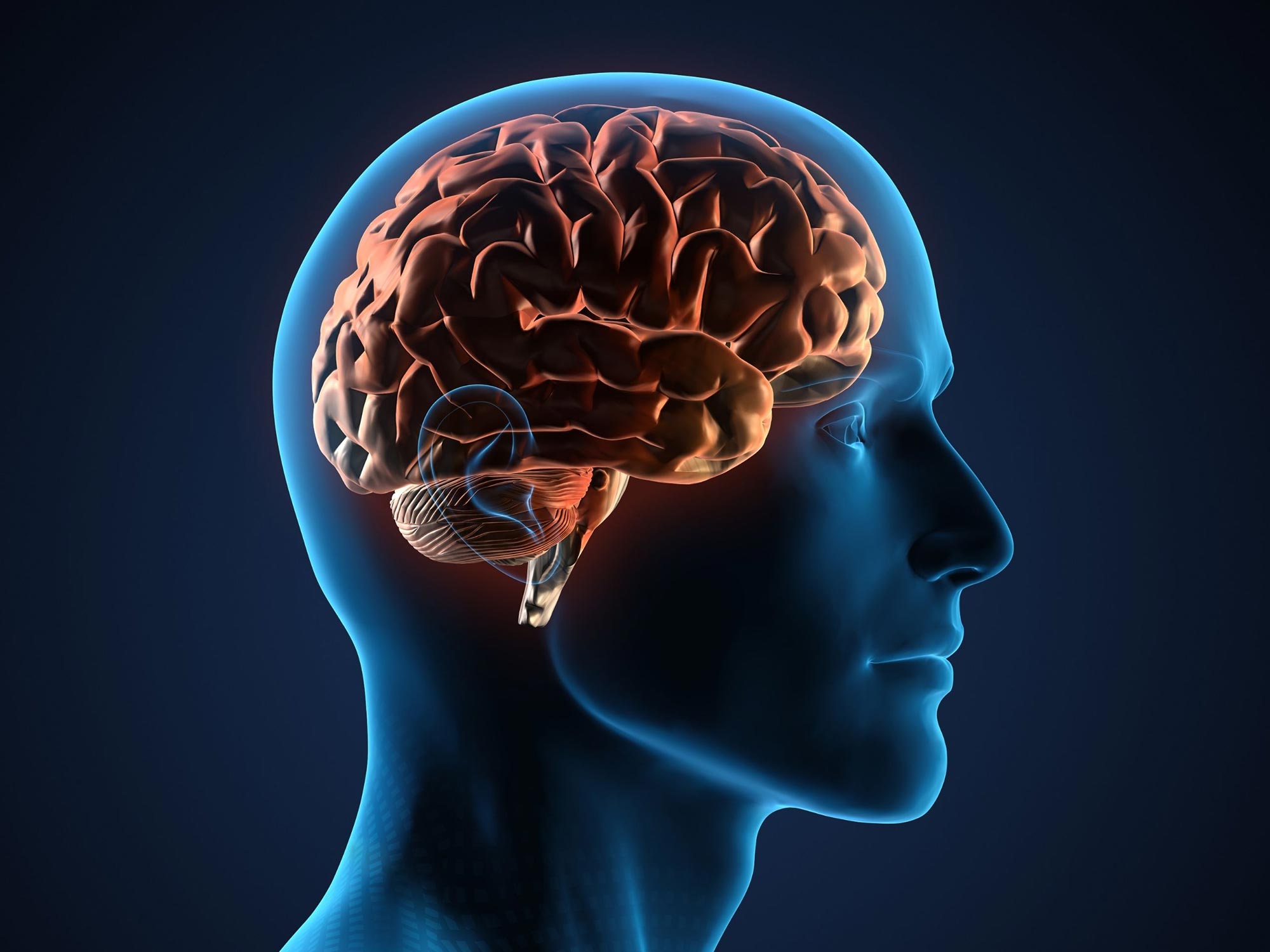
Researchers have reversed aging-related brain waste accumulation in mice, using a clinically approved drug to boost waste removal and potentially treat neurological disorders.
Alzheimer’s, Parkinson’s, and other neurological disorders are often considered “dirty brain” diseases, where the brain struggles to clear harmful waste. Aging significantly increases the risk of these conditions because, as we age, our brain’s ability to eliminate toxic buildup diminishes. However, recent research in mice shows that it may be possible to reverse these age-related changes and restore the brain’s waste-clearing processes.
“This research shows that restoring cervical lymph vessel function can substantially rescue the slower removal of waste from the brain associated with age,” said Douglas Kelley, PhD, a professor of Mechanical Engineering in the University of Rochester Hajim School of Engineering and Applied Sciences. “Moreover, this was accomplished with a drug already being used clinically, offering a potential treatment strategy.” Kelley is one of the lead authors of the study, which appears in the journal Nature Aging, along with Maiken Nedergaard, MD, DMSc, co-director the University’s Center for Translational Neuromedicine.
First described by Nedergaard and her colleagues in 2012, the glymphatic system is the brain’s unique waste removal process that uses cerebrospinal fluid (CSF) to wash away excess proteins generated by energy-hungry neurons and other cells in the brain during normal activity.
This discovery pointed the way for potential new approaches to treat diseases commonly associated with the accumulation of protein waste in the brain, such as Alzheimer’s (beta-amyloid and tau) and Parkinson’s (alpha-synuclein). In healthy and young brains, the glymphatic system does a good job of flushing away these toxic proteins, however, as we age, this system slows, setting the stage for these diseases.
A network of tiny pumps draws waste from the brain
Once laden with protein waste, CSF in the skull needs to make its way to the lymphatic system and ultimately the kidneys, where it is processed along with the body’s other waste. The new research combines advanced imaging and particle tracking techniques to describe for the first time in detail the route via the cervical lymph vessels in the neck through which half of dirty CSF exits the brain.
In addition to measuring the flow of CSF, the researchers were able to observe and record the pulsing of lymph vessels in the neck that helps draw CSF out of the brain. “Unlike the cardiovascular system which has one big pump, the heart, fluid in the lymphatic system is instead transported by a network of tiny pumps,” said Kelley. These microscopic pumps, called lymphangions, have valves to prevent backflow and are strung together, one after another, to form lymph vessels.
The researchers found that as the mice aged, the frequency of contractions decreased, and the valves failed. As a result, the speed of dirty CSF flowing out of the brains of older mice was 63 percent slower compared to younger animals.
Known drug restarts flow of brain-cleaning fluids
The team then set out to see if they could revive the lymphangions and identified a drug called prostaglandin F2α, a hormone-like compound commonly used medically to induce labor and known to aid smooth muscle contraction. The lymphangions are lined with smooth muscle cells, and when the researchers applied the drug to the cervical lymph vessels in older mice, the frequency of contractions and the flow of dirty CSF from the brain both increased, returning to a level of efficiency found in younger mice.
“These vessels are conveniently located near the surface of the skin, we know they are important, and we now know how to accelerate function,” said Kelley. “One can see how this approach, perhaps combined with other interventions, could be the basis for future therapies for these diseases.”
Reference: “Restoration of cervical lymphatic vessel function in aging rescues cerebrospinal fluid drainage” by Ting Du, Aditya Raghunandan, Humberto Mestre, Virginia Plá, Guojun Liu, Antonio Ladrón-de-Guevara, Evan Newbold, Paul Tobin, Daniel Gahn-Martinez, Saurav Pattanayak, Qinwen Huang, Weiguo Peng, Maiken Nedergaard and Douglas H. Kelley, 15 August 2024, Nature Aging.
DOI: 10.1038/s43587-024-00691-3
Additional contributors to the study include first authors Ting Du, Aditya Raghunandan, and Humberto Mestre, and Virginia Plá, Guojun Liu, Antonio Ladrón-de-Guevara, Evan Newbold, Paul Tobin, Daniel Gahn-Martinez, Saurav Pattanayak, Qinwen Huang, and Weiguo Peng with the University of Rochester. The research was supported with funding from the National Institute of Neurological Disorders and Stroke, the Lundbeck Foundation, the Novo Nordisk Foundation, the Human Frontier Science Program, the Miriam and Sheldon G. Adelson Medical Research Foundation, the Simons Foundation, the EU Joint Programme – Neurodegenerative Disease Research, the US Army Research Office, the National Center for Complementary and Integrative Health, and the BRAIN Initiative.
Never miss a breakthrough: Join the SciTechDaily newsletter.
Follow us on Google and Google News.
5 Comments
What is its purpose?
All drugs have side effects. Plus we have to watch stupid commercials with smiling people and hundreds of dancing actors.
How about clearing the brain of waste through healthy living and regular exercise? WHAT A CONCEPT!
I am a medical anthropologist researcher examining the cultural causes of disease. I have also studies many diseases which we have found are caused by sleep position, which affects brain circulation. Unlike mice, humans stand up all day, with blood pumping against gravity to the brain, and gravity assisting the drainage of the brain. At night, we lie down, with the loss of this gravity resistance to brain circulation and assistance to brain drainage. As a result, the brain has reduced circulation and increased pressure at night. When you raise the head of the bed from 10-30 degrees, some gravity effect is restored and brain circulation increases. NASA scientists study this effect since astronauts in space are in zero gravity, and their heads and brains get pressurized with fluid shifting to the head. Zero gravity is studied on earth by having people lie flat, and it has been found that 30 degree head-of-bed elevation is optimal for brain and heart circulation. This means people who sleep flat all their lives will have a lifetime of sleeping with their heads and brains pressurized with stagnant fluid. We discovered this causes migraines, which disappear within a day or two of elevating the head of the bed! Research has already shown raising the head of the bed will treat sleep apnea and glaucoma, which we confirmed in our research. We also found raising the head of the bed treats ADHD and stroke, and explains the high intracranial pressure associated with Alzheimer’s, which we believe is the end disease after a lifetime of sleeping flat and having high brain pressure. You can try this for yourself, using a wedge, like the ones prescribed for GERD or acid reflux. Or you can raise the bed with blocks at the head. Or use an adjustable bed. This also clears the head of morning congestion, and you will have a clearer mind in the morning. It also affects the ears, and side-sleeping children who lean on their ears get ear infections from compression and lack of gravity. Memory may improve with better brain circulation, too. Of course, you cannot see this effect in mice, who do not have the same anatomy or gravity issues humans have. No need to experiment on non-human animals and promote a drug for increasing glymphatic drainage from the brain when you can do it mechanically with head of bed elevation. See my article, Heads Up! The Way You Are Sleeping May Be Killing You. https://www.academia.edu/1483361/Heads_Up_The_Way_You_Are_Sleeping_May_Be_Killing_You_
Sydney Ross Singer wrote “When you raise the head of the bed from 10-30 degrees, some gravity effect is restored and brain circulation increases”
——–
I’m not prepared to argue your contention one way or the other but Isn’t raising your head the function of a pillow?
The pillow raises the head slightly, but head of bed elevation is making an incline plane out of the bed. The entire torso is raised, not just the head. And pillows can hyper-flex the neck, resulting in reduced brain circulation, as veins draining the brain are compressed by neck muscles in that position. So don’t try adding an extra pillow. That won’t work. Elevate your body from the waist upwards. You will feel the difference the very next morning. Guaranteed. If you want more, check out my book, Get It Up! Revealing the Simple, Surprising Lifestyle that Causes Migraines, Alzheimer’s, Stroke, Glaucoma, Sleep Apnea, Impotence, and More! Or see my article, linked to above.