
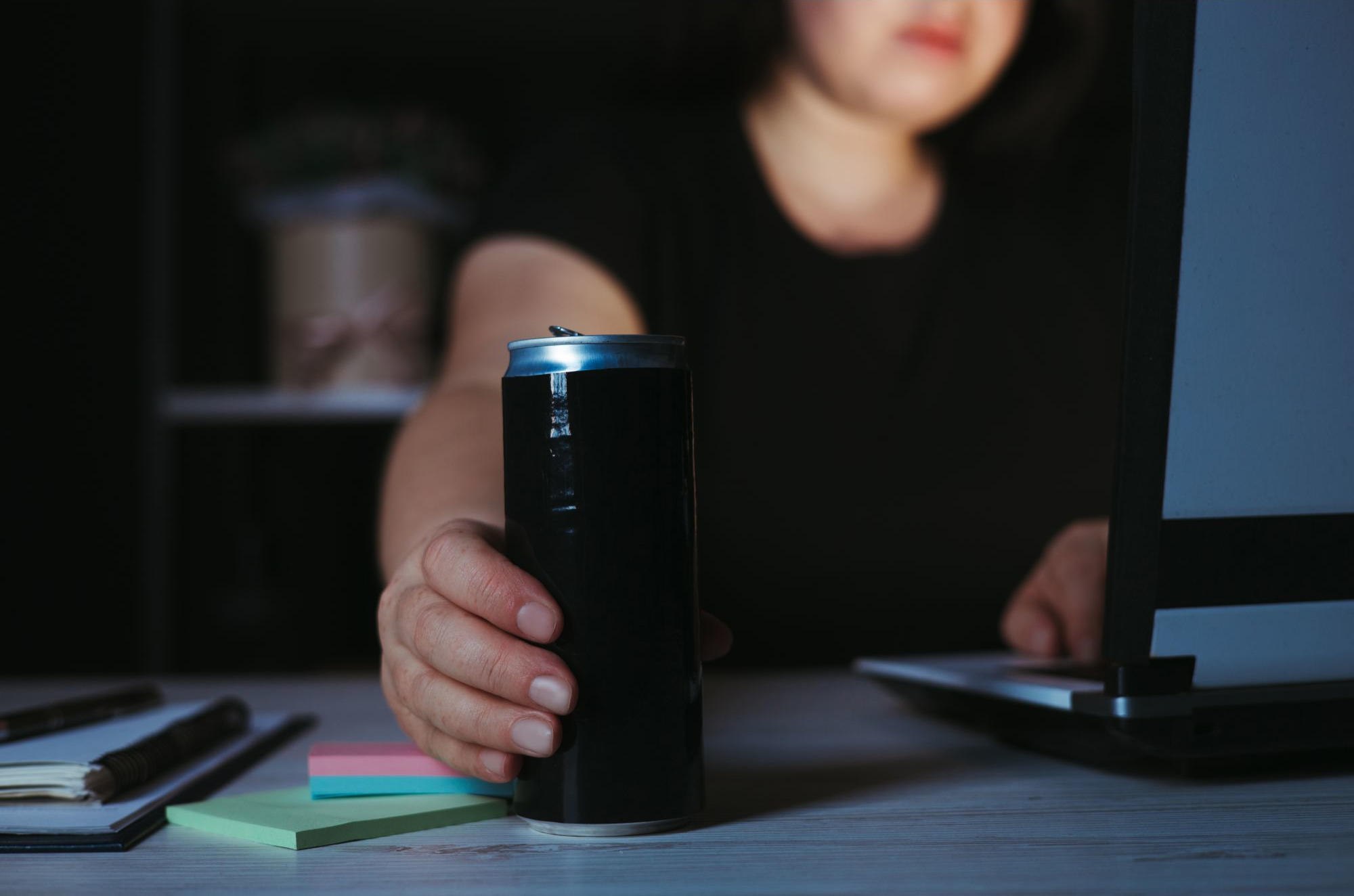
The more frequently they consume, the less sleep they get each night. However, even occasional consumption is associated with an increased risk of sleep disturbances.
Consuming energy drinks is associated with lower sleep quality and insomnia in college students, according to a comprehensive Norwegian study published in the open-access journal BMJ Open.
And the higher the frequency of consumption, the fewer hours of nightly shut-eye the students clocked up. But even just the occasional can—1-3 times a month—is linked to a heightened risk of disturbed sleep, the findings indicate.
Energy drinks contain an average caffeine content of 150 mg per liter as well as sugar, vitamins, minerals, and amino acids in varying quantities, note the researchers. Marketed as mental and physical pick-me-ups, they are popular with college students and young people in general.
While there is some evidence to suggest that they reduce sleep quality, it’s not clear exactly which aspects of sleep might be more or less affected, or whether there are any sex-specific differences in these effects.
The Study’s Methodology
To explore these issues further, the researchers drew on 53,266 eighteen to 35-year-old participants of the Students’ Health and Well-being Study (SHOT22 study)—the most recent wave of a large national survey of college and university students in Norway.
The students were asked how often they drank energy drinks, with the response options of daily, weekly (once; 2-3 times; 4-6 times), monthly (1-3 times), and seldom/never.
They were also asked detailed questions about their usual sleep patterns: when they went to bed and got up; how long it took them to fall asleep (sleep latency); wakefulness after going to sleep. Sleep efficiency was then calculated from the total nightly hours of sleep vs time spent in bed.
Insomnia was defined as experiencing difficulties falling and staying asleep and waking early on at least 3 nights of the week, plus daytime sleepiness and tiredness for at least 3 days of the week, for at least 3 months.
Findings on Consumption Patterns and Sleep Effects
The survey responses indicated clear sex differences in patterns of energy drink consumption. For example, women were more likely than men to report never or seldom consuming energy drinks: 50% vs 40%.
Of those who said they did drink these beverages, 5.5% of women said they drank them 4-6 times a week and just over 3% reported daily consumption. The comparable figures for men were 8% and 5%, respectively.
But there was a clear dose-response association for both sexes between energy drink consumption and fewer hours of sleep.
Association with Sleep Problems
Both men and women who reported daily consumption slept around half an hour less than those reporting only occasional or no consumption. Similar associations were also observed for waking after falling asleep and taking longer to fall asleep.
And increasing consumption was associated with a corresponding increase in both nocturnal wake time and time taken to fall asleep—poorer sleep efficiency.
Insomnia was also more common among both women and men reporting daily consumption than among those reporting occasional or no consumption: 51% vs 33% (women) and 37% vs 22 % (men).
Overall, higher energy drink consumption was associated with an increasing risk of sleep problems across all the aspects studied, with the strongest associations for short sleep duration.
Compared with those reporting no or only an occasional energy drink, men who reported daily consumption were more than twice as likely to say they slept fewer than 6 hours/night, while women were 87% more likely to do so.
But even those reporting having an energy drink just 1-3 times a month were still at heightened risk of sleep problems.
Limitations and Conclusions
This is an observational study, and as such, no firm conclusions can be drawn about cause. And the researchers acknowledge that reverse causality—whereby energy drink consumption might be a consequence of poor sleep rather than the other way round—might explain the associations found.
There was no information either on the timing of consumption or the exact quantities drunk, and the study relied on self-assessment rather than objective measures of consumption and sleep patterns.
Nevertheless, the researchers conclude: “The results from the current study show that there is a robust association between the frequency of [energy drink] consumption and the different sleep parameters.
“Identifying modifiable risk factors for sleep problems among college and university students is vital and our results suggest that the frequency of …consumption could be a possible target for interventions.”
Reference: “Energy drink consumption and sleep parameters in college and university students: a national cross-sectional study” by Siri Kaldenbach, Mari Hysing, Tor A Strand and Børge Sivertsen, 1 February 2024, BMJ Open.
DOI: 10.1136/bmjopen-2023-072951
The study was funded by the Norwegian Ministry of Education and Research and the Norwegian Ministry of Health and Care Services.
Never miss a breakthrough: Join the SciTechDaily newsletter.
Follow us on Google and Google News.