
Close Menu
    Facebook X (Twitter) Instagram
    SciTechDaily
    • Biology
    • Chemistry
    • Earth
    • Health
    • Physics
    • Science
    • Space
    • Technology
    Facebook X (Twitter) Pinterest YouTube RSS
    SciTechDaily
    Home»Biology»New Study Reveals How Gut Bacteria Can Enhance the Effects of Cocaine
    Biology

    New Study Reveals How Gut Bacteria Can Enhance the Effects of Cocaine

    By Cell PressDecember 10, 2022No Comments3 Mins Read
    Facebook Twitter Pinterest Telegram LinkedIn WhatsApp Email Reddit
    Share
    Facebook Twitter LinkedIn Pinterest Telegram Email Reddit
    Cocaine Exposure and Gut Microbiota
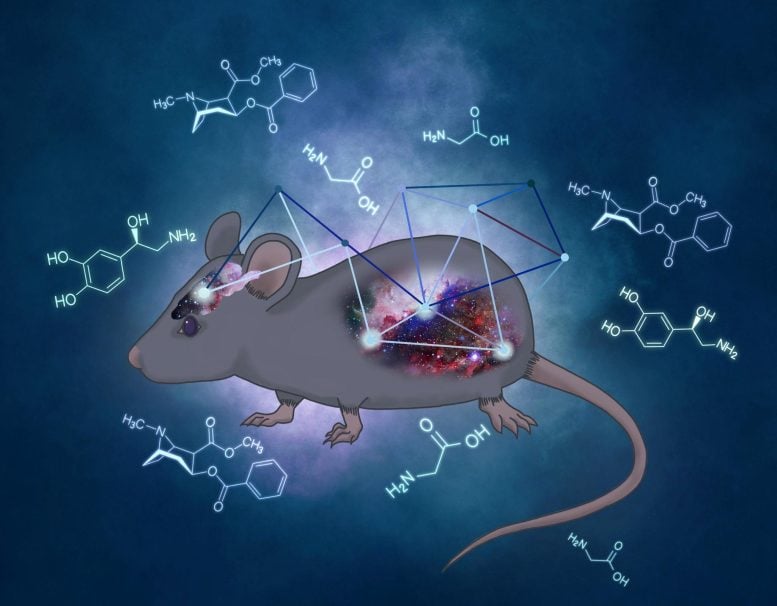
    This photo represents Cuesta et al.’s demonstration that cocaine exposure increases norepinephrine in the gut facilitating γ-Proteobacteria colonization. This gut microbiota shift toward γ-Proteobacteria leads to a depletion of glycine from the host, which, in turn, facilitates cocaine-induced addiction-like behaviors in mice. Credit: Florencia Cerchiara

    Common gut bacteria can enhance the effects of cocaine in mice, according to a report published recently in the journal Cell Host & Microbe.

    This study demonstrates how cocaine usage promotes the growth of gut bacteria, which in turn consume glycine, a chemical that contributes to normal brain function. As levels of glycine become depleted, mice exhibit a stronger response to cocaine with behavior abnormalities, such as substantially increasing drug-induced locomotion and seeking behaviors. 

    In addition, by supplementing glycine back systemically or using a genetically modified bacteria that cannot use glycine, the response of the mice to cocaine falls back to normal levels. This demonstrates that this simple amino acid can act as an addiction-like behavior mediator in animal models.

    “I was interested in the gut-brain axis, and I found it very new and exciting,” says first author Santiago Cuesta a neuroscientist at the University of Wisconsin School of Medicine and Public Health. 

    Mechanism of Bacterial Growth in Response to Cocaine

    Cuesta and colleagues found that when cocaine enters the gut of the mice, it triggers the activation of the QseC protein that supports the growth of γ-proteobacteria, such as E. coli. Fueled by glycine, these bacteria outcompete the normal gut bacteria that already exist in our digestive tracks, taking up most of the space and resources. 

    “The gut bacteria are consuming all of the glycine and the levels are decreasing systemically and in the brain,” says senior author Vanessa Sperandio, a microbiologist from the University of Wisconsin School of Medicine and Public Health. “It seems changing glycine overall is impacting the glutamatergic synapses that make the animals more prone to develop addiction.”  

    “Usually, for neuroscience behaviors, people are not thinking about controlling the microbiota, and microbiota studies usually don’t measure behaviors, but here we show they’re connected” says Cuesta. “Our microbiome can actually modulate psychiatric or brain-related behaviors.” 

    “I think the bridging of these communities is what’s going to move the field forward, advancing beyond correlations towards causations for the different types of psychiatric disorders,” says Sperandio. 

    Reference: “Gut colonization by Proteobacteria alters host metabolism and modulates cocaine neurobehavioral responses” by Santiago Cuesta, Paula Burdisso, Amir Segev, Saïd Kourrich and Vanessa Sperandio, 1 November 2022, Cell Host & Microbe.
    DOI: 10.1016/j.chom.2022.09.014

    Financial support was provided by the National Institutes of Health (NIH). 

    Never miss a breakthrough: Join the SciTechDaily newsletter.
    Follow us on Google and Google News.

    Addiction Cell Press Neuroscience
    Share. Facebook Twitter Pinterest LinkedIn Email Reddit

    Related Articles

    Live Brain Cells Learn To Play Pong in Real Time

    Mental Fatigue Is No Illusion: Scientists Figure Out Why Thinking Hard Makes You Tired

    Gamergate: Single Molecule Controls Unusual Ants’ Switch From Worker to Queen-Like Status

    Drug (Cocaine, Methamphetamine, or Nicotine) Withdrawal Morphs Brain Communication Networks in Mice

    Human Brain Organoids Grown in Lab With “Eyes” That Respond to Light

    Gene Changes Linked to Severe Repetitive Behaviors Seen in Autism, Schizophrenia, and Drug Addiction

    Octopuses Have Two Major Alternating Sleep States – And May Even Experience Dreams

    Researchers Show Real-Time Dialog With a Dreaming Person Is Possible

    Scientists Identify Gene Linked to Thinness – Unique to People That Can Eat Anything and Not Gain Weight

    Leave A Reply Cancel Reply

    • Facebook
    • Twitter
    • Pinterest
    • YouTube

    Don't Miss a Discovery

    Subscribe for the Latest in Science & Tech!

    Trending News

    Wasp Colonies Explode Into Violence After Losing Their Queen

    Scientists Create “Living Plastic” That Self-Destructs in Just Six Days

    Your Blood May Carry a 700-Million-Year-Old Secret

    Scientists Discover Some “Zombie Cells” May Actually Help You Live Longer

    Earth May Be Seeding Venus With Life, According to New Research

    What Scientists Found Inside a 117-Year-Old Woman Reveals New Clues to Long Life

    Scientists Discover Mysterious Creature Living in the Great Salt Lake – and It Exists Nowhere Else on Earth

    It’s Alive? Surprising Discovery Changes What We Know About Fog

    Follow SciTechDaily
    • Facebook
    • Twitter
    • YouTube
    • Pinterest
    • Newsletter
    • RSS
    SciTech News
    • Biology News
    • Chemistry News
    • Earth News
    • Health News
    • Physics News
    • Science News
    • Space News
    • Technology News
    Recent Posts
    • Scientists Crack Major Ammonia Problem With a Platinum Catalyst Breakthrough
    • MIT Engineers Solve a Major Lidar Problem That Has Stumped Researchers for Years
    • NASA’s X-59 Sonic Boom Killer Is Ready for Its Biggest Test Yet
    • Why Some Cancers Turn Deadly: Researchers Uncover a Hidden Trigger
    • The Best Exercise Combination for Longevity, According to a 30-Year Study
    Copyright © 1998 - 2026 SciTechDaily. All Rights Reserved.
    • Science News
    • About
    • Contact
    • Editorial Board
    • Privacy Policy
    • Terms of Use

    Type above and press Enter to search. Press Esc to cancel.