
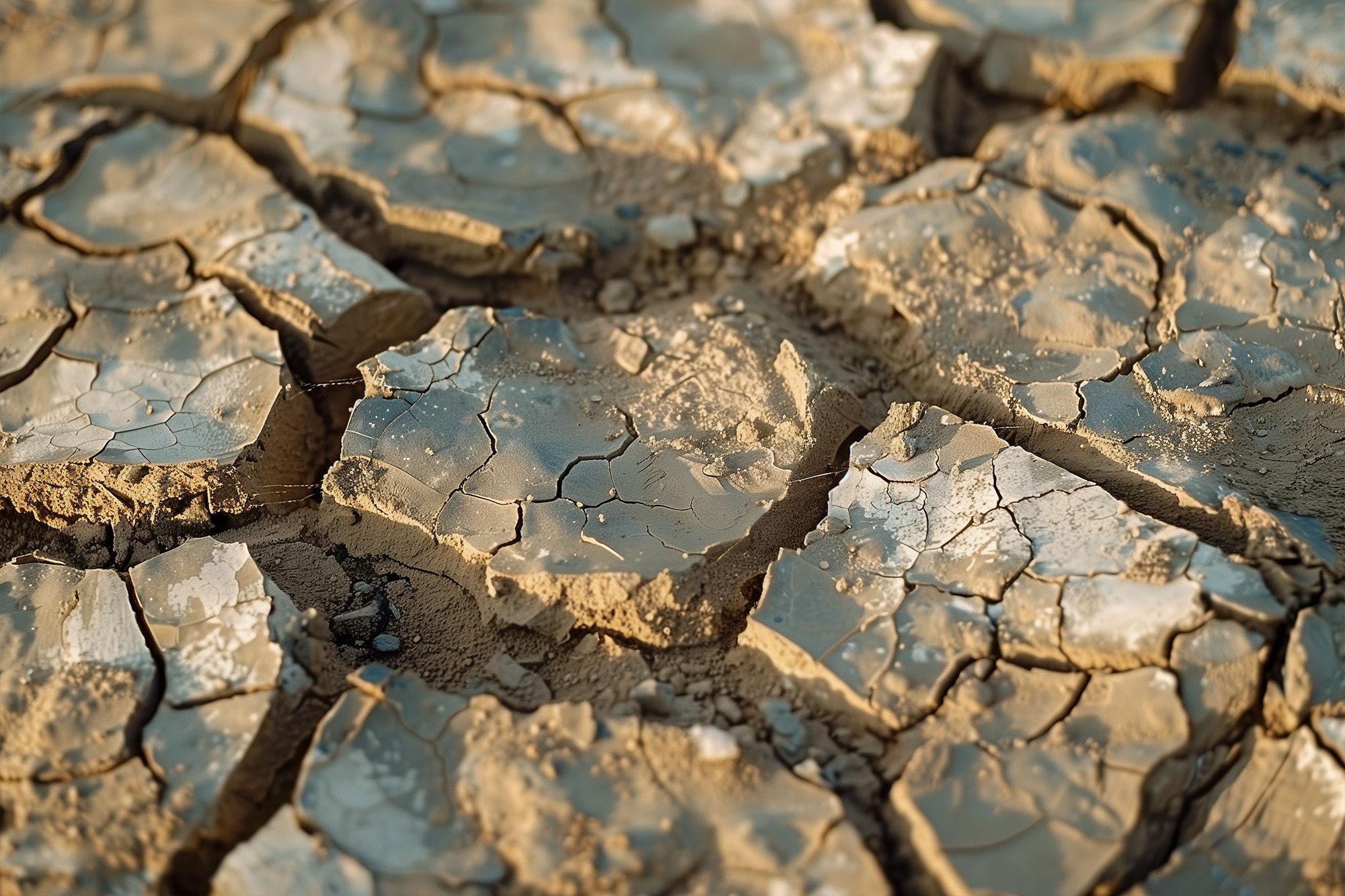
UC San Diego–led research shows that knowing the origins of rainfall could transform how drought planning and land management are approached worldwide.
A new study from the University of California San Diego reveals an overlooked factor that shapes crop vulnerability worldwide: the original source of the rain that falls on farmland.
Published in Nature Sustainability, the research tracks atmospheric moisture back to where it evaporated, whether it began over the ocean or over land areas such as soil, lakes, and forests. As sunlight heats these surfaces, water becomes vapor, rises into the atmosphere, and later returns as rain.
Moisture that comes from the ocean can travel vast distances on global winds and often moves through large-scale weather systems including atmospheric rivers, monsoons, and tropical storms. Moisture that comes from land, sometimes referred to as recycled rainfall, evaporates from nearby soils and vegetation and fuels local weather events. The study shows that the mix of moisture sourced from land versus ocean strongly affects drought risk and agricultural productivity.
“Our work reframes drought risk—it’s not just about how much it rains, but where that rain comes from,” said Yan Jiang, the study’s lead author and postdoctoral scholar at UC San Diego with a joint appointment at the School of Global Policy and Strategy and Scripps Institution of Oceanography. “Understanding the origin of rainfall and whether it comes from oceanic or land sources, gives policymakers and farmers a new tool to predict and mitigate drought stress before it happens.”
A New Way to Forecast Drought Risk
Using nearly two decades of satellite observations, Jiang and co-author Jennifer Burney of Stanford University estimated how much of global rainfall originates from land evaporation. They found that when more than about one-third of rainfall comes from land, crop-producing regions face a much higher risk of drought, soil drying, and yield losses. This is likely because ocean-driven systems tend to bring heavier rainfall, whereas land-driven systems produce lighter and less dependable showers, increasing the chance of water shortages during critical periods of plant growth.

These findings offer a new way for farmers and decision-makers to identify which areas face the greatest risk and to prepare more effectively for future drought conditions.
“For farmers in areas that rely heavily on land-originating moisture — like parts of the Midwest or eastern Africa — local water availability becomes the deciding factor for crop success,” Jiang explained. “Changes in soil moisture or deforestation can have immediate, cascading impacts on yields.”
Two Global Hotspots: The U.S. Midwest and East Africa
The study highlights two striking hotspots of vulnerability: the U.S. Midwest and tropical East Africa.
In the Midwest, Jiang notes, droughts have become more frequent and intense in recent years — even in one of the world’s most productive and technologically advanced farming regions.
“Our findings suggest that the Midwest’s high reliance on land-sourced moisture, from surrounding soil and vegetation, could amplify droughts through what we call ‘rainfall feedback loops,’” Jiang said. “When the land dries out, it reduces evaporation, which in turn reduces future rainfall—creating a self-reinforcing drought cycle.”
Because this region is also a major supplier to global grain markets, disruptions there have ripple effects far beyond U.S. borders. Jiang suggests that Midwestern producers may need to pay closer attention to soil moisture management, irrigation efficiency, and timing of planting to avoid compounding drought stress.
In contrast, East Africa faces a more precarious but still reversible situation. Rapid cropland expansion and loss of surrounding rainforests threaten to undermine the very moisture sources that sustain rainfall in the region.
“This creates a dangerous conflict,” Jiang said. “Farmers are clearing forests to grow more crops, but those forests help generate the rainfall that the crops depend on. If that moisture source disappears, local food security will be at greater risk.”
However, Jiang sees opportunity as well as risk:
“Eastern Africa is on the front line of change, but there is still time to act. Smarter land management — like conserving forests and restoring vegetation — can protect rainfall and sustain agricultural growth.”
Forests as Rainmakers
The research underscores that forests and natural ecosystems are crucial allies in farming. Forests release vast amounts of water vapor into the atmosphere through evaporation and transpiration (when plants produce moisture), effectively seeding the clouds that bring rain to nearby croplands.
“Upland forests are like natural rainmakers,” Jiang said. “Protecting these ecosystems isn’t just about biodiversity—it’s about sustaining agriculture.”
A Tool for Smarter Land and Water Management
Jiang’s research provides a new scientific framework connecting land management, rainfall patterns, and crop planning — a relationship that could become central to future drought resilience strategies.
The study’s novel satellite-based mapping technique could help governments and farmers identify where to invest in irrigation infrastructure, soil water storage, and forest conservation to maintain reliable rainfall.
Reference: “Crop water origins and hydroclimate vulnerability of global croplands” by Yan Jiang, and Jennifer A. Burney, 24 October 2025, Nature Sustainability.
DOI: 10.1038/s41893-025-01662-1
This study was supported by the US National Science Foundation (NSF INFEWS #1639318) and the Center for Global Transformation at UC San Diego’s School of Global Policy and Strategy.
Never miss a breakthrough: Join the SciTechDaily newsletter.
Follow us on Google and Google News.
3 Comments
The original article is behind a paywall so it is impossible to verify the claims. However, I have found that abstracts usually imbue a sense of the numeracy of the research. This seems to be lacking in supporting-numbers other than percentages of correlations. One might say that this is another example of ‘could science’ that is based on speculation. That is, it is speculation without an in-depth analysis of the situation. Surprisingly, there is no mention of the importance of the Ogallala Aquifer as a backup to the undependable rains on the high plains.
The abstract remarks, “Here we use satellite-derived water isotope observations and physical models to trace atmospheric moisture origins for major global rain-fed crops from 2003 to 2019, distinguishing between oceanic and terrestrial sources.” I would appreciate it if someone would tell me how one uses satellites to obtain “water isotope observations.” I’m left with the impression that the researchers don’t understand the tools that they are working with. Stanford isn’t the university it used to be.
As I understand isotopes, they show finger prints on the door knob, but not the multitude that pass through.
Would you please explain your analogy in more detail?