
Close Menu
    Facebook X (Twitter) Instagram
    SciTechDaily
    • Biology
    • Chemistry
    • Earth
    • Health
    • Physics
    • Science
    • Space
    • Technology
    Facebook X (Twitter) Pinterest YouTube RSS
    SciTechDaily
    Home»Space»A New View of Centaurus A
    Space

    A New View of Centaurus A

    By NASAMay 2, 2014No Comments1 Min Read
    Facebook Twitter Pinterest Telegram LinkedIn WhatsApp Email Reddit
    Share
    Facebook Twitter LinkedIn Pinterest Telegram Email Reddit
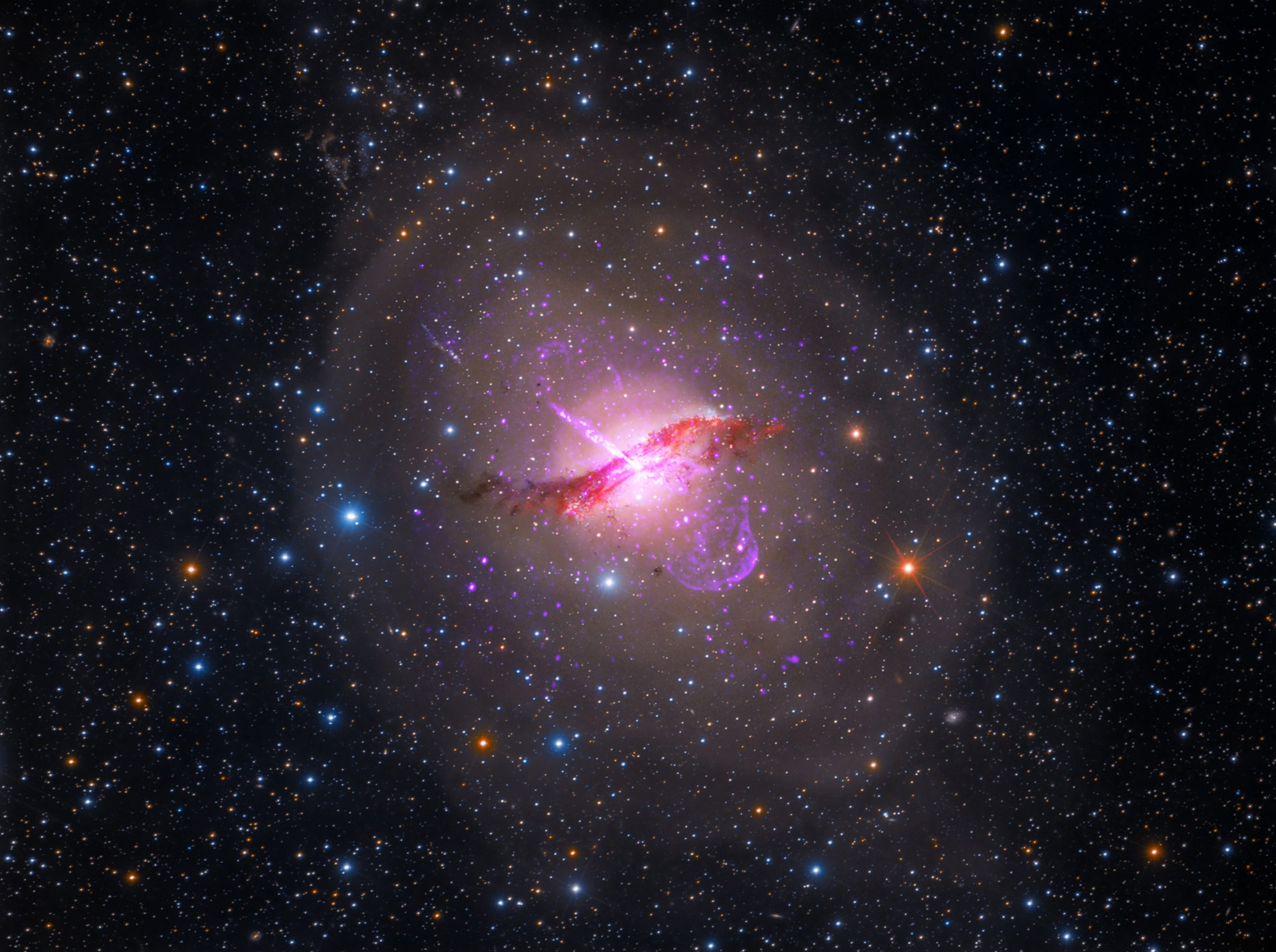
    New Composite Image of Centaurus A
    Centaurus A, the fifth brightest galaxy in the sky, is an active galaxy located approximately 12 million light-years away from Earth. Credit: X-ray: NASA/CXC/SAO; Optical: Rolf Olsen; Infrared: NASA/JPL-Caltech

    This new composite image of Centaurus A was created with X-ray data from NASA’s Chandra X-ray Observatory, infrared data from the Spitzer Space Telescope, and optical data collected by an amateur astronomer.

    Centaurus A is the fifth brightest galaxy in the sky — making it an ideal target for amateur astronomers — and is famous for the dust lane across its middle and a giant jet blasting away from the supermassive black hole at its center. Cen A is an active galaxy about 12 million light-years from Earth.

    This image is part of a “quartet of galaxies” collaboration of professional and amateur astronomers that combines optical data from amateur telescopes with data from the archives of NASA missions. NASA’s Marshall Space Flight Center in Huntsville, Alabama, manages the Chandra program for NASA’s Science Mission Directorate in Washington. The Smithsonian Astrophysical Observatory in Cambridge, Massachusetts, controls Chandra’s science and flight operations.


    Never miss a breakthrough: Join the SciTechDaily newsletter.
    Follow us on Google and Google News.

    Astronomy Chandra X-ray Observatory NASA Spitzer Space Telescope
    Share. Facebook Twitter Pinterest LinkedIn Email Reddit

    Related Articles

    Astronomers Build Incredible 3D Visualization of Exploded Star Using NASA’s Great Observatories [Video]

    New Image of Star Cluster NGC 1333 – Stellar Sparklers That Last

    Amateur Astronomers Combine Data to Reveal New Images of Galaxies

    3D Viewer Offers a New Look at Cassiopeia A

    NASA to Look Deeper Into the Universe than Ever Before

    NASA Data Suggests Black Holes Abundant Among the Earliest Stars

    NASA’s Spitzer Space Telescope Finds Solid Buckyballs in Space

    Hubble Observes Rare Blue Stars in Andromeda’s Core

    Largest Galaxy Cluster in Distant Universe Found by NASA’s Chandra X-ray Observatory

    Leave A Reply Cancel Reply

    • Facebook
    • Twitter
    • Pinterest
    • YouTube

    Don't Miss a Discovery

    Subscribe for the Latest in Science & Tech!

    Trending News

    NASA’s Voyager 1 Is About to Become the First Spacecraft One Light-Day From Earth

    A Woman Who Lived 30,000 Years Ago Is Changing What We Know About Ice Age Europe

    A Rare Radioactive Element Reveals a Hidden Secret About the Heaviest Atoms

    Breakthrough Cancer Treatment Wipes Out Deadly Brain Tumors in Every Mouse Tested

    Something Remarkable Is Happening to Dogs Living Near Chernobyl’s Nuclear Plant

    Hubble Uncovers a Mysterious 93-Billion-Mile Structure Hiding in a Nearby Star System

    Earth’s Oceans Were Slowly Suffocating Millions of Years Before a Devastating Mass Extinction

    Why Are Men Twice As Likely To Develop Parkinson’s? Scientists Discover a Hidden Clue in the Brain

    Follow SciTechDaily
    • Facebook
    • Twitter
    • YouTube
    • Pinterest
    • Newsletter
    • RSS
    SciTech News
    • Biology News
    • Chemistry News
    • Earth News
    • Health News
    • Physics News
    • Science News
    • Space News
    • Technology News
    Recent Posts
    • Kids Who Learn To Swim Early May Have an Unexpected Advantage in School
    • Could Type 2 Diabetes Be Reversed? 14-Year Study Reveals Remarkable Results
    • The Secret to Saving Shellfish From Acidifying Oceans Could Be Hiding in Crushed Shells
    • Earthquake Faults Can Suddenly Become Almost As Fluid as Water, Study Finds
    • Scientists Reveal How a Mysterious Brain Structure Keeps Memories From Fading
    Copyright © 1998 - 2026 SciTechDaily. All Rights Reserved.
    • Science News
    • About
    • Contact
    • Editorial Board
    • Privacy Policy
    • Terms of Use

    Type above and press Enter to search. Press Esc to cancel.