
Close Menu
    Facebook X (Twitter) Instagram
    SciTechDaily
    • Biology
    • Chemistry
    • Earth
    • Health
    • Physics
    • Science
    • Space
    • Technology
    Facebook X (Twitter) Pinterest YouTube RSS
    SciTechDaily
    Home»Earth»New Zealand’s Mount Ruapehu Captured in Stunning Image by Space Station Astronaut
    Earth

    New Zealand’s Mount Ruapehu Captured in Stunning Image by Space Station Astronaut

    By NASA Earth ObservatorySeptember 19, 2022No Comments3 Mins Read
    Facebook Twitter Pinterest Telegram LinkedIn WhatsApp Email Reddit
    Share
    Facebook Twitter LinkedIn Pinterest Telegram Email Reddit
    New Zealand Mount Ruapehu Annotated
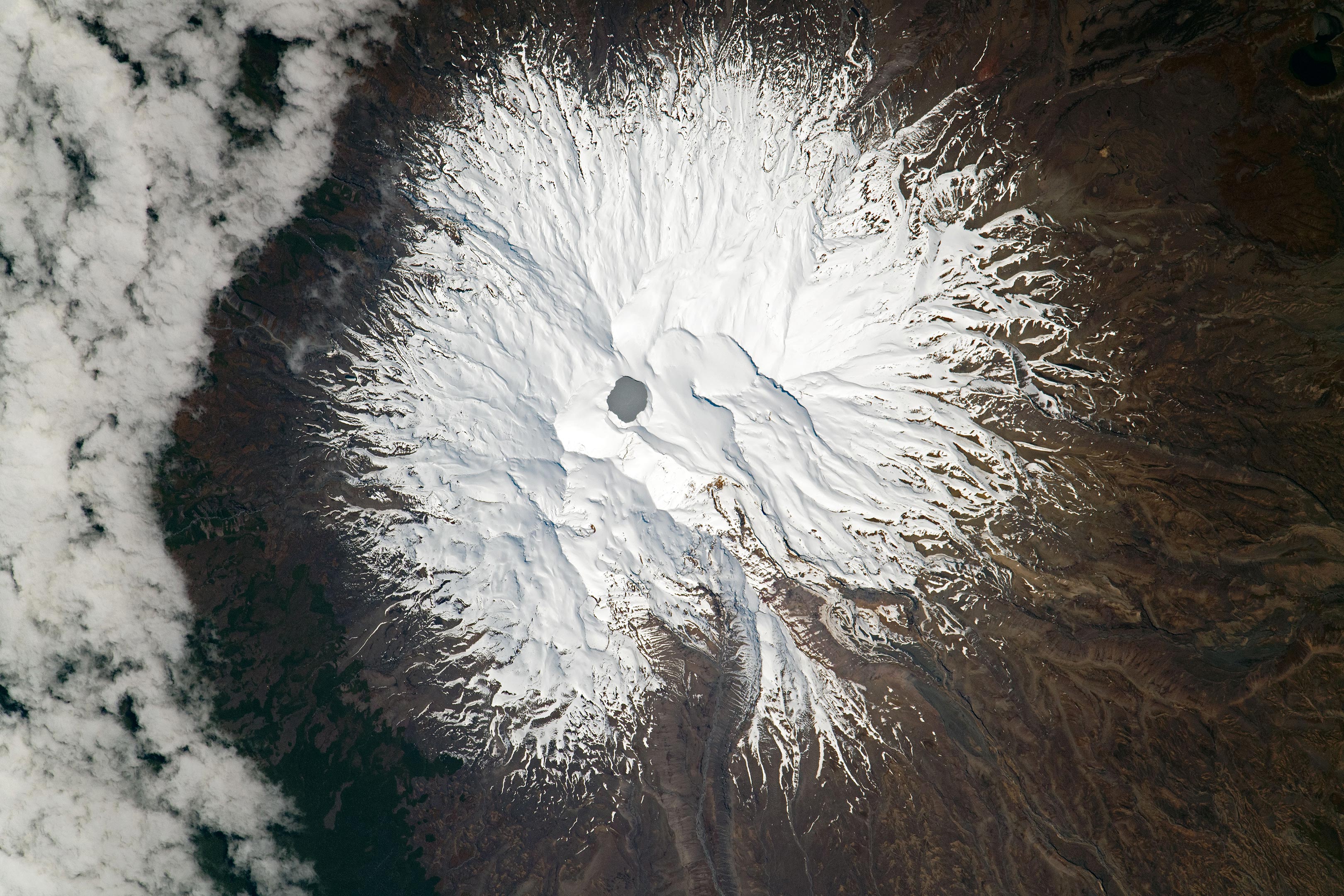
    New Zealand’s Mount Ruapehu. September 23, 2021.

    A lake at the summit of the volcano provides the main clues to what is happening below.

    While passing over the North Island of New Zealand, an astronaut onboard the International Space Station (ISS) took a photograph of Mount Ruapehu, offering a nadir (straight down) view of the mountain and Tongariro National Park. Ruapehu is an active stratovolcano that stands 2,797 meters (9,177 feet) tall at its highest point. It is the tallest mountain on the North Island.

    A stratovolcano, also called a composite volcano, is a tall, conical volcano built up by many layers (strata) of hardened lava, tephra, pumice, and volcanic ash. Unlike shield volcanoes, stratovolcanoes have a steep slope and occasional explosive eruptions.

    They are among the most common types of volcanoes, while shield volcanoes are less common. Three of the most famous examples of stratovolcanoes are Vesuvius in Italy, whose catastrophic eruption in AD 79 buried the Roman cities of Pompeii and Herculaneum; Krakatoa in Indonesia, known for its catastrophic eruption in 1883; and Mount St. Helens in Washington, which had a major eruption in 1980.

    Near the summit lies Crater Lake (Te Wai ā-moe), which is heated by a hydrothermal system within the volcano. The lake remains warm year-round (15 to 45 degrees Celsius / 60 to 110 degrees Fahrenheit) and is highly acidic (pH <1). Lake temperatures usually fluctuate within this temperature range, so prolonged spikes in temperatures can signal impending volcanic activity. Because Crater Lake is the only geologically active part of the stratovolcano that is visible at the surface, changes in lake water temperatures and gas emissions are key to detecting impending volcanic activity.

    Following a period of dormancy dating back to 2011, volcanic unrest was reported at Ruapehu in 2022. Moderate tremors started in March and led volcanologists to issue an alert about heightened volcanic activity. They took periodic lake temperature measurements and sulfur dioxide emission samples to monitor changes. Water temperature peaked around 40 degrees Celsius (104 degrees Fahrenheit) in May 2022, but cooled to 24 degrees Celsius (75 degrees Fahrenheit) in the following months. By July, temperatures and emissions dropped enough to lower the volcanic alert level.

    During the period of unrest, a magmatic intrusion was detected beneath the volcano. The intrusion suggested that magma was rising slowly under the volcano but had halted. As a result of the magma rising, scientists suggested that the likelihood of an eruption may have increased within the Crater Lake basin.

    Astronaut photograph ISS065-E-415587 was acquired on September 23, 2021, with a Nikon D5 digital camera using a focal length of 1150 millimeters. It is provided by the ISS Crew Earth Observations Facility and the Earth Science and Remote Sensing Unit, Johnson Space Center. The image was taken by a member of the Expedition 65 crew. The image has been cropped and enhanced to improve contrast, and lens artifacts have been removed. The International Space Station Program supports the laboratory as part of the ISS National Lab to help astronauts take pictures of Earth that will be of the greatest value to scientists and the public, and to make those images freely available on the Internet.

    Never miss a breakthrough: Join the SciTechDaily newsletter.
    Follow us on Google and Google News.

    Geography NASA NASA Earth Observatory Volcano
    Share. Facebook Twitter Pinterest LinkedIn Email Reddit

    Related Articles

    Island Obliterated: Dramatic Changes at Hunga Tonga-Hunga Ha’apai

    Hunga Tonga Island Obliterated – NASA Satellites Capture Massive Blast

    A Wolf Awakens in the Galápagos Islands at Night

    A Deadly Day on Mount Semeru: Destructive Rivers of Debris on Indonesian Volcano

    Wall of Lava Burns a Path Through La Palma

    Cumbre Vieja Lights Up the Night – Astronaut Photo Captures Volcanic Eruption From Space

    Socked in Stratovolcano: Astronaut on ISS Captures Incredible View of Uninhabited Atlasov Island

    Kilauea’s Lava Lake Returns – Hawaii’s Most Active Volcano Is Erupting Again

    Newberry Volcano Photographed by Astronaut Onboard the International Space Station

    Leave A Reply Cancel Reply

    • Facebook
    • Twitter
    • Pinterest
    • YouTube

    Don't Miss a Discovery

    Subscribe for the Latest in Science & Tech!

    Trending News

    Collapsing Plasma May Hold the Key to Cosmic Magnetism

    This Breakthrough Solar Panel Generates Power From Both Sunlight and Raindrops

    Scientists Uncover New Metabolic Effects Beyond Weight Loss of Mounjaro

    Scientists Discover Cancer Tumors Are “Addicted” to This Common Antioxidant

    1,800 Miles Down: Scientists Uncover Mysterious Movements at the Edge of Earth’s Core

    Scientists Discover Hidden “Good Fats” in Green Rice That Could Transform Nutrition

    Your Child’s Clothes Could Contain Toxic Lead, Study Finds

    Researchers Break a 150-Year-Old Math Law With a Surprising Donut Discovery

    Follow SciTechDaily
    • Facebook
    • Twitter
    • YouTube
    • Pinterest
    • Newsletter
    • RSS
    SciTech News
    • Biology News
    • Chemistry News
    • Earth News
    • Health News
    • Physics News
    • Science News
    • Space News
    • Technology News
    Recent Posts
    • The Mystery of the Notes: Why No One Knows How This 120-Year-Old Song Should Sound
    • Scientists Discover 132-Million-Year-Old Dinosaur Tracks on South Africa’s Coast
    • Scientists Uncover the Secret Ingredient Behind the Spark That May Have Started Life on Earth
    • Natural Oils vs. Antibiotics: The Swine Study That Could Change Farming
    • The Biggest Volcanic Event in Earth’s History Transformed an Entire Oceanic Plate
    Copyright © 1998 - 2026 SciTechDaily. All Rights Reserved.
    • Science News
    • About
    • Contact
    • Editorial Board
    • Privacy Policy
    • Terms of Use

    Type above and press Enter to search. Press Esc to cancel.