
Close Menu
    Facebook X (Twitter) Instagram
    SciTechDaily
    • Biology
    • Chemistry
    • Earth
    • Health
    • Physics
    • Science
    • Space
    • Technology
    Facebook X (Twitter) Pinterest YouTube RSS
    SciTechDaily
    Home»Biology»Newly Developed Technique Predicts Resistance Paths to Cancer Treatment
    Biology

    Newly Developed Technique Predicts Resistance Paths to Cancer Treatment

    By Rosalind D'Eugenio, Yale UniversityFebruary 22, 2018No Comments3 Mins Read
    Facebook Twitter Pinterest Telegram LinkedIn WhatsApp Email Reddit
    Share
    Facebook Twitter LinkedIn Pinterest Telegram Email Reddit
    New Method Predicts Gene Resistance to Cancer Treatments
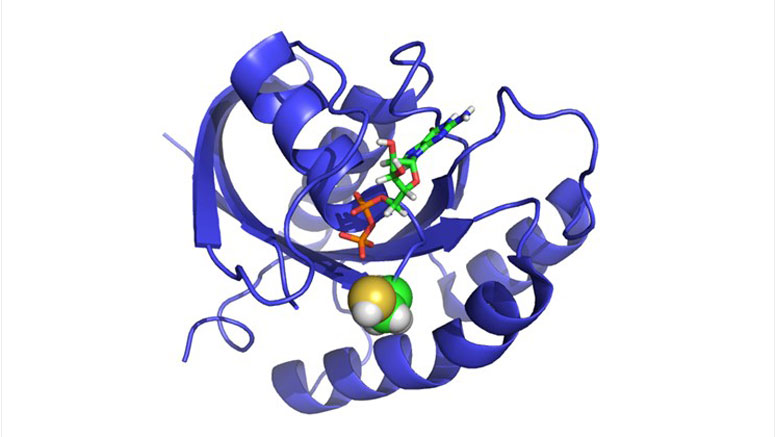
    Crystal Structure of K-Ras G12C. Cancer-causing genes, KRAS, is mutated in approximately 20 percent of all human cancers. New targeted therapies show promise in inhibiting the KRAS G12C variant.

    Yale School of Public Health researchers have developed a new method to predict likely resistance paths to cancer therapeutics, and a methodology to apply it to one of the most frequent cancer-causing genes.

    That gene, KRAS, is mutated in approximately 20 percent of all human cancers and has a major presence in pancreatic, colorectal and lung cancers, can continue to mutate and evolve even after successful chemotherapy, radiation, or drug treatment.

    The study, published in Oncogene, follows up on new targeted therapies that show promise in inhibiting the KRAS G12C variant. Researchers collaborated with Gilead Sciences in Foster City, California to perform sequencing of KRAS-positive lung tumors to determine the prevalence of other oncogenic mutations that could lead to treatment resistance. They were also able to assess new mutations in KRAS itself that could present after the treatment of specific tumors.

    “The treatment initially appears to successfully target a specific mutation in KRAS,” said Jeffrey Townsend, Ph.D., the Elihu Associate Professor of Biostatistics at the Yale School of Public Health and associate professor of ecology and evolutionary biology at Yale. “But, other mutations can appear down the road. By assessing the tumor’s potential to reinvent itself after therapy, our findings inform us on how to combine therapies to intervene before cancer comes back in full force.”

    The researchers focused on getting ahead of potential new tumor development by preventing resistance and inhibiting the KRAS G12C mutation. The study findings offer insight into new mutations likely to resist treatments based on the degree that specific mutations drive the growth and evolution of cancer, and the potential of therapeutic that may be able to stop deviant gene function.

    “Currently, we treat tumors with medication to target and inhibit the tumor as is, but not to prevent the future evolution of tumors into resistant forms,” said Townsend. “We need to develop techniques and drugs that not only target the mutations that we know are there, but that also stop the evolution of the tumor.”

    Using a national database of tumor sequences along with tumor sequences from previous Yale studies, the researchers created a promising evolutionary framework with potential utility in the prediction of pathways to resistance to new targeted therapies as they become available. By judicious combinations of multiple therapies that prevent the emergence of resistant forms, the researchers predict that cancer can eventually be overcome.

    Other YSPH study authors include Vincent L. Cannataro, Ph.D.; Stephen F. Gaffney, Ph.D.; Carly Stender; and Zi-Ming Zhao, Ph.D.

    Reference: “Heterogeneity and mutation in KRAS and associated oncogenes: evaluating the potential for the evolution of resistance to targeting of KRAS G12C” by Vincent L. Cannataro, Stephen G. Gaffney, Carly Stender, Zi-Ming Zhao, Mark Philips, Andrew E. Greenstein and Jeffrey P. Townsend, 16 February 2018, Oncogene.
    DOI: 10.1038/s41388-017-0105-z

    Never miss a breakthrough: Join the SciTechDaily newsletter.
    Follow us on Google and Google News.

    Cancer Genetics Medicine Oncology Yale University
    Share. Facebook Twitter Pinterest LinkedIn Email Reddit

    Related Articles

    Study Shows Tiny DNA Modification Has Big Impact on Tumors

    Yale Research Provides New Clues to How Cancer Cells Spread

    Immune Therapy Drug Prolongs Survival in Advanced Lung Cancer Patients

    A New Paradigm for Cancer Research, One That Focuses on Improving Efficacy and Value

    DNA Mutations Can Be Good in Brain Tumors

    Yale Develops a Faster and Less Expensive Way to Analyze Gene Activity

    New Genome Analysis Reveals Dozens of Cancer Triggers

    BubR1 Protein Could Fight Cancer & Aging

    Cancer-Causing Mutations Disrupt Cells’ Ability to Differentiate

    Leave A Reply Cancel Reply

    • Facebook
    • Twitter
    • Pinterest
    • YouTube

    Don't Miss a Discovery

    Subscribe for the Latest in Science & Tech!

    Trending News

    One of the Universe’s Largest Stars May Be Getting Ready To Explode

    Scientists Discover Enzyme That Could Supercharge Ozempic-Like Weight Loss Drugs

    Popular Sweetener Linked to DNA Damage – “It’s Something You Should Not Be Eating”

    Ancient “Rock” Microbes May Reveal How Complex Life Began

    Researchers Capture Quantum Interference in One of Nature’s Rarest Atoms

    “A Plague Is Upon Us”: The Mass Death That Changed an Ancient City Forever

    Scientists Discover Game-Changing New Way To Treat High Cholesterol

    This Small Change to Your Exercise Routine Could Be the Secret to Living Longer

    Follow SciTechDaily
    • Facebook
    • Twitter
    • YouTube
    • Pinterest
    • Newsletter
    • RSS
    SciTech News
    • Biology News
    • Chemistry News
    • Earth News
    • Health News
    • Physics News
    • Science News
    • Space News
    • Technology News
    Recent Posts
    • Scientists Prove There Are Just Six Degrees of Separation in a Social Network
    • Bee Bacteria Could Fix a Major Flaw in Plant-Based Milk
    • Scientists Discover a Surprising Way To Make Bread Healthier and More Nutritious
    • Natural Compounds Boost Bone Implant Success While Killing Bacteria and Cancer Cells
    • After 60 Years, Scientists Uncover Unexpected Brain Effects of Popular Diabetes Drug Metformin
    Copyright © 1998 - 2026 SciTechDaily. All Rights Reserved.
    • Science News
    • About
    • Contact
    • Editorial Board
    • Privacy Policy
    • Terms of Use

    Type above and press Enter to search. Press Esc to cancel.