
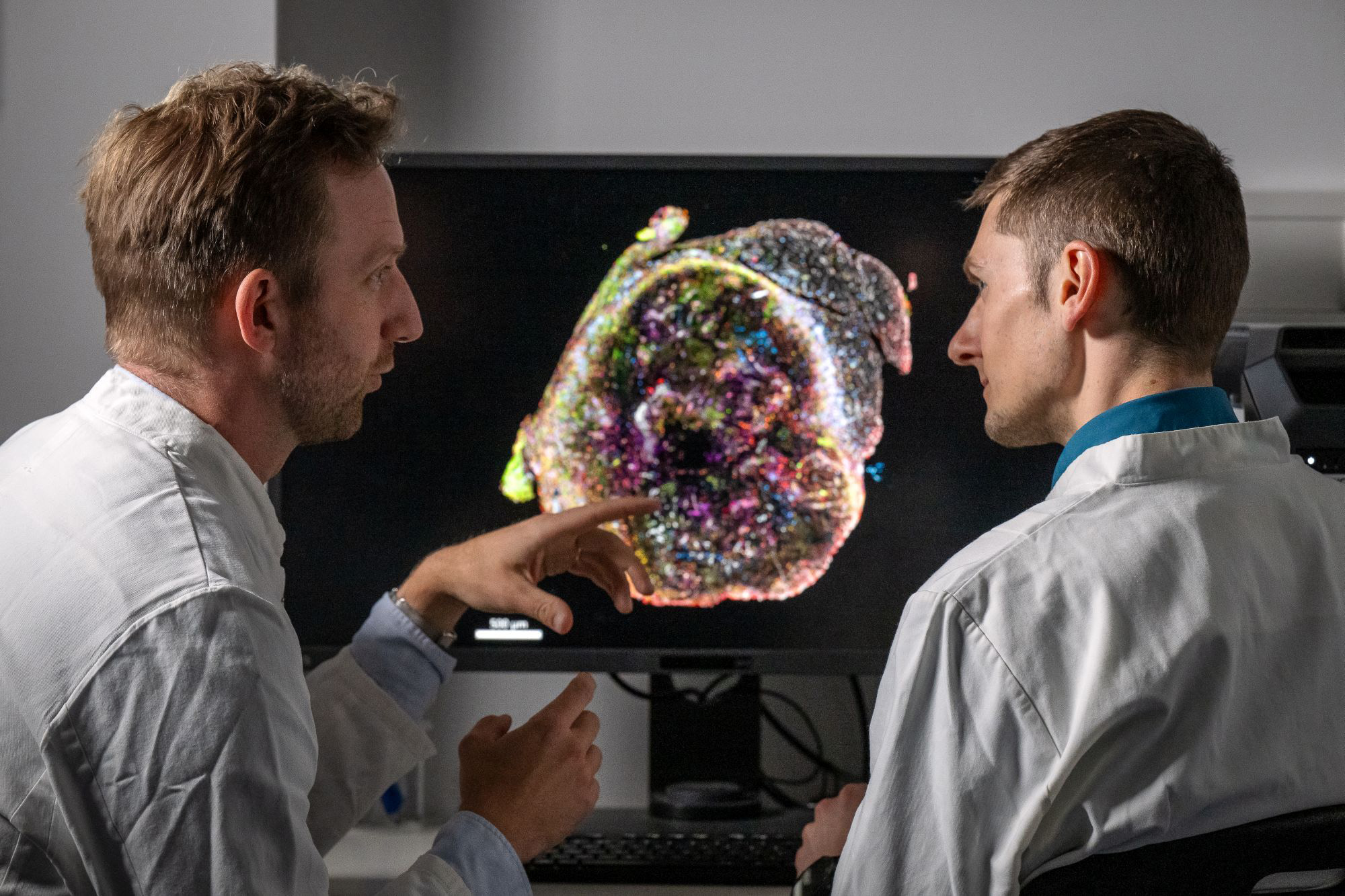
A study revealed that tumors block immune responses by using prostaglandin E2, providing new insights for enhancing cancer immunotherapies.
Tumors actively inhibit the development of immune responses by cytotoxic T cells, crucial for fighting cancer. For the first time, researchers at the Technical University of Munich (TUM) and Ludwig-Maximilians-Universität München (LMU) Hospital have discovered the precise mechanisms behind this. Published in the journal Nature, their study offers insights for novel cancer immunotherapies and could enhance the efficacy of current treatments. A follow-up study, also published in Nature, corroborates these findings.
In cancer, tumors often impair the body’s immune response. For example, they can prevent immune cells from perceiving cancer cells as a threat or render them inactive. Immunotherapies aim to overcome these mechanisms and stimulate the immune system, in particular the T cells. However, such therapies do not work for a large number of cancer patients. Researchers around the world are looking for the causes and new counter-strategies.
Messenger substance stops effector development of T cells in tumors
A team led by Dr. Jan Böttcher, research group leader at the Institute of Molecular Immunology at TUM, and Prof. Sebastian Kobold, Deputy Director of the Department of Clinical Pharmacology at LMU Klinikum München, has now discovered that tumors use a messenger substance to influence immune cells in an early phase of the immune response. Many cancer cells show increased secretion of the messenger substance prostaglandin E2. The researchers were able to show that prostaglandin E2 binds to EP2 and EP4, two receptors on the surface of certain immune cells.
These so-called stem-like T cells migrate from other areas of the body into the tumor. If the immune response is successful, they multiply in the tumor and develop into cytotoxic T cells that attack the cancer. “This whole process is strongly limited when tumors secrete prostaglandin E2 and this factor binds to EP2 and EP4 receptors,” says Jan Böttcher. “The T cell response collapses and the tumor can progress.” If the researchers prevented the interaction of messenger substances and receptors in tumor models, the immune system was able to fight tumors effectively.
Current therapies address a later point of the immune response
“We have discovered a mechanism that influences the body’s immune response in a crucial phase,” says Jan Böttcher. “Many tumors prevent the stem-like T cells from generating cytotoxic T cells in the tumor that could attack the cancer.”
Current immunotherapies aim to prevent the cancer from switching off immune responses at a later phase. Checkpoint inhibitor therapies, for example, aim to release the blockade of fully differentiated cytotoxic T cells and “switch them back on”. Before the dreaded T cell exhaustion sets in, which other researchers are trying to prevent, differentiated T cells must also be present.
Increase the effectiveness of existing therapies
“Current treatment approaches would probably be more effective if the effects of prostaglandin E2 on stem-like T cells is blocked to enable their unhindered differentiation within tumor tissue,” says Sebastian Kobold.
This similarly applies to recent approaches that rely on the protein IL-2 to stimulate T cells. The current study shows that as soon as the prostaglandin E2 binds to the two receptors, T cells can no longer respond to IL-2. “We suspect that even the body’s own IL-2 signals may be sufficient to enable T cells to successfully fight cancer once the effects of prostaglandin E2 have been stopped,” says Sebastian Kobold.
A second study in Nature confirms the results
A second research publication in Nature investigates the effects of prostaglandin E2 on the immune system. For this study, the authors, researchers from the University Hospital of Lausanne, collaborated with the Munich team. In their laboratory, they among other things examined T cells from human tumor tissue. When they blocked the release of prostaglandin E2 in cancer tissue, the T cells showed better expansion and were thus able to fight human cancer cells more effectively.
Search for counter-strategies begins
“We now have a concrete starting point for significantly improving immunotherapies,” says Jan Böttcher. “Researchers around the world must now develop strategies to overcome the tumors’ defense. We need to stop the effects of prostaglandin E2 – either by preventing tumors from producing the molecule or by making immune cells resistant to it.”
References:
“PGE2 limits effector expansion of tumour-infiltrating stem-like CD8+ T cells” by Sebastian B. Lacher, Janina Dörr, Gustavo P. de Almeida, Julian Hönninger, Felix Bayerl, Anna Hirschberger, Anna-Marie Pedde, Philippa Meiser, Lukas Ramsauer, Thomas J. Rudolph, Nadine Spranger, Matteo Morotti, Alizee J. Grimm, Sebastian Jarosch, Arman Oner, Lisa Gregor, Stefanie Lesch, Stefanos Michaelides, Luisa Fertig, Daria Briukhovetska, Lina Majed, Sophia Stock, Dirk H. Busch, Veit R. Buchholz, Percy A. Knolle, Dietmar Zehn, Denarda Dangaj Laniti, Sebastian Kobold and Jan P. Böttcher, 24 April 2024, Nature.
DOI: 10.1038/s41586-024-07254-x
“PGE2 inhibits TIL expansion by disrupting IL-2 signalling and mitochondrial function” by Matteo Morotti, Alizee J. Grimm, Helen Carrasco Hope, Marion Arnaud, Mathieu Desbuisson, Nicolas Rayroux, David Barras, Maria Masid, Baptiste Murgues, Bovannak S. Chap, Marco Ongaro, Ioanna A. Rota, Catherine Ronet, Aspram Minasyan, Johanna Chiffelle, Sebastian B. Lacher, Sara Bobisse, Clément Murgues, Eleonora Ghisoni, Khaoula Ouchen, Ribal Bou Mjahed, Fabrizio Benedetti, Naoill Abdellaoui, Riccardo Turrini, Philippe O. Gannon, Khalil Zaman, Patrice Mathevet, Loic Lelievre, Isaac Crespo, Marcus Conrad, Gregory Verdeil, Lana E. Kandalaft, Julien Dagher, Jesus Corria-Osorio, Marie-Agnes Doucey, Ping-Chih Ho, Alexandre Harari, Nicola Vannini, Jan P. Böttcher, Denarda Dangaj Laniti and George Coukos, 24 April 2024, Nature.
DOI: 10.1038/s41586-024-07352-w
Never miss a breakthrough: Join the SciTechDaily newsletter.
Follow us on Google and Google News.