
Close Menu
    Facebook X (Twitter) Instagram
    SciTechDaily
    • Biology
    • Chemistry
    • Earth
    • Health
    • Physics
    • Science
    • Space
    • Technology
    Facebook X (Twitter) Pinterest YouTube RSS
    SciTechDaily
    Home»Health»Major Cancer Breakthrough Could Help Patients Who Don’t Respond to Immunotherapy
    Health

    Major Cancer Breakthrough Could Help Patients Who Don’t Respond to Immunotherapy

    By University of MontrealMarch 24, 20262 Comments3 Mins Read
    Facebook Twitter Pinterest Telegram LinkedIn WhatsApp Email Reddit
    Share
    Facebook Twitter LinkedIn Pinterest Telegram Email Reddit
    Biological Cancer Cells Rendering
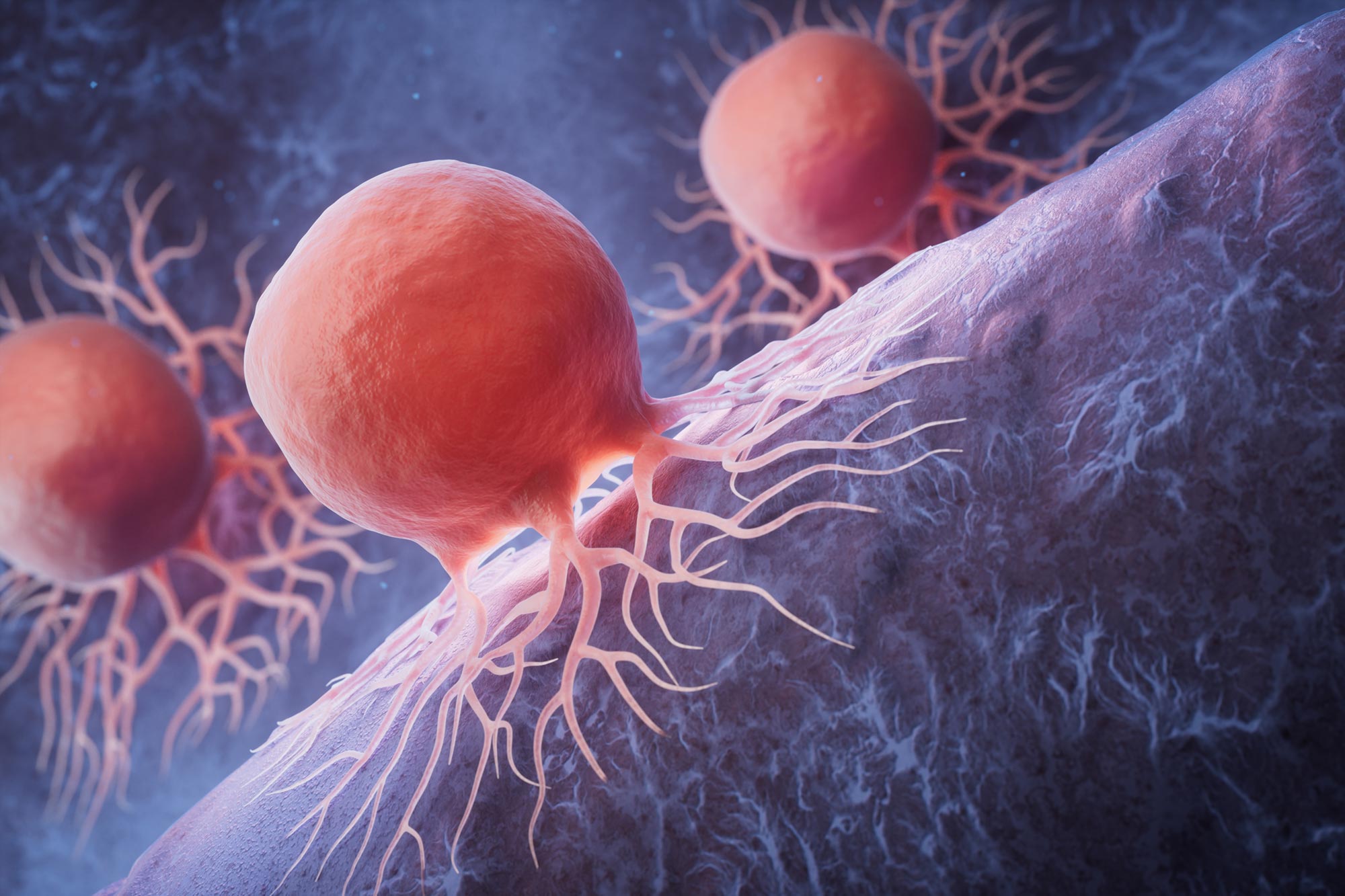
    A newly identified self-regulating molecule may explain why some cancer immunotherapies fall short. Early findings hint that disabling this pathway could unlock stronger, longer-lasting antitumor immunity. Credit: Shutterstock

    Researchers have uncovered a previously hidden “internal brake” on immune cells that limits their ability to fight cancer, independent of tumor influence.

    Scientists developing next-generation cancer immunotherapies have uncovered a hidden weakness inside the immune system itself. A molecule known as SLAMF6, found on T cells, acts as a built-in shutoff switch that limits their ability to destroy tumors. In experiments with mice, researchers were able to block this signal, effectively restoring the cells’ cancer-fighting power.

    The discovery, led by Dr. André Veillette of Université de Montréal at the Montreal Clinical Research Institute (IRCM), appears in Nature and highlights a form of immune suppression that operates independently of tumors.

    An internal brake independent of tumor cells

    Veillette’s team found that SLAMF6 acts differently from other inhibitory molecules. It does not need to interact with tumor cells to suppress the immune response. It self-activates directly on the surface of T cells, sending a stop signal that:

    • weakens their attack capacity;
    • reduces the production of healthy, robust, long-lasting T cells;
    • and accelerates immune exhaustion, a state in which T cells become ineffective against cancer.

    Existing immunotherapies, including PD1 and PDL1 inhibitors, work by removing external “brakes” imposed by tumors. However, many patients either do not respond or eventually stop responding to these treatments.

    To counter this effect, Veillette and his co-researchers developed new monoclonal antibodies that prevent SLAMF6 from interacting with itself. These antibodies have shown remarkable effects that include:

    • more activation of human T cells;
    • higher numbers of resilient immune cells;
    • fewer exhausted T-cells;
    • and strong anti-tumor responses in mice.

    Outperform all other approaches

    According to the researchers, these antibodies outperform all existing strategies aimed at SLAMF6, making them promising candidates for a new class of cancer immunotherapies.

    They may provide an option for patients who no longer benefit from PD1 or PDL1 inhibitors and could be used either on their own or alongside other immune-based treatments.

    The next step is to evaluate safety and effectiveness in early-phase clinical trials involving patients with solid tumors or blood cancers.

    “The discovery made by Dr. Veillette’s team opens the door to a new chapter in immunotherapy,” said IRCM president and scientific director Dr. Jean-François Côté.

    “By identifying an internal brake that had until now gone unrecognized and by developing antibodies capable of neutralizing it, our researchers are offering an innovative solution to the limitations of current treatments,” he said.

    “Rooted in a strategic vision to develop precision therapeutics, this breakthrough brings real hope to many patients and stands as a strong example of the impact of the translational research conducted at the IRCM.”

    Reference: “SLAMF6 as a drug-targetable suppressor of T cell immunity against cancer” by Bin Li, Ming-Chao Zhong, Cristian Camilo Galindo, Jiayu Dou, Jin Qian, Zhenghai Tang, Dominique Davidson and André Veillette, 11 February 2026, Nature.
    DOI: 10.1038/s41586-026-10106-5

    Funding was provided by the Canadian Institutes of Health Research (CIHR), the Terry Fox Research Institute, BioCanRx, Québec’s Ministry of Economy, Innovation and Energy, and the Canadian Foundation for Innovation.

    Never miss a breakthrough: Join the SciTechDaily newsletter.
    Follow us on Google and Google News.

    Cancer Immune System Immunotherapy Oncology University of Montreal
    Share. Facebook Twitter Pinterest LinkedIn Email Reddit

    Related Articles

    Newly Discovered Mechanism Could Significantly Improve Cancer Immunotherapies

    Supercharging the Immune System: UCLA’s Pioneering Vaccine Shows Promise Against Deadly Brain Cancer

    Cancer Immunotherapy Treatment 2.5x More Effective With Mitochondrial DNA Mutations

    Scientists Discover New Way To Boost the Immune System

    Researchers Discover a New Mechanism of Cancer Immune Defense

    Scientists Uncover Potential Explanation for Sex Differences in Pancreatic Cancer

    Faster and Safer: A New Treatment for Bone Marrow Transplant Side Effects

    Novel Treatment Makes Pancreatic Cancer Susceptible to Chemotherapy and Immunotherapy

    Personalized Immunotherapy Could Potentially Be Used To Treat Metastatic Breast Cancer

    2 Comments

    1. Kayden Aaron Waltower on March 25, 2026 5:53 am

      Blossom powerpuff girls

      Reply
    2. Salomon Peralta M. on April 23, 2026 2:31 pm

      This excellent research can improve immunotherapy treatments and save many lives.

      Reply
    Leave A Reply Cancel Reply

    • Facebook
    • Twitter
    • Pinterest
    • YouTube

    Don't Miss a Discovery

    Subscribe for the Latest in Science & Tech!

    Trending News

    Breakthrough Bowel Cancer Trial Leaves Patients Cancer-Free for Nearly 3 Years

    Natural Compound Shows Powerful Potential Against Rheumatoid Arthritis

    100,000-Year-Old Neanderthal Fossils in Poland Reveal Unexpected Genetic Connections

    Simple “Gut Reset” May Prevent Weight Gain After Ozempic or Wegovy

    2.8 Days to Disaster: Scientists Warn Low Earth Orbit Could Suddenly Collapse

    Common Food Compound Shows Surprising Power Against Superbugs

    5 Simple Ways To Remember More and Forget Less

    The Atomic Gap That Could Cost the Semiconductor Industry Billions

    Follow SciTechDaily
    • Facebook
    • Twitter
    • YouTube
    • Pinterest
    • Newsletter
    • RSS
    SciTech News
    • Biology News
    • Chemistry News
    • Earth News
    • Health News
    • Physics News
    • Science News
    • Space News
    • Technology News
    Recent Posts
    • Scientists Print Artificial Neurons That Can Talk to the Brain
    • Bowel and Ovarian Cancers Are Dramatically Rising in Young Adults and Scientists Aren’t Sure Why
    • Alzheimer’s May Begin Decades Earlier Than You Think, New Mayo Clinic Study Finds
    • The Hidden Risk of Taking Breaks From Weight-Loss Drugs Like Ozempic
    • Total Solar Eclipse Made Cities Go Eerily Quiet Beneath the Surface
    Copyright © 1998 - 2026 SciTechDaily. All Rights Reserved.
    • Science News
    • About
    • Contact
    • Editorial Board
    • Privacy Policy
    • Terms of Use

    Type above and press Enter to search. Press Esc to cancel.