
Close Menu
    Facebook X (Twitter) Instagram
    SciTechDaily
    • Biology
    • Chemistry
    • Earth
    • Health
    • Physics
    • Science
    • Space
    • Technology
    Facebook X (Twitter) Pinterest YouTube RSS
    SciTechDaily
    Home»Space»Newly Released Hubble Image of Spiral Galaxy NGC 201
    Space

    Newly Released Hubble Image of Spiral Galaxy NGC 201

    By Hubble Space TelescopeJune 30, 2014No Comments2 Mins Read
    Facebook Twitter Pinterest Telegram LinkedIn WhatsApp Email Reddit
    Share
    Facebook Twitter LinkedIn Pinterest Telegram Email Reddit
    Hubble Views Spiral Galaxy NGC 201
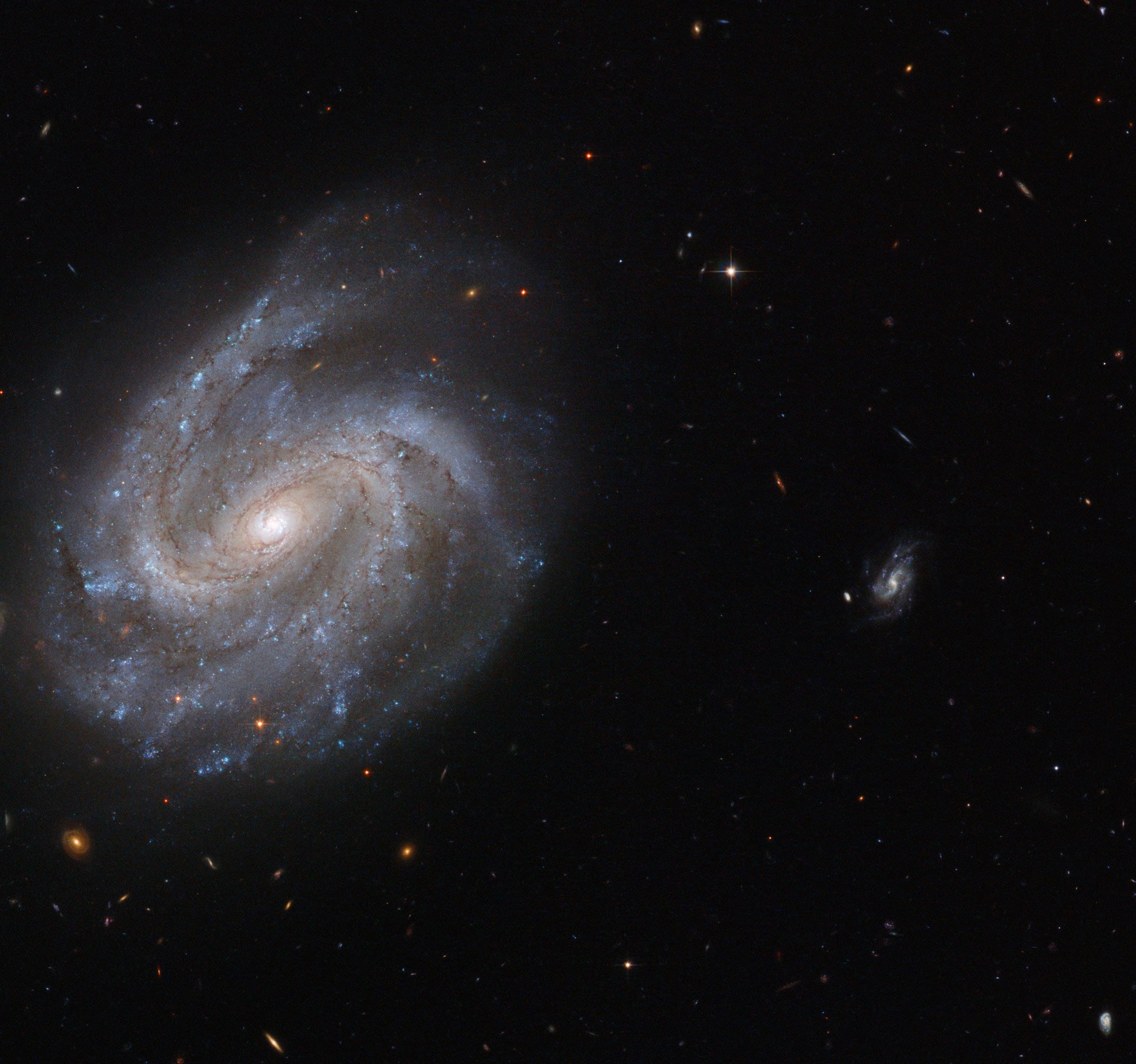
    NGC 201 is a barred spiral galaxy located 200 million light-years away from Earth in the constellation of Cetus, also known as “The Sea Monster.” Credit: ESA/Hubble & NASA; Acknowledgement: Luca Limatola

    This newly released Hubble image shows spiral galaxy NGC 201, which is located 200 million light-years from Earth.

    Discovered by astronomer William Herschel in the late 1700s, NGC 201 is a barred spiral galaxy similar to our own galaxy, the Milky Way. It lies 200 million light-years from Earth in the constellation of Cetus (The Sea Monster), and is invisible to the naked eye.

    This new NASA/ESA Hubble Space Telescope image of NGC 201 shows the galaxy in striking detail, capturing the bright center and the barred spiral arms — arms that do not start directly from the galactic center, but instead seem to be offset and stem from a “bar” of stars cutting through the middle of the galaxy.

    Along with three of its closest galactic neighbors (outside the frame), NGC 201 belongs to a group known as the HCG 7 compact galactic group. Hickson Compact Groups (HCG) are relatively small and isolated systems containing a handful of bright, compact galaxies that lie close to one another. As the galaxies within these groups move closer together they interact strongly, dragging galactic material out into space and distorting the structure of the other group members.

    Eventually, all the galaxies within one HCG will merge together. Simulations have shown that within a billion years, the galaxies within one HCG have merged to form a giant fossil galaxy. It is possible that this is the final fate of all galactic groups.

    A version of this image was submitted to the Hubble’s Hidden Treasures image processing competition by contestant Luca Limatola.


    Never miss a breakthrough: Join the SciTechDaily newsletter.
    Follow us on Google and Google News.

    Astronomy Hubble Space Telescope
    Share. Facebook Twitter Pinterest LinkedIn Email Reddit

    Related Articles

    A Morphing Spiral Galaxy Amongst Friends

    Hubble Views Magnificent Lopsided Galaxy NGC 2276

    Hubble Captures Fantastic Detail of Eponymous Spiral Galaxy NGC 691

    Spectacular Image Captured by Hubble Shows a Strangely Contorted Spiral Galaxy

    A Distant Spiral in Virgo: Extraordinary Detail Seen in a Galaxy 150 Million Light-Years Away From Earth

    Magnetic Monsters: Hubble Tracks Down Location of Mysterious Radio Signals From Intergalactic Space

    A Menagerie of Galaxies: Hubble Captures a Cluster With Galaxies of All Shapes and Sizes

    How Habitable Are Planets That Orbit Red Dwarfs – The Most Common Type of Stars in the Galaxy?

    Cosmic Silver Lining: Hubble Spots V565 Surrounded by Four Prominent Diffraction Spikes

    Leave A Reply Cancel Reply

    • Facebook
    • Twitter
    • Pinterest
    • YouTube

    Don't Miss a Discovery

    Subscribe for the Latest in Science & Tech!

    Trending News

    New Research Challenges Common Exercise Advice for Bone Health

    Avoiding These 3 Health Risks in Midlife Linked to 13 More Years Without Dementia

    Where Were All the Tiny Dinosaurs? Scientists May Finally Have an Answer

    Humanity May Soon Have the Technology To Reach Other Star Systems

    Popular GLP-1 Weight-Loss Drugs Linked to 30% Lower Breast Cancer Risk

    A Deadly Fungus Has Found the Perfect Hiding Place: Human Hair Follicles

    Ancient Neanderthal DNA May Give Some People More Muscle

    How a Low-Fat Vegan Diet Helped People Lose Weight Without Counting Calories

    Follow SciTechDaily
    • Facebook
    • Twitter
    • YouTube
    • Pinterest
    • Newsletter
    • RSS
    SciTech News
    • Biology News
    • Chemistry News
    • Earth News
    • Health News
    • Physics News
    • Science News
    • Space News
    • Technology News
    Recent Posts
    • Your Teeth May Reveal a Surprising Clue About Pancreatic Cancer Survival
    • Childhood Pesticide Exposure May Shift the Timing of Puberty
    • Coffee Drinkers Show Surprising Differences in Fat, Muscle, and Hormones
    • Researchers Discover a Potential Weak Spot in One of the Deadliest Brain Cancers
    • New $60 Blood Test Detects Lung Cancer Without Costly DNA Sequencing
    Copyright © 1998 - 2026 SciTechDaily. All Rights Reserved.
    • Science News
    • About
    • Contact
    • Editorial Board
    • Privacy Policy
    • Terms of Use

    Type above and press Enter to search. Press Esc to cancel.