
Close Menu
    Facebook X (Twitter) Instagram
    SciTechDaily
    • Biology
    • Chemistry
    • Earth
    • Health
    • Physics
    • Science
    • Space
    • Technology
    Facebook X (Twitter) Pinterest YouTube RSS
    SciTechDaily
    Home»Earth»NO2 Levels Rebound in China – Pollution Seen From Space Clear Sign Major Lockdowns Over
    Earth

    NO2 Levels Rebound in China – Pollution Seen From Space Clear Sign Major Lockdowns Over

    By Michael Carlowicz, NASA Earth ObservatoryMay 23, 2020No Comments3 Mins Read
    Facebook Twitter Pinterest Telegram LinkedIn WhatsApp Email Reddit
    Share
    Facebook Twitter LinkedIn Pinterest Telegram Email Reddit
    China NO2 February May 2020
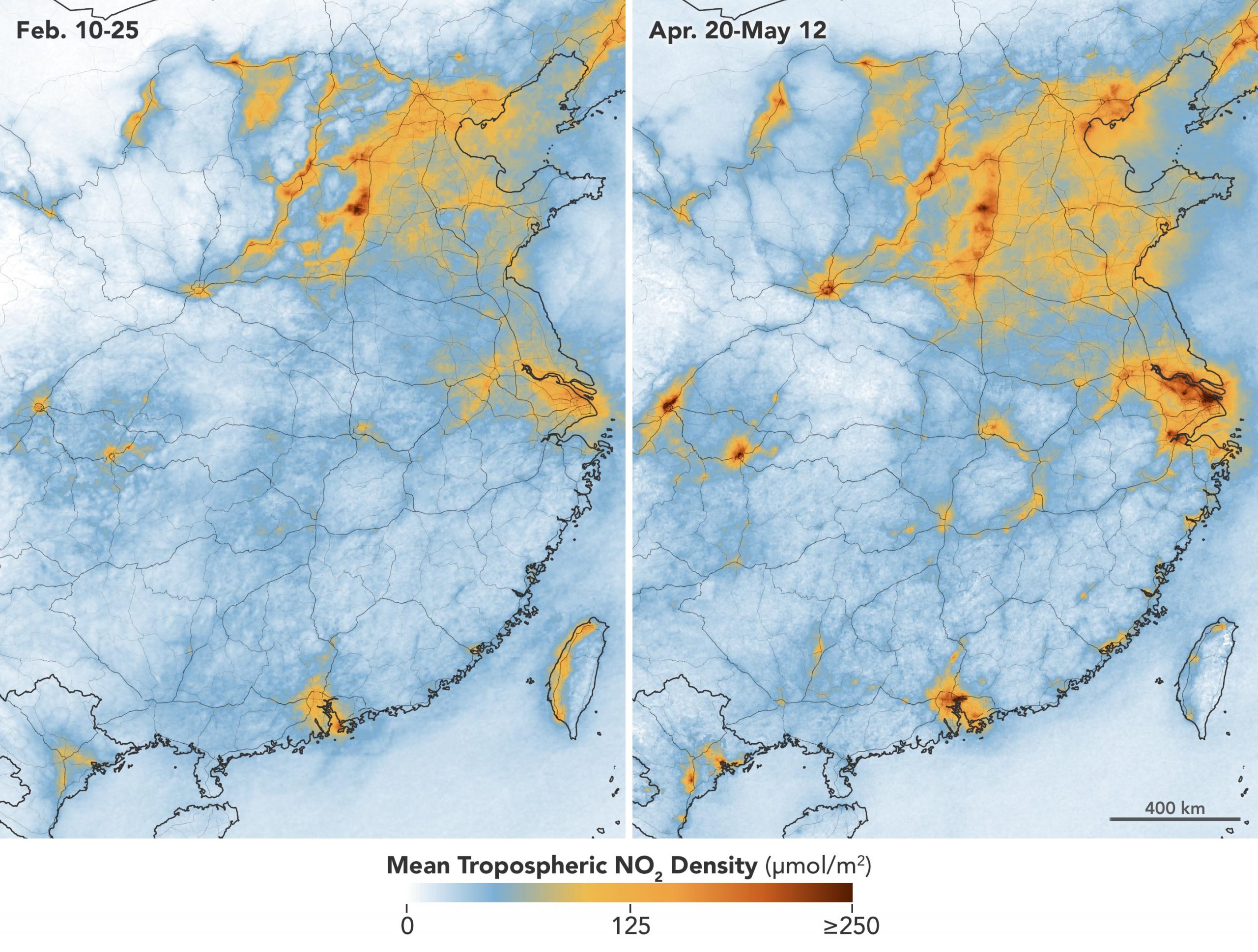
    Nitrogen Dioxide Levels in China February 10 – May 12, 2020.

    In early February 2020, scientists using NASA and European satellites detected a significant reduction in a key air pollutant over China after the country shut down transportation and much of its economy. Three months later, with most coronavirus (COVID-19) lockdowns ending in China and economic activity resuming, the levels of nitrogen dioxide over the country have returned to near normal for this time of year. Scientists expected this rebound.

    Nitrogen dioxide (NO2) is a noxious gas emitted primarily through the burning of gasoline, coal, and diesel fuel by motor vehicles, power plants, and industrial facilities. Near the ground, NO2 can turn into ozone that makes air hazy and unhealthy to breathe. Higher in the atmosphere, it can form acid rain. Scientists in the Atmospheric Chemistry and Dynamics Laboratory at NASA’s Goddard Space Flight Center have been monitoring nitrogen dioxide and other aspects of global air quality for several decades.

    The maps on this page show levels of nitrogen dioxide in the troposphere (the lowest layer of the atmosphere) over China. The maps above show NO2 levels in central and eastern portions of the country from February 10–25 (during the quarantine) and April 20 to May 12 (after restrictions were lifted).

    The map below shows the changes in NO2 levels between the two periods. Orange areas depict increases (mainly in China) since February, while blue areas have seen decreases (such as India and Bangladesh, which were still under quarantine). These data were collected by the Tropospheric Monitoring Instrument (TROPOMI) on the European Commission’s Copernicus Sentinel-5P satellite, built by the European Space Agency.

    Wuhan China NO2 February May 2020
    Change in Nitrogen Dioxide Levels in China February 10 – May 12, 2020.

    The predecessor to TROPOMI, the Ozone Monitoring Instrument (OMI) on NASA’s Aura satellite, has been making comparable measurements since 2004. Though OMI provides lower spatial resolution, it has a longer data record that can put pollution changes into context. OMI has recorded similar trends in 2020 over China as observed with TROPOMI.

    The plot below shows the mean column density of nitrogen dioxide—how much NO2 would be found in a column of air stretching up through the troposphere—over China as measured by OMI in 2020 (red line) and from 2015-2019 (blue lines). Time is measured in days before and after the Lunar New Year began. (In 2020, it started on January 25.) Past research has shown that air pollution in China usually decreases during New Year’s celebrations and then increases slowly in the month after the celebrations are over.

    Nitrogen Dioxide Levels Normal China

    However, in 2020, that post-holiday rebound was delayed by several weeks because of the COVID-19 lockdown. In February and March 2020, NO2 levels over Wuhan and some other Chinese cities were well below long-term trends. By April, levels approached the long-term norm for the season.

    It is important to note that NO2 levels in the atmosphere naturally decline each year from winter to spring and summer, apart from the Lunar New Year pattern. Increasing sunlight shortens the lifetime of the gas near the ground, and changing weather patterns can cause the pollutant to disperse more readily from the air.

    NASA Earth Observatory images by Joshua Stevens, using Ozone Monitoring Instrument (OMI) data from the NASA Goddard Earth Sciences Data and Information Services Center (GES DISC), and modified Copernicus Sentinel 5P data processed by the European Space Agency.

    Never miss a breakthrough: Join the SciTechDaily newsletter.
    Follow us on Google and Google News.

    COVID-19 NASA Earth Observatory Pollution
    Share. Facebook Twitter Pinterest LinkedIn Email Reddit

    Related Articles

    COVID-19 Lockdowns Cut Pollution, but Not All of It – “It Was Kind of a Surprise”

    Sulfur Dioxide Concentrations Drop 40% Over India During COVID-19

    COVID-19’s Remarkable Changes to the Environment Seen From Space [Video]

    Stunning Satellite Images Show Air Pollution Drop in India Following Coronavirus Lockdown

    Dramatic Satellite Images Show Air Pollution Remains Low as Europeans Stay at Home

    Dramatic NASA Satellite Images Show 30% Drop in Air Pollution Over Northeast U.S. From COVID-19 Lockdown

    Satellite Captures Stunning Drop in Pollution Across Europe From COVID-19 Lockdown

    Shocking Video Shows Dramatic Nitrogen Dioxide Drop Over China Due to COVID-19 Lockdown

    Jaw-Dropping Video Shows Nitrogen Dioxide Emissions Drop Over Italy Due to Coronavirus

    Leave A Reply Cancel Reply

    • Facebook
    • Twitter
    • Pinterest
    • YouTube

    Don't Miss a Discovery

    Subscribe for the Latest in Science & Tech!

    Trending News

    New Study Reveals Why Ozempic Works Better for Some People Than Others

    Climate Change Is Altering a Key Greenhouse Gas in a Way Scientists Didn’t Expect

    New Study Suggests Gravitational Waves May Have Created Dark Matter

    Scientists Discover Why the Brain Gets Stuck in Schizophrenia

    Scientists Engineer “Tumor-Eating” Bacteria That Devour Cancer From Within

    Even “Failed” Diets May Deliver Long-Term Health Gains, Study Finds

    NIH Scientists Discover Powerful New Opioid That Relieves Pain Without Dangerous Side Effects

    Collapsing Plasma May Hold the Key to Cosmic Magnetism

    Follow SciTechDaily
    • Facebook
    • Twitter
    • YouTube
    • Pinterest
    • Newsletter
    • RSS
    SciTech News
    • Biology News
    • Chemistry News
    • Earth News
    • Health News
    • Physics News
    • Science News
    • Space News
    • Technology News
    Recent Posts
    • New Study Warns: Asia’s Lifeline Water Source Is Rapidly Draining
    • 100 Times Worse? Thawing Permafrost May Be More Dangerous Than Previously Thought
    • “Pretty Close to Home”: The Hidden Earthquake Threat Beneath Seattle
    • The Surprising Reason You Might Want To Sleep Without a Pillow
    • Household Cats Could Hold the Secret to Fighting Breast Cancer
    Copyright © 1998 - 2026 SciTechDaily. All Rights Reserved.
    • Science News
    • About
    • Contact
    • Editorial Board
    • Privacy Policy
    • Terms of Use

    Type above and press Enter to search. Press Esc to cancel.