
A century of hair samples shows how environmental rules helped slash Americans’ lead exposure by up to 100 times.
Before the Environmental Protection Agency was created in 1970, lead pollution was deeply embedded in everyday American life. Communities were exposed through industrial activity, lead-based paint, aging water pipes, and most heavily through vehicle exhaust. Lead is a powerful neurotoxin that builds up in the body over time and has been linked to developmental problems in children. As environmental regulations took effect, lead levels in the environment dropped sharply, followed by a steep decline in human exposure.
The evidence of that change is still visible today.
It is recorded in human hair.
Hair Samples Reveal a Century of Lead Exposure
University of Utah researchers analyzed hair samples and found dramatic reductions in lead levels stretching back to 1916. These samples provide a long-term biological record of environmental exposure.
“We were able to show through our hair samples what the lead concentrations are before and after the establishment of regulations by the EPA,” said demographer Ken Smith, a distinguished professor emeritus of family and consumer studies. “We have hair samples spanning about 100 years. And back when the regulations were absent, the lead levels were about 100 times higher than they are after the regulations.”
A Useful Metal With Serious Health Costs
The results, published today (February 2) in PNAS, highlight how environmental rules have played a major role in protecting public health. The study also notes that some lead regulations are now being weakened by the Trump administration as part of a broader effort to roll back environmental protections.
“We should not forget the lessons of history. And the lesson is those regulations have been very important,” said co-author Thure Cerling, a distinguished professor of both geology and biology. “Sometimes they seem onerous and mean that industry can’t do exactly what they’d like to do when they want to do it or as quickly as they want to do it. But it’s had really, really positive effects.”
Lead is the heaviest of the heavy metals and, like mercury and arsenic, it accumulates in living tissue and can be toxic even at low doses. Despite these dangers, lead was widely used because of its practical benefits. It was molded into water pipes, mixed into paint to improve durability and color, and added to gasoline to prevent engine knocking.
By the 1970s, the health risks were undeniable, prompting the EPA to begin removing lead from paint, plumbing, gasoline, and other consumer products.
Family History Helps Scientists Track Pollution
To determine whether these policy changes actually reduced human exposure, Smith teamed up with geologist Diego Fernandez and Cerling. Fernandez and Cerling had previously developed methods to reconstruct where animals lived and what they ate by examining the chemical makeup of hair and teeth.
This work expanded on an earlier study supported by the university’s Center on Aging and the National Institutes of Health. That project recruited Utah residents who agreed to provide blood samples and detailed family health records.
For the new research, participants were asked to submit hair samples from the present day as well as from earlier in their lives. Some contributors went even further, uncovering hair preserved in family scrapbooks from parents, grandparents, and even earlier generations. In total, the team collected samples from 48 individuals, creating a rare historical snapshot of lead exposure along Utah’s Wasatch Front, an area once heavily affected by industrial pollution.
“The Utah part of this is so interesting because of the way people keep track of their family history. I don’t know that you could do this in New York or Florida,” said Smith, who led the U’s Pedigree and Population Program at the Huntsman Cancer Center during the research.
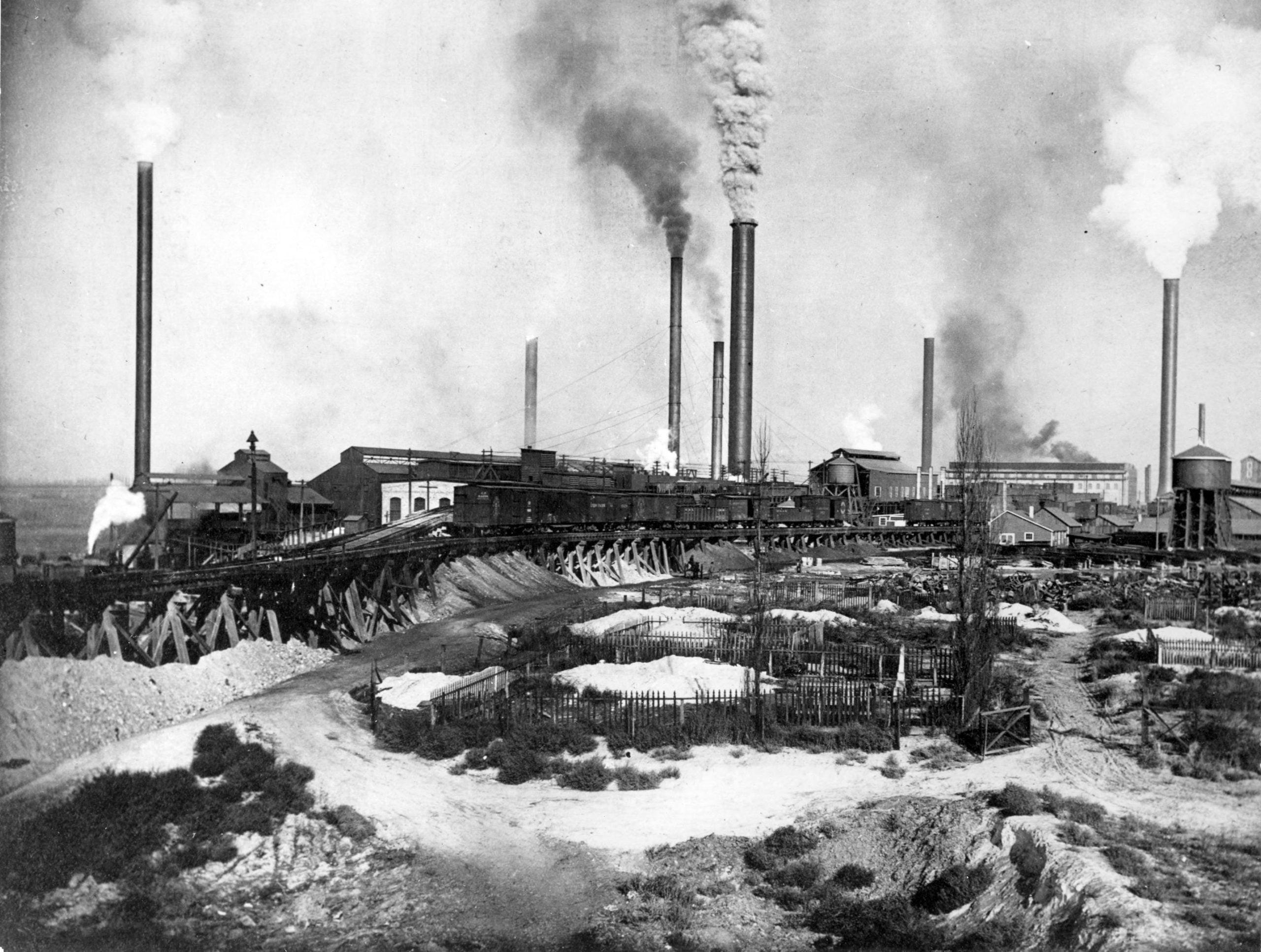
Throughout much of the 20th century, the region supported a large smelting industry, particularly in Midvale and Murray. Most of these facilities closed by the 1970s, around the same period when federal rules sharply restricted the use of lead.
Why Hair Preserves a Chemical Record
The researchers analyzed the hair using mass spectrometry at a facility overseen by Fernandez.
“The surface of the hair is special. We can tell that some elements get concentrated and accumulated in the surface. Lead is one of those. That makes it easier because lead is not lost over time,” said Fernandez, a research professor in the Department of Geology & Geophysics. “Because mass spectrometry is very sensitive, we can do it with one hair strand, though we cannot tell where the lead is in the hair. It’s probably in the surface mostly, but it could be also coming from the blood if that hair was synthesized when there was high lead in the blood.”
Blood samples offer a more precise snapshot of what the body was experiencing at a given moment. Hair, however, is much easier to collect and store, and it provides valuable insight into exposures that occurred decades earlier, even for people who are now elderly or no longer alive.
“It doesn’t really record that internal blood concentration that your brain is seeing, but it tells you about that overall environmental exposure,” Cerling said. “One of the things that we found is that hair records that original value, but then the longer the hair has been exposed to the environment, the higher the lead concentrations are.”
The Fall of Leaded Gas, Written in Hair
The decline in lead found in hair closely matches the reduction of lead in gasoline after the EPA was established under President Richard Nixon.
Before 1970, gasoline typically contained about 2 grams of lead per gallon. While that amount may sound small, the scale of fuel consumption made it enormous. With billions of gallons burned each year, this translated into nearly 2 pounds of lead released into the environment per person annually.
“It’s an enormous amount of lead that’s being put into the environment and quite locally,” Cerling said. “It’s just coming out of the tailpipe, goes up in the air and then it comes down. It’s in the air for a number of days, especially during the inversions that we have and it absorbs into your hair, you breathe it and it goes into your lungs.”
After the 1970s, even as gasoline use continued to rise in the United States, lead levels measured in hair dropped sharply. Concentrations fell from as high as 100 parts per million (ppm) to about 10 ppm by 1990. By 2024, the average level had fallen to less than 1 ppm.
Reference: “Lead in archived hair documents a decline in lead exposure to humans since the establishment of the US Environmental Protection Agency” by Thure E. Cerling, Diego P. Fernandez and Ken R. Smith, 2 February 2026, Proceedings of the National Academy of Sciences.
DOI: 10.1073/pnas.2525498123
The study was supported by the Huntsman Cancer Foundation and the National Cancer Institute through a grant to the Utah Population Database and the University of Utah.
Never miss a breakthrough: Join the SciTechDaily newsletter.
Follow us on Google and Google News.
8 Comments
Very nice!
“But it’s had really, really positive effects.”
Other than a measurable decline in the lead present in human hair, what specific symptoms of chronic pathology have declined or disappeared?
I have no problem with erring on the side of caution, providing there is good reason to be cautious. However, I would like to be certain that an actual problem is being addressed and not simply reducing something correlated with pathologies. My concern is that it is documented that humans can and do excrete lead and mercury when exposed and that there are good reasons to believe that most toxins have a threshold for effects. As Paracelsus observed, “The dose makes the poison.” Thus, the lethality of toxins is based on the amount of toxin that terminates half of the subjects, adjusted for weight of the subject.
It makes sense, as an initial response, to look to completely ban something like lead. You want to act quickly. But you are right that by now we should be trying to understand the evidence for harm at low levels. It is perfectly plausible that there is a low threshold below which lead is not a problem at all.
“The study also notes that some lead regulations are now being weakened by the Trump administration as part of a broader effort to roll back environmental protections.”
The study actually states the current administration has not directly deregulated Pb exposure. What lead regulations are being weakened? The study used terms such as, “may” and “can.” For example:
“While the current administration has not directly deregulated Pb exposure, there are actions it is considering that may allow implementation flexibilities for enforcing the Lead and Copper rule of 2024. This requires most water systems to replace old Pb pipes while also establishing standards that further limit children exposure to Pb.
Dishonest framing of potential regulatory changes does not instill confidence in your reporting. It is no wonder the credibility of science, science journals and science reporting is lower now than it has even been on the past.
hear hear. well stated.
I think that any criticism about reporting should be aimed at the source. SciTechDaily works with press releases it receives, in this case from the University of Utah. It works with what material it receives.
What I find interesting is that the article states “The study was supported by the Huntsman Cancer Foundation and the National Cancer Institute through a grant to the Utah Population Database and the University of Utah.” This article does not mention any association between cancer and lead. What it does say is, “Lead is a powerful neurotoxin that builds up in the body over time and has been linked to developmental problems in children.” Why is U of U spending cancer research money on the detection of a neurotoxin?
One of the things that seems to be happening is that as technology advances, and ever smaller toxin concentrations become detectable, regulatory agencies lower the threshold for acceptable environmental presence, without demonstrating that the micro or nano-doses are actually a threat. It becomes job security to discover ever declining limits of detectability and then imposing monitoring and restrictions on the toxins. I suspect that there are better ways to spend tax money.
Roman legions conquered the World eating food cooked in lead pots. Rome’s decline coincided with the rise in the use of iron and copper pots.
Compare the mental and moral decline that has occurred since the 70’s.
If zinc is a vital mineral, so must be lead.
Too much, or TOO LITTLE of a good thing can have undesirable consequences. Australia had vast areas that appeared to be suitable for grazing. However, introduced sheep were malnourished and sickly. It was found that the soils were deficient in a critical ‘mineral,’ cobalt, and Australia resorted to aerial distribution to solve the problem. All small ruminants are sensitive to dietary deficiencies of several different elements. The fact that there are critical dietary ‘minerals’ that humans must have in their diet, but are usually toxic in high doses, argues against the linear, no-threshold (LNT) hypothesis for chemical toxins, despite being widely adopted for ionizing radiation.