
Using snail shells, Dr. Hong Yan’s team reconstructed the intense “7.20” rainstorm in Zhengzhou, suggesting that such extreme weather events might become more common with global warming.
In July 2021, Zhengzhou, central China was battered by an extreme rainstorm (then named “7.20” super rainstorm). Local daily precipitation was over 300mm and the region experienced nearly an entire year’s worth of precipitation within three days.
Evaluating Historical Weather Events
Although the “7.20” super rainstorm has been regarded as a “once-in-a-millennium” weather event in meteorological statistics, this designation is based on instrumental data from the past hundred years. With rapid global warming, the climate background of extreme weather events is also changing rapidly. Therefore, whether “7.20” super rainstorm is a “once-in-a-millennium” disaster or a new normal event in a warmer world is still a pressing question to clarify. Given this uncertainty, obtaining extreme weather event variability under various climate conditions could greatly improve our understanding of the mechanisms and dynamics of extreme weather events.
However, due to the short time span of most modern instrumental data (no more than 100 years) and the coarse temporal resolution of most current paleoclimate records (ranging from years to millennia), it is fair to say that our knowledge about the intrinsic relationship between extreme weather variability and climate background is almost non-existent up to now.
Paleoclimatic Reconstruction of Extreme Weather
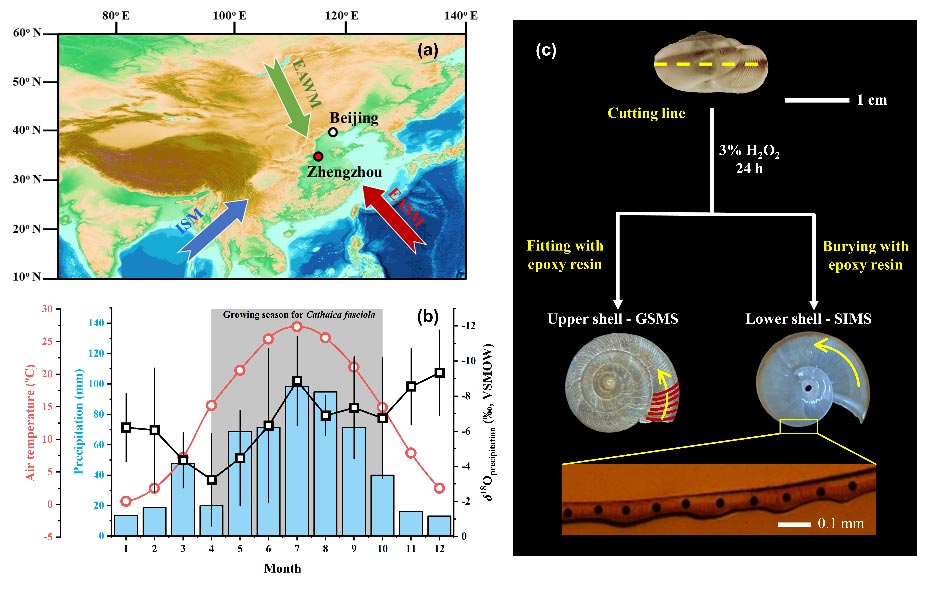
Now, the team of Dr. Hong Yan from the Institute of Earth Environment, Chinese Academy of Sciences has reconstructed the “7.20” super rainstorm using local land snail shells. Four modern land snail shells (Cathaica fasciola) were collected in the Zhengzhou-Xingyang area, one of the centers hit by the “7.20” super rainstorm (Figure 1).
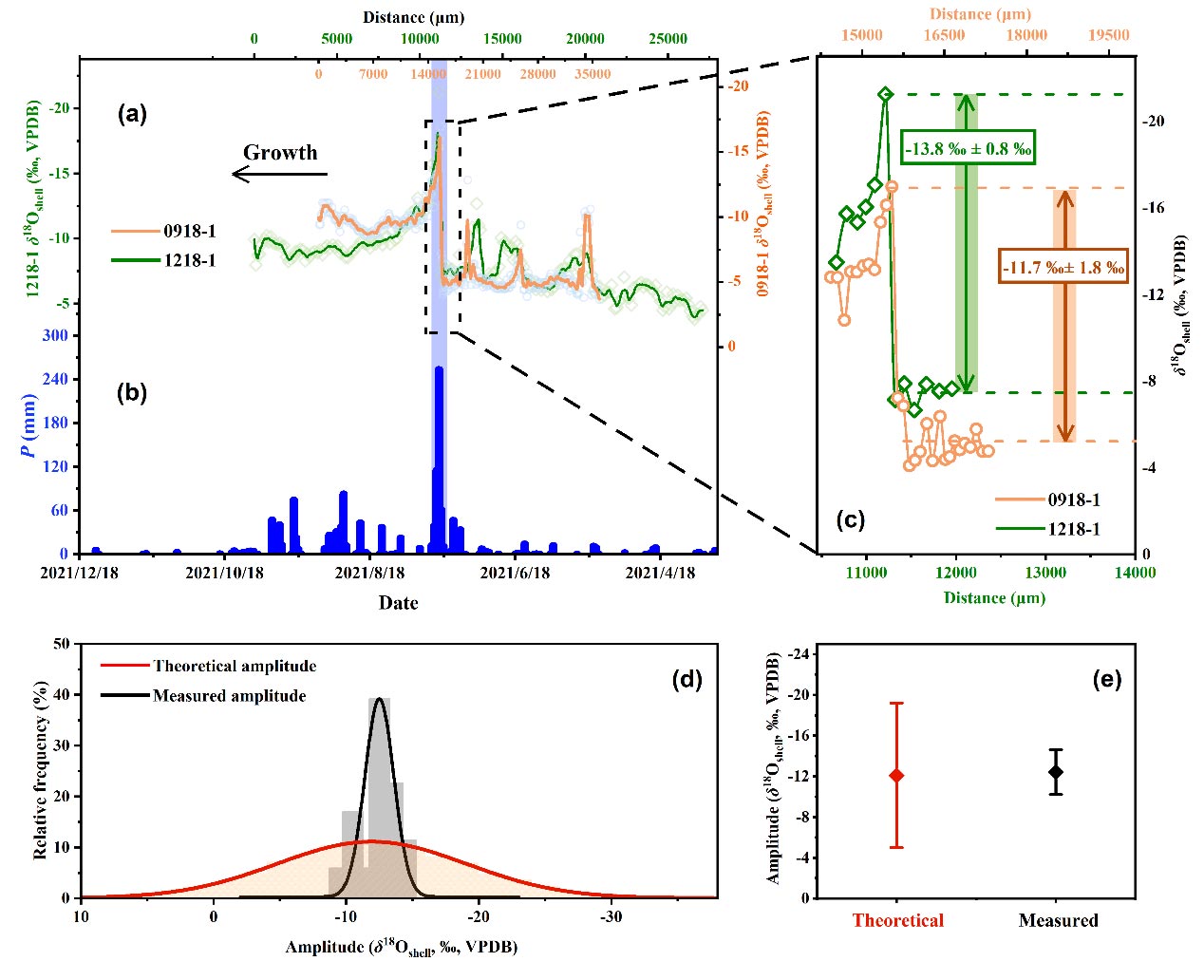
Weekly and daily resolved snail shell δ18O records from June to September of 2021 were obtained by gas-source mass spectrometry (GSMS) and secondary ion mass spectrometry (SIMS). The daily resolved records show a dramatic negative shift between June 18th and September 18th, which is very likely to be related to the “7.20” super rainstorm according to the established age framework. Furthermore, the theoretical precipitation amounts of “7.20” super rainstorm calculated by the amplitude of this δ18O shift using the flux balance model closely approaches the precipitation amount observed at the local meteorological station (Figure 2).
Implications for Climate Science
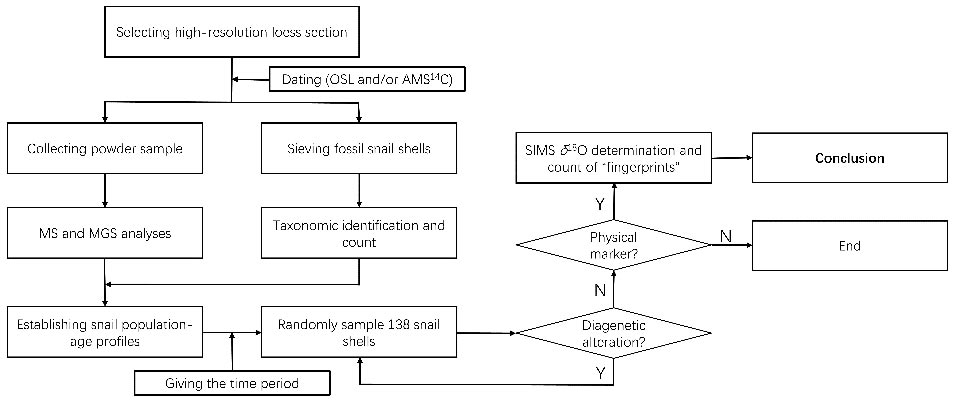
This study is the first to demonstrate that terrestrial synoptic scale extreme rainstorm events can be quantitively reconstructed by a natural paleoclimate archive. The application of current work on fossil snail shells in the older sedimentary strata may offer an opportunity to reveal the frequency and intensity of synoptic scale extreme rainstorms under different climate backgrounds (Figure 3). These paleoweather information sources may prove to be essential sources to help understand the law and dynamics of regional extreme rainstorms, especially for calibrating numerical climatic models and predicting the future trend of extreme rainstorms.
Reference: “Quantitative reconstruction of a single super rainstorm using daily resolved δ18O of land snail shells” by Guozhen Wang, Jibao Dong, Tao Han, Chengcheng Liu, Fan Luo, Haotian Yang, Miaohong He, Guoqiang Tang, Nanyu Zhao, Qian Zhang, Gang Xue, John Dodson, Qiuli Li and Hong Yan, 18 April 2024, Science Bulletin.
DOI: 10.1016/j.scib.2024.04.037
Never miss a breakthrough: Join the SciTechDaily newsletter.
Follow us on Google and Google News.