
Close Menu
    Facebook X (Twitter) Instagram
    SciTechDaily
    • Biology
    • Chemistry
    • Earth
    • Health
    • Physics
    • Science
    • Space
    • Technology
    Facebook X (Twitter) Pinterest YouTube RSS
    SciTechDaily
    Home»Earth»Once in a Thousand Years: The Increasing Threat of Mega Floods in Southern China
    Earth

    Once in a Thousand Years: The Increasing Threat of Mega Floods in Southern China

    By Science China PressFebruary 26, 2024No Comments4 Mins Read
    Facebook Twitter Pinterest Telegram LinkedIn WhatsApp Email Reddit
    Share
    Facebook Twitter LinkedIn Pinterest Telegram Email Reddit
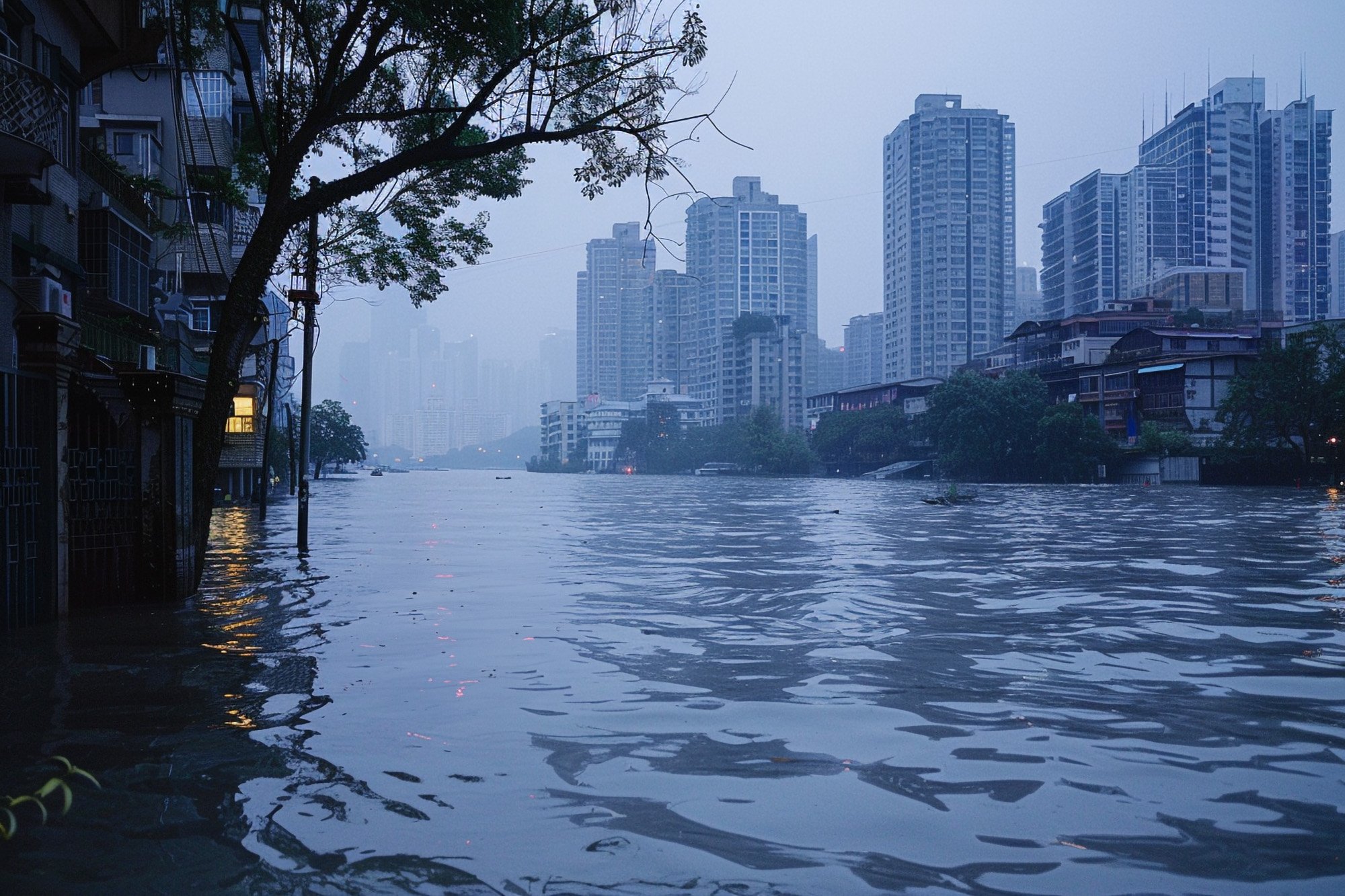
    Flooding Guangzhou
    The Pearl River basin has experienced significant flooding events linked to climatic changes, with notable impacts on local ecology, agriculture, and society. A new study highlights the importance of understanding historical flood patterns to predict future events and their potential effects on human civilization.

    River flooding is among the most catastrophic disasters worldwide. The Pearl River, the longest watercourse in southern China, particularly its lower reach with dense population and economic activity, has been identified as one of the world’s most vulnerable regions to flood exposure. Over 400 major flood disasters have been documented in the Pearl River basin over the past 2000 years. Model simulations even suggest that future surface warming can enhance both the intensity and frequency of extreme rainfall in this region.

    “The past is a clue to the future.” To assess the prediction of future catastrophic floods, an international team of scientists led by Prof. Zhuo Zheng (School of Earth Sciences and Engineering, Sun Yat-sen University) and Prof. Yongqiang Zong (Guangzhou Institute of Geography, Guangdong Academy of Sciences) sought to reconstruct the detailed history of great floods in the lower Pearl River area.
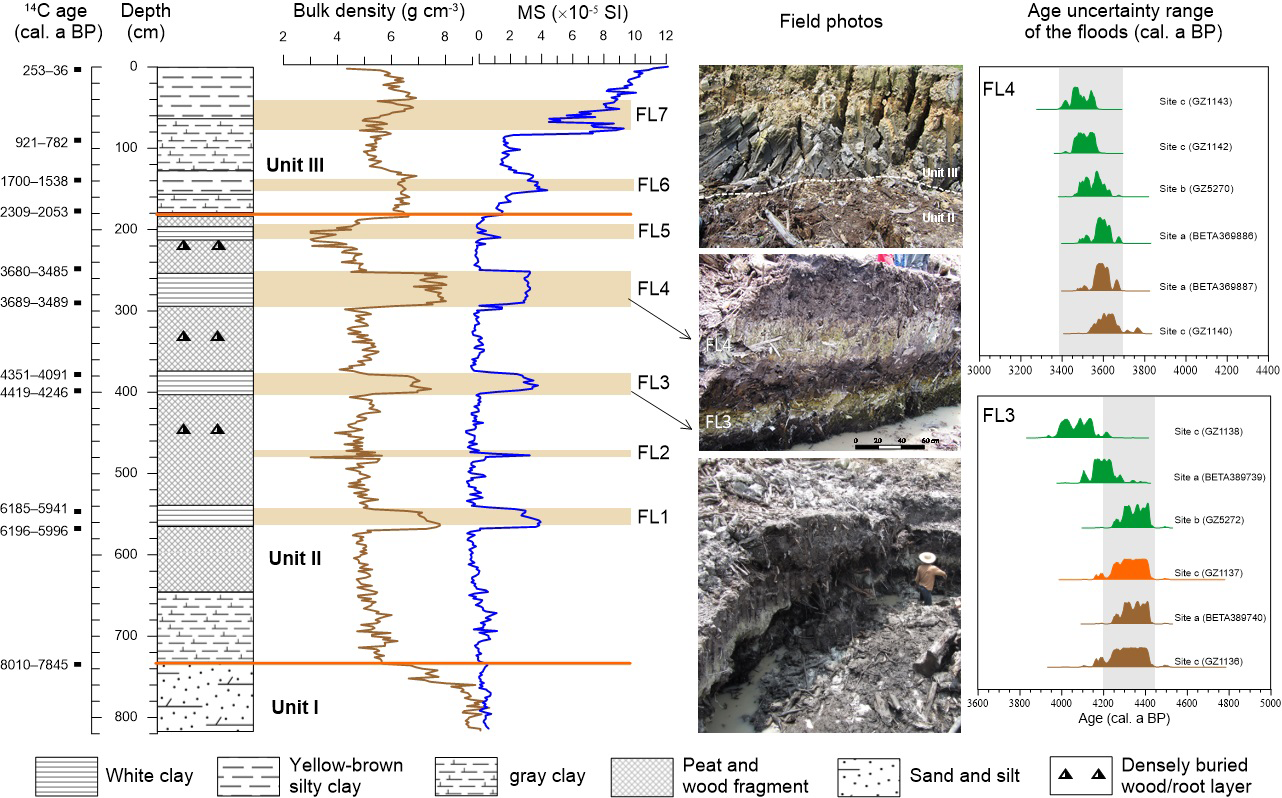
    Sedimentary Characteristics, Bulk Density and Magnetic Susceptibility of Profile BS01
    The identified clay flood layers are numbered from FL1–FL7 upward. Credit: Science China Press

    Study Findings on Flood Deposits

    In this study, Chen et al. report a series of white to gray clay layers interbedded sharply with wood-rich peat sediments in Gaoyao County, west of the Pearl River Delta. Through profile correlation, sedimentary analysis, and radiocarbon dating, they identified seven clay layers with 5–40 cm thickness during the past 6000 years, interpreted as flood deposits (designated FL1–FL7).
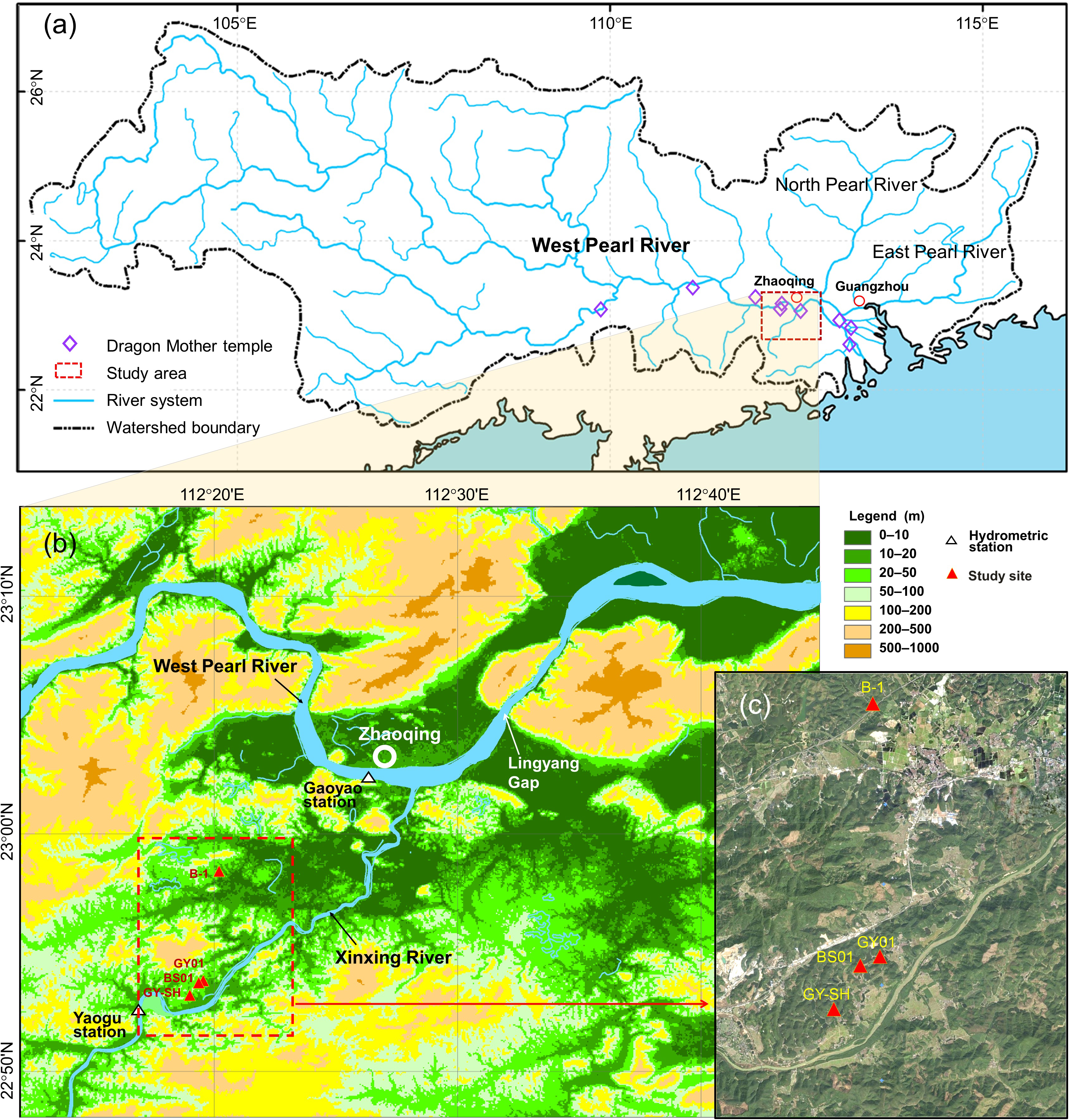
    Location Map of the Pearl River System and the Study Area
    The study sites locate at the riparian hill land terrace near the river channel. Credit: Science China Press

    These floods had an average return period of approximately 855 years, with an average water volume estimated to be 1.5 times that of the once-in-a-century Yimao Flood in July 1915.

    Climatic Influences on Historical Flooding

    The climatic background related to these great floods was found to match the period of weakening Asian summer monsoons, indicated by Chinese speleothem δ18O data and higher El Niño-Southern Oscillation (ENSO) frequency. Therefore, the authors suggest that the past great floods in the lower Pearl River area were possibly triggered by a weak summer monsoon and enhanced ENSO.
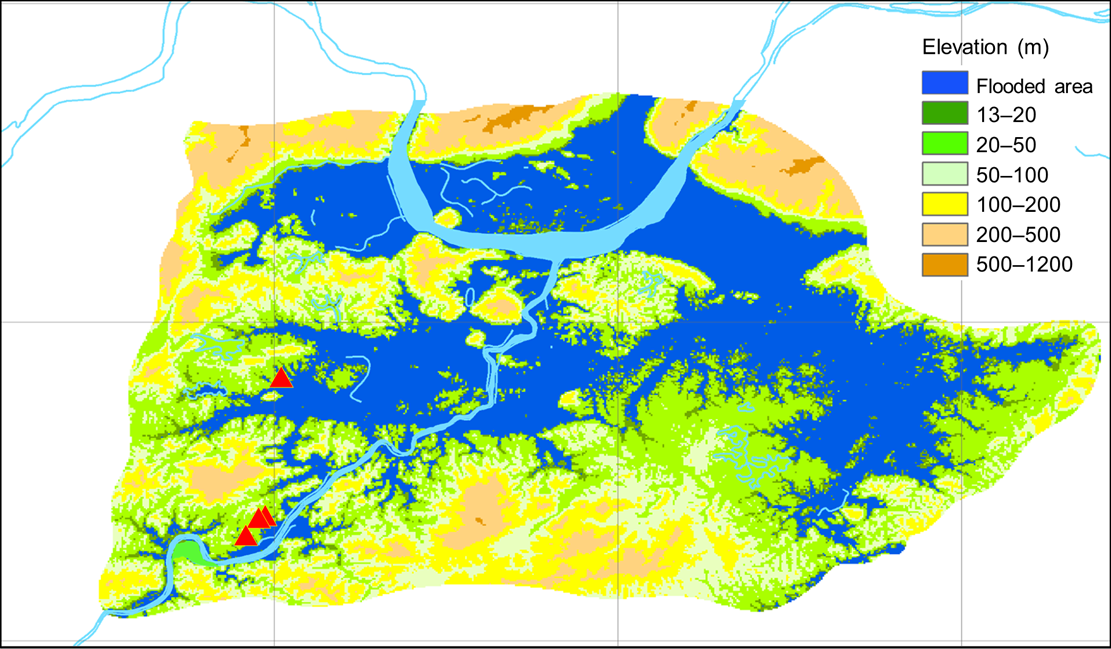
    Estimated Flooded Areas Using SRTM Datasets
    Inundated areas of the Holocene paleomegafloods based on the average water level (16 m). Credit: Science China Press

    This mechanism is increasingly evidenced by modern meteorological observations, implying that southern China may face a significant risk of once-in-a-thousand-year flooding during periods of intensified ENSO amplitude in the future.

    Impact of Flooding on Local Ecology and Agriculture

    Pollen analysis was performed to reveal the tale of the Glyptostrobus wetland forest. The Glyptostrobus tree gradually expanded since 5200 years ago, becoming dominant after the FL3 event at 4200 years ago. However, the wetland forest abruptly declined at 2100 years ago, coinciding with the rise of intensive rice agriculture. Natural wetlands were ideal places for early paddy field rice farming, and the disappearance of Glyptostrobus in Southeast Asia serves as an intriguing example of how early rice agriculture could impact certain endemic species.
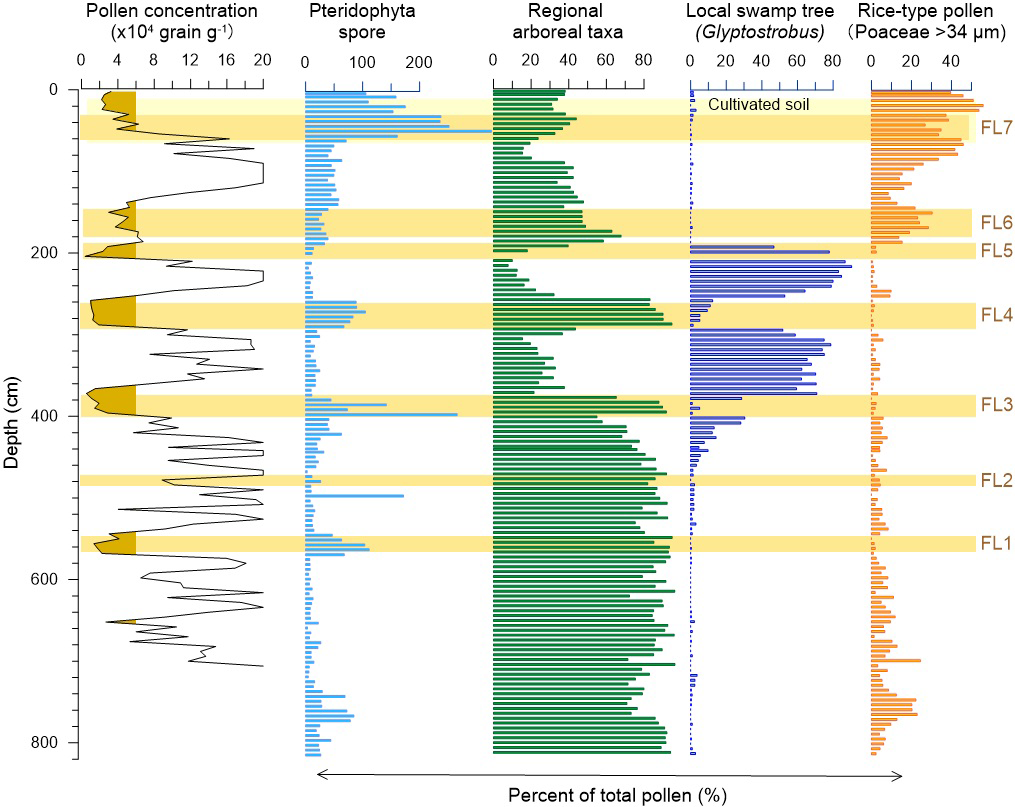
    Pollen Diagram and Flood Events From Study Site BS01
    The Glyptostrobus wetland ecosystem could quickly recover after the floods. Credit: Science China Press

    Furthermore, the earliest FL1 flood coincided with the demise of the Dingsishan culture approximately 6000 years ago. Megafloods also play a central role in some famous tales or old legends. In the Pearl River basin, the Dragon Mother is worshipped as a water god and protector against floods. The origin of this worship culture can be traced back to the Qin Dynasty (221–207 BC), fitting chronologically with the FL5 flood. The FL7 flood coincided with the beginning of levee construction along the local West Pearl River during the Song Dynasty. The authors argue that the recurrent megafloods had noticeable impacts on the development of local civilization and human society in the Pearl River basin.

    Reference: “Holocene millennial-scale megaflood events point to ENSO-driven extreme climate changes” by Cong Chen, Yanwei Zheng, Zhuo Zheng, Yongqiang Zong, Kangyou Huang, Barry V. Rolett, Huanhuan Peng, Xiao Zhang, Yongjie Tang, Qiuchi Wan, Guifang Zhang and Rachid Chedaddi, 24 October 2023, Science China Earth Sciences.
    DOI: 10.1007/s11430-023-1196-y

    Never miss a breakthrough: Join the SciTechDaily newsletter.
    Follow us on Google and Google News.

    Rain Science China Press
    Share. Facebook Twitter Pinterest LinkedIn Email Reddit

    Related Articles

    Seismic Mystery Solved: Scientists Find a New State of Matter at Earth’s Center

    Rain in the Sahara? Climate Change Could Turn the Desert Wetter than Ever

    Geologists Decode Earth’s 4.4-Billion-Year-Old “Missing” Crust

    Tectonic Surprise: Mantle Upwelling, Not Mega-Crunch, Built Earth’s “Roof of the World”

    17 Years Later, Scientists May Have Finally Solved the Extreme Rainfall Mystery

    Antarctica’s Astonishing Rebound: Ice Sheet Grows for the First Time in Decades

    Atmospheric Rivers Unleashed: How Climate Change Is Reshaping West Coast Storms

    Revolutionary Satellite Tech Unveils Secrets of Nepal’s Devastating Floods

    Climate Chaos: New Research Suggests That Humans Are Causing Unprecedented Shifts in Rainfall Patterns

    Leave A Reply Cancel Reply

    • Facebook
    • Twitter
    • Pinterest
    • YouTube

    Don't Miss a Discovery

    Subscribe for the Latest in Science & Tech!

    Trending News

    289-Million-Year-Old Reptile Mummy Reveals Origin of Human Breathing System

    New Brain Discovery Challenges Long-Held Theory of Teenage Brain Development

    Scientists Discover Plants “Scream” – We Just Couldn’t Hear Them Until Now

    Scientists Discover a Surprising Reason Intermittent Fasting Extends Life

    This Simple Fruit Wash Could Make Produce Safer and Last Days Longer

    Scientists Say Adding This Unusual Seafood to Your Diet Could Reverse Signs of Aging

    Scientists Say a Hidden Structure May Exist Inside Earth’s Core

    Doctors Surprised by the Power of a Simple Drug Against Colon Cancer

    Follow SciTechDaily
    • Facebook
    • Twitter
    • YouTube
    • Pinterest
    • Newsletter
    • RSS
    SciTech News
    • Biology News
    • Chemistry News
    • Earth News
    • Health News
    • Physics News
    • Science News
    • Space News
    • Technology News
    Recent Posts
    • This Simple Trick Can Boost Your Workout Endurance by 20%
    • This Popular Supplement May Interfere With Cancer Treatment, Scientists Warn
    • Scientists Propose Radical New Way To Detect Alien Life – Without Traditional Biosignatures
    • Scientists Just Discovered Light Can Actually Slow Plant Growth
    • Scientists Finally Solved One of Water’s Biggest Mysteries
    Copyright © 1998 - 2026 SciTechDaily. All Rights Reserved.
    • Science News
    • About
    • Contact
    • Editorial Board
    • Privacy Policy
    • Terms of Use

    Type above and press Enter to search. Press Esc to cancel.