
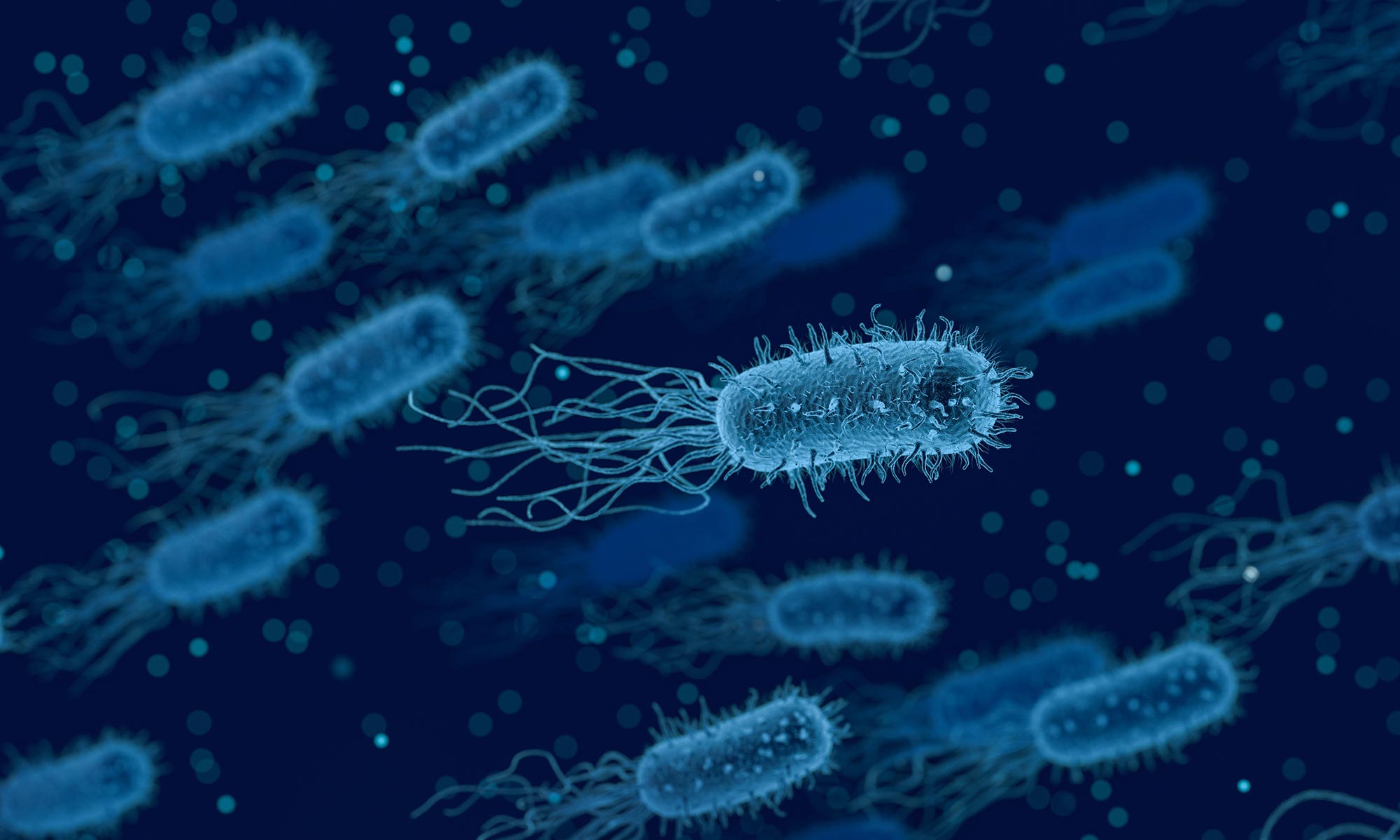
A decades-old mystery of how natural antimicrobial predatory bacteria are able to recognize and kill other bacteria may have been solved, according to new research.
In a study published in Nature Microbiology, researchers from the University of Birmingham and the University of Nottingham have discovered how natural antimicrobial predatory bacteria, called Bdellovibrio bacterivorous, produce fiber-like proteins on their surface to ensnare prey.
This discovery may enable scientists to use these predators to target and kill problematic bacteria that cause issues in healthcare, food spoilage, and the environment.
Professor of Structural Biology at the University of Birmingham, Andrew Lovering said: “Since the 1960s Bdellovibrio bacterivorous has been known to hunt and kill other bacteria by entering the target cells and eating them from the inside before later bursting out. The question that had stumped scientists was ‘how do these cells make a firm attachment when we know how varied their bacterial targets are?’”
Professor Lovering and Professor Liz Sockett, from the School of Life Sciences at the University of Nottingham, have been collaborating in this field for almost 15 years. The breakthrough came when Sam Greenwood an undergraduate student, and Asmaa Al-Bayati, a PhD student in the Sockett lab, discovered that the Bdellovibrio predators lay down a sturdy vesicle (a “pinched-off” part of the predator cell envelope) when invading their prey.
The Role of Vesicles and Fibers in Predation
Professor Liz Sockett explained: “The vesicle creates a kind of airlock or keyhole allowing Bdellovibrio entry into the prey cell. We were then able to isolate this vesicle from the dead prey, which is a first in this field. The vesicle was analyzed to reveal the tools used during the preceding event of predator/prey contact. We thought of it as a bit like a locksmith leaving the pick, or key, as evidence, in the keyhole.
“By looking at the vesicle contents, we discovered that because Bdellovibrio doesn’t know which bacteria it will meet, it deploys a range of similar prey recognition molecules on its surface, creating lots of different ‘keys’ to ‘unlock’ lots of different types of prey.”
Advanced Molecular Analysis and Engineering
The researchers then undertook an individual analysis of the molecules, demonstrating that they form long fibers, approximately ten times longer than common globular proteins. This allows them to operate at a distance and “feel” for prey in the vicinity.
In total, the labs counted 21 different fibers. Researchers Dr Simon Caulton, Dr Carey Lambert, and Dr Jess Tyson worked on how they operated both at the cellular and molecular levels. They were supported by fibre gene-engineering by Paul Radford and Rob Till. The team then began to attempt linking a particular fiber to a particular prey-surface molecule. Finding out which fiber matches which prey, could enable an engineering approach that sees bespoke predators targeting different types of bacteria.
Professor Lovering continued: “Because the predator strain we were looking at comes from the soil it has a wide killing range, making this identification of these fiber and prey pairs very difficult. However, on the fifth attempt to find the partners we discovered a chemical signature on the outside of prey bacteria that was a tight fit to the fibre tip. This is the first time a feature of Bdellovibrio has been matched to prey selection.”
Scientists in this field will now be able to use these discoveries to ask which fiber set is used by the different predators they study and potentially attribute these to specific prey. Improving understanding of these predator bacteria could enable their usage as antibiotics, to kill bacteria that degrade food, or ones that are harmful to the environment.
Professor Lovering concluded: “We know that these bacteria can be helpful, and by fully understanding how they operate and find their prey, it opens up a world of new discoveries and possibilities.”
Reference: “Bdellovibrio bacteriovorus uses chimeric fibre proteins to recognize and invade a broad range of bacterial hosts” by Simon G. Caulton, Carey Lambert, Jess Tyson, Paul Radford, Asmaa Al-Bayati, Samuel Greenwood, Emma J. Banks, Callum Clark, Rob Till, Elisabete Pires, R. Elizabeth Sockett and Andrew L. Lovering, 4 January 2024, Nature Microbiology.
DOI: 10.1038/s41564-023-01552-2
The research was funded by the Wellcome Trust Investigator in Science Award (209437/Z/17/Z).
Never miss a breakthrough: Join the SciTechDaily newsletter.
Follow us on Google and Google News.