
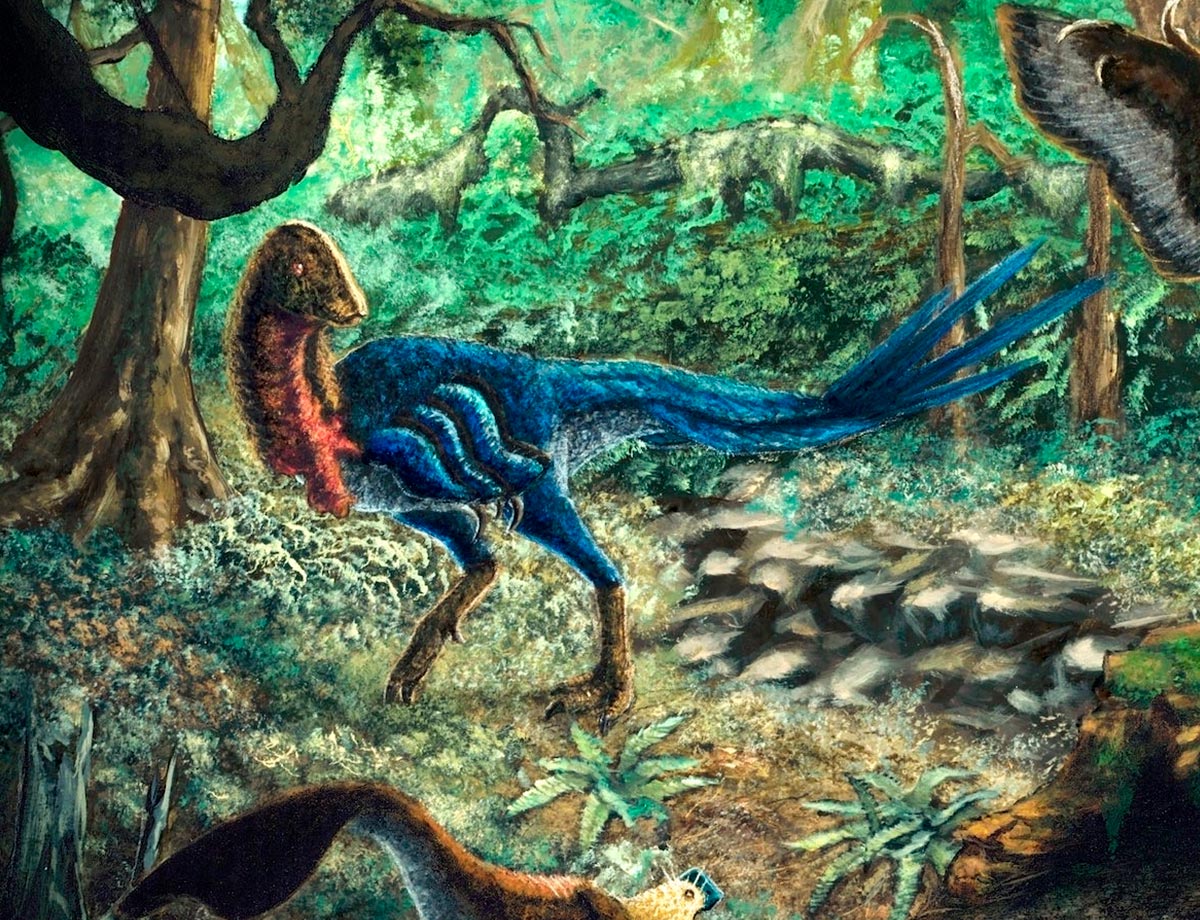
New findings, including the discovery of Eoneophron infernalis, suggest that dinosaurs, particularly caenagnathids, were not declining in diversity before the asteroid impact, contradicting earlier theories of their vulnerability.
Were dinosaurs already on their way out when an asteroid hit Earth 66 million years ago, ending the Cretaceous, the geologic period that started about 145 million years ago? It’s a question that has vexed paleontologists like us for more than 40 years.
In the late 1970s, debate began about whether dinosaurs were at their peak or in decline before their big extinction. Scientists at that time noted that while dinosaur diversity seemed to have increased in the geologic stage that spanned 83.6 million to 71.2 million years ago, the number of species on the scene seemed to decrease during the last few million years of the Cretaceous. Some researchers have interpreted this pattern to mean that the asteroid that struck the Gulf of Mexico was simply the final blow for an already vulnerable group of animals.
However, others have argued that what looks like a decrease in the diversity of dinosaurs may be an artifact of how hard it is to accurately count them. Fossil formations might preserve different dinosaurs more or less often based on factors like their favored environment and how easily their bodies fossilized there. The accessibility of various outcrops could influence what kinds of fossils researchers have so far found. These biases are a problem because fossils are what paleontologists must rely on to conclusively answer how healthy dinosaur populations were when the asteroid hit.
At that crucial moment, what was really happening to dinosaur diversity? Discovery, identification and description of new dinosaurs provide vital clues. This is where our work comes in. Close examination of what we’d thought was a juvenile specimen of an already-known species of dinosaur from this time period revealed that it was actually part of an adult from a completely new species.
Our work focusing on the life stage of our specimen demonstrates that dinosaur diversity may not have been declining before the asteroid hit, but rather that there are more species from this time period yet to be discovered – potentially even through reclassification of fossils already in museum collections.
Clues Inside the Bones of a Birdlike Dinosaur
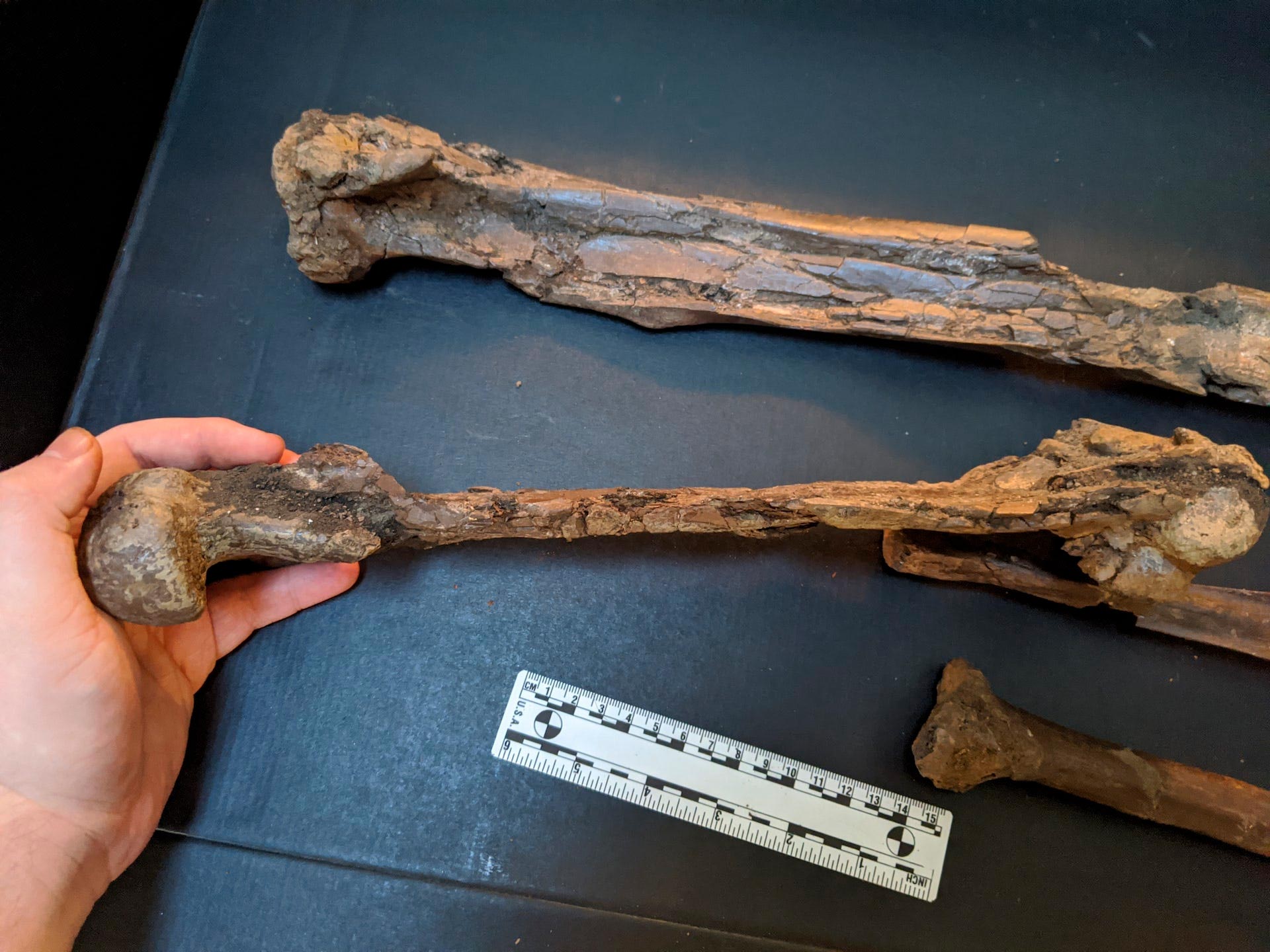
Our new study focused on four hindlimb bones – a femur, a tibia, and two metatarsals. They were unearthed in South Dakota, in rocks of the Hell Creek Formation, and date to the final 2 million years of the Cretaceous.
When we first examined the bones, we identified them as belonging to a family of dinosaurs known as the caenagnathids – a group of birdlike dinosaurs that had toothless beaks, long legs and short tails. Direct fossil and inferred evidence indicates these dinosaurs were covered in complex feathers, much like modern birds.
The only known species of caenagnathid from this time and region was Anzu, sometimes called the “chicken from Hell.” Covered in feathers and sporting wings and a toothless beak, Anzu was between roughly 450 and 750 pounds (200 and 340 kilograms). Despite its fearsome nickname, though, its diet is a matter of debate. It was likely an omnivore, eating both plant material and small animals.
Because our specimen was significantly smaller than Anzu, we simply assumed it was a juvenile. We chalked up the anatomical differences we noticed to its juvenile status and smaller size – and figured the animal would have changed had it continued to grow. Anzu specimens are rare, and no definite juveniles have been published in the scientific literature, so we were excited to potentially learn more about how it grew and changed throughout its lifetime by looking inside its bones.
Just like with a tree’s rings, bone records rings called lines of arrested growth. Each annual line represents part of a year when the animal’s growth slowed. They would tell us how old this animal was, and how fast or slow it was growing.
We cut through the middle of three of the bones so that we could microscopically examine the internal anatomy of the cross-sections. What we saw completely uprooted our initial assumptions.
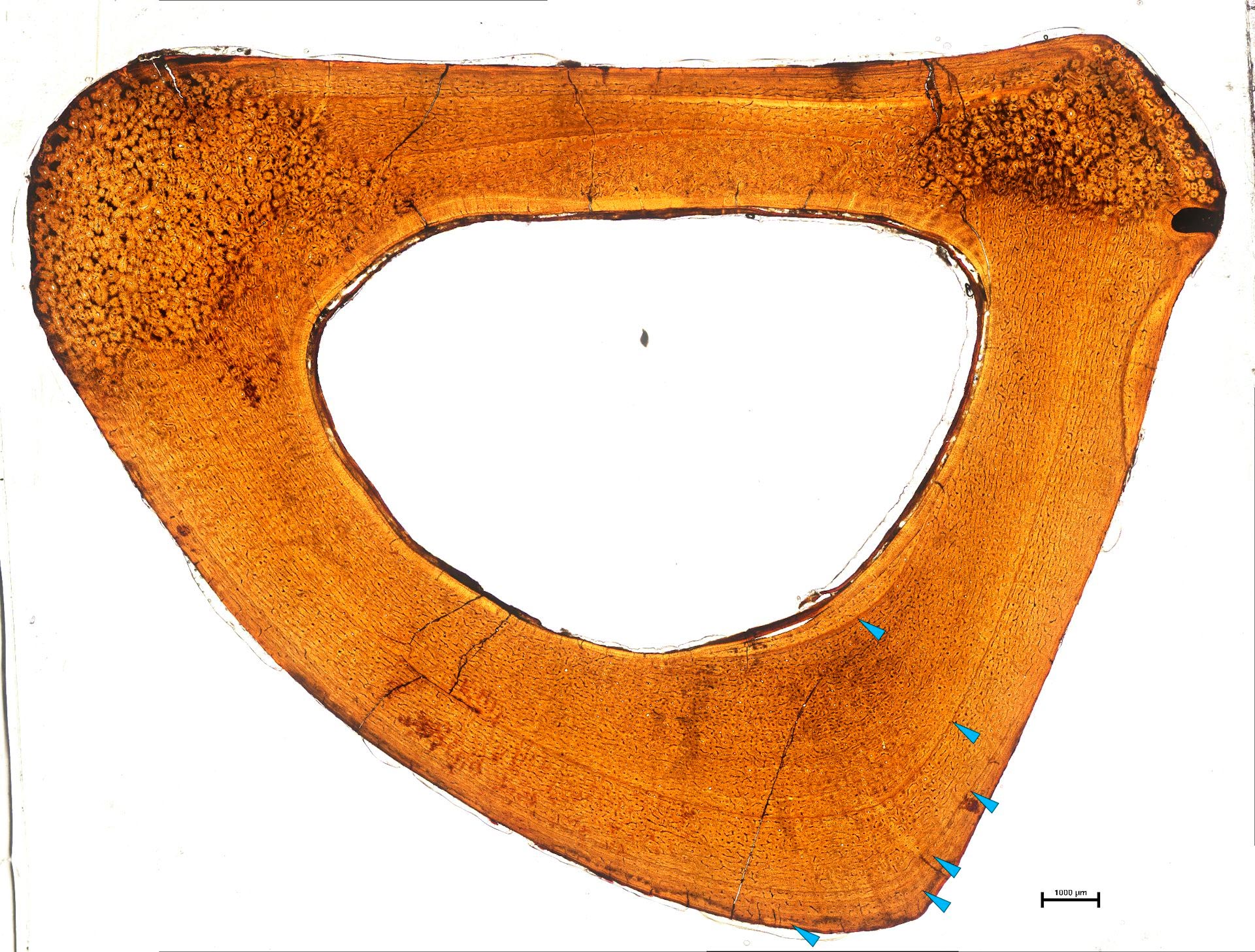
In a juvenile, we would expect lines of arrested growth in the bone to be widely spaced, indicating rapid growth, with even spacing between the lines from the inside to the outside surface of the bone. Here, we saw that the later lines were spaced progressively closer together, indicating that this animal’s growth had slowed and it was nearly at its adult size.
This was no juvenile. Instead, it was an adult of an entirely new species, which we dubbed Eoneophron infernalis. The name means “Pharaoh’s dawn chicken from Hell,” referencing the nickname of its larger cousin Anzu. Traits unique to this species include ankle bones fused to the tibia, and a well-developed ridge on one of its foot bones. These weren’t features a young Anzu would outgrow, but rather unique aspects of the smaller Eoneophron.
Expanding the Caenagnathid Family Tree
With this new evidence, we started making thorough comparisons with other members of the family to determine where Eoneophron infernalis fit within the group.
It also inspired us to reexamine other bones previously believed to be Anzu, as we now knew that more caenagnathid dinosaurs lived in western North America during that time. One specimen, a partial foot bone smaller than our new specimen, appeared distinct from both Anzu and Eoneophron. Where once there was one “chicken from Hell,” now there were two, and evidence for a third: one large (Anzu), weighing as much as a grizzly bear, one medium (Eoneophron), humanlike in weight, and one small and yet unnamed, close in size to a German shepherd.
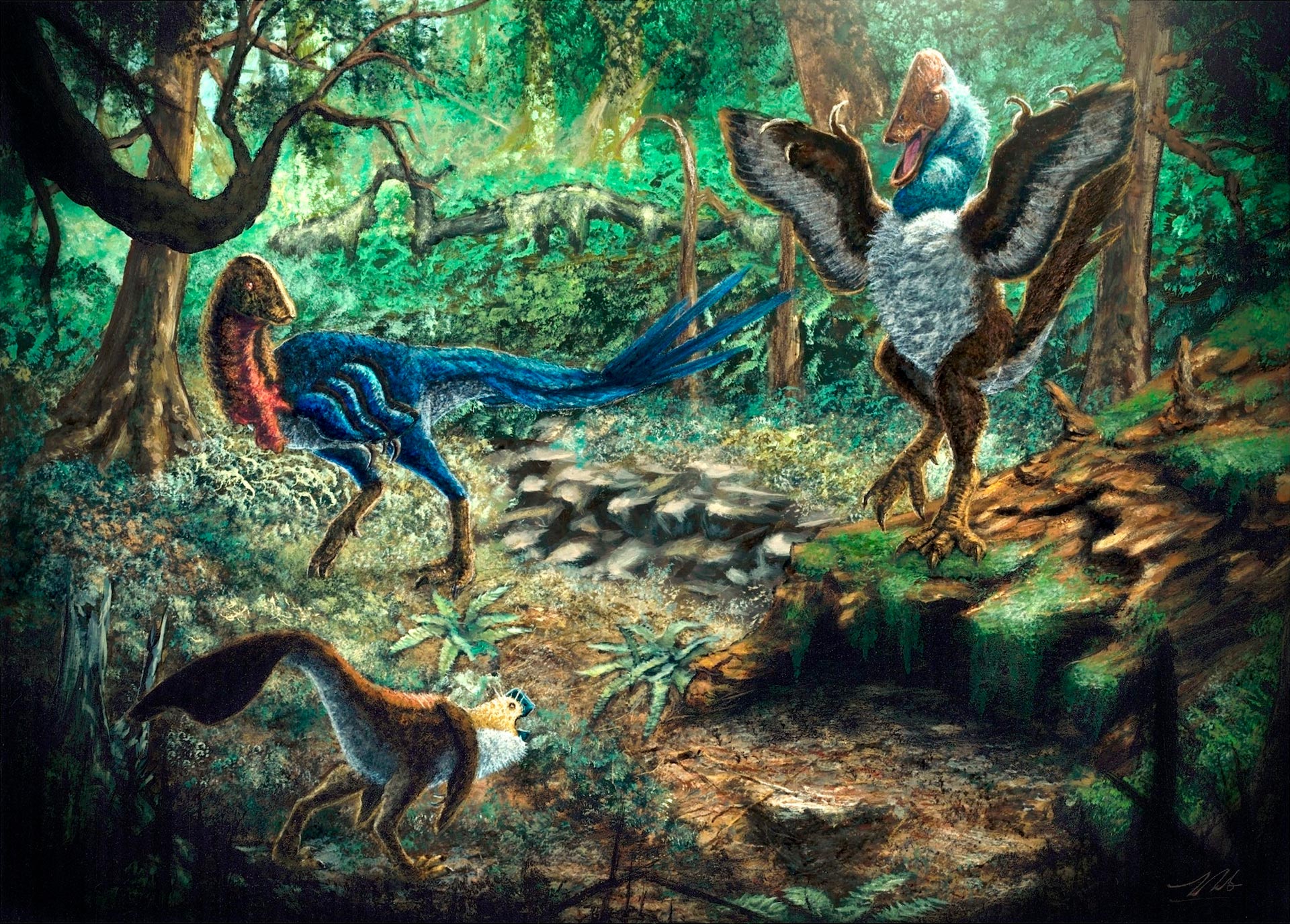
Comparing Hell Creek with older fossil formations such as the famous Dinosaur Park Formation of Alberta that preserves dinosaurs that lived between 76.5 million and 74.4 million years ago, we find not only the same number of caenagnathid species, but also the same size classes. There, we have Caenagnathus, comparable to Anzu, Chirostenotes, comparable to Eoneophron, and Citipes, comparable to the third species we found evidence for. These parallels in both species count and relative sizes offer compelling evidence that caenagnathids remained stable throughout the last part of the Cretaceous.
Our new discovery suggests that this dinosaur group was not declining in diversity at the very end of the Cretaceous. These fossils show that there are still new species to be discovered, and support the idea that at least part of the pattern of decreasing diversity is the result of sampling and preservation biases.
Did large dinosaurs go extinct the way a Hemingway character quipped he went broke: “gradually, then suddenly”? While there are plenty of questions still outstanding in this extinction debate, Eoneophron adds evidence that caenagnathids were doing quite well for themselves before the asteroid ruined everything.
Written by:
- Kyle Atkins-Weltman – Ph.D. Student in Paleoecology, Oklahoma State University
- Eric Snively – Associate Professor of Anatomy and Cell Biology, Oklahoma State University
Adapted from an article originally published in The Conversation.
Never miss a breakthrough: Join the SciTechDaily newsletter.
Follow us on Google and Google News.