
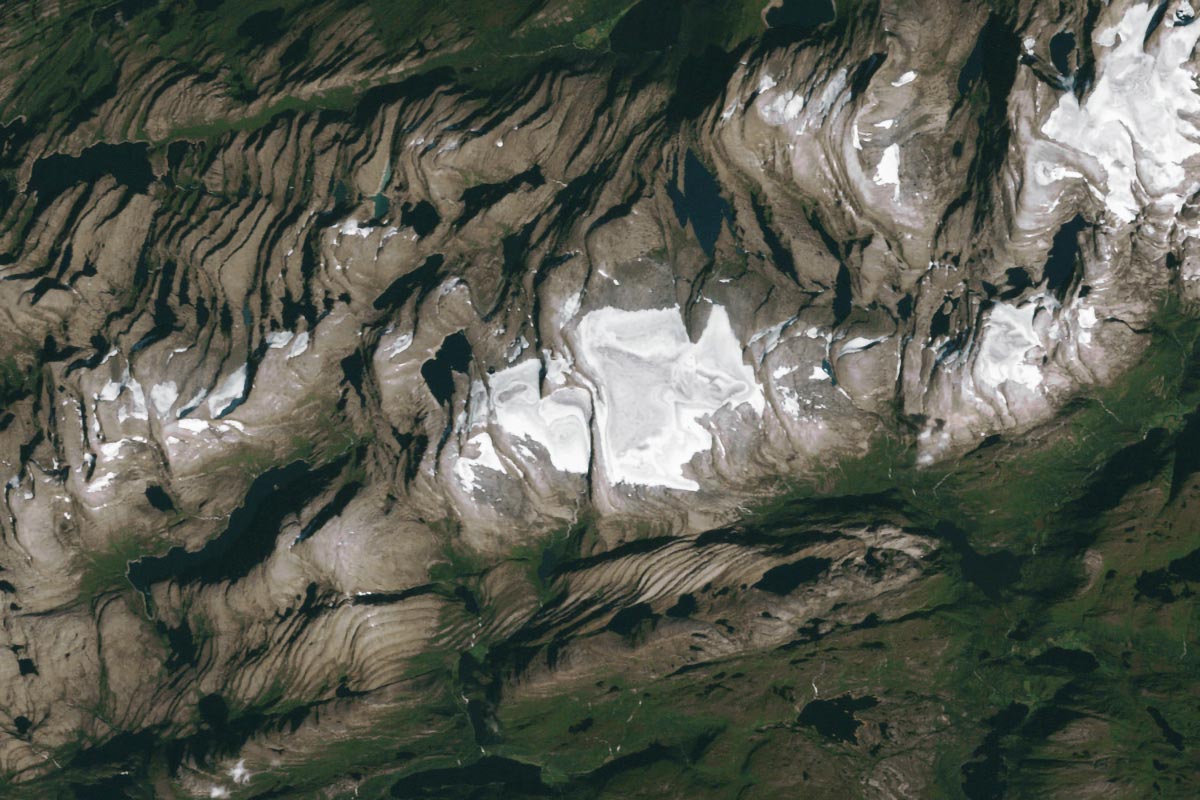
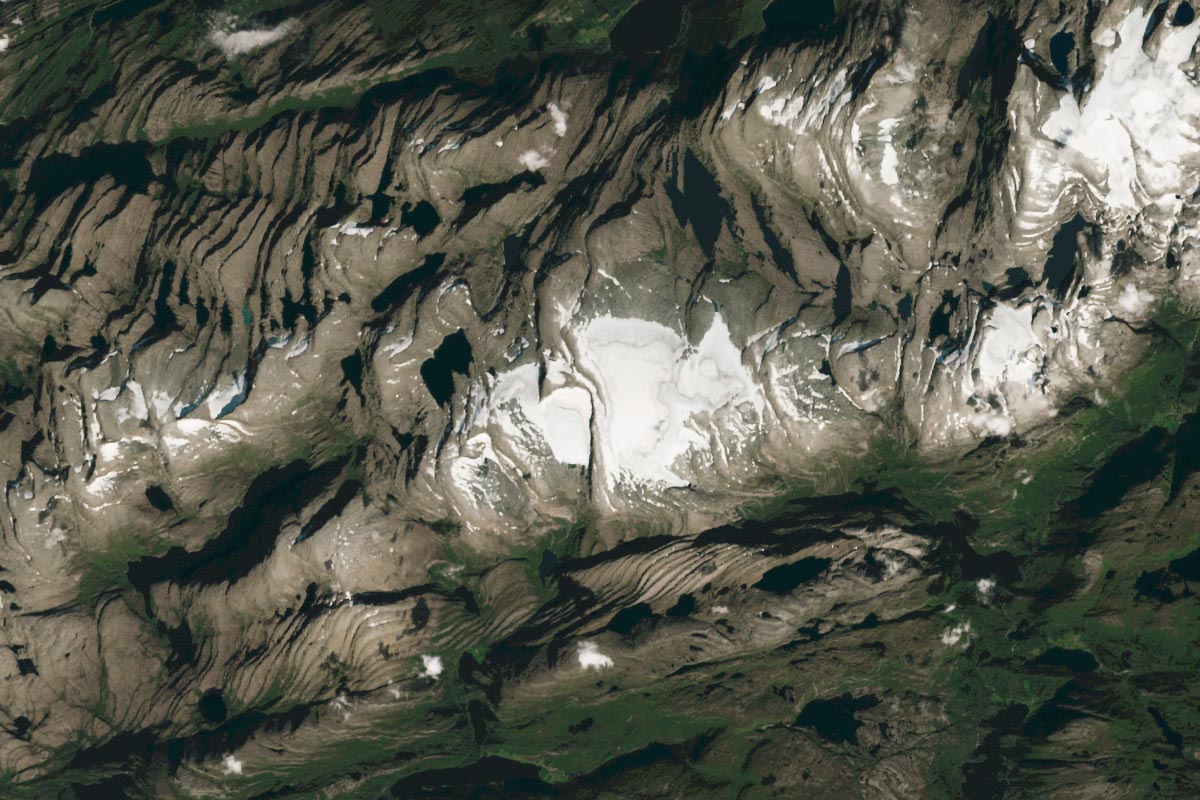
Resting atop a shingled sandstone landscape, the Norwegian glacier has been in decline since the late 1990s.
Ålfotbreen glacier rests on ledges of sandstone among the fjords of Norway’s western coast. The ice cap is vulnerable to changing temperatures and has been in decline since the late 1990s.
Unique Geological Formation
Ålfotbreen, which is Norway’s 25th largest glacier, covers the top of a unique landscape of shingled sandstone in an area known as the Hornelen Basin. The basin was formed after tectonic plates collided and later thinned out about 400 million years ago, in the Devonian period.
Sandstone mountain ledges run north to south and are often flanked by cliffs of up to 100 meters in height. As Ålfotbreen retreats, more of this unique geology is being exposed.
Climate Impact on Ålfotbreen
The glacier sees dramatic swings in its surface mass between winter and summer. This is partly due to its location along the western coast, which receives about 600 centimeters (236 inches) of annual precipitation, making it one of the wettest places in Europe.
Ålfotbreen gains mass as snow accumulates over winter and loses mass as it melts over summer. Heatwaves melt snow cover earlier in the season, which exposes darker icy surfaces earlier and accelerates melting.
Monitoring Glacier Health
Scientists compare glaciers’ winter accumulations with summer losses to track how their mass changes from year to year—a calculation known as surface mass balance (typically measured in meters water equivalent; that is, the depth of water that would result if the ice melted). The Norwegian Water Resources and Energy Directorate maintains a 60-year record of Ålfotbreen’s mass, which is collected in the field and reported to the World Glacier Monitoring Service.
Much of Ålfotbreen’s surface is snow that has survived 1–3 summers—known as firn—which is a transition stage to forming glacier ice. Although snowy winters led to the ice cap’s growth between 1989 and 1995, more frequent and intense heatwaves have since contributed to the glacier’s decline.
Recent Trends and Concerns
“There have been many years recently—in 2017, 2018, 2021, 2022, and 2023, for example—when the glacier lost most of its snow before the melt season ended,” said Mauri Pelto, a glaciologist at Nichols College. “This leads to glacier decline as the more permanent ice and firn melt away.”
The image pair above shows Ålfotbreen during the summers of 2003 (left) and 2022 (right). On August 3, 2003, with more than a month left in the melt season, the glacier had already lost all of its snow cover, which led to a large loss of its mass (3 meters of water equivalent). Likewise, in 2022, the glacier had lost much of its snow cover on September 4, leading to a net mass loss, although not as severe as 2003.
Over the past ten years (2013-2022), the World Glacier Monitoring Service reports that Ålfotbreen lost an average of 1.07 meters water equivalent each year. In about half of the summers over the past two decades, no snow cover remained on the glacier at the end of the melt season. Pelto added, “the lack of a persistent accumulation zone suggests that the glacier cannot survive the current climate.”
Global Perspective on Glacier Decline
Pelto led a review of World Glacier Monitoring Service mass balance data for 37 mountain glaciers across the globe in 2022, and found that 34 of those glaciers had lost mass. The analysis found that, on average, glaciers lost more than a meter of ice that year and that ice loss from mountain glaciers globally has been accelerating over time.
NASA Earth Observatory images by Wanmei Liang, using Landsat data from the U.S. Geological Survey.
Never miss a breakthrough: Join the SciTechDaily newsletter.
Follow us on Google and Google News.