
Close Menu
    Facebook X (Twitter) Instagram
    SciTechDaily
    • Biology
    • Chemistry
    • Earth
    • Health
    • Physics
    • Science
    • Space
    • Technology
    Facebook X (Twitter) Pinterest YouTube RSS
    SciTechDaily
    Home»Space»One Atom Thick Graphene Light Sail Could Speed Journey to Other Star Systems
    Space

    One Atom Thick Graphene Light Sail Could Speed Journey to Other Star Systems

    By European Space AgencyMay 19, 2020No Comments4 Mins Read
    Facebook Twitter Pinterest Telegram LinkedIn WhatsApp Email Reddit
    Share
    Facebook Twitter LinkedIn Pinterest Telegram Email Reddit
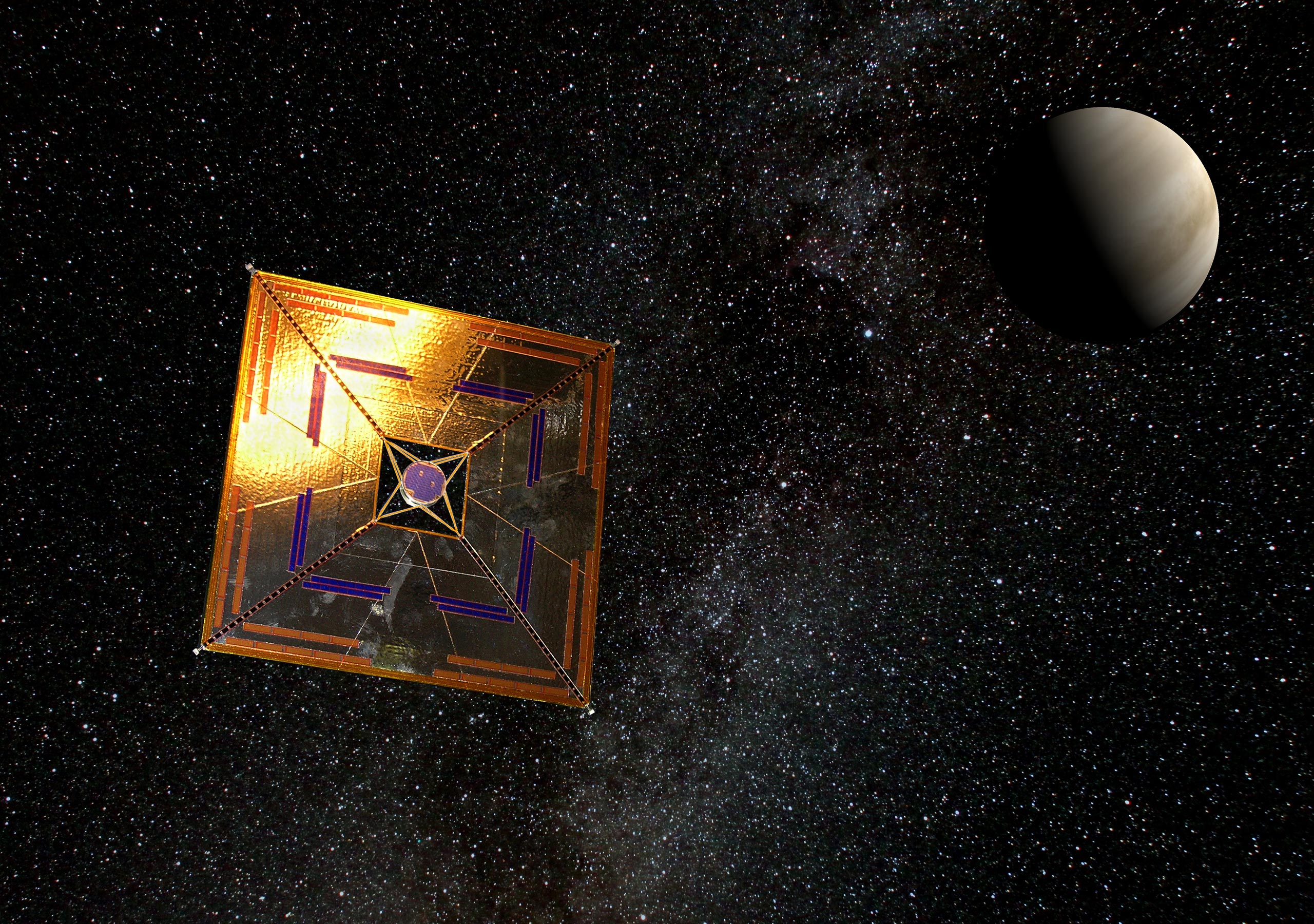
    IKAROS Solar Sail
    Artist’s depiction of the IKAROS spaceprobe (the first spacecraft to successfully demonstrate solar sail technology in interplanetary space) in flight. Credit: Andrzej Mirecki

    A tiny sail made of the thinnest material known – one carbon-atom-thick graphene – has passed initial tests designed to show that it could be a viable material to make solar sails for spacecraft.

    Light sails are one of the most promising existing space propulsion technologies that could enable us to reach other star systems within many decades.
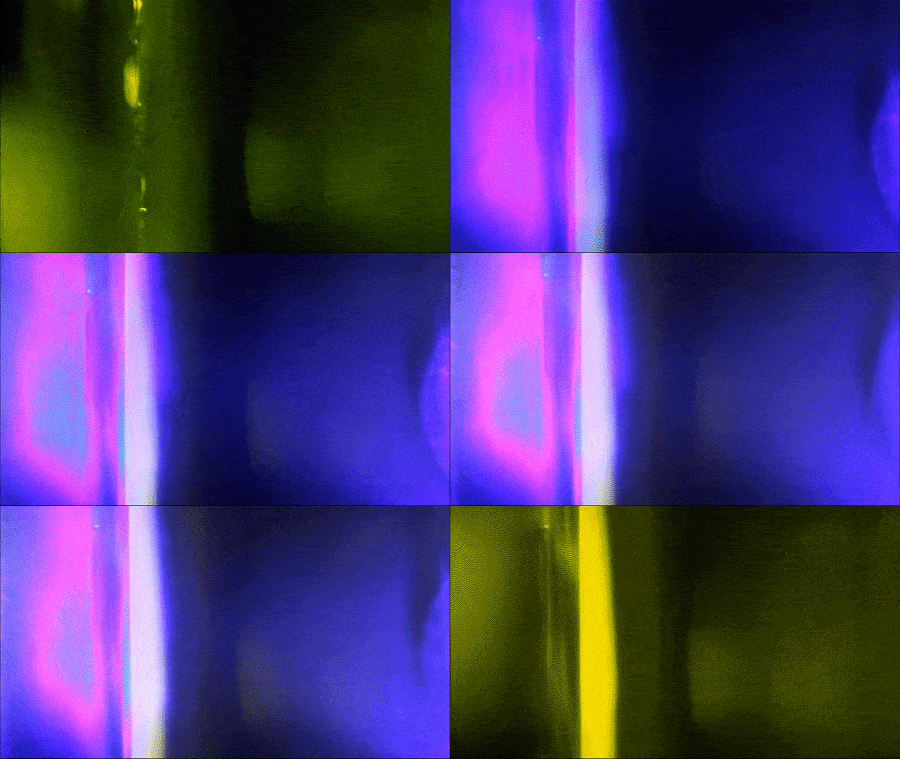
    Graphene Sail in Microgravity
    Video of drop tower research into graphene light sails. Credit: GrapheneSail team

    Traditional spacecraft carry fuel to power their journeys and use complex orbital maneuvers around other planets. But the weight of the fuel makes them difficult to launch and intricate flyby maneuvers considerably lengthen the journey.

    Solar sails need no fuel. Spacecraft equipped with them are thus much lighter and easier to launch.

    Two spacecraft flown over the past decade have already demonstrated the technology, but they used sails made of polyimide and of mylar, a polyester film.
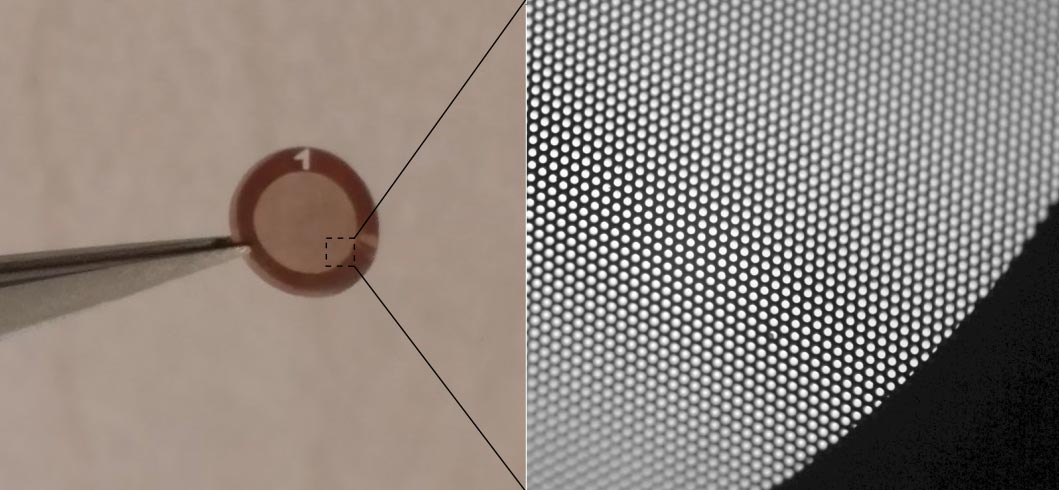
    Graphene Light Sail
    Graphene light sail of 3mm in diameter with a mass of 0.25 mg ‘sets sail’ when pointed with a 1W laser. The prototype has a graphene micromembrane design that reduces the overall mass while keeping functional the complete area of the sail. Credit: Dr. Santiago Jose Cartamil-Bueno

    Graphene is much lighter. To test whether it could be used as a sail, researchers used a scrap just 3 millimeters across.

    They dropped it from a 100-m (330-ft) tall tower in Bremen, Germany, to test whether it worked under vacuum and in microgravity.
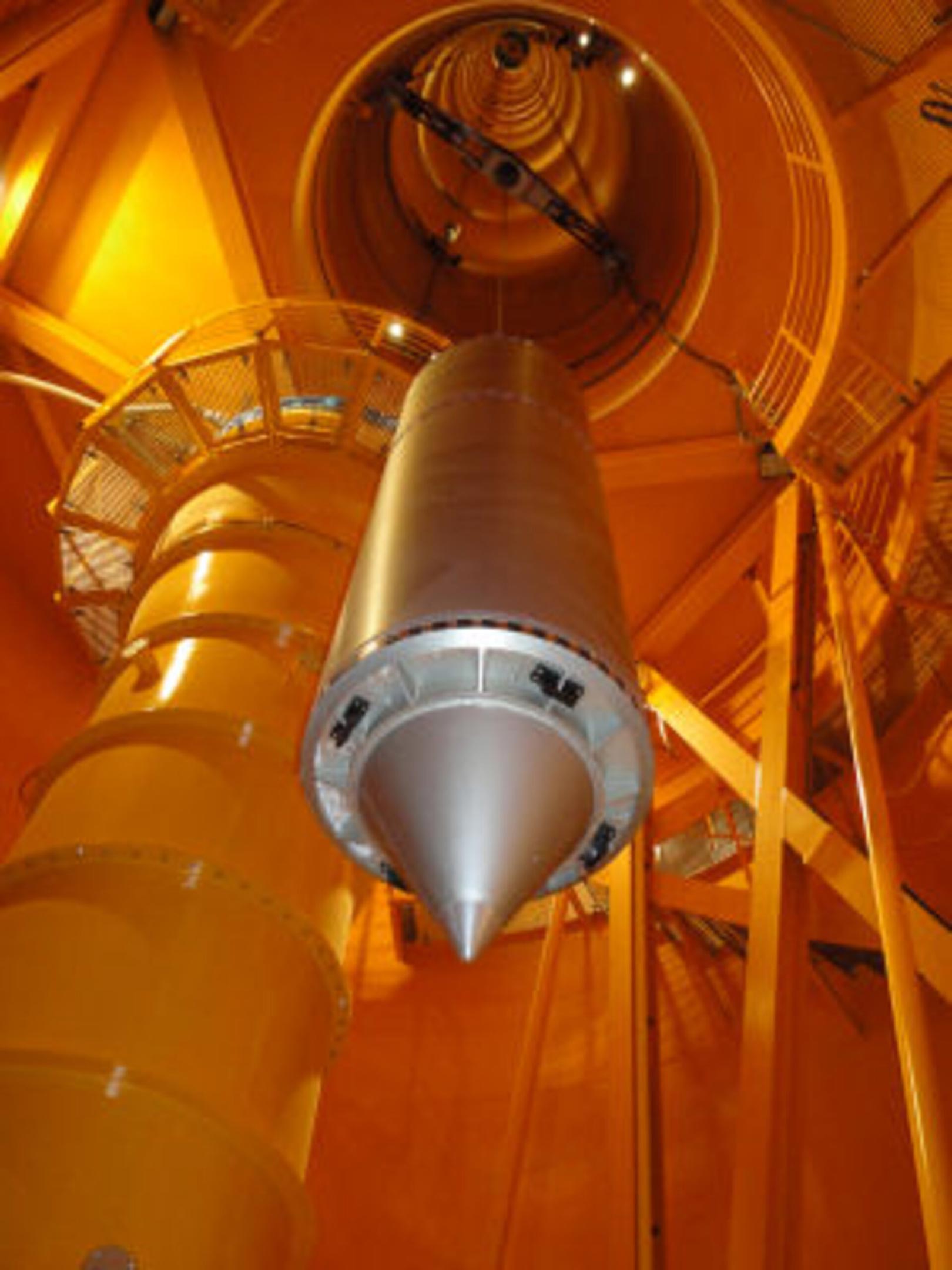
    ESA Drop Tower Interior
    Interior of the drop tower. Credit: ESA

    Once the sail was in free-fall – effectively eliminating the effects of gravity – they shone a series of laser lights onto it, to see whether it would act as a solar sail.

    Shining a 1-watt laser made the sail accelerate by up to 1 m/s2  (3.3 ft/s2) similar to the acceleration of an office lift, but for solar sails the acceleration continues as long as sunlight keeps hitting the sails, taking spacecraft higher and higher speeds.

    “Making graphene is relatively simple and could be easily scaled up to kilometer-wide sails, though the deployment of a giant sail will be a serious challenge,” says Santiago Cartamil-Bueno, leader of the GrapheneSail team and director of SCALE Nanotech, a research start-up company operating in Estonia and Germany.

    SCALE Nanotech is now looking for strategic partners to scale up the technology for an eventual test in space. The product development of the sail technology is currently accelerated through ESA’s Business Incubator Centre in Hessen and Baden-Württemberg, Germany.

    Astrid Orr of ESA’s human spaceflight research program oversees physical science experiments in weightlessness for human and robotic exploration.
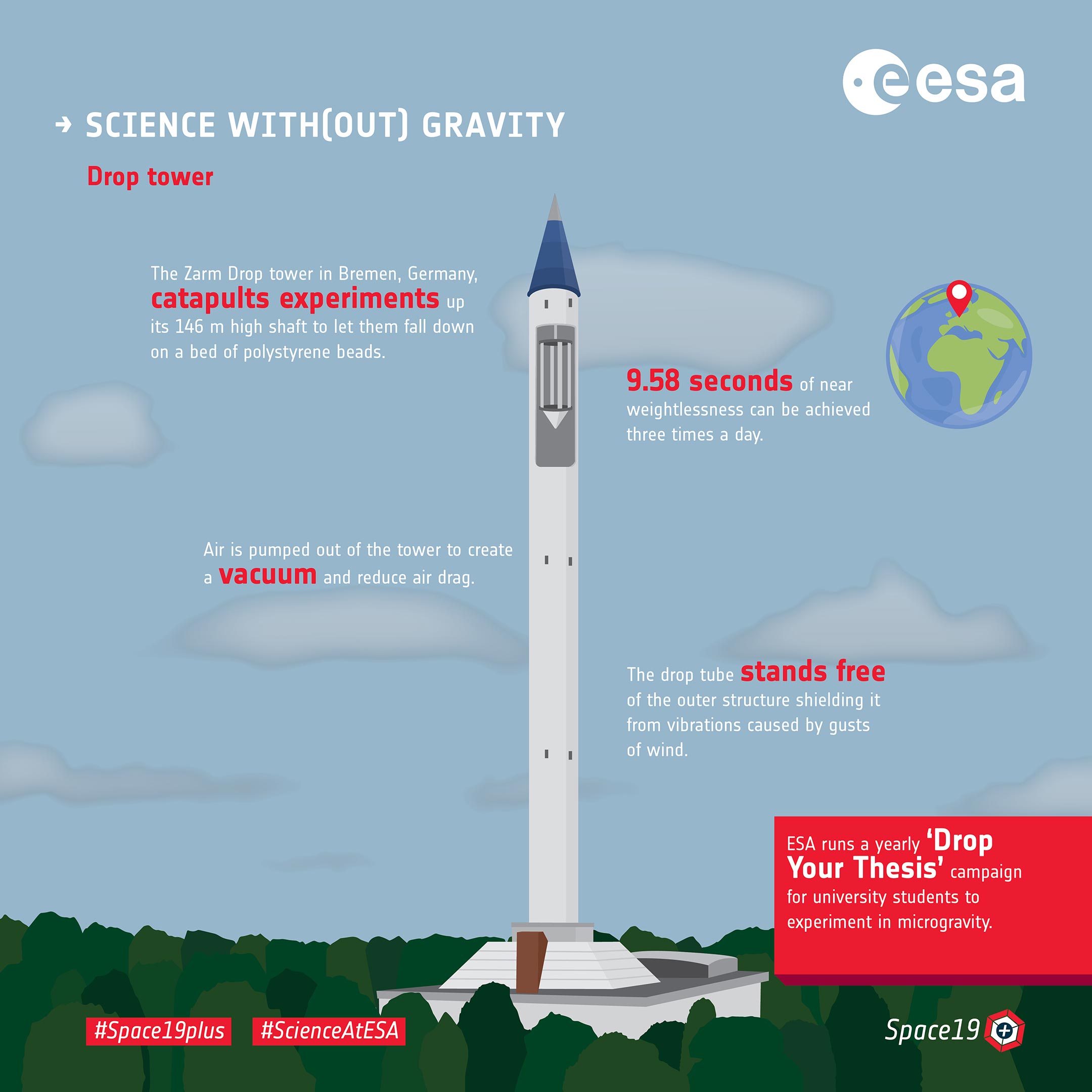
    Drop Towers Science Without Gravity
    Science with(out) gravity – drop towers. Gravity affects everything we do on Earth but we know surprisingly little about how it works and how it affects life. Until recently scientists had no way of experimenting without gravity to understand what life would be like without it. From the moment an experiment is let go at the top of a drop tower until it hits the padded ground beneath, the experiment is free of the influences of gravity. These short bouts of microgravity are open to scientists from all over the world and offer an economical alternative to spaceflight that can be used at any time of the year. Credit: ESA

    She says: “This project is a wonderful example of scientific research that can be performed in weightlessness without leaving Earth.

    “Dropping graphene and shooting it with lasers is fascinating. To think that this research could help scientists to send instruments through the solar system and, if one dares to dream, to distant star systems in years to come is the icing on the cake.”

    Never miss a breakthrough: Join the SciTechDaily newsletter.
    Follow us on Google and Google News.

    2D Materials European Space Agency Graphene Nanotechnology Popular Solar Sail
    Share. Facebook Twitter Pinterest LinkedIn Email Reddit

    Related Articles

    A Physics Discovery So Strange It’s Changing Quantum Theory

    Wonder Material Graphene Discovered in Lunar Soil Sample From Chinese Moon Mission

    MIT Physicists Forge a Five-Lane Quantum Superhighway for Electrons

    MIT Physicists Transform Pencil Lead Into Electronic “Gold”

    MIT Physicists Discover “Magic-Angle” Trilayer Graphene May Be a Rare, Magnet-Proof Superconductor

    MIT Turns “Magic” Superconducting Material Into Versatile Electronic Devices

    Nanotechnology Breakthrough: A Material-Keyboard Made of Graphene

    Graphene “Nano-Origami” Creates Tiniest Microchips Yet – Could Make Computers and Phones Thousands of Times Faster

    Graphene Surprises Researchers Again: Strange ‘Melting’ Behavior

    Leave A Reply Cancel Reply

    • Facebook
    • Twitter
    • Pinterest
    • YouTube

    Don't Miss a Discovery

    Subscribe for the Latest in Science & Tech!

    Trending News

    AI Could Detect Early Signs of Alzheimer’s in Under a Minute – Far Before Traditional Tests

    What if Dark Matter Has Two Forms? Bold New Hypothesis Could Explain a Cosmic Mystery

    This Metal Melts in Your Hand – and Scientists Just Discovered Something Strange

    Beef vs. Chicken: Surprising Results From New Prediabetes Study

    Alzheimer’s Breakthrough: Scientists Discover Key Protein May Prevent Toxic Protein Clumps in the Brain

    Quantum Reality Gets Stranger: Physicists Put a Lump of Metal in Two Places at Once

    Scientists May Have Found the Key to Jupiter and Saturn’s Moon Mystery

    Scientists Uncover Brain Changes That Link Pain to Depression

    Follow SciTechDaily
    • Facebook
    • Twitter
    • YouTube
    • Pinterest
    • Newsletter
    • RSS
    SciTech News
    • Biology News
    • Chemistry News
    • Earth News
    • Health News
    • Physics News
    • Science News
    • Space News
    • Technology News
    Recent Posts
    • Ancient “Rock” Microbes May Reveal How Complex Life Began
    • Hidden “Trade Winds” Inside Cells Could Explain Cancer Spread
    • Humans Owe Their Eyes to a Tiny One-Eyed “Cyclops”
    • Researchers Capture Quantum Interference in One of Nature’s Rarest Atoms
    • Ancient DNA Reveals Irish Goats Have a 3,000-Year-Old Lineage Still Alive Today
    Copyright © 1998 - 2026 SciTechDaily. All Rights Reserved.
    • Science News
    • About
    • Contact
    • Editorial Board
    • Privacy Policy
    • Terms of Use

    Type above and press Enter to search. Press Esc to cancel.