

Researchers have uncovered a hidden split in the venom of Australia’s deadly Eastern Brown Snake.
Southern populations create rock-solid blood clots, while northern snakes produce fragile clots that collapse almost instantly — two very different paths to the same deadly outcome. This discovery raises urgent concerns about whether current antivenoms, made from pooled venoms of unclear origin, can fully protect patients across regions.
Antivenom Effectiveness Questioned
A new study from the University of Queensland suggests that the antivenom used to treat Eastern Brown Snake bites may not always provide full protection, leading researchers to review hospital records.
The project was led by Professor Bryan Fry of UQ’s School of the Environment, who, along with his team, analyzed the blood-clotting toxins found in the venom of every Australian brown snake species.
Clotting Patterns: Rock-Solid vs Fragile
“We discovered not all brown-snake venoms are the same – meaning that lifesaving antivenom may need an urgent upgrade,” Professor Fry said.
“Some venoms formed a rock-solid clot in blood, while others spun up a rapid but flimsy web of clots that shredded almost instantly.
“Both venoms can kill, but they do it in completely different ways.”
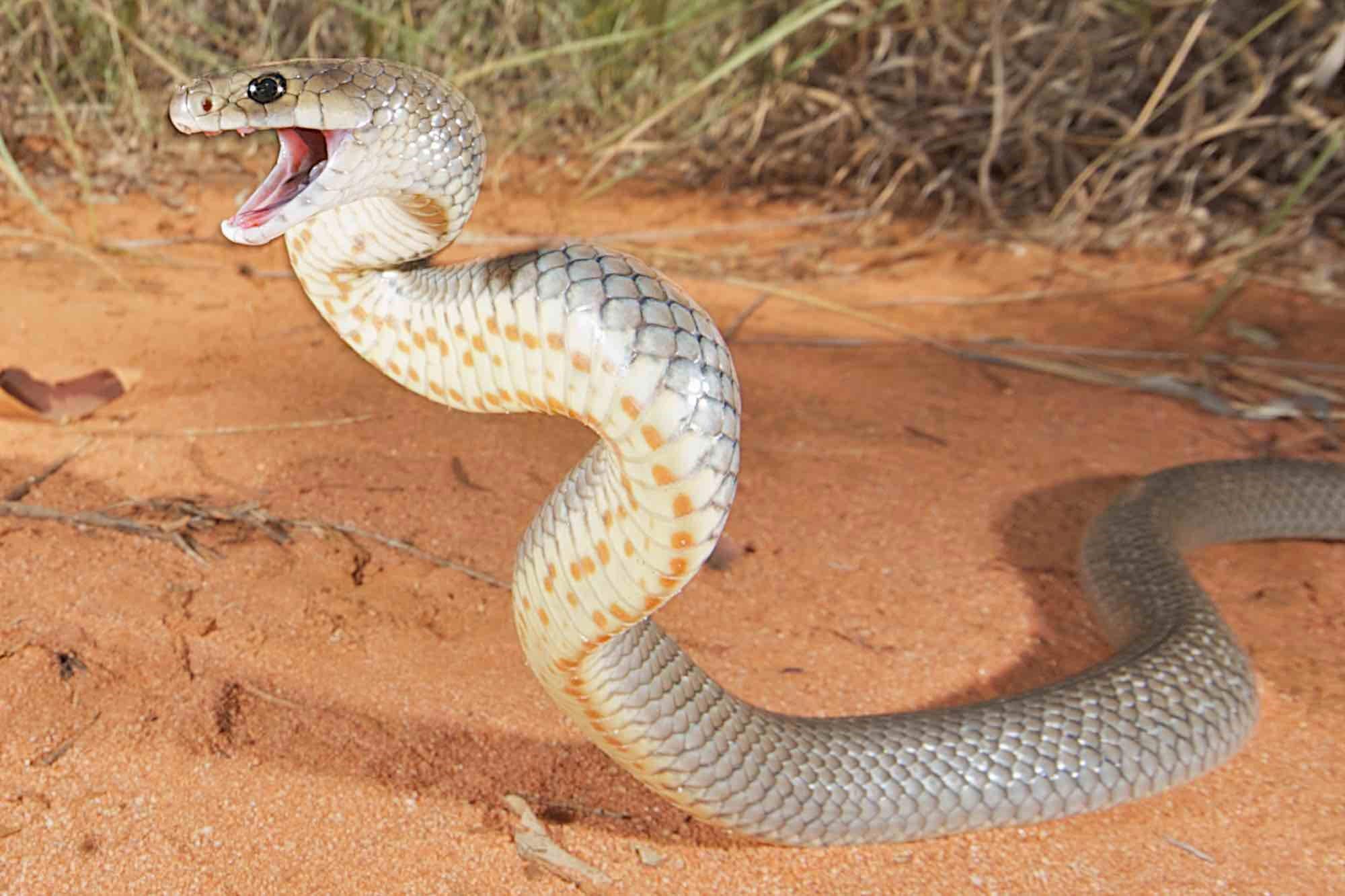
Southern vs Northern Eastern Browns
To investigate further, the researchers used a technique called thromboelastography, which measures blood coagulation. Their results revealed that Eastern Brown Snakes (Pseudonaja textilis) from southern Australia produce a taipan-like venom that creates a firm, lasting clot.
In contrast, venom from northern Eastern Brown Snakes and from all other brown snake species generated clots that were weak and easily destroyed, although they formed at remarkable speed.
“Our data shows the effect on blood of an Eastern Brown Snake bite in northern areas and a bite in southern Australia are chalk and cheese,” Professor Fry said.
Rethinking Hospital Records
“Currently, Australia’s brown-snake antivenom is produced using a pool of venom of unstated geographic origin.
“If it doesn’t have both northern and southern Eastern Brown Snake venom, coverage could be patchy, and the antivenom efficacy could vary widely.
“Clinical reports have all brown snake bite cases together regardless of species or location, so any differences for the southern population versus all other brown snakes could be obscured.
Precision Toxicology on the Horizon
“Our next step is to go back through hundreds of hospital charts to ascertain if there is a difference, which we can do because the southern strong-clot lineage lives where no other brown snake occurs.
“We can re-code every reported bite by geography and tease apart the clotting patterns between the strong and weak clotting types of brown snakes.
“We will also urgently test the available human and veterinary antivenoms to see if the differences in venom biochemistry are mirrored by variations in antivenom efficacy.
“While existing antivenoms have saved lives, with new information we can move to precision toxicology, matching the right antivenom to the right snake, and ultimately, to the right patient.”
Genetic Clues to Venom Evolution
Professor Fry’s team is also sequencing the venom genes to pinpoint the mutations responsible for the differences in northern and southern Eastern Brown Snakes.
“We showed the geographic difference in venom effect overlays with a genetic divide within the Eastern Brown Snake,” he said.
“Our research demonstrates how diet steers venom evolution, because the southern populations consume more reptiles than the northern populations, which eat more mammals.
“By appreciating both the evolutionary fine-tuning and the clinical outcomes of these venoms, we can better tailor our medical responses.”
The research paper has been published in Toxins.
Reference: “X Marks the Clot: Evolutionary and Clinical Implications of Divergences in Procoagulant Australian Elapid Snake Venoms” by Holly Morecroft, Christina N. Zdenek, Abhinandan Chowdhury, Nathan Dunstan, Chris Hay and Bryan G. Fry, 17 August 2025, Toxins.
DOI: 10.3390/toxins17080417
Never miss a breakthrough: Join the SciTechDaily newsletter.
Follow us on Google and Google News.
4 Comments
Electric shock from D/C current has been effective in snake bite and bee sting allergic reactions.. why not focus more on this instead of anti-venom that leaves the person in pain and bed for the better part of a week or 2. Something like a stun gun used several times in several spots along the bite or sting site has been effective at breaking do n the venom causing rapid healing with less complications.. would like to see more research in this field.. maybe you could raise the price of electricity!🤦🏼♂️🤦🏼♂️🤨
Goldqueen devil vampire diaries Haunted University Ezra
A decade after 1920 1921 ahexation England British lord carnavalis
A decade after 1920 the EViL returns
possession is back AHEXTION Mongoose dashmukhdwaparniisllamickazapakrica inland tipan sarphani
As someone recently diagnosed with the Auto-immune disorder, Anti Phospho-Lipid Syndrome, which creates easy clotting, I am interested in such new findings, even if they are not directly applicable to my situation and the antibodies that cause it.