
Close Menu
    Facebook X (Twitter) Instagram
    SciTechDaily
    • Biology
    • Chemistry
    • Earth
    • Health
    • Physics
    • Science
    • Space
    • Technology
    Facebook X (Twitter) Pinterest YouTube RSS
    SciTechDaily
    Home»Biology»“Dental Origami” – How Snakes Got Their Fangs
    Biology

    “Dental Origami” – How Snakes Got Their Fangs

    By Flinders UniversityAugust 10, 2021No Comments3 Mins Read
    Facebook Twitter Pinterest Telegram LinkedIn WhatsApp Email Reddit
    Share
    Facebook Twitter LinkedIn Pinterest Telegram Email Reddit
    Types of Venom Fangs in Snakes
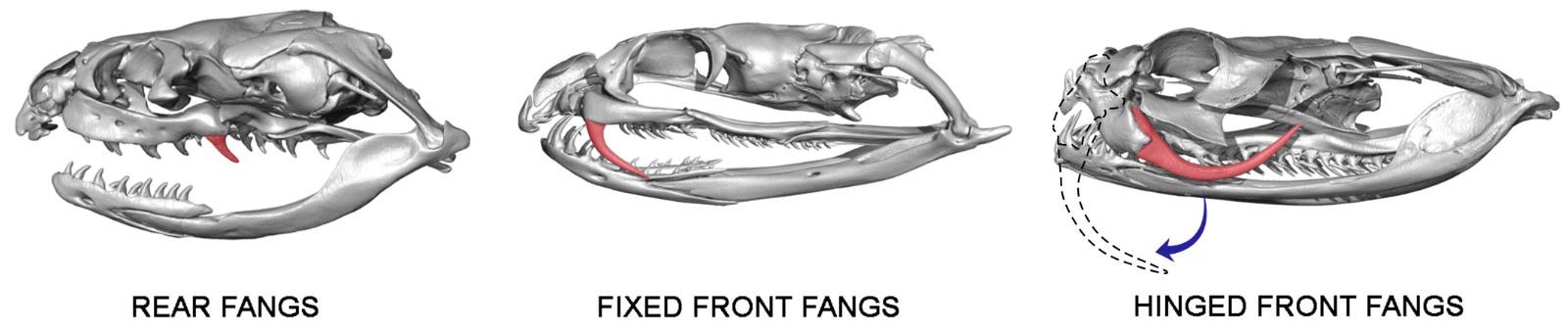
    Types of venom fangs in snakes: rear fangs (crab-eating water snake), fixed front fangs (taipan), and hinged front fangs (Gaboon viper); fangs highlighted in red. Credit A. Palci

    ‘Dental origami’ exploited by multiple species.

    Ever wondered how deadly snakes evolved their fangs? The answer lies in particular microscopic features of their teeth, research led by Flinders University and the South Australian Museum suggests.

    “It’s always been a mystery why fangs have evolved so many times in snakes, but rarely in other reptiles. Our study answers this, showing how easy it is for normal snake teeth to turn into hypodermic needles,” says lead author Dr. Alessandro Palci, from Flinders University.
    Taipan Skull Fangs
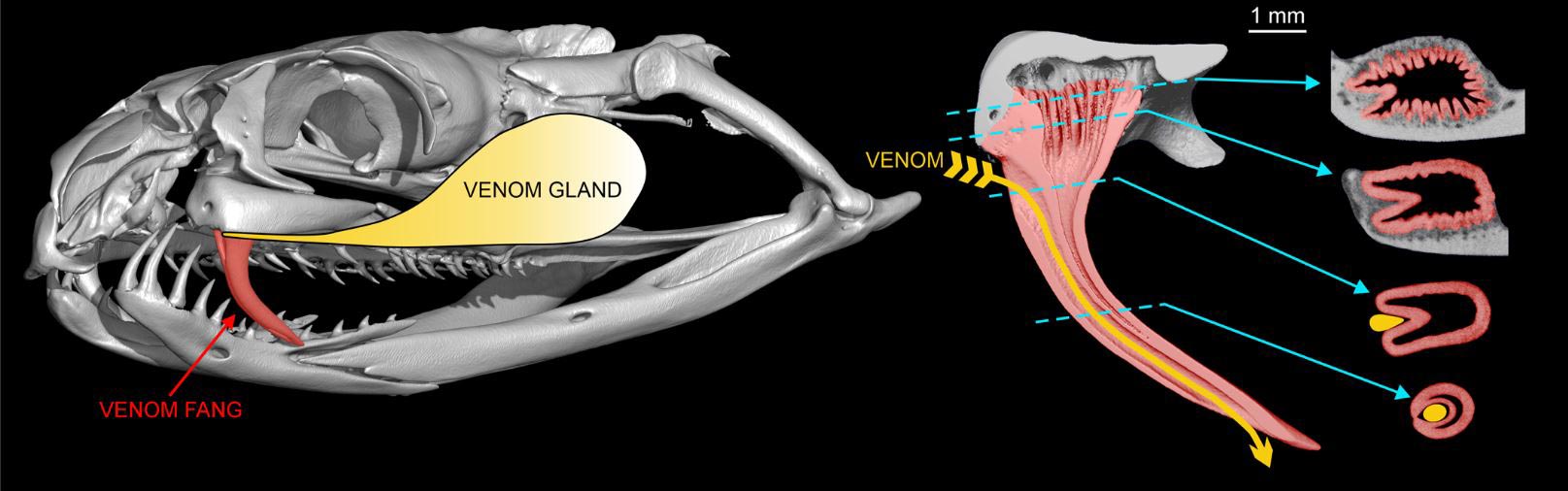
    Skull of a taipan and sections through its left fang showing the relationship between venom groove and infoldings at the base of the tooth. Credit: A. Palci

    Of almost 4,000 species of snakes alive today, about 600 of them are considered ‘medically significant’ to humans, meaning that if you get bitten you are very likely to require a visit to the nearest hospital for treatment.

    Venom fangs are modified teeth that are grooved and larger than other nearby teeth. They can be located at the back or at the front of the mouth, where they can be fixed or hinged (i.e. they can fold backwards).
    Gaboon Viper Fang
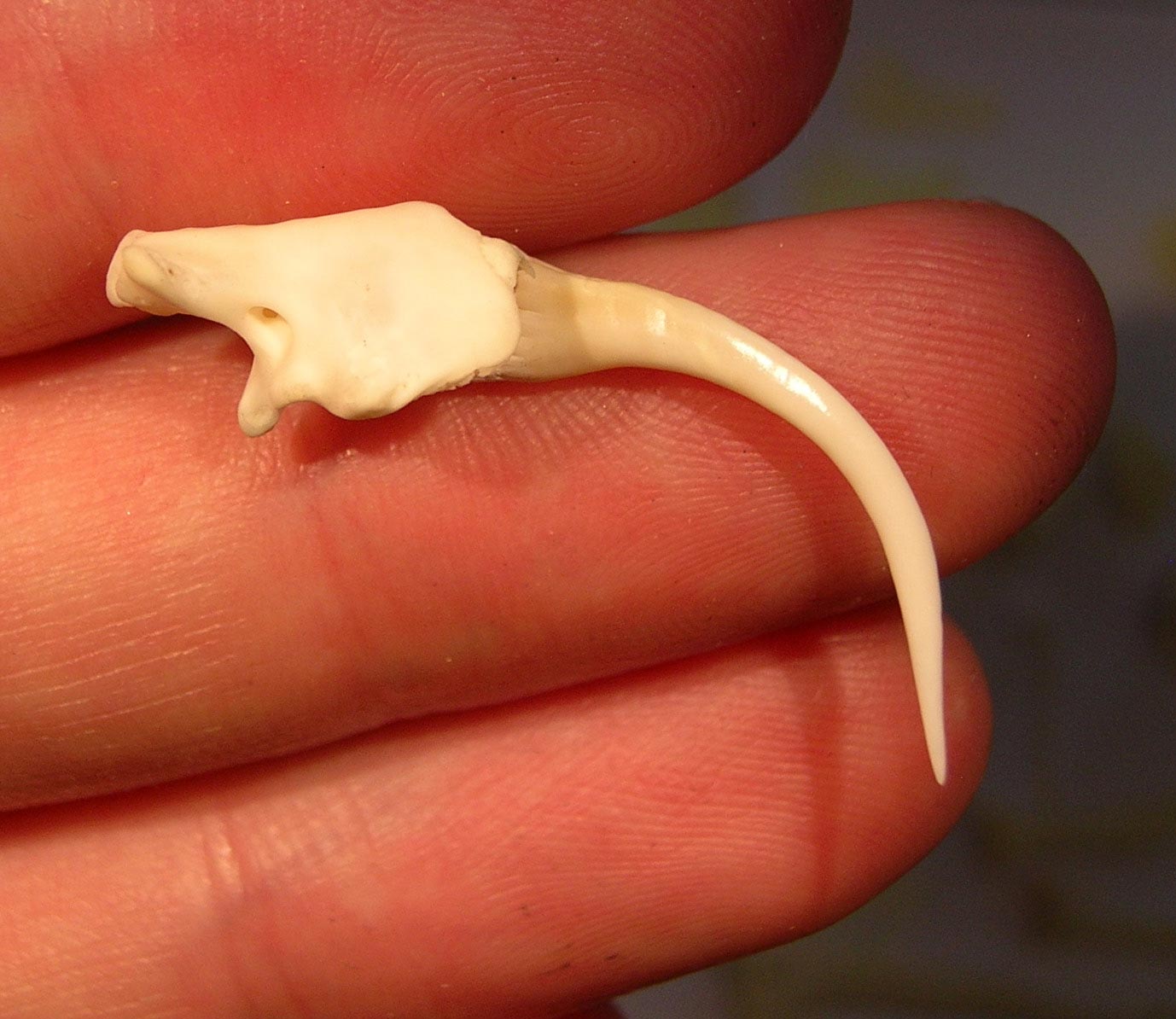
    The fang of a Gaboon viper (attached to the bone, the maxilla). Credit: A. Palci (Flinders University)

    Australian and overseas researchers used high-tech modeling, fossils, and hours of microscope observations to reveal that snakes possess tiny infoldings, or wrinkles, at the base of the teeth. These infoldings might help teeth attach more firmly to the jaw. In venomous snakes, one of these wrinkles becomes deeper and extends all the way to the tooth tip, thus producing a venom groove and a fang.

    “Our work also highlights the opportunism and efficiency of evolution. Wrinkles which helped attach teeth to the jaw were repurposed to help inject venom,” says co-author Matthew Flinders Professor Michael Lee (Flinders University and South Australian Museum).

    Alessandro Palci
    Flinders University researcher Dr Alessandro Palci with a non-venomous snake at the SA Museum Discovery Centre. Credit: Flinders University

    Reference: “Plicidentine and the repeated origins of snake venom fangs” by Alessandro Palci, Aaron R. H. LeBlanc, Olga Panagiotopoulou, Silke G. C. Cleuren, Hyab Mehari Abraha, Mark N. Hutchinson, Alistair R. Evans, Michael W. Caldwell and Michael S. Y. Lee, 10 August 2021, Proceedings of the Royal Society B.
    DOI: 10.1098/rspb.2021.1391

    Researchers received funding from an NSERC Postdoctoral Fellowship, NSERC Discovery Grant, Australian Research Council Discovery Program and University of Alberta grants.

    Never miss a breakthrough: Join the SciTechDaily newsletter.
    Follow us on Google and Google News.

    Evolution Flinders University Popular Reptiles Snake Teeth
    Share. Facebook Twitter Pinterest LinkedIn Email Reddit

    Related Articles

    World’s Oldest Python Found in Messel Pit

    Remarkable New Species of Snake Found Hidden in a Biodiversity Collection – Occupies Its Own Branch on Snake Tree of Life

    Evolution of Reptiles Timeline: New Study Rebuts 75-Year-Old Belief About How and When Reptiles Evolved

    Our Species Is Still Evolving: Forearm Artery Reveals Humans Evolving From Changes in Natural Selection

    Mystery of How Flying Snakes Move Solved by 3D Modeling and Motion Capture

    Evolutionary Origin of the Human Hand Revealed by Ancient Fish Fossil

    New Fossils of Ancient Snake With Hind Legs Reveals Tantalizing Details of Evolution

    This 100 Million-Year-Old Snake Had Legs, but Cheekbone Provides Critical Insight Into Evolution

    New Insight Into the Evolution of Sight From 54 Million Year-Old Fossil

    Leave A Reply Cancel Reply

    • Facebook
    • Twitter
    • Pinterest
    • YouTube

    Don't Miss a Discovery

    Subscribe for the Latest in Science & Tech!

    Trending News

    Researchers Have Found a Dietary Compound That Increases Longevity

    Scientists Baffled by Bizarre “Living Fossil” From 275 Million Years Ago

    Your IQ at 23 Could Predict Your Wealth at 27, Study Finds

    320 Light-Years Away, a Planet Confirms a Fundamental Cosmic Assumption

    The Crown Jewel of Dentistry? Breakthrough Tech Could Transform Tooth Repair

    Python Blood Could Hold the Secret to Weight Loss Without Side Effects

    Naturally Occurring Bacteria Completely Eradicate Tumors in Mice With a Single Dose

    New “Nanozyme Hypothesis” Could Rewrite the Story of Life’s Origins

    Follow SciTechDaily
    • Facebook
    • Twitter
    • YouTube
    • Pinterest
    • Newsletter
    • RSS
    SciTech News
    • Biology News
    • Chemistry News
    • Earth News
    • Health News
    • Physics News
    • Science News
    • Space News
    • Technology News
    Recent Posts
    • Scientists Uncover Hidden Clues to the Origin of the Genetic Code
    • Scientists Discover Unexpected Role of Alzheimer’s Protein in Cell Division
    • Scientists Uncover Brain Changes That Link Pain to Depression
    • A New Chapter in Chemistry? Scientists Uncover New Way Metals Bind Oxygen
    • New Study Reveals Earth Is Getting Brighter at Night – About 2% Each Year
    Copyright © 1998 - 2026 SciTechDaily. All Rights Reserved.
    • Science News
    • About
    • Contact
    • Editorial Board
    • Privacy Policy
    • Terms of Use

    Type above and press Enter to search. Press Esc to cancel.