
Decoding the Biosynthesis of Limonoids in Plants
New research has revealed the secret of how plants make limonoids, a group of valuable organic chemicals. These chemicals, which include bee-friendly insecticides, have potential use as anti-cancer drugs.
The John Innes Centre and Stanford University joined forces to form a research team and utilized groundbreaking techniques to uncover the biosynthetic pathways of these valuable molecules. These molecules are produced by specific plant families, including mahogany and citrus.
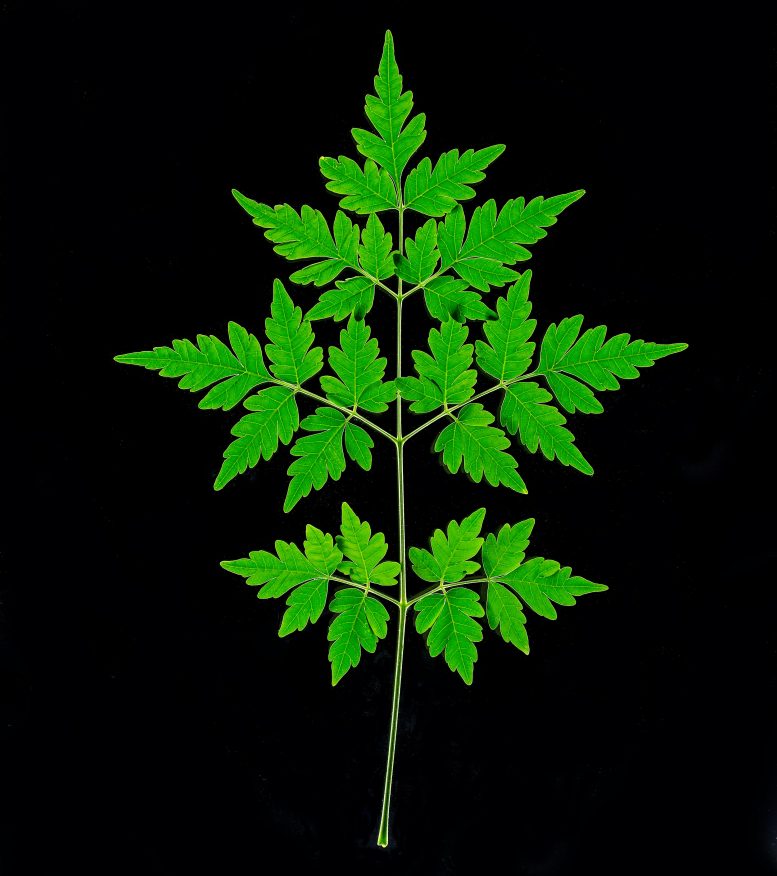
In the study which appears in Science, the John Innes Centre research team used genomic tools to map the genome of Chinaberry (Melia azedarach), a mahogany species, and combined this with molecular analysis to reveal the enzymes in the biosynthetic pathway.
Sustainable Production of Limonoids
“By finding the enzymes required to make limonoids, we have opened the door to an alternate production source of these valuable chemicals,” explained Dr. Hannah Hodgson, co-first author of the paper and a postdoctoral scientist at the John Innes Centre.
Until now limonoids, a type of triterpene, could only be produced by extraction from plant material.
Dr. Hodgson explains, “Their structures are too complicated to efficiently make by chemical synthesis. With the knowledge of the biosynthetic pathway, it is now possible to use a host organism to produce these compounds.” she added.
Armed with the complete biosynthetic pathway researchers can now produce the chemicals in commonly used host plants such as Nicotiana benthamiana. This method can produce larger quantities of limonoids in a more sustainable way.
Increasing the supply of limonoids could enable the more widespread use of azadirachtin, the anti-insect limonoid obtained from the neem tree and used in commercial and traditional crop protection. Azadirachtin is an effective, fast-degrading, bee-friendly option for crop protection but is not widely used due to its limited supply.
The team made two relatively simple limonoids, azadirone from Chinaberry and kihadalactone A from citrus, and believe that the methods used here can now be applied as a template for making more complicated triterpenes.
Professor Anne Osbourn, group leader at the John Innes Centre and co-corresponding author of the study said: “Plants make a wide variety of specialized metabolites that can be useful to humans. We are only just starting to understand how plants make complex chemicals like limonoids. Prior to this project, their biosynthesis and the enzymes involved were completely unknown, now the door is open for future research to build on this knowledge, which could benefit people in many ways.”
Another example of a high-value limonoid that the team hopes to produce is the anti-cancer drug candidate nimbolide, this work could enable easier access to limonoids like nimbolide to enable further study. As well as producing known products like nimbolide, the research team says the door may open to understanding new activities for limonoids that have not yet been investigated.
Research Method in More Detail
The team at John Innes used genomic tools to assemble a chromosome-level genome for Chinaberry (Melia azedarach), within which they found the genes encoding 10 additional enzymes required to produce the azadirachtin precursor, azadirone. In parallel, the team working at Stanford was able to find the 12 additional enzymes required to make khidalactone A.
Expressing these enzymes in N. benthamiana enabled their characterization, with the help of both Liquid chromatography–mass spectrometry (LC-MS) and Nuclear Magnetic Resonance (NMR) Spectroscopy, technologies that allow the molecular level analysis of samples.
Reference: “Complex scaffold remodeling in plant triterpene biosynthesis” by Ricardo De La Peña, Hannah Hodgson, Jack Chun-Ting Liu, Michael J. Stephenson, Azahara C. Martin, Charlotte Owen, Alex Harkess, Jim Leebens-Mack, Luis E. Jimenez, Anne Osbourn and Elizabeth S. Sattely, 26 January 2023, Science.
DOI: 10.1126/science.adf1017
The team at the John Innes Centre was funded by Syngenta and BBSRC via an industrial partnership award.
Never miss a breakthrough: Join the SciTechDaily newsletter.
Follow us on Google and Google News.
1 Comment
All I can say is WOW – those dumped genetic structures are proving to be so wonderful. But what has happened is the ever deepening knowledge of just how complex nature is. Having helped a little with a study in a genetics program, I am so impressed with the scope of what this means. Thank you for your work ! Nobody should ever think they are ‘the expert’ in such things !