
Close Menu
    Facebook X (Twitter) Instagram
    SciTechDaily
    • Biology
    • Chemistry
    • Earth
    • Health
    • Physics
    • Science
    • Space
    • Technology
    Facebook X (Twitter) Pinterest YouTube RSS
    SciTechDaily
    Home»Space»Orbits of a Near-Earth Asteroid and a Potentially Hazardous Asteroid
    Space

    Orbits of a Near-Earth Asteroid and a Potentially Hazardous Asteroid

    By NASAJuly 30, 2012No Comments2 Mins Read
    Facebook Twitter Pinterest Telegram LinkedIn WhatsApp Email Reddit
    Share
    Facebook Twitter LinkedIn Pinterest Telegram Email Reddit
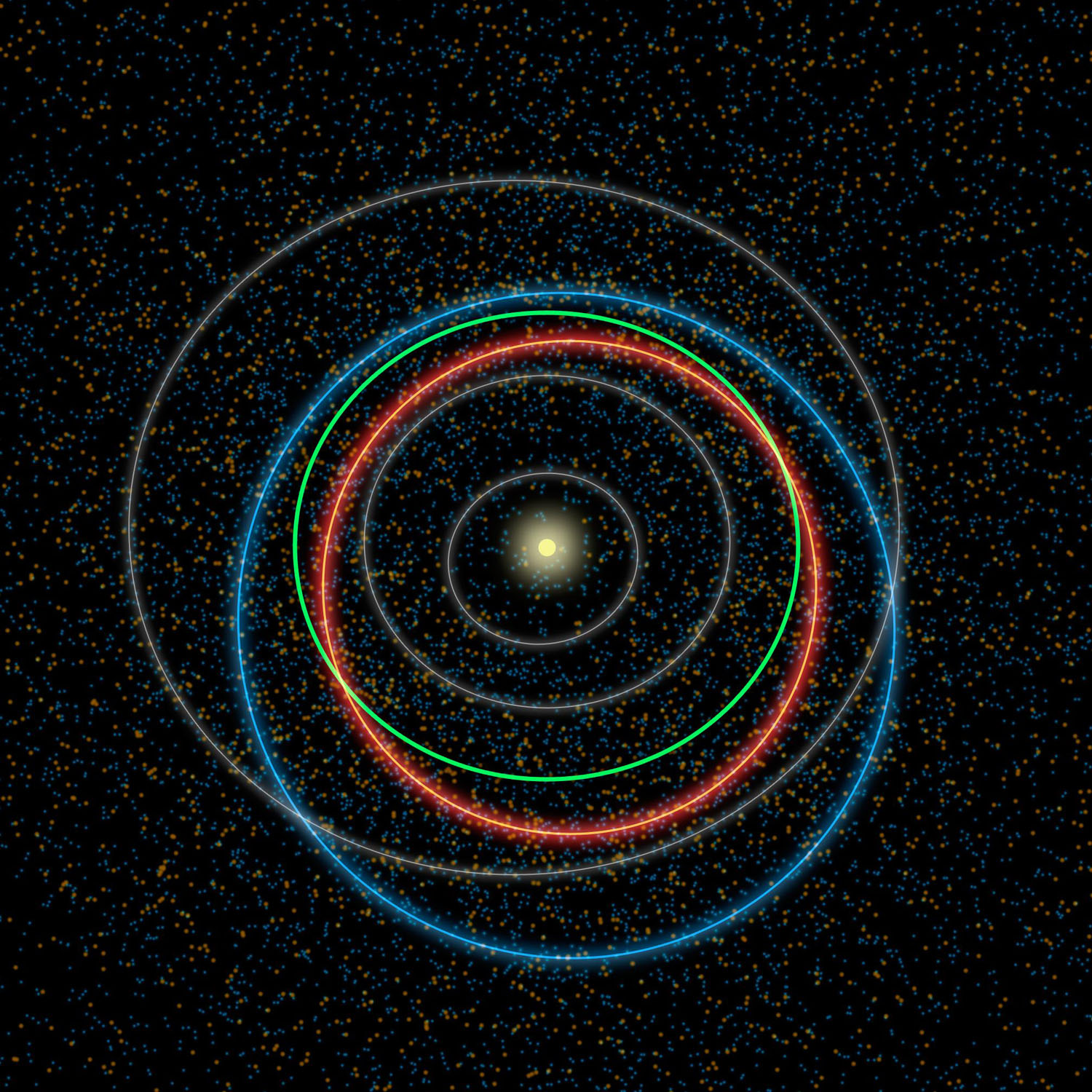
    differences between orbits of a typical near-Earth asteroid (blue) and a potentially hazardous asteroid, or PHA
    This diagram illustrates the differences between the orbits of a typical near-Earth asteroid (blue) and a potentially hazardous asteroid, or PHA (orange). PHAs are a subset of near-Earth asteroids (NEAs). They have the closest orbits to Earth’s orbit, coming within 5 million miles (about 8 million kilometers), and they are large enough to survive passage through Earth’s atmosphere and cause damage on a regional, or greater, scale. Credit: NASA/JPL-Caltech

    This NASA image of the day shows the differences between orbits of a typical near-Earth asteroid and a potentially hazardous asteroid, or PHA.

    The Hustle and Bustle of Our Solar System

    This diagram illustrates the differences between orbits of a typical near-Earth asteroid (blue) and a potentially hazardous asteroid, or PHA (orange). PHAs are a subset of the near-Earth asteroids (NEAs) and have the closest orbits to Earth’s orbit, coming within 5 million miles (about 8 million kilometers). They also are large enough to survive passage through Earth’s atmosphere and cause damage on a regional, or greater, scale.

    Our yellow sun sits at the center of the crowd, while the orbits of the planets Mercury, Venus and Mars are shown in grey. Earth’s orbit stands out in green between Venus and Mars. As the diagram indicates, the PHAs tend to have more Earth-like orbits than the rest of the NEAs. The asteroid orbits are simulations of what a typical object’s path around the sun might look like.

    The dots in the background are based on data from NASA’s NEOWISE, the asteroid-hunting portion of the Wide-field Infrared Survey Explorer (WISE) mission, which scanned the whole sky twice in infrared light before entering hibernation mode in 2011. The blue and orange dots represent a simulation of the population of near-Earth asteroids and PHAs, respectively, which are larger than 330 feet (100 meters).

    NEOWISE has provided the best overall look at the PHA population yet, refining estimates of their numbers, sizes, types of orbits and potential hazards. The NEOWISE team estimates that about 20 to 30 percent of the PHAs thought to exist have actually been discovered as of May 2012, the date of this image.

    Never miss a breakthrough: Join the SciTechDaily newsletter.
    Follow us on Google and Google News.

    Asteroid Astronomy NASA
    Share. Facebook Twitter Pinterest LinkedIn Email Reddit

    Related Articles

    NASA’s Heat-Seeking Space Telescope Is Almost Ready to Spot Killer Asteroids

    Chunk of Moon Rock? NASA Tracks Asteroid 2024 PT5 During Close Earth Flyby

    Asteroid to Make a Record Close Approach to Earth on February 15

    Asteroid Apophis Will Make a Record Setting Close Approach to Earth

    4.5 km Asteroid Tumbles Past Earth

    New Images of Near-Earth Asteroid 2007 PA8

    NASA’s Dawn Gets a Close Up View of the Canuleia Crater on Vesta

    NASA’s WISE Uncovers New Clues on Jovian Trojans

    Near Miss Asteroid – An Opportunity To Test a Rapid Response Program

    Leave A Reply Cancel Reply

    • Facebook
    • Twitter
    • Pinterest
    • YouTube

    Don't Miss a Discovery

    Subscribe for the Latest in Science & Tech!

    Trending News

    Millions Take These IBS Drugs, But a New Study Finds Serious Risks

    Scientists Unlock Hidden Secrets of 2,300-Year-Old Mummies Using Cutting-Edge CT Scanner

    Bread Might Be Making You Gain Weight Even Without Eating More Calories

    Scientists Discover Massive Magma Reservoir Beneath Tuscany

    Europe’s Most Active Volcano Just Got Stranger – Here’s Why Scientists Are Rethinking It

    Alzheimer’s Symptoms May Start Outside the Brain, Study Finds

    Millions Take This Popular Supplement – Scientists Discover a Concerning Link to Heart Failure

    The Universe Is Expanding Too Fast and Scientists Can’t Explain Why

    Follow SciTechDaily
    • Facebook
    • Twitter
    • YouTube
    • Pinterest
    • Newsletter
    • RSS
    SciTech News
    • Biology News
    • Chemistry News
    • Earth News
    • Health News
    • Physics News
    • Science News
    • Space News
    • Technology News
    Recent Posts
    • Scientists Say a Hidden Structure May Exist Inside Earth’s Core
    • Doctors Surprised by the Power of a Simple Drug Against Colon Cancer
    • Why Popular Diabetes Drugs Like Ozempic Don’t Work for Everyone: The “Genetic Glitch”
    • Scientists Create Improved Insulin Cells That Reverse Diabetes in Mice
    • Scientists Stunned After Finding Plant Thought Extinct for 60 Years
    Copyright © 1998 - 2026 SciTechDaily. All Rights Reserved.
    • Science News
    • About
    • Contact
    • Editorial Board
    • Privacy Policy
    • Terms of Use

    Type above and press Enter to search. Press Esc to cancel.