
Close Menu
    Facebook X (Twitter) Instagram
    SciTechDaily
    • Biology
    • Chemistry
    • Earth
    • Health
    • Physics
    • Science
    • Space
    • Technology
    Facebook X (Twitter) Pinterest YouTube RSS
    SciTechDaily
    Home»Space»Orion Spacecraft to Take a Test Spin in the Vacuum of Space Without Leaving Earth
    Space

    Orion Spacecraft to Take a Test Spin in the Vacuum of Space Without Leaving Earth

    By NASAJuly 2, 2024No Comments3 Mins Read
    Facebook Twitter Pinterest Telegram LinkedIn WhatsApp Email Reddit
    Share
    Facebook Twitter LinkedIn Pinterest Telegram Email Reddit
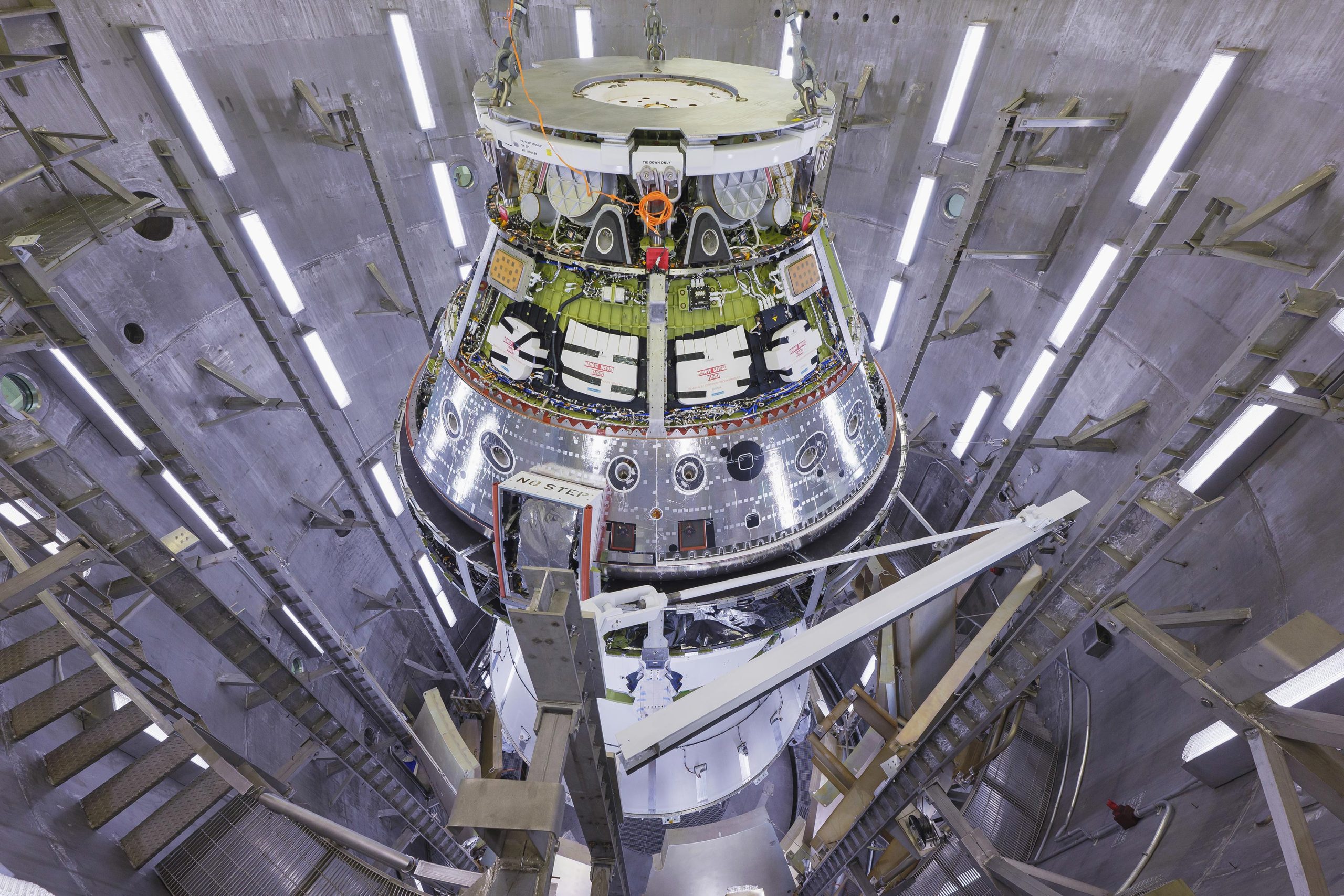
    NASA Orion Spacecraft Altitude Chamber
    Technicians used a 30-ton crane to lift NASA’s Orion spacecraft on Friday, June 28, 2024, from the Final Assembly and System Testing (FAST) cell to the altitude chamber inside the Neil A. Armstrong Operations and Checkout building at NASA’s Kennedy Space Center in Florida. The spacecraft, which will be used for the Artemis II mission to orbit the Moon, underwent leak checks and end-to-end performance verification of the vehicle’s subsystems. Credit: NASA

    NASA’s Orion spacecraft for the Artemis II mission completed assembly and system tests, including checks for propulsion system leaks. It was tested in a vacuum chamber to replicate the space environment, with data collected to verify its readiness for lunar missions.

    Orion Spacecraft’s Final Preparations

    NASA’s Orion spacecraft for the Artemis II mission was lifted out of the Final Assembly and System Testing cell on June 28 inside the Neil A. Armstrong Operations and Checkout building at NASA’s Kennedy Space Center in Florida. The integrated spacecraft has been undergoing final rounds of testing and assembly, including end-to-end performance verification of its subsystems and checking for leaks in its propulsion systems.

    Electromagnetic and Vacuum Testing

    A 30-ton crane returned Orion to the recently renovated altitude chamber where it underwent electromagnetic testing. The spacecraft will now undergo a series of vacuum chamber qualification tests. The testing will subject the spacecraft to a near-vacuum environment by removing air, thus creating a space where the pressure is extremely low. This results in no atmosphere, similar to the one the spacecraft will experience during future lunar missions.

    Data Collection and Suit Testing

    Testing will span approximately a week, with technicians collecting data from the spacecraft’s chamber, cabin, and environmental control and life support system to test spacesuit functionality. The data recorded during these tests will be used to qualify the spacecraft to safely fly the Artemis II astronauts through the harsh environment of space.

    NASA’s Orion spacecraft is designed for deep space missions, aiming to carry astronauts further into space than ever before, including potential missions to the Moon and Mars. It is a critical part of NASA’s Artemis program, which plans to return humans to the Moon and establish a sustainable presence there. The spacecraft consists of two main parts: the Crew Module, built by Lockheed Martin, which houses the astronauts and supports life during missions; and the European Service Module, provided by the European Space Agency, which supplies power, propulsion, and life support systems to the Crew Module. Orion is engineered to withstand the harsh environment of deep space and safely return its crew to Earth.

    Never miss a breakthrough: Join the SciTechDaily newsletter.
    Follow us on Google and Google News.

    ARTEMIS Mission NASA Orion Spacecraft
    Share. Facebook Twitter Pinterest LinkedIn Email Reddit

    Related Articles

    NASA’s Super Guppy Arrives in California With Key Component for Artemis Moon Mission

    One Step Closer: Orion Spacecraft Stacked on Top SLS Rocket for NASA’s Artemis I Mission

    A European Push to the Moon and Beyond

    Artemis I: NASA’s Bold Plans to Travel Beyond the Moon [Video]

    Welding Underway on Orion Crew Module for First Artemis Mission Landing Astronauts on the Moon

    Orion Spacecraft Ready to Fuel Up for NASA’s Artemis I Mission Beyond the Moon

    NASA Selects New Orion Program Manager: Catherine Koerner

    Orion Spacecraft Passes Tests – Ready for Final Artemis I Launch Preparations

    Orion Spacecraft Returns to Kennedy Space Center for Final Preparations Before Artemis I Launch

    Leave A Reply Cancel Reply

    • Facebook
    • Twitter
    • Pinterest
    • YouTube

    Don't Miss a Discovery

    Subscribe for the Latest in Science & Tech!

    Trending News

    The Universe Is Expanding Too Fast and Scientists Can’t Explain Why

    “Like Liquid Metal”: Scientists Create Strange Shape-Shifting Material

    Early Warning Signals of Esophageal Cancer May Be Hiding in Plain Sight

    Common Blood Pressure Drug Shows Surprising Power Against Deadly Antibiotic-Resistant Superbug

    Scientists Uncover Dangerous Connection Between Serotonin and Heart Valve Disease

    Scientists Discover a “Protector” Protein That Could Help Reverse Hair Loss

    Bone-Strengthening Discovery Could Reverse Osteoporosis

    Scientists Uncover Hidden Trigger Behind Stem Cell Aging

    Follow SciTechDaily
    • Facebook
    • Twitter
    • YouTube
    • Pinterest
    • Newsletter
    • RSS
    SciTech News
    • Biology News
    • Chemistry News
    • Earth News
    • Health News
    • Physics News
    • Science News
    • Space News
    • Technology News
    Recent Posts
    • Scientists Overcome Major Quantum Bottleneck, Potentially Transforming Teleportation and Computing
    • Quantum Physics’ Strangest Problem May Hold the Key to Time Itself
    • Scientists Create “Liquid Gears” That Spin Without Touching
    • The Simple Habit That Could Help Prevent Cancer
    • Forgotten Medicinal Plant Shows Promise in Fighting Dangerous Superbugs
    Copyright © 1998 - 2026 SciTechDaily. All Rights Reserved.
    • Science News
    • About
    • Contact
    • Editorial Board
    • Privacy Policy
    • Terms of Use

    Type above and press Enter to search. Press Esc to cancel.