
Close Menu
    Facebook X (Twitter) Instagram
    SciTechDaily
    • Biology
    • Chemistry
    • Earth
    • Health
    • Physics
    • Science
    • Space
    • Technology
    Facebook X (Twitter) Pinterest YouTube RSS
    SciTechDaily
    Home»Space»Artemis II Spacecraft Testing Begins in NASA’s Upgraded Altitude Chamber
    Space

    Artemis II Spacecraft Testing Begins in NASA’s Upgraded Altitude Chamber

    By NASAApril 21, 2024No Comments6 Mins Read
    Facebook Twitter Pinterest Telegram LinkedIn WhatsApp Email Reddit
    Share
    Facebook Twitter LinkedIn Pinterest Telegram Email Reddit
    NASA Altitude Chamber Gets Upgrade for Artemis II
    As NASA prepares for the Artemis II mission, the Orion spacecraft is undergoing rigorous testing at Kennedy Space Center’s updated altitude chamber. The testing sequence, which assesses electromagnetic compatibility and simulates high-altitude conditions, is a crucial step in ensuring Orion’s readiness for lunar exploration. Credit: NASA’s Kennedy Space Center

    NASA is preparing the Orion spacecraft for the Artemis II mission by conducting rigorous tests at Kennedy Space Center’s upgraded altitude chamber.

    Before the Orion spacecraft is stacked atop NASA’s powerful SLS (Space Launch System) rocket ahead of the Artemis II mission, engineers will put it through a series of rigorous tests to ensure it is ready for lunar flight. In preparation for testing, teams at the agency’s Kennedy Space Center in Florida have made significant upgrades to the altitude chamber where testing will occur.

    Testing Facilities and Procedures

    Several of the tests take place inside one of two altitude chambers in the high bay of the Neil A. Armstrong Operations and Checkout (O&C) Building at Kennedy. These tests, which began on April 10, include checking out electromagnetic interference and electromagnetic compatibility, which demonstrate the capability of the spacecraft when subjected to internally and externally generated electromagnetic energy and verify that all systems perform as they would during the mission.
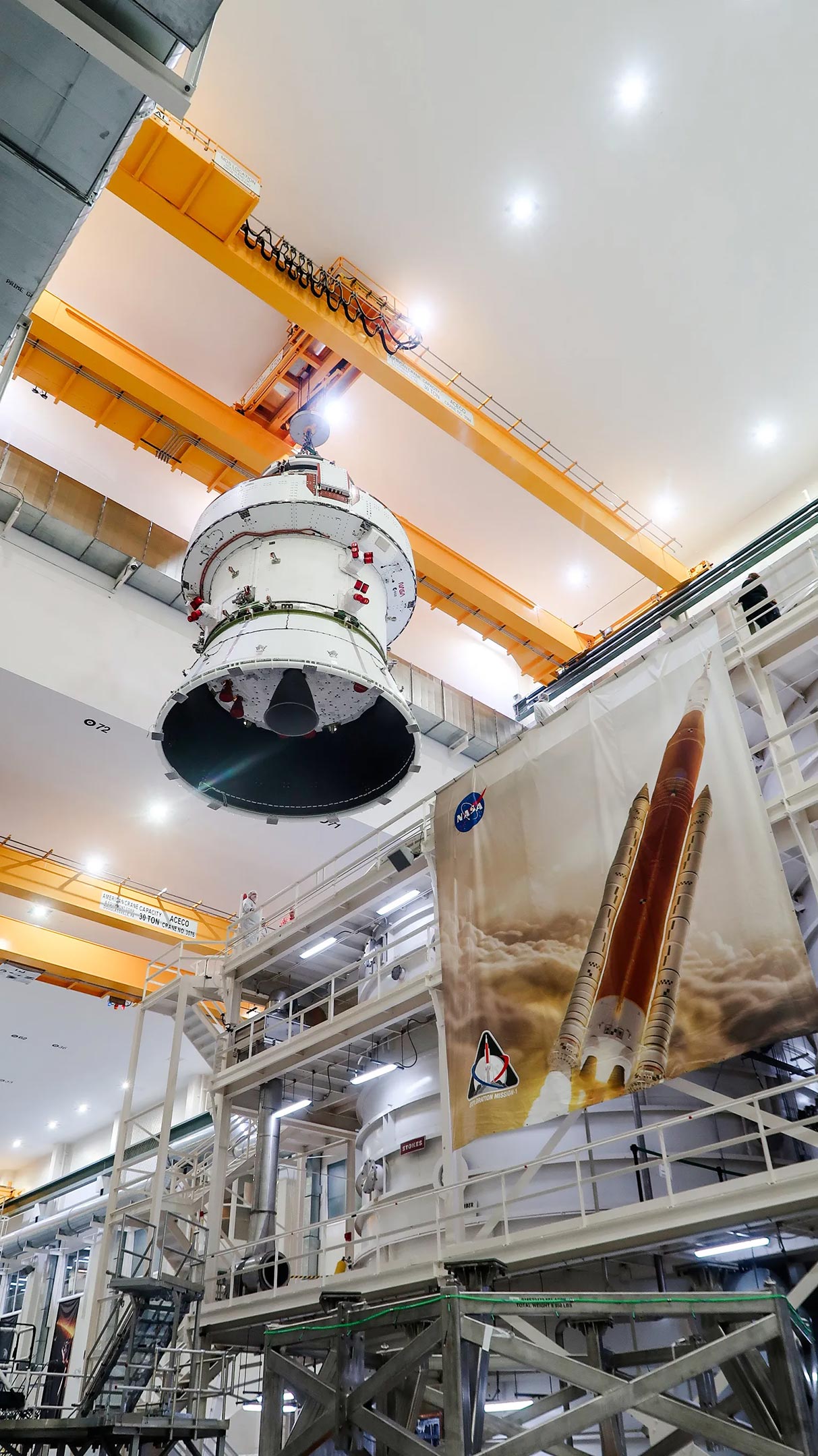
    Artemis II Orion Spacecraft Lift Into Vacuum Chamber
    On April 4, 2024, a team lifts the Artemis II Orion spacecraft into a vacuum chamber inside the Operations and Checkout Building at NASA’s Kennedy Space Center in Florida, where it will undergo electromagnetic compatibility and interference testing. Credit: NASA/Amanda Stevenson

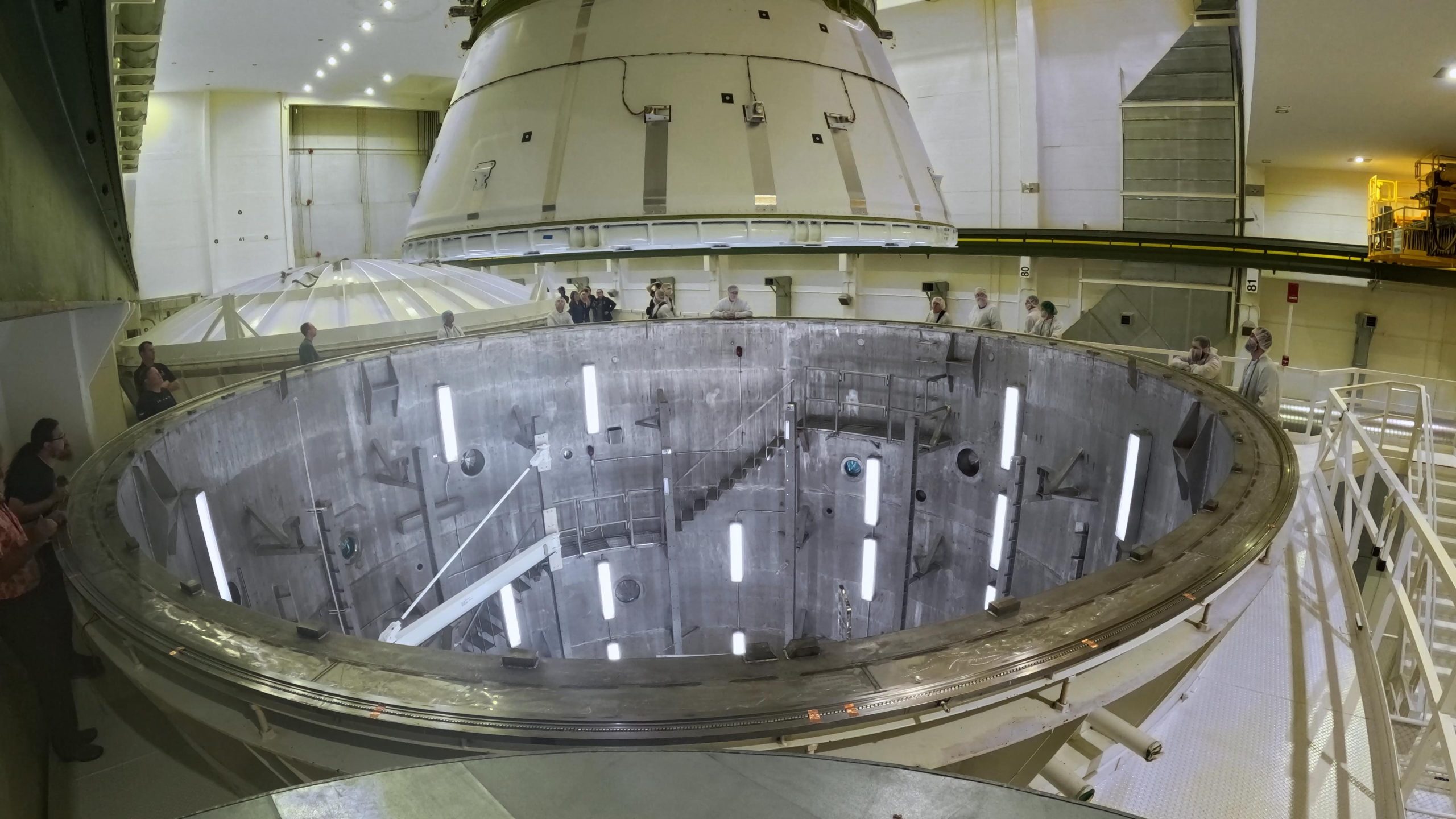
    To prepare for the tests, the west altitude chamber was upgraded to test the spacecraft in a vacuum environment that simulates an altitude of up to 250,000 feet. These upgrades re-activated altitude chamber testing capabilities for the Orion spacecraft at Kennedy. Previous vacuum testing on the Orion spacecraft for Artemis I took place at NASA’s Glenn Research Center in Ohio. Teams also installed a 30-ton crane in the O&C to lift and lower the Orion crew and service module stack into the chamber, lift and lower the chamber’s lid, and move the spacecraft across the high bay.

    Significant Testing Milestones

    On Thursday, April 4, teams loaded the Artemis II spacecraft into the altitude chamber. This event marks the first time, since the Apollo testing, that a spacecraft designed for human exploration of space has entered the chamber for testing. After testing is complete, the spacecraft will return to the Final Assembly and Systems Testing, or FAST, cell in the O&C for further work. Later this summer, teams will lift Orion back into the altitude chamber to conduct a test that simulates as close as possible the conditions in the vacuum of deep space.


    On April 4, 2024, a team lifts the Artemis II Orion spacecraft into a vacuum chamber inside the Operations and Checkout Building at NASA’s Kennedy Space Center in Florida, where it will undergo electromagnetic compatibility and interference testing. Credit: NASA’s Kennedy Space Center

    Originally used to test environmental and life support systems on the lunar and command modules during the Apollo Program, the interior of each altitude chamber measures 33 feet in diameter and 44 feet high and was designed to simulate the vacuum equivalent of up to 200,000 feet in a deep space environment. Both chambers were rated for astronaut crews to operate flight systems during tests.
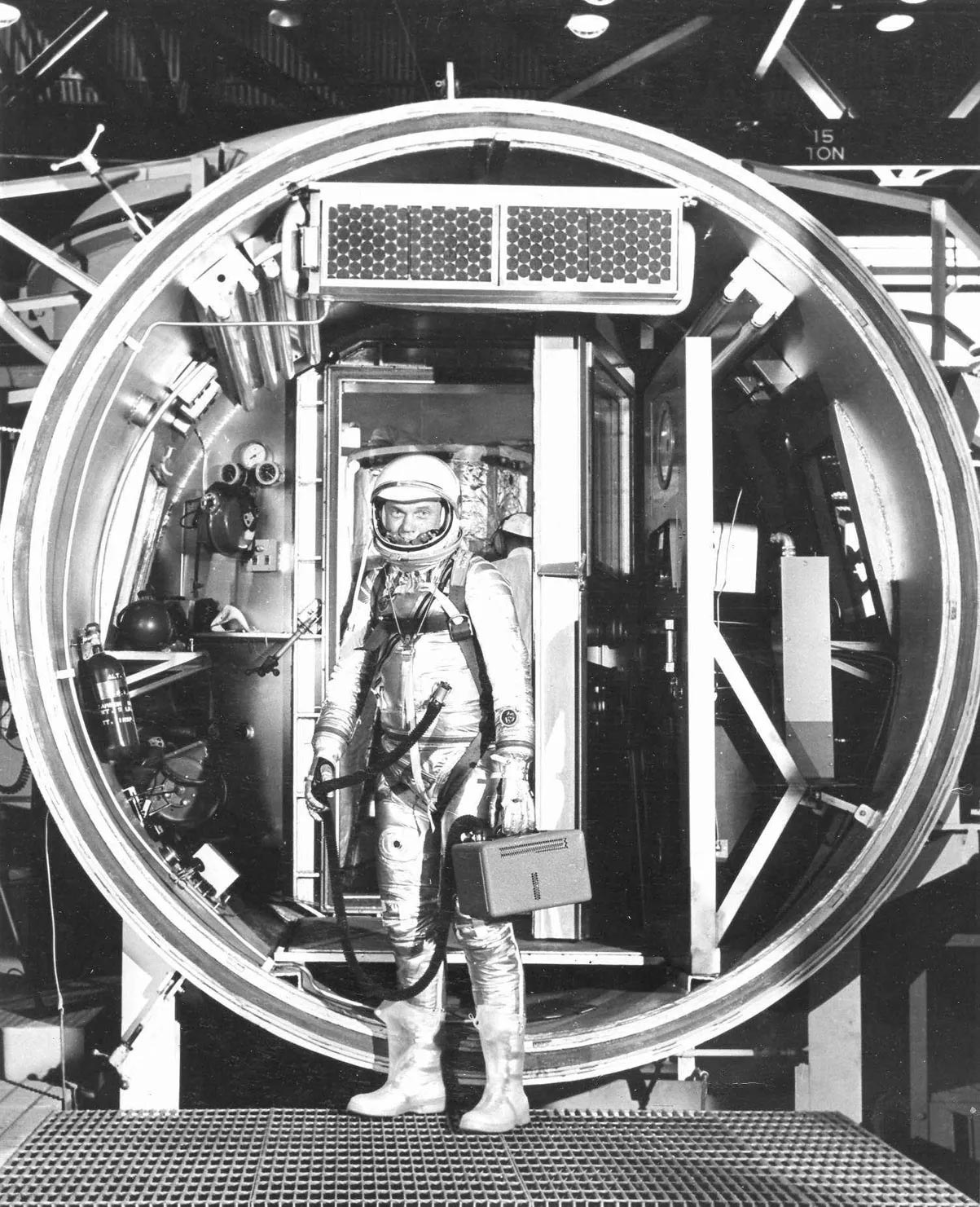
    Altitude Chambers
    View of the Altitude Chambers inside the Neil A. Armstrong Operations and Checkout (O&C) Building at Kennedy Space Center in Florida. Credit: ACI/Penny Rogo Bailes

    After Apollo, the chambers were used for leak tests on pressurized modules delivered by the Shuttle program for the International Space Station.

    Additional upgrades to the west chamber include a new oxygen deficiency monitoring system that provides real-time monitoring of the oxygen levels and a new airflow system. New LED lights replaced the previous lighting system, and equipment from the Apollo days was removed. A pressure control system was added to the chamber that provides precise control of pressure levels. Two new pumps remove the air from the chamber to create a vacuum. New guardrails and service platforms replaced the older platforms inside the chamber.
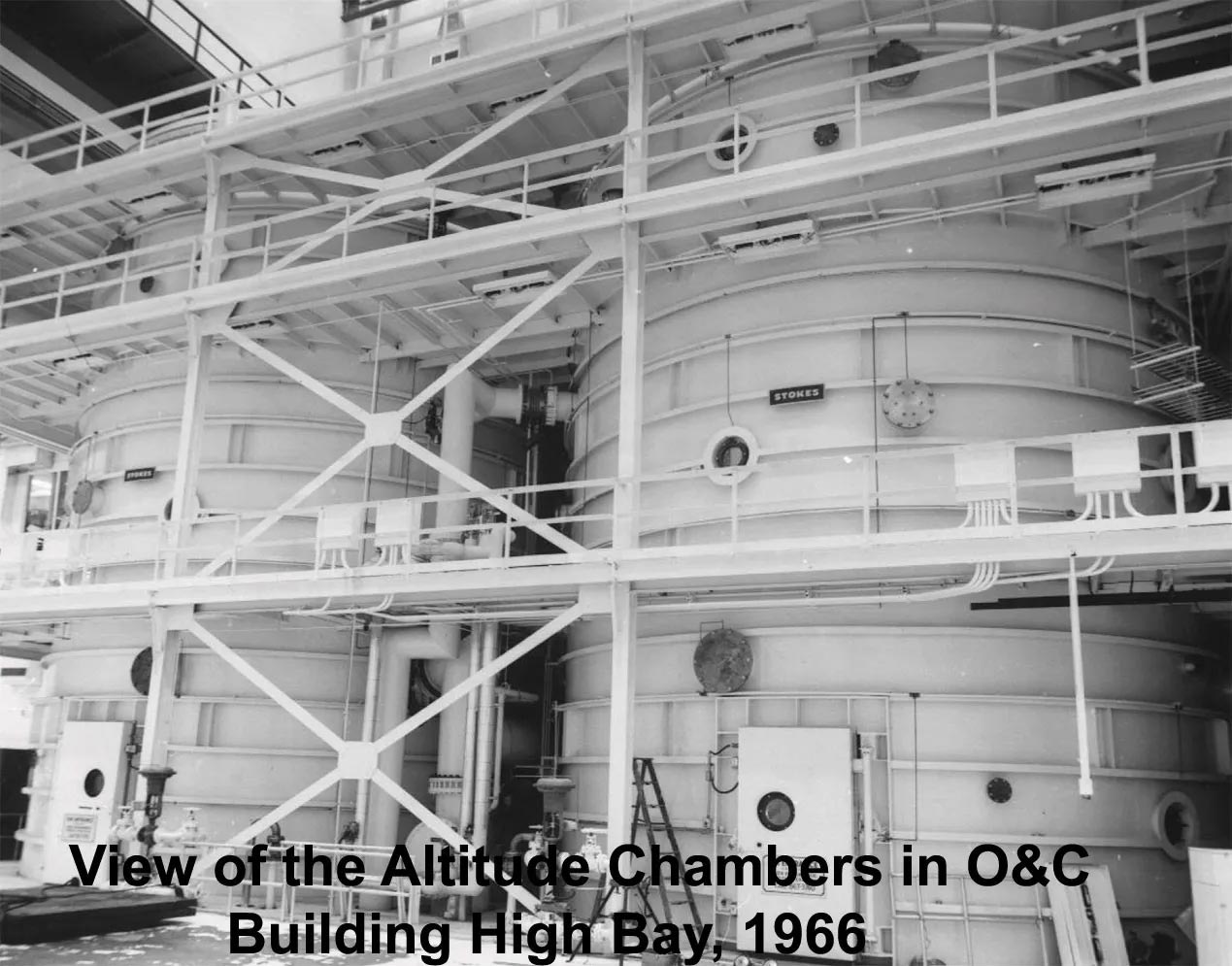
    NASA Altitude Chambers 1966
    View of the Altitude Chambers inside the Neil A. Armstrong Operations and Checkout (O&C) Building at Kennedy Space Center in Florida. Credit: ACI/Penny Rogo Bailes

    A new control room overlooks the upgraded chamber. It contains several workstations and communication equipment. The chamber control and monitoring system was upgraded to handle operation of all the remotely controlled hardware and subsystems that make up the vacuum testing capability.

    Project Management and Future Missions

    “It was an amazing opportunity to lead a diverse and exceptional team to re-activate a capability for testing the NASA’s next generation spacecraft that will carry humans back to the Moon,” said Marie Reed, West Altitude Chamber Reactivation Project Manager. “The team of more than 70 aerospace professionals, included individuals from NASA, Lockheed Martin, Artic Slope Research Corps, Jacobs Engineering, and every discipline area imaginable. This project required long hours of dedication and exceptional coordination to enable the successful turn-around and activation in time for this Artemis II spacecraft testing.”

    West Altitude Chamber Reactivation Project Team Leads
    Team leads from the west altitude chamber reactivation project are pictured in Artemis gear standing in front of the upgraded vacuum chamber inside the Operations and Checkout Building at NASA’s Kennedy Space Center. The team for this project included more than 70 aerospace professionals who received a NASA Silver Group Achievement Award for their efforts. Pictured from left to right: Victor Allpiste (Power & Lighting Systems Electrical Lead) Raymond T. Francois (TQCM System Lead / Mechanical Engineer) Marie Reed (Project Manager), Alfredo Urbina (Controls / Electrical Systems Lead), and Tim Saunders (Mechanical Systems Lead). Credit: NASA

    NASA’s Artemis II mission will carry four astronauts aboard the agency’s Orion spacecraft on an approximately 10-day test flight around the Moon and back to Earth, the first crewed flight under Artemis that will test Orion’s life support systems ahead of future missions. Under the Artemis campaign, NASA will return humanity to the lunar surface, this time sending humans to explore the lunar South Pole region.

    Never miss a breakthrough: Join the SciTechDaily newsletter.
    Follow us on Google and Google News.

    ARTEMIS Mission Kennedy Space Center NASA Orion Spacecraft
    Share. Facebook Twitter Pinterest LinkedIn Email Reddit

    Related Articles

    NASA’s Artemis I Orion Spacecraft Returns to Kennedy Space Center

    Journey Around the Moon: Artemis II Crew Inspects Orion Spacecraft Ahead of Historic Mission

    Mission Successful: NASA and DoD Ace First Recovery Test for Artemis II

    NASA Conducts Check-outs, Preparations Ahead of Next Artemis I Moon Rocket Launch Attempt

    Orion Spacecraft Ready to Fuel Up for NASA’s Artemis I Mission Beyond the Moon

    NASA Selects New Orion Program Manager: Catherine Koerner

    Searching With Sasquatch: Recovering NASA’s Orion Spacecraft

    Orion Spacecraft Passes Tests – Ready for Final Artemis I Launch Preparations

    Orion Spacecraft Returns to Kennedy Space Center for Final Preparations Before Artemis I Launch

    Leave A Reply Cancel Reply

    • Facebook
    • Twitter
    • Pinterest
    • YouTube

    Don't Miss a Discovery

    Subscribe for the Latest in Science & Tech!

    Trending News

    Popular Sugar-Free Sweetener Linked to Liver Disease, Study Warns

    What Is Hantavirus? The Deadly Disease Raising Alarm Worldwide

    Scientists Just Discovered How the Universe Builds Monster Black Holes

    Scientists Unveil New Treatment Strategy That Could Outsmart Cancer

    A Simple Vitamin May Hold the Key to Treating Rare Genetic Diseases

    Scientists Think the Real Fountain of Youth May Be Hiding in Your Gut

    Ravens Don’t Follow Wolves, They Predict Them

    This Common Knee Surgery May Be Doing More Harm Than Good

    Follow SciTechDaily
    • Facebook
    • Twitter
    • YouTube
    • Pinterest
    • Newsletter
    • RSS
    SciTech News
    • Biology News
    • Chemistry News
    • Earth News
    • Health News
    • Physics News
    • Science News
    • Space News
    • Technology News
    Recent Posts
    • Why Are So Many New Fathers Dying? Scientists Say the U.S. Has a Dangerous Blind Spot
    • Scientists Identify Simple Supplement That Greatly Reduces Alzheimer’s Damage
    • You May Have a Dangerous Type of Cholesterol Even if Your Tests Look Normal
    • Study Reveals Dangerous Flaw in AI Symptom Checkers
    • New MRI Breakthrough Captures Stunningly Clear Images of the Eye and Brain
    Copyright © 1998 - 2026 SciTechDaily. All Rights Reserved.
    • Science News
    • About
    • Contact
    • Editorial Board
    • Privacy Policy
    • Terms of Use

    Type above and press Enter to search. Press Esc to cancel.