
Close Menu
    Facebook X (Twitter) Instagram
    SciTechDaily
    • Biology
    • Chemistry
    • Earth
    • Health
    • Physics
    • Science
    • Space
    • Technology
    Facebook X (Twitter) Pinterest YouTube RSS
    SciTechDaily
    Home»Earth»Otherworldly Earth: This NASA Photo Isn’t Really Mars, It’s the Libyan Desert
    Earth

    Otherworldly Earth: This NASA Photo Isn’t Really Mars, It’s the Libyan Desert

    By NASA Earth ObservatoryDecember 27, 2021No Comments3 Mins Read
    Facebook Twitter Pinterest Telegram LinkedIn WhatsApp Email Reddit
    Share
    Facebook Twitter LinkedIn Pinterest Telegram Email Reddit
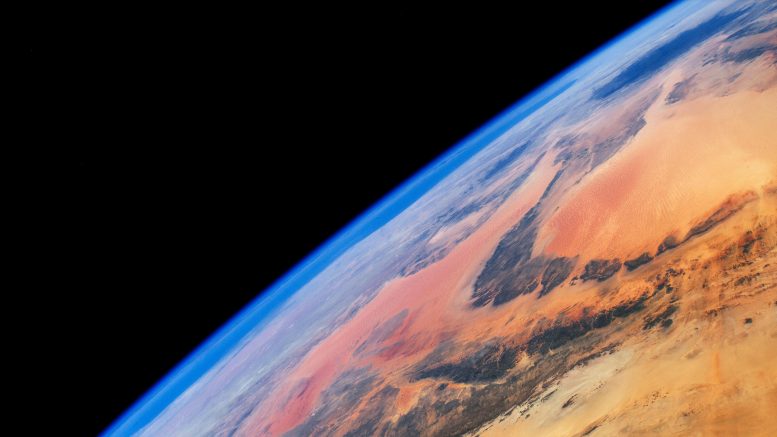
    Libyan Desert
    Libyan Desert, February 5, 2021

    The Libyan Desert Is Often Cited as a Mars Analog

    The vast Libyan Desert stretches toward the Mediterranean Sea, which itself fades into the horizon of this photograph. This highly oblique view of Northern Africa was taken by an External High-Definition Camera (EHDC) on the International Space Station (ISS). The burnt reds and oranges of the desert and the dark-toned mountains and plateaus contrast sharply with the bright blues of the sea and horizon; all stand out against the deep black of space. From this vantage point, Earth looks otherworldly. Were it not for the distinctive blue of the Mediterranean in the distance, it could be mistaken for Mars or the myriad desert planets of science fiction.

    The Libyan Desert, part of the larger Sahara Desert, is often cited as a Mars analog—an area of Earth that has similar features to the Red Planet. It is the most arid part of the Sahara, and mostly uninhabited. The featured landscape is a mosaic of windswept dunes and darker sandstone plateaus making up the Fezzan region of Libya.

    The EHDC is one of the ground-controlled cameras used to monitor mission status on the ISS. When the camera is Earth-facing, it joins the many Earth-observing sensors that are part of the ISS mission. These experiments take advantage of the unique orbital properties of the space station to gather data about our home planet. The position of EDHC on the orbiting lab allows for it to take wide-angle, highly oblique shots like this one—a type of view that is unusual for most remote sensing platforms but a favorite for astronaut photography.

    ISS External High-Definition Camera (EHDC) photograph ISS064-E-29444 was acquired on February 5, 2021, with a D4 Electronic Still Camera using a focal length of 56 millimeters. It is provided by the ISS Crew Earth Observations Facility and the Earth Science and Remote Sensing Unit, Johnson Space Center. The image was taken by an externally-mounted camera on the ISS during Expedition 64. The image has been cropped and enhanced to improve contrast, and lens artifacts have been removed. The International Space Station Program supports the laboratory as part of the ISS National Lab to help astronauts take pictures of Earth that will be of the greatest value to scientists and the public, and to make those images freely available on the Internet. Additional images taken by astronauts and cosmonauts can be viewed at the NASA/JSC Gateway to Astronaut Photography of Earth. Caption by Alex Stoken, Jacobs, JETS Contract at NASA-JSC.

    Never miss a breakthrough: Join the SciTechDaily newsletter.
    Follow us on Google and Google News.

    Geography Geology NASA NASA Earth Observatory
    Share. Facebook Twitter Pinterest LinkedIn Email Reddit

    Related Articles

    Australia’s “Fairy Circles” – Nature’s Hydrogen Goldmine?

    Utah’s Hidden Time Capsule: The Dark Canyon Complex

    Traces of an Ancient Watery World in Capitol Reef Photographed From Space Station

    Island Obliterated: Dramatic Changes at Hunga Tonga-Hunga Ha’apai

    Movie Mars on Earth: Wadi Rum as a Stand-In for the Red Planet

    Ol Doinyo Lengai: The Symmetric “Mountain of God” in Tanzania Is Part of the East African Rift System

    From Russia With Questions: Distinctive Striping Pattern in Siberia Puzzles Researchers

    Gold Mining in Russia’s Central Aldan Ore District Seen From Space

    Sea of Galilee Seen From Space – Source of Religious Inspiration and Intrigue

    Leave A Reply Cancel Reply

    • Facebook
    • Twitter
    • Pinterest
    • YouTube

    Don't Miss a Discovery

    Subscribe for the Latest in Science & Tech!

    Trending News

    First-of-Its-Kind Discovery: Homer’s Iliad Found Embedded in a 1,600-Year-Old Egyptian Mummy

    Beyond Inflammation: Scientists Uncover New Cause of Persistent Rheumatoid Arthritis

    A Simple Molecule Could Unlock Safer, Easier Weight Loss

    Scientists Just Built a Quantum Battery That Charges Almost Instantly

    Researchers Unveil Groundbreaking Sustainable Solution to Vitamin B12 Deficiency

    Millions of People Have Osteopenia Without Realizing It – Here’s What You Need To Know

    Researchers Discover Boosting a Single Protein Helps the Brain Fight Alzheimer’s

    World-First Study Reveals Human Hearts Can Regenerate After a Heart Attack

    Follow SciTechDaily
    • Facebook
    • Twitter
    • YouTube
    • Pinterest
    • Newsletter
    • RSS
    SciTech News
    • Biology News
    • Chemistry News
    • Earth News
    • Health News
    • Physics News
    • Science News
    • Space News
    • Technology News
    Recent Posts
    • After Decades, MIT Researchers Capture the First 3D Atomic View of a Mysterious Material
    • Your Favorite Fishing Spot Is Turning Brown – and the Fish Are Changing
    • 380-Million-Year-Old Fish Fossil Reveals Secrets of Life’s First Steps Onto Land
    • Mezcal “Worm” in a Bottle Mystery: DNA Testing Reveals a Surprise
    • Scientists Turn Red Lettuce Green, Unlocking Hidden Nutrients
    Copyright © 1998 - 2026 SciTechDaily. All Rights Reserved.
    • Science News
    • About
    • Contact
    • Editorial Board
    • Privacy Policy
    • Terms of Use

    Type above and press Enter to search. Press Esc to cancel.