

Close Menu
    Facebook X (Twitter) Instagram
    SciTechDaily
    • Biology
    • Chemistry
    • Earth
    • Health
    • Physics
    • Science
    • Space
    • Technology
    Facebook X (Twitter) Pinterest YouTube RSS
    SciTechDaily
    Home»Science»Out of This World Flavor: How Zero Gravity Could Make Your Beer Taste Better
    Science

    Out of This World Flavor: How Zero Gravity Could Make Your Beer Taste Better

    By Megan Winslow, University of FloridaAugust 26, 2024No Comments4 Mins Read
    Facebook Twitter Pinterest Telegram LinkedIn WhatsApp Email Reddit
    Share
    Facebook Twitter LinkedIn Pinterest Telegram Email Reddit
    Astronaut Beer
    University of Florida scientists explored how beer yeast ferments in space-like conditions, finding increased fermentation speeds but lower ester outputs, suggesting potential for superior beer quality in microgravity environments. Credit: SciTechDaily.com

    A study by the University of Florida found that beer yeast ferments faster but produces fewer flavoring esters in simulated microgravity, hinting at better-quality beer production in space.

    New insight into how beer yeast might behave when fermented in outer space is provided in a recently published study.

    While the concept may initially sound trivial, it has far-reaching applications, according to the study, a collaboration between researchers from the University of Florida, Institute of Food and Agricultural Sciences (UF/IFAS) food science and human nutrition department and the horticultural sciences department.

    Fermentation is an essential process in the creation of food products including bread, yogurt and kombucha. Biofuels and many pharmaceuticals are also generated through fermentation. But the researchers chose to analyze beer yeast fermentation because humans have brewed beer for thousands of years, and there is an established foundation of knowledge about it.
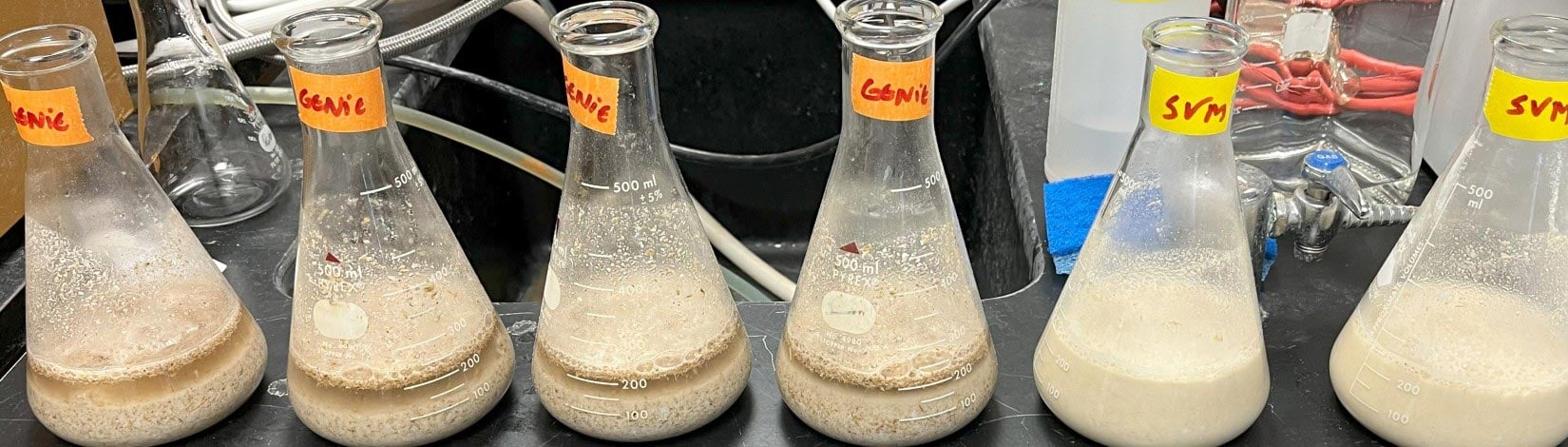
    Beer Microgravity Fermentation
    Fermentation of beer yeast in simulated microgravity speeds up but produces fewer flavor esters, potentially improving beer quality in space. Credit: Andrew MacIntosh

    “We are absolutely going to be conducting fermentations under microgravity in the future, as we continue space exploration, and there are going to be outcomes that will be very difficult for us to predict,” said study author Andrew MacIntosh, a UF/IFAS associate professor of food science. “It’s essential that we look at what some of those outcomes may be, now, so we can decide which processes are going to be the first ones we perform under microgravity, how we adapt them, and how we can take advantage of the changes we see.”

    Experiment Setup and Microgravity Simulation

    Pedro Fernandez Mendoza led the study as an undergraduate researcher. His team took barley grown in Live Oak, Florida, and mashed it to create wort, a liquid solution of extracted grains. They divided the wort into six identical samples and initiated fermentation by combining the samples in tubes with Saccharomyces pastorianus, the species of beer yeast used for brewing lagers.

    Three tubes acted as controls, and three tubes were placed inside a clinostat, a device that simulates microgravity by rotating samples around a horizontal axis.
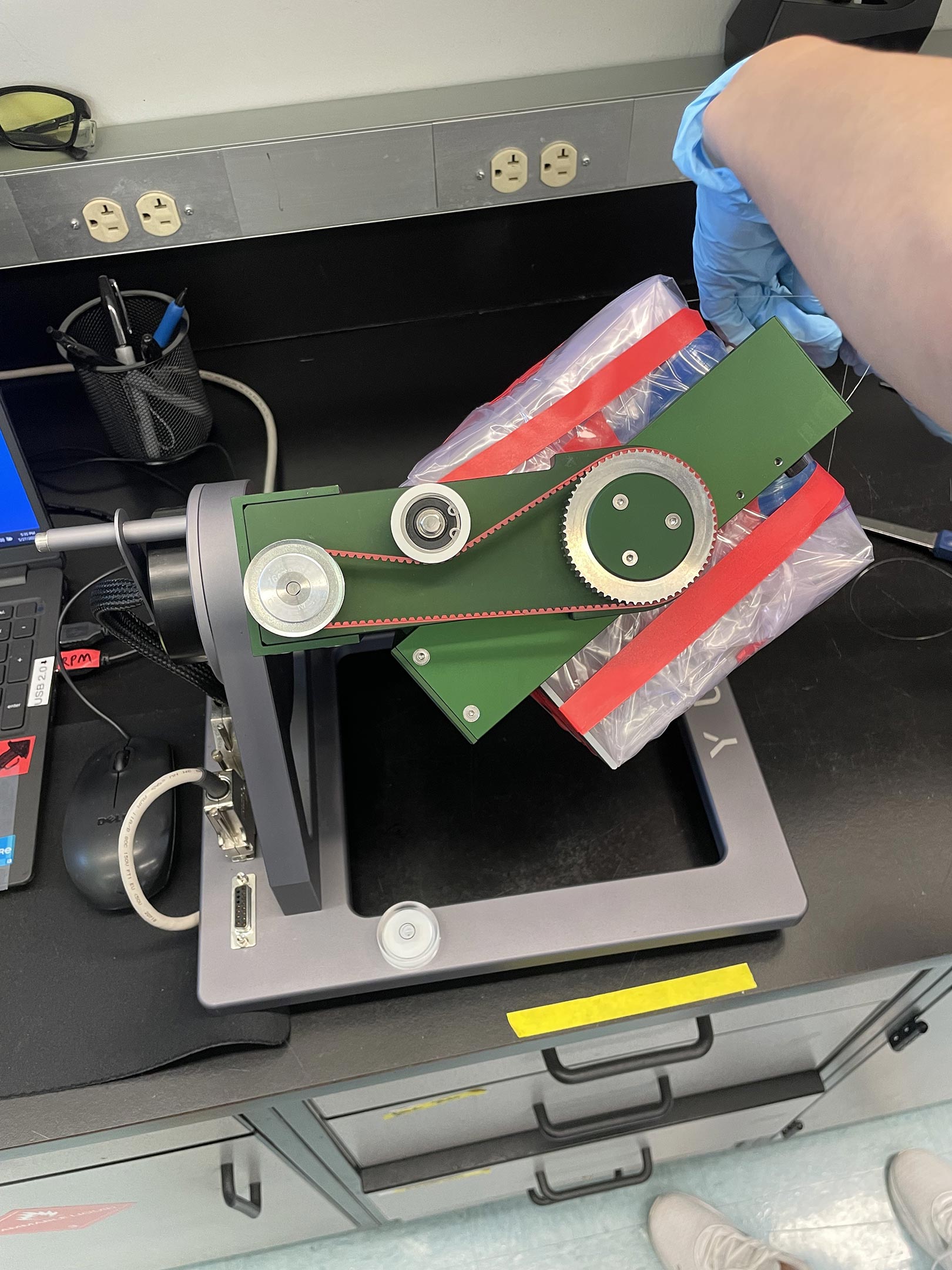
    Clinostat Simulates Microgravity
    A clinostat simulates microgravity during the experiment. Credit: Andrew MacIntosh

    Results of Fermentation in Simulated Microgravity

    As the researchers hypothesized, microgravity did not adversely affect the number of yeast cells or their viability. Instead, the rate of fermentation increased. They attributed this result to the cells’ constant suspension, a state that maximized nutrient availability by preventing settling.

    Andrew MacIntosh
    Andrew MacIntosh Credit: Andrew MacIntosh

    Surprisingly, however, the yeast exposed to microgravity produced fewer esters, the byproducts of fermentation that create both desirable and undesirable beer flavors. While suspension could be responsible, the researchers learned a yeast gene that regulates ester production might also play a part; the gene was expressed less in yeast samples exposed to microgravity than in control samples.

    Conclusions and Future Research

    The researchers concluded the ester levels observed in the microgravity samples would likely lead to the creation of a higher-quality product compared to those observed in the control samples.

    MacIntosh said the team’s research marks only the beginning of understanding how microgravity can be leveraged to improve products used every day.

    “This study is definitely the first piece in the puzzle, and I’m excited to do more,” he said.

    Reference: “Brewing Beer in Microgravity: The Effect on Rate, Yeast, and Volatile Compounds” by Pedro Fernandez Mendoza, Katherine A. Thompson-Witrick, Skylar R. Moreno, Santiago Cárdenas-Pinto, Zhen Jia, Lincoln Zotarelli, Boce Zhang and Andrew J. MacIntosh, 18 June 2024, Beverages.
    DOI: 10.3390/beverages10020047

    Never miss a breakthrough: Join the SciTechDaily newsletter.
    Follow us on Google and Google News.

    Beer Food Science Microbiology University of Florida
    Share. Facebook Twitter Pinterest LinkedIn Email Reddit

    Related Articles

    Unlocking Yeast’s Killer Instinct to Save Craft Beer

    CRISPR-Crafted Cuisine: How Genetic Engineering Is Changing What We Eat

    New Research Reveals Why You Should Always Refrigerate Lettuce

    Unraveling the Secrets of Beer: New Study Debunks Age-Old Assumptions

    Science Reveals Sourdough Secrets: Unraveling the Tangy Mystery of Pandemic-Era’s Favorite Bread

    New Recipe Discovered by Italian Researchers Extends Shelf Life of Fresh Pasta by 30 Days

    Used Beer Yeast Could Be Simple Solution to Heavy Metal Contamination in Water

    Ancient Poop Shows People in Austria Drank Beer and Ate Blue Cheese 2,700 Years Ago

    Beer Byproduct Mixed With Manure Proves an Excellent Pesticide – Increases Crop Yields

    Leave A Reply Cancel Reply

    • Facebook
    • Twitter
    • Pinterest
    • YouTube

    Don't Miss a Discovery

    Subscribe for the Latest in Science & Tech!

    Trending News

    Popular Supplement Ingredient Linked to Shorter Lifespan in Men

    Scientists May Have Found a Way To Repair Nerve Damage in Multiple Sclerosis

    “Totally Unexpected” – Scientists Discover Pancreatic Cancer’s Fatal Addiction

    A Strange Quantum Effect May Explain One of Biology’s Greatest Mysteries

    James Webb Telescope Reveals the Universe’s Hidden Cosmic Web in Stunning Detail

    Scientists Identify Simple Supplement That Greatly Reduces Alzheimer’s Damage

    You May Have a Dangerous Type of Cholesterol Even if Your Tests Look Normal

    Your Blood Pressure Reading Could Be Wrong Because of One Simple Mistake

    Follow SciTechDaily
    • Facebook
    • Twitter
    • YouTube
    • Pinterest
    • Newsletter
    • RSS
    SciTech News
    • Biology News
    • Chemistry News
    • Earth News
    • Health News
    • Physics News
    • Science News
    • Space News
    • Technology News
    Recent Posts
    • After 50 Years of Mystery, Researchers Identify New Human Blood Group
    • Leading Climate Scientist Rebuts “Factually Incorrect” US Government Climate Claims
    • You’re Breathing Plastic: Study Finds 4% of City Air Pollution Is Microplastics
    • Cancer Mystery Solved: Scientists Discover How Melanoma Becomes “Immortal”
    • Scientists Uncover Cancer-Fighting Power of Popular Fatty Liver Drug
    Copyright © 1998 - 2026 SciTechDaily. All Rights Reserved.
    • Science News
    • About
    • Contact
    • Editorial Board
    • Privacy Policy
    • Terms of Use

    Type above and press Enter to search. Press Esc to cancel.