
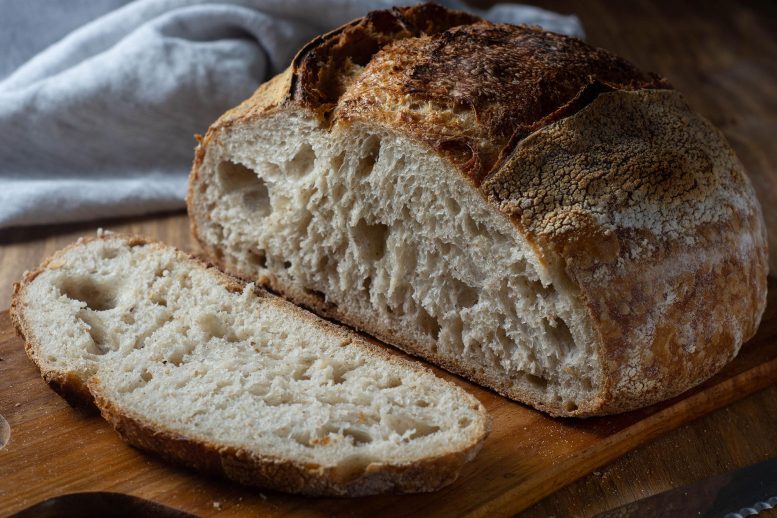
Researchers have decoded 21 chemical compounds behind sourdough bread’s distinct taste and aroma. Using a “sensomics” approach, the team highlighted the importance of fermentation and proposed methods to reduce salt while preserving flavor.
A few years ago, amid lockdown boredom, it seemed like everyone was perfecting their sourdoughs. A simple, fermented mixture of flour and water, the bread is powered by microbes that provide its one-of-a-kind tangy flavor. For over a hundred years, sourdough bread has been synonymous with San Francisco, where scientists recently reported that they’ve identified and quantified 21 key chemical compounds that make this bread taste and smell so unique. They’ve also compared the levels of the compounds in different breads.
The researchers presented their results at the fall meeting of the American Chemical Society (ACS). ACS Fall 2023 is a meeting that features about 12,000 presentations on a wide range of science topics.
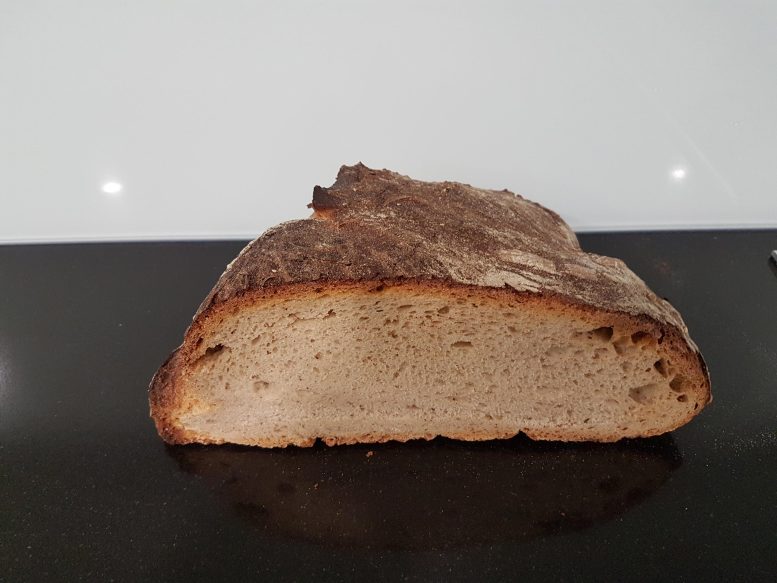
The Science Behind Sourdough’s Unique Flavor
Sourdough breads have existed for centuries, dating back to ancient Egypt — well before they hit their recent peak of popularity in 2020. Unlike other wheat or white breads, which often rely on baker’s yeast to rise, sourdough breads use a “starter” — a living colony of bacteria and wild yeast that causes the bread’s dough to rise through fermentation. Since the microbes come from the air of the local environment, certain places are reportedly home to the best loaves. For example, San Francisco’s unique foggy climate is said to help make its sourdoughs so famously delicious.
Even though these breads are common, little work has been done to understand what chemical compounds provide their characteristic taste and smell. This knowledge could be important to bakers who need to control the quality of their breads, preventing them from becoming too sour, and it could also help them create more consistent sourdoughs for consumers to enjoy. So, Thomas Hofmann’s team at the Technical University of Munich wanted to apply an updated version of a technique known as “sensomics” to sourdough bread crumb — the soft inside part of a loaf. Hofmann currently serves as editor-in-chief of ACS’ Journal of Agricultural and Food Chemistry.
“With sensomics, you can take just a few key compounds and completely recreate the characteristic taste of a food,” says Laura Eckrich, a graduate student in Hofmann’s lab, who is presenting the work at the meeting. The approach involves chromatography, mass spectrometry, and similar methods. The team has applied the method previously to other foods to isolate all the flavor-active compounds and to determine their structures and concentrations, as well as how they contribute to taste. The team has used this knowledge to re-engineer the flavor profile of various foods from the bottom up.
Identifying the Key Taste and Aroma Compounds
Hofmann’s team isolated, identified, and quantified the flavor compounds in sourdough bread crumb, and then determined which ones were the most important. The resulting 10 key “tastants” and 11 key “odorants” were then combined into a sourdough “essence,” the flavor of which was confirmed by a human sensory panel. The key taste compounds include salt, which is directly added to the dough, as well as acetic and lactic acid, produced during fermentation. After these experiments, they applied a technique called “unified flavor quantitation,” which was previously developed by Hofmann’s team, to the sourdough bread. For the first time, this technique allowed them to analyze these unique taste and aroma compounds simultaneously.
The team then used the method in brand-new studies to quantify the concentrations of these compounds in different types of bread. They collected both yeast-based and sourdough breads from local bakeries and supermarkets made with either rye or wheat flours. Though key sourdough compounds, including lactic and acetic acids, were found in the yeast-based breads, they were present in much smaller amounts. These results confirmed the importance of the fermentation process to the sourdough’s special flavor.
Reducing Salt Without Sacrificing Flavor
Next on the researchers’ plates was an analysis of the best way to reduce the salt content in breads. They addressed this issue by unevenly distributing saltier doughs throughout a dough mixture. Since breads, especially sourdoughs, can contribute significantly to one’s daily salt intake, the method could help reduce the amount of sodium while maintaining the bread’s unique taste.
Ultimately, the team says their discoveries should be welcome news for the baking industry. “This was the first time the key taste and aroma compounds of bread crumb were elucidated using the sensomics approach, and we hope what we learned will help bakers create the best sourdough breads they can,” says Eckrich.
Meeting: ACS Fall 2023
The researchers acknowledge support and funding from the German Research Foundation.
Title
Flavor elucidation and simultaneous quantitation of key tastants and odorants of sourdough bread crumb
Abstract
Sourdough bread is highly appreciated for its unique taste and aroma. As a scientific basis, it is essential to identify the key compounds that contribute significantly to the flavor of bread crumb in order to investigate the influence of different ingredients and production parameters. By means of the sensomics approach, ten tastants and eleven odorants were identified as the key flavor compounds of sourdough bread crumb and verified by recombination and omission experiments. Based on this, a sensitive, high-throughput ultra-high-performance liquid chromatography-tandem mass spectrometry (UHPLC-MS/MS) method using stable isotope dilution analysis (SIDA) was developed, validated, and applied. By derivatization with 3-nitrophenylhydrazine (3-NPH), this method allows the simultaneous quantification of both non-volatile key tastants as well as volatile key odorants in bread crumb. The knowledge obtained about the key taste and aroma compounds and the quantitation method can be utilized to control and optimize the flavor of bread and to acquire objective and independent information about the flavor quality of breads.
Never miss a breakthrough: Join the SciTechDaily newsletter.
Follow us on Google and Google News.
1 Comment
Sourdough s the only bread I’ll eat