
Close Menu
    Facebook X (Twitter) Instagram
    SciTechDaily
    • Biology
    • Chemistry
    • Earth
    • Health
    • Physics
    • Science
    • Space
    • Technology
    Facebook X (Twitter) Pinterest YouTube RSS
    SciTechDaily
    Home»Biology»Over 60 Feet Long – Scientists Discover the New World’s Largest Omnivore
    Biology

    Over 60 Feet Long – Scientists Discover the New World’s Largest Omnivore

    By Australian Institute of Marine ScienceSeptember 10, 20226 Comments4 Mins Read
    Facebook Twitter Pinterest Telegram LinkedIn WhatsApp Email Reddit
    Share
    Facebook Twitter LinkedIn Pinterest Telegram Email Reddit
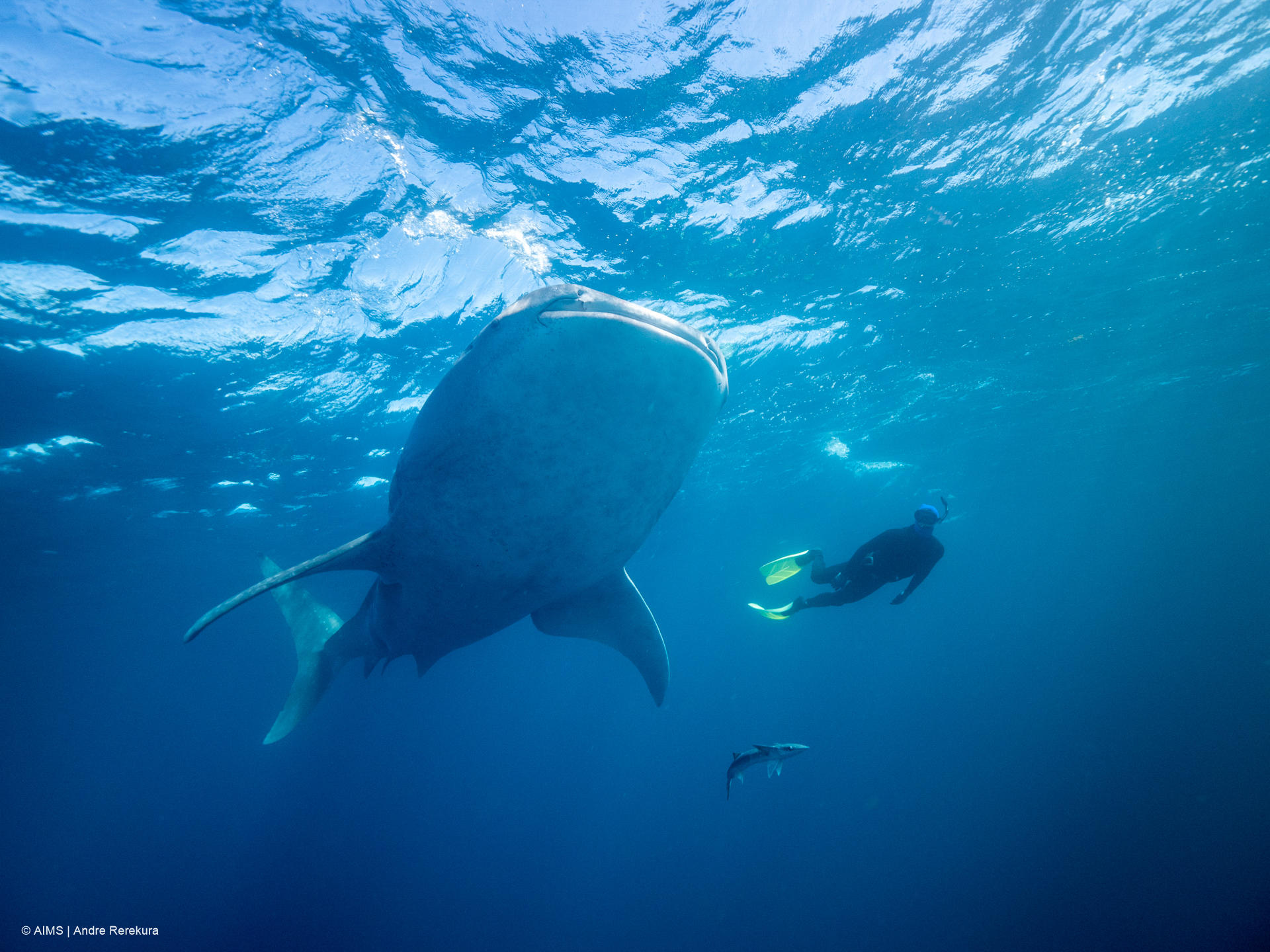
    Whale Shark Seaweed
    Researchers were surprised to discover whale sharks ate seaweed as well as krill at Ningaloo Reef, Western Australia. Credit: Andre Rerekura, Australian Institute of Marine Science

    Marine biologists have discovered that whale sharks consume plants, making the famous species the largest omnivore in the world.

    Whale sharks consume plants, according to marine biologists, making the iconic animal the world’s biggest omnivore. Whale sharks are filter feeders, and in Western Australia’s Ningaloo Reef, they have long been seen consuming krill.

    Mark Meekan
    Australian Institute of Marine Science fish biologist Dr. Mark Meekan. Credit: Andre Rerekura, Australian Institute of Marine Science

    However, scientists found that whale sharks in the reef were consuming a lot of plant material when they analyzed biopsy samples from the animals.

    “This causes us to rethink everything we thought we knew about what whale sharks eat,” said Australian Institute of Marine Science fish biologist Dr. Mark Meekan. “And, in fact, what they’re doing out in the open ocean.”

    The discovery makes whale sharks, which have been measured up to 18.8 meters (61.7 feet) in length, the biggest omnivores in the whole world.

    “On land, all the biggest animals have always been herbivores,” Dr. Meekan said.

    “In the sea, we always thought the animals that have gotten really big, like whales and whale sharks, were feeding one step up the food chain on shrimp-like animals and small fishes. Turns out that maybe the system of evolution on land and in the water isn’t that different after all.”

    Whale Shark Tissue Analysis
    Australian researchers analyzed whale shark tissue to analyze what they were using for energy and growth. Credit: Andre Rerekura, Australian Institute of Marine Science.

    The study was recently published in the journal Ecology. The researchers gathered samples of potential food sources at the reef, ranging in size from small plankton to giant seaweed, in order to determine precisely what the whale sharks were consuming. Then they compared the amino and fatty acids in the whale sharks to those in the plankton and plant material.

    Dr. Meekan said that substances found in Sargassum, a form of brown seaweed common to Ningaloo that breaks off the reef and floats at the surface, were present in the whale shark tissue.

    Evolution of Whale Shark Digestion

    “We think that over evolutionary time, whale sharks have evolved the ability to digest some of this Sargassum that’s going into their guts,” he said.

    “So, the vision we have of whale sharks coming to Ningaloo just to feast on these little krill is only half the story. They’re actually out there eating a fair amount of algae too.”
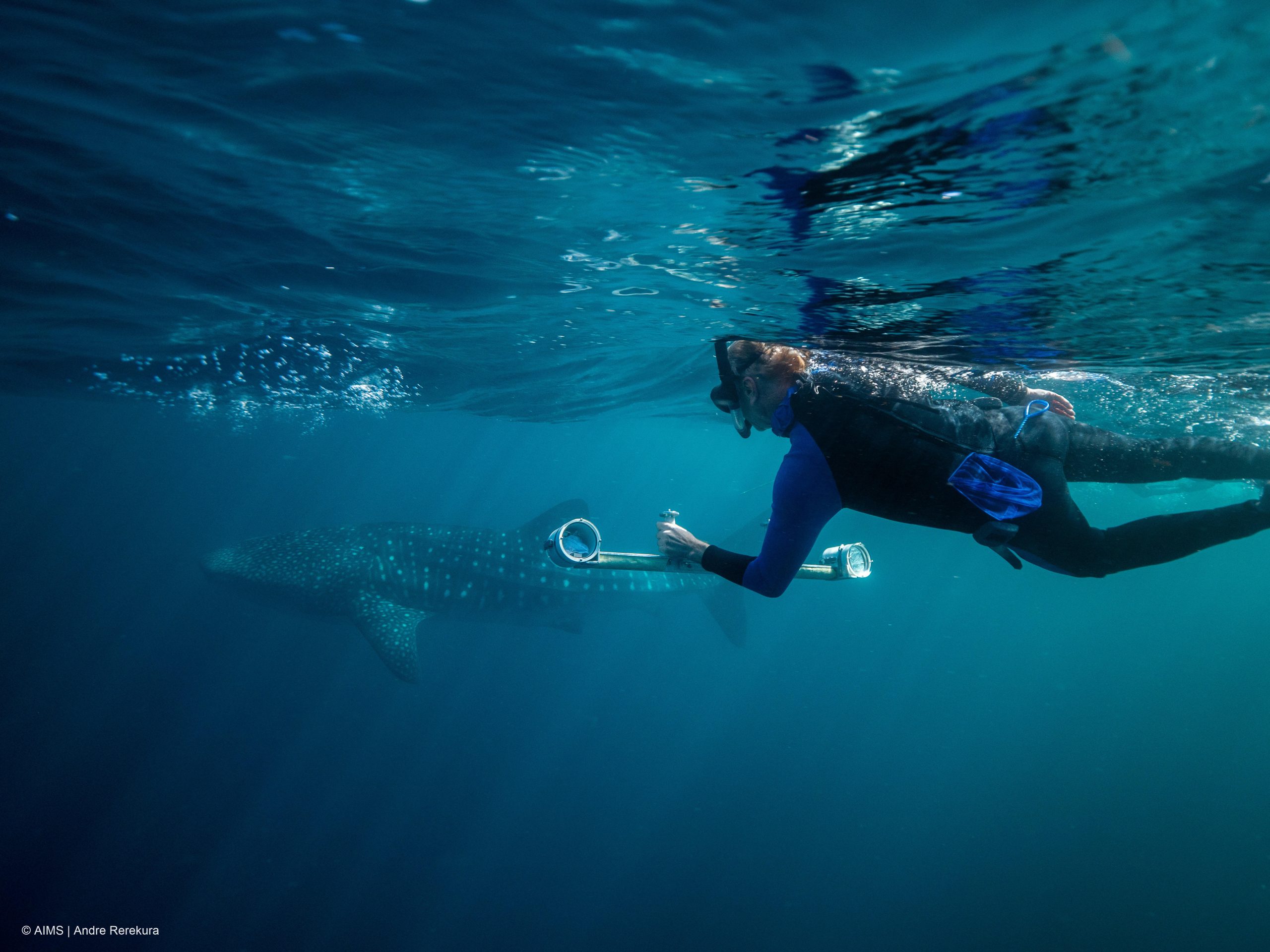
    Whale Shark Plants
    Researchers discovered whale sharks ate plants as well as krill. Credit: Andre Rerekura, Australian Institute of Marine Science

    CSIRO Oceans and Atmosphere organic biogeochemist Dr. Andy Revill, who analyzed the whale shark tissue using compound-specific stable isotope analysis, said the technology allowed scientists to study what animals were used for energy and growth, not just what they were eating.

    “Something like a whale shark, which swims through the water with its mouth open, is going to ingest a lot of different things,” he said.

    “But you don’t know how much of that has been used by the animal and how much just goes straight out the other end. Whereas stable isotopes, because they’re actually incorporated into the body, are a much better reflection of what the animals are actually utilizing to grow.”

    Surprising Biochemical Signature in Whale Shark Tissue

    Biological oceanographer Dr. Patti Virtue, from the University of Tasmania’s Institute for Marine and Antarctic Studies, said she was surprised by the whale shark’s biochemical signature.

    “It’s very strange because in their tissue they don’t have a fatty acid or stable isotope signature of a krill-feeding animal,” she said.

    The researchers also caught whale shark poo with a net and analyzed it.

    “The poo did show that they were eating krill,” Dr. Virtue said. “But they’re not metabolizing much of it.”

    Reference: “The world’s largest omnivore is a fish” by M. G. Meekan, P. Virtue, L. Marcus, K. D. Clements, P. D. Nichols and A. T. Revill, 19 July 2022, Ecology.
    DOI: 10.1002/ecy.3818

    This AIMS whale shark research project is supported by Santos and INPEX as Joint Venture participants in the Van Gogh Development.

    Never miss a breakthrough: Join the SciTechDaily newsletter.
    Follow us on Google and Google News.

    Animal Sciences Australian Institute of Marine Science Marine Biology Popular University of Tasmania
    Share. Facebook Twitter Pinterest LinkedIn Email Reddit

    Related Articles

    This Dancing Sea Lion Can Keep a Beat Better Than Humans

    Legacy of Cold War Nuclear Bomb Tests Solves Whale Shark Mystery

    At Least a Third of All Marine Species Are Still Unknown

    Great White Shark Have a More Varied Diet Than Previously Thought

    Adult White Killer Whale Spotted in the Wild for the First Time

    Relationships of Male Dolphins from Shark Bay Determined by Slow Swimming

    Black Band Disease Puts Great Barrier Reef at Risk

    Researchers Discover ‘Supergiant’ Amphipods in the Kermadec Trench

    Mesodinium Chamaeleon Is A Unique Life Form That is Half Plant Half Animal

    6 Comments

    1. Juan on September 11, 2022 9:55 pm

      The plural of fish is fish, not fishes

      Reply
    2. Bk on September 13, 2022 6:57 pm

      Juan, fishes is correctly used as the technical term when referring to multiple species. Evidently science is not your lane.

      Reply
    3. X T C on September 13, 2022 7:16 pm

      Bk, you don’t have to be a xxxx about it. I am sure,just by your attitude, that you’re lacking in many, many departments.

      Reply
    4. E. Boyd on September 13, 2022 9:28 pm

      Joy to the fishes in the deep blue sea.

      Reply
    5. Jeff Hagerman on September 15, 2022 7:49 pm

      …joy to you and me!

      Reply
    6. Mar on September 17, 2022 1:37 pm

      BK derogatory comments would be better left unsaid.

      Reply
    Leave A Reply Cancel Reply

    • Facebook
    • Twitter
    • Pinterest
    • YouTube

    Don't Miss a Discovery

    Subscribe for the Latest in Science & Tech!

    Trending News

    Breakthrough Bowel Cancer Trial Leaves Patients Cancer-Free for Nearly 3 Years

    Natural Compound Shows Powerful Potential Against Rheumatoid Arthritis

    100,000-Year-Old Neanderthal Fossils in Poland Reveal Unexpected Genetic Connections

    Simple “Gut Reset” May Prevent Weight Gain After Ozempic or Wegovy

    2.8 Days to Disaster: Scientists Warn Low Earth Orbit Could Suddenly Collapse

    Common Food Compound Shows Surprising Power Against Superbugs

    5 Simple Ways To Remember More and Forget Less

    The Atomic Gap That Could Cost the Semiconductor Industry Billions

    Follow SciTechDaily
    • Facebook
    • Twitter
    • YouTube
    • Pinterest
    • Newsletter
    • RSS
    SciTech News
    • Biology News
    • Chemistry News
    • Earth News
    • Health News
    • Physics News
    • Science News
    • Space News
    • Technology News
    Recent Posts
    • After 37 Years, the World’s Longest-Running Soil Warming Experiment Uncovers a Startling Climate Secret
    • NASA Satellite Captures First-Ever High-Res View of Massive Pacific Tsunami
    • ADHD Isn’t Just a Deficit: Study Reveals Powerful Hidden Strengths
    • Scientists Uncover “Astonishing” Hidden Property of Light
    • Scientists Discover Stem Cells That Could Regrow Teeth and Bone
    Copyright © 1998 - 2026 SciTechDaily. All Rights Reserved.
    • Science News
    • About
    • Contact
    • Editorial Board
    • Privacy Policy
    • Terms of Use

    Type above and press Enter to search. Press Esc to cancel.