
Close Menu
    Facebook X (Twitter) Instagram
    SciTechDaily
    • Biology
    • Chemistry
    • Earth
    • Health
    • Physics
    • Science
    • Space
    • Technology
    Facebook X (Twitter) Pinterest YouTube RSS
    SciTechDaily
    Home»Biology»Paleontologists Discover Odd Shrimp That Fills Hole in Fossil Record
    Biology

    Paleontologists Discover Odd Shrimp That Fills Hole in Fossil Record

    By University of AlbertaDecember 9, 20191 Comment3 Mins Read
    Facebook Twitter Pinterest Telegram LinkedIn WhatsApp Email Reddit
    Share
    Facebook Twitter LinkedIn Pinterest Telegram Email Reddit
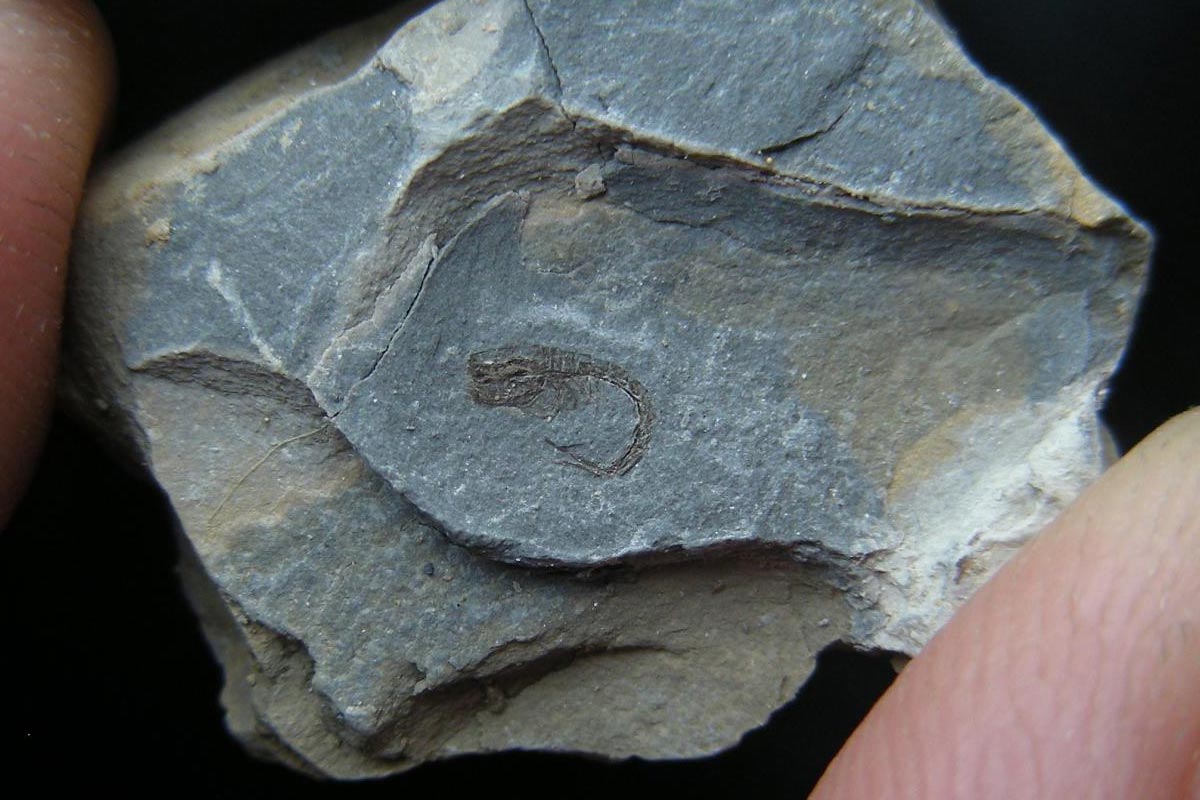
    Small Comma Shrimp Fossil
    A small comma shrimp fossil held between fingertips demonstrates the fine details preserved in the fossils. Credit: Javier Luque

    Tiny Fossils, Big Findings: Paleontologists Discover Odd Mid-Cretaceous Shrimp

    Hundreds of tiny well-preserved fossils shed new light on one of the poorest fossil records of marine arthropods.

    One of the most incomplete fossil records of marine life is being filled in by a new find by a team of paleontologists from the University of Alberta, Yale University, and the Smithsonian Tropical Research Institute—with the discovery of hundreds of tiny comma shrimp fossils.

    “Comma shrimp are small, delicate crustaceans with one of the poorest fossil records among marine arthropods—which is shocking as they are abundant today and live in soft sediments with good fossilization potential,” said Javier Luque, lead author who conducted the research as a Ph.D. candidate in the Department of Biological Sciences, and is now a postdoctoral associate at Yale University.


    One of the most incomplete fossil records of marine life is being filled in by a new find by a team of paleontologists from the University of Alberta, Yale University, and the Smithsonian Tropical Research Institute — with the discovery of hundreds of tiny comma shrimp fossils.

    The exceptional degree of preservation has even enabled paleontologists to create a 3D reconstruction of the comma shrimp, Eobodotria muisca.

    Credit: Alex Duque & Masato Hattori

    The excellent condition of the fossils allowed paleontologists to discern extremely fine details of the creatures, including eyes, antennae, mouthparts, and even fine hairs—and create a 3D reconstruction of what they might have looked like while alive.

    “These fossils are of hundreds of adult males—which likely died suddenly in the water column while swarming during mating, falling slowly through the water with little or no damage,” said Sarah Gerken, co-author, and professor at the University of Alaska Anchorage. “This left them in truly stunning condition.”

    Marine fossils in the mountains

    The scarcity of these fossils is in part due to where they lived—a shallow inner sea that, more than 90 million years ago, ran through what is now the uplifted Andes mountains.
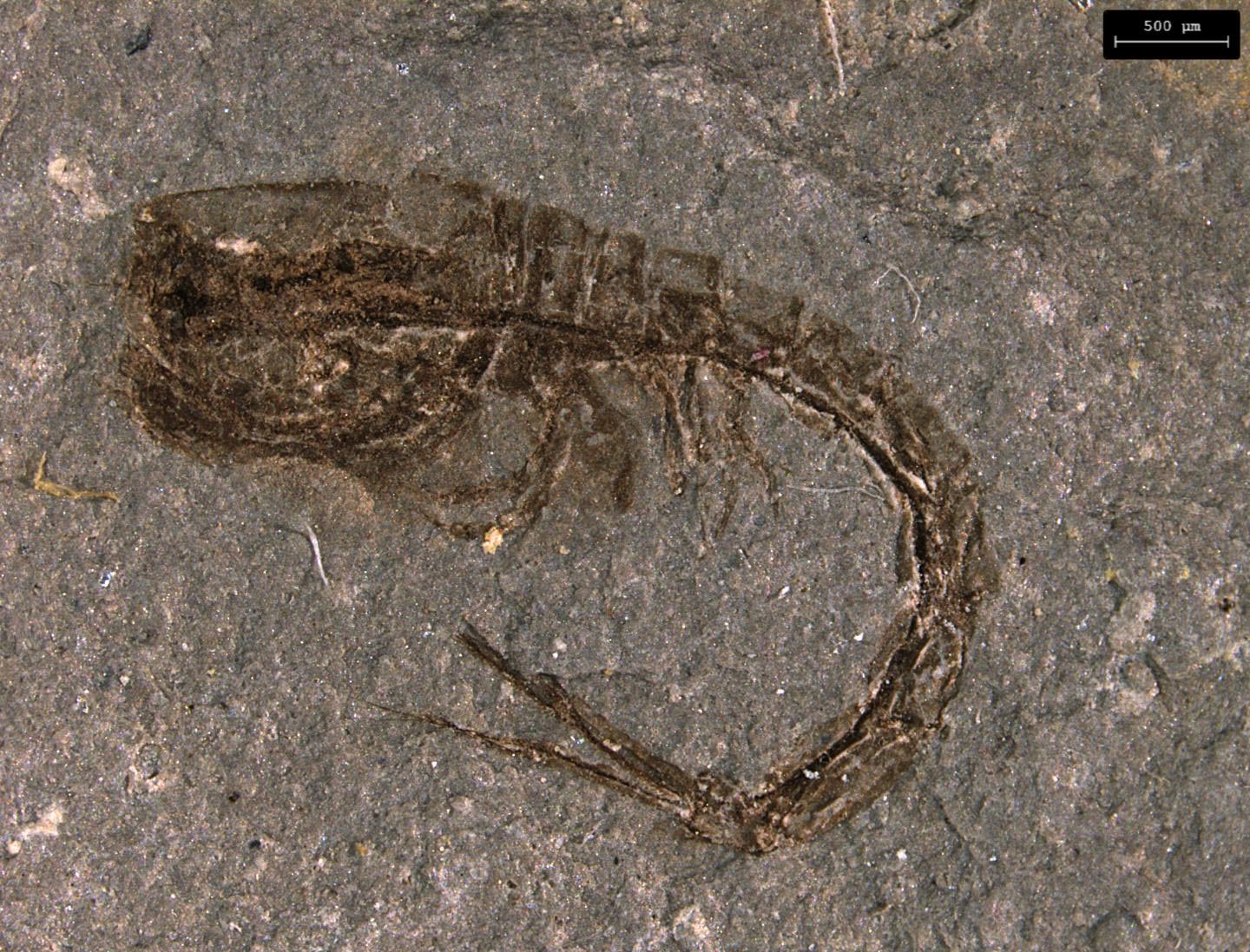
    Eobodotria muisca
    Eobodotria bridges an approximately 165 million year gap in the cumacean fossil record, provides a reliable calibration point for phylogenetic studies and expands our understanding of exceptional preservation in past and present tropical settings. Credit: Javier Luque

    “Exceptionally preserved fossils provide a crucial glimpse into the Earth’s past,” explained Luque. “Deposits like this are widely known from mid-to-high latitudes, but very few from modern tropical latitudes. This new fossil assemblage is the first of its kind in northern South America, and we hope it will become a reference for tropical paleontology in the region.”

    The find follows on the heels of Luque’s discovery earlier this year of a “chimera” or “platypus crab,” incorporating the features of many different marine arthropods.

    “Both of these species are the first of a trove of fossils we are still exploring to understand the species preserved here and the processes that allowed their fossilization,” said Luque. “It will give us a closer glimpse into the tropics’ past, and we hope our discoveries will open new avenues for the study of exceptional preservation in past and present tropical settings.”

    Reference: “Exceptional preservation of comma shrimp from a mid-Cretaceous Lagerstätte of Colombia, and the origins of crown Cumacea” by Javier Luque and Sarah Gerken, 27 November 2019, Proceedings of the Royal Society B.
    DOI: 10.1098/rspb.2019.1863

    Never miss a breakthrough: Join the SciTechDaily newsletter.
    Follow us on Google and Google News.

    Paleontology University of Alberta
    Share. Facebook Twitter Pinterest LinkedIn Email Reddit

    Related Articles

    34-Million-Year-Old Snake Discovered in Wyoming Changes Our Understanding of Evolution

    Ancient Reptile Had Mammal-Like Tooth Enamel – “Strangest Teeth Ever Seen”

    New Group of Ancient Flying Reptiles Identified by Paleontologists

    Asymmetrical Dinosaur Skull Discovery Turns Paleontology Assumptions on Their Head

    This 100 Million-Year-Old Snake Had Legs, but Cheekbone Provides Critical Insight Into Evolution

    Silurian Fossil of Dibasterium Durgae Untangles Horseshoe Crab Past

    Evidence Shows that Birds are Essentially Living Dinosaurs

    Pikaia Gracilens Revealed as Possible Genetic Ancestors to All Vertebrates

    Scientists Reconstruct Ancient Permian Ecosystem from Ash-Covered Plants

    1 Comment

    1. Ziane on December 9, 2019 10:08 pm

      Topic is really excellent !

      Reply
    Leave A Reply Cancel Reply

    • Facebook
    • Twitter
    • Pinterest
    • YouTube

    Don't Miss a Discovery

    Subscribe for the Latest in Science & Tech!

    Trending News

    5 Simple Ways To Remember More and Forget Less

    The Atomic Gap That Could Cost the Semiconductor Industry Billions

    Researchers Finally Solve 50-Year-Old Blood Group Mystery

    Scientists Discover “Molecular Switch” That Fuels Alzheimer’s Brain Inflammation

    Trees Emit Tiny Lightning Flashes During Storms and Scientists Finally Prove It

    Pomegranate Compound Could Help Protect Against Heart Disease

    Your Blood Test Might Already Show Alzheimer’s Risk

    Scientists Were Wrong About This Strange “Rule-Breaking” Particle

    Follow SciTechDaily
    • Facebook
    • Twitter
    • YouTube
    • Pinterest
    • Newsletter
    • RSS
    SciTech News
    • Biology News
    • Chemistry News
    • Earth News
    • Health News
    • Physics News
    • Science News
    • Space News
    • Technology News
    Recent Posts
    • Scientists Complete Largest 3D Map of the Universe to Probe Dark Energy
    • Hidden Parasite Found in Popular Portuguese Lake Raises Health Concerns
    • This Simple Trick Can Boost Your Workout Endurance by 20%
    • This Popular Supplement May Interfere With Cancer Treatment, Scientists Warn
    • Scientists Propose Radical New Way To Detect Alien Life – Without Traditional Biosignatures
    Copyright © 1998 - 2026 SciTechDaily. All Rights Reserved.
    • Science News
    • About
    • Contact
    • Editorial Board
    • Privacy Policy
    • Terms of Use

    Type above and press Enter to search. Press Esc to cancel.