
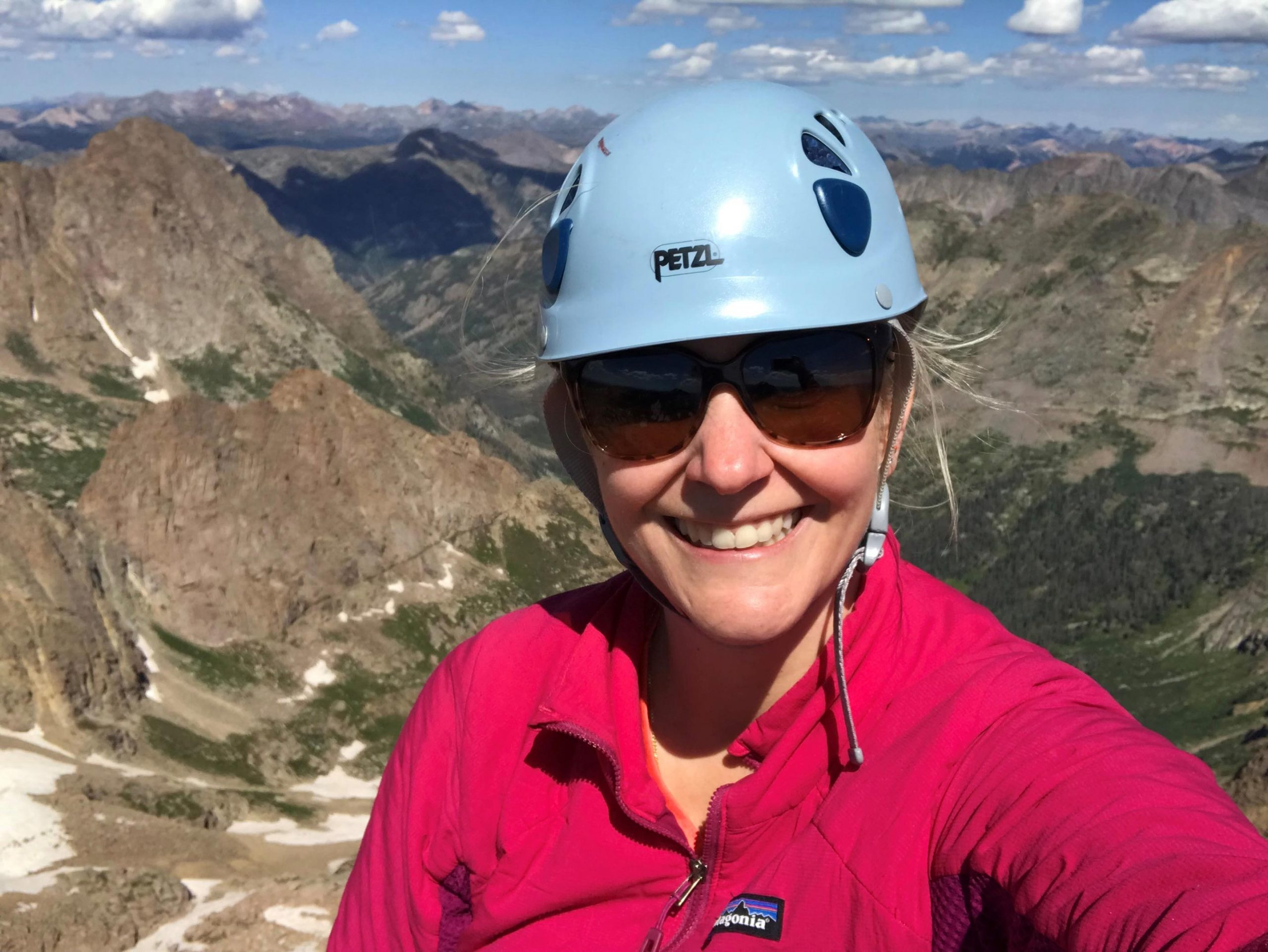
Name: Estelle Church
Title: Systems Engineer and OSIRIS-REx Deputy TAG Phase Lead at Lockheed Martin
Education: B.A. Physics and Astrophysics at University of Colorado Boulder and an MBA from CU Boulder
Superpower Skill: Perseverance
Today (October 20, 2020) Estelle Church will send the commands instructing NASA’s mission to touch asteroid Bennu, becoming NASA’s first mission to collect a sample of material from an asteroid’s surface. Church has been planning this moment for the past five years, thinking about all the things that could end the Touch-And-Go (TAG) mission.
Church’s job is to keep the spacecraft safe. She has to think and plan for what could go wrong as she creates the sequence of commands for the Origins, Spectral Interpretation, Resource Identification, Security-Regolith Explorer (OSIRIS-REx) spacecraft.
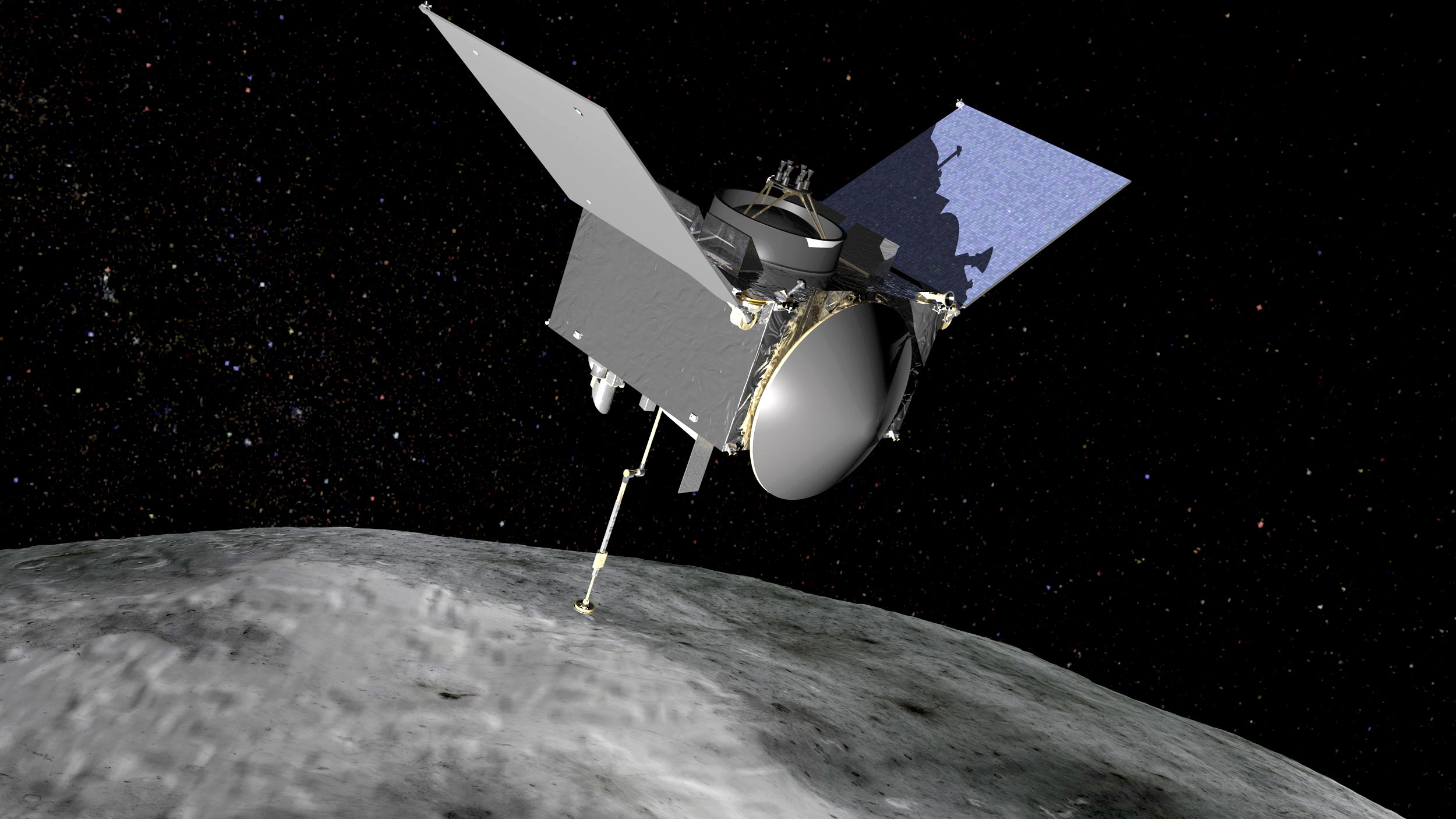
“We have done so much extra work to make sure that if anything goes unplanned, we have a way to recover the mission,” said Church. “If you miss a maneuver or something unexpected happens, you can end up behind the asteroid, or put the spacecraft on a collision course with Bennu.”
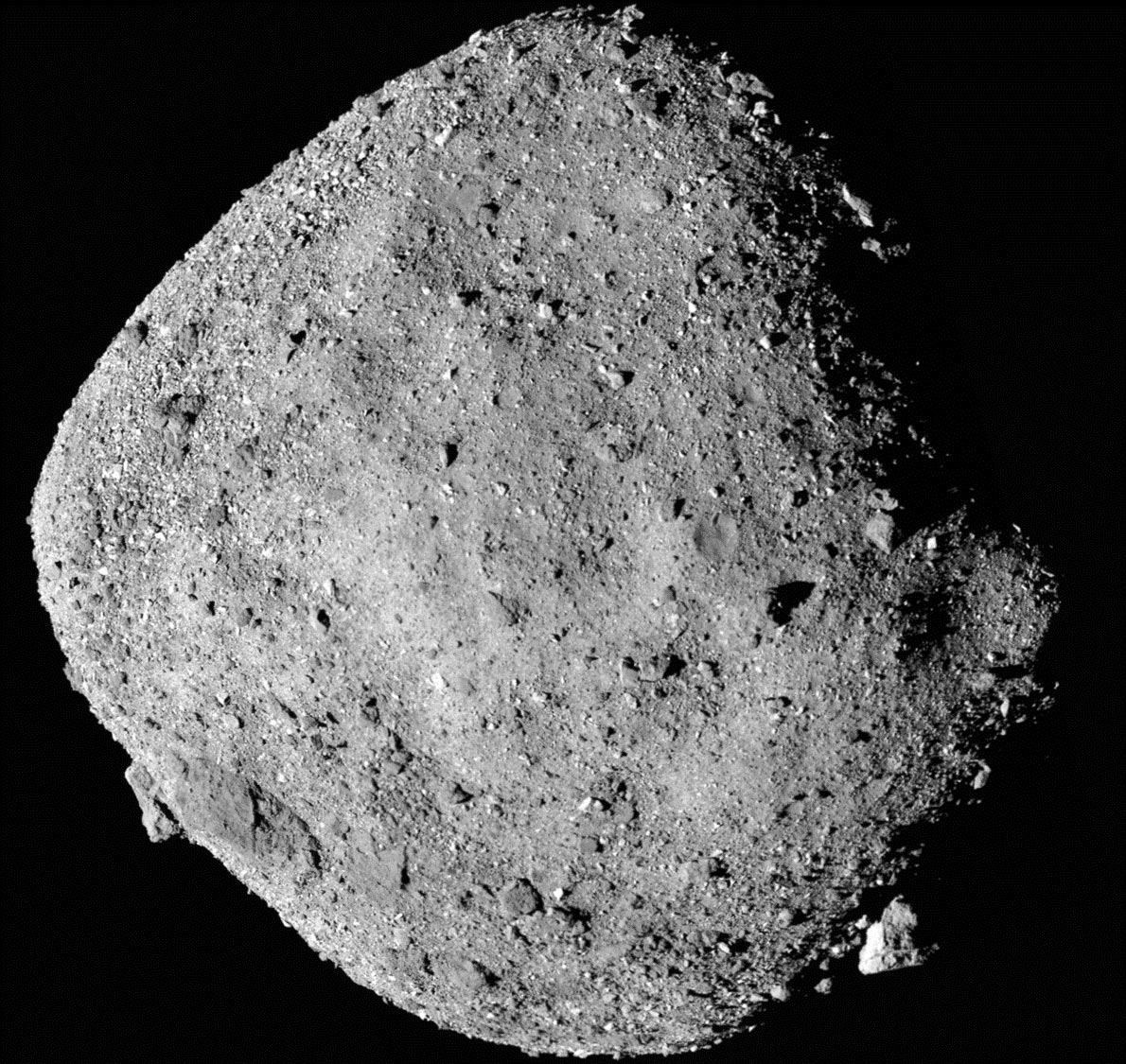
OSIRIS-REx made history when it began orbiting asteroid Bennu, the smallest object ever orbited by a spacecraft. For more than two years, the spacecraft circled about a mile (1.6 kilometers) from its center, where the gravity force is only five-millionths of Earth’s gravity—barely enough gravity to keep a spacecraft in orbit.
“There is no handbook on how to fly a spacecraft around an asteroid,” said Church. “I enjoy that it is not easy. The challenges have been fun to work through, and there’s nothing that this team hasn’t been able to do.”
Prior to working with asteroids, Church was a laser jock. She designed and built lasers to measure distance and range for a company that Lockheed Martin acquired. After working with lasers for six years, she became a systems engineer in the Mission Support Area of Lockheed Martin. Currently, she coordinates operations for TAG, gathering inputs from all OSIRIS-REx’s subsystems, including thermal, power, telecommunications, propulsion, fault protection, and satellite control.
ORISIS-REx’s primary navigation system was to use laser range measurements to guide the spacecraft. The rough terrain forced the OSIRIS-REx mission team to switch to a backup navigation system called Natural Feature Tracking (NFT) that Lockheed Martin developed, just in case. NFT relies on 3-D imagery of the asteroid for navigation.
“When we first saw Bennu, we were surprised by its unexpected rugged terrain,” said Church. “We had to redesign all of TAG due to this rocky space rock!”
Church always excelled in school without really trying, but loves a challenge. That is why she majored in physics at the University of Colorado, Boulder.
“When I realized how hard physics was and that I had to apply myself to succeed, I was hooked,” she said.
Even though she was good at science and math, her true passion was theater. One of her favorite performances was ‘The Good Person of Szechwan’ for which they transformed the theatre into a theatre in the round.
“That was such a different concept than I was used to performing on a traditional stage,” said Church. “Each day before rehearsal, we did 30 minutes of Tai Chi to calm our minds and find focus within our characters.”
Church also sings and plays the piano, performing in many musicals, singing in choirs, and even studied classical piano with the Associated Board of the Royal Schools of Music. She graduated from high school as an honor Thespian from the Cairo American College in Egypt.
During her first year in college, as a general major, she was able to take a couple of theater classes. However, once she fell into physics and then astrophysics, she no longer had time for the theater.
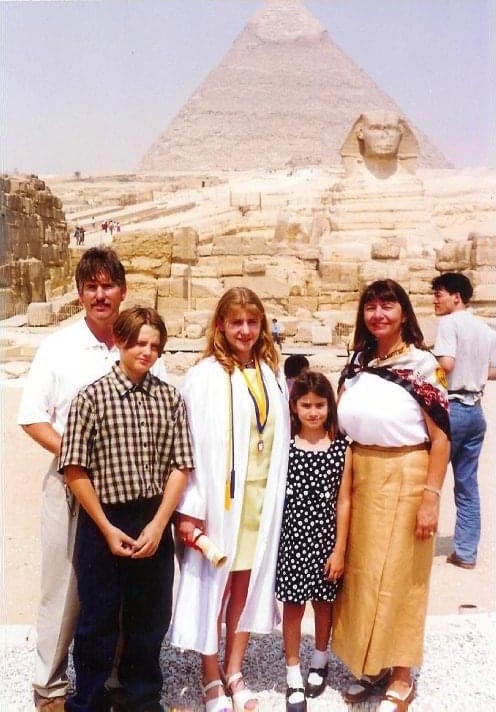
Church grew up all over the world because her father’s job in the oil industry required her family to move frequently. She has lived in Spain, Louisiana, Qatar, Egypt, and Colorado. Her high school graduation took place in front of the Giza pyramids and Sphinx. She loved experiencing different cultures.
Church also loves to hike. She has hiked 49 out of 58 of Colorado’s “fourteeners,” or mountain peaks of at least 14,000 feet (4,267 meters). Sunlight Peak is her favorite.
“It has everything,” said Church. “The hike in is epic; where you camp is epic, there is the wildlife. There are so many goats around. The topography of the area is stunning. It looks like the Alps.”
Last summer, Church was excited and nervous to hike Sunlight Peak with her boyfriend. Most people ride the train to reach the start of the hike. Unfortunately, Church and her boyfriend were unable to get a ticket. They hiked 16 miles over two days to reach Chicago Basin, which is surrounded by four fourteeners.
“There is a lot of climbing, yet it’s not super technical,” said Church. “You technically don’t need ropes. But if you fall, you will die. There are huge boulders stacked up with a 3000-foot (900-meter) drop on either side at the very top, called the summit block. It’s a gorgeous peak and fun climb.”
Church is also excited and nervous about TAG. Based on the success of rehearsals and flying the spacecraft within 40 meters (130 feet) of Bennu’s surface, she’s hopeful that OSIRIS-REx will touch the asteroid on the first attempt. She is more uncertain about how much material the spacecraft will collect, given the asteroid’s rough terrain.
“I know we’ve done everything possible to prepare for TAG, and we are ready,” said Church.
Never miss a breakthrough: Join the SciTechDaily newsletter.
Follow us on Google and Google News.
1 Comment
Very Interesting.
Conratulations and Well done EC. Now figure out ways to ensure that the samples collected are examined by scientists off-planet so risks related to the unknown are also minimised.
The pay offs from mutiskilling in completely unrelated areas of science and non-science subjects are innumerable and opens up the human mind to possibilities that may be difficult to anticipate. Especially, the perspective of space and dimensional aspects of space-time. Art has a fascination which are timeless as do the wonders of mother Nature.
Sometimes sitting in on Art appreciation classes at the University may lead to insights not available from physics and other specialised science and non-science areas!