
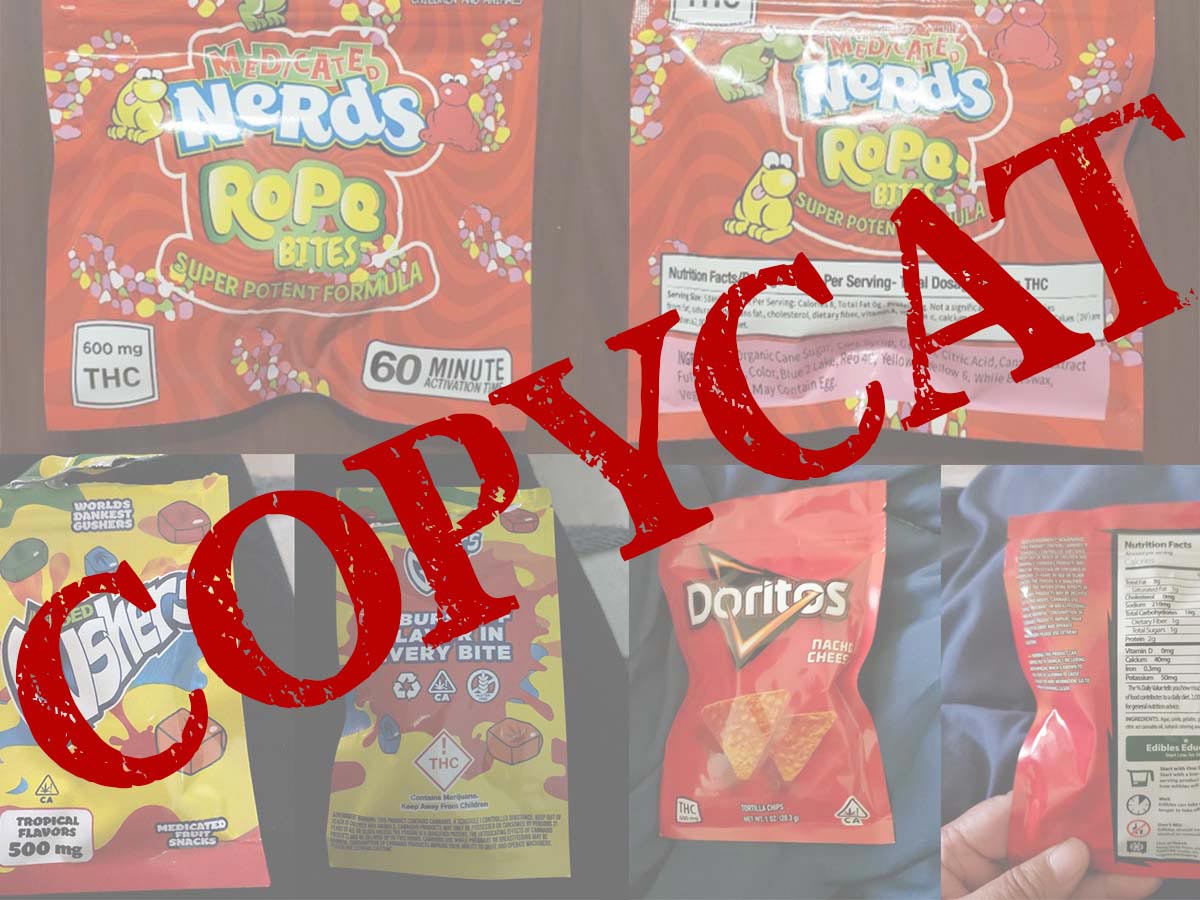
Copycat edibles increase risk for accidental ingestion by children, include high THC content.
Some cannabis edibles look remarkably similar to popular snack foods and may easily be confused for them, finds a new study led by researchers at NYU School of Global Public Health that will be published today (April 19, 2022) in the journal Drug and Alcohol Dependence.
These “copycat” edibles also have levels of tetrahydrocannabinol or THC—the main psychoactive compound in cannabis—that far exceed the limits set by state cannabis regulations.
Potential Risks of Copycat Cannabis Products
“At first glance, most of the packages look almost exactly like familiar snacks. If these copycat cannabis products are not stored safely, there is the potential for accidental ingestion by children or adults,” said Danielle Ompad, associate professor of epidemiology at NYU School of Global Public Health and the lead author of the new study.
Edibles are a popular and rapidly expanding segment of the marijuana industry. More than half (56%) of people who use cannabis in states where it is legal consume edibles, with younger people being more likely to do so.
Recent news reports have drawn attention to edibles that use similar branding and imagery to mimic popular snack foods. These copycat cannabis products are a public health concern given that people—including children—could mistake them for snacks and accidentally consume them. From 2017 to 2019, U.S. Poison Control Centers handled nearly 2,000 cases of young children ages 0 to 9 consuming edibles.
To gain a deeper understanding of copycat edibles, the researchers collected hundreds of photos of cannabis products and analyzed their packaging, including branding, names, imagery, and THC content. They focused on photos for 267 edibles and found that 8% (22 photos) closely resembled 13 different snack products.
Twelve of the products were candies or sweet snacks (fruit chews, fruit snacks, rice and marshmallow treats, and gummies) and one was a salty snack (chips). Eight of the 13 packages used the exact brand or product name of the original product; the remaining five used names that were similar (for instance, “Stoner Patch Dummies” instead of “Sour Patch Kids”). Seven of the packages used the same cartoon or brand character as the original product.
THC Content in Copycat Edibles
Most states that have legalized cannabis limit the amount of THC in edibles—typically 5 mg or 10 mg of THC per dose and 100 mg per package. According to information listed on the packaging of the lookalike products, these edibles contained an average of 459 mg of THC and a range of 300 to 600 mg per package, greatly exceeding the maximum limits.
“While each package is likely intended to include multiple doses, few packages indicate the serving size or number of servings,” said Ompad, who is also the deputy director of the Center for Drug Use and HIV/HCV Research (CDUHR) at NYU School of Global Public Health. “Moreover, if we’re considering 10 mg a standard dose, these products could contain an alarming 30 to 60 doses per package.”
The findings highlight the risk that these copycat products could be attractive to children, given the colorful packaging and use of familiar branding and characters.
“Policies to prevent cannabis packaging from appealing to children haven’t stopped copycat products from entering the market—nor have food brands taken legal action against cannabis companies for copyright infringement,” said Ompad. “People who purchase edibles that look like snack foods should store them separately from regular snacks and out of reach of children.”
Reference: “Copycat and lookalike edible cannabis product packaging in the United States” by Danielle C. Ompad, Kyle M. Snyder, Simon Sandh, Daniel Hagen, Kewanda J. Collier, Emily S. Goldmann, Melody S. Goodman and Andy S. L. Tan, 15 March 2022, Drug and Alcohol Dependence.
DOI: 10.1016/j.drugalcdep.2022.109409
In addition to Ompad, study authors include Kyle Snyder, Simon Sandh, Daniel Hagen, Emily Goldmann, and Melody Goodman of NYU School of Global Public Health; Kewanda Collier of Morgan State University; and Andy Tan of the University of Pennsylvania. The research was supported by the National Institute on Drug Abuse (P30DA011041, R21DA052421, and R01DA054236) and National Cancer Institute (R01CA237670).
Never miss a breakthrough: Join the SciTechDaily newsletter.
Follow us on Google and Google News.