
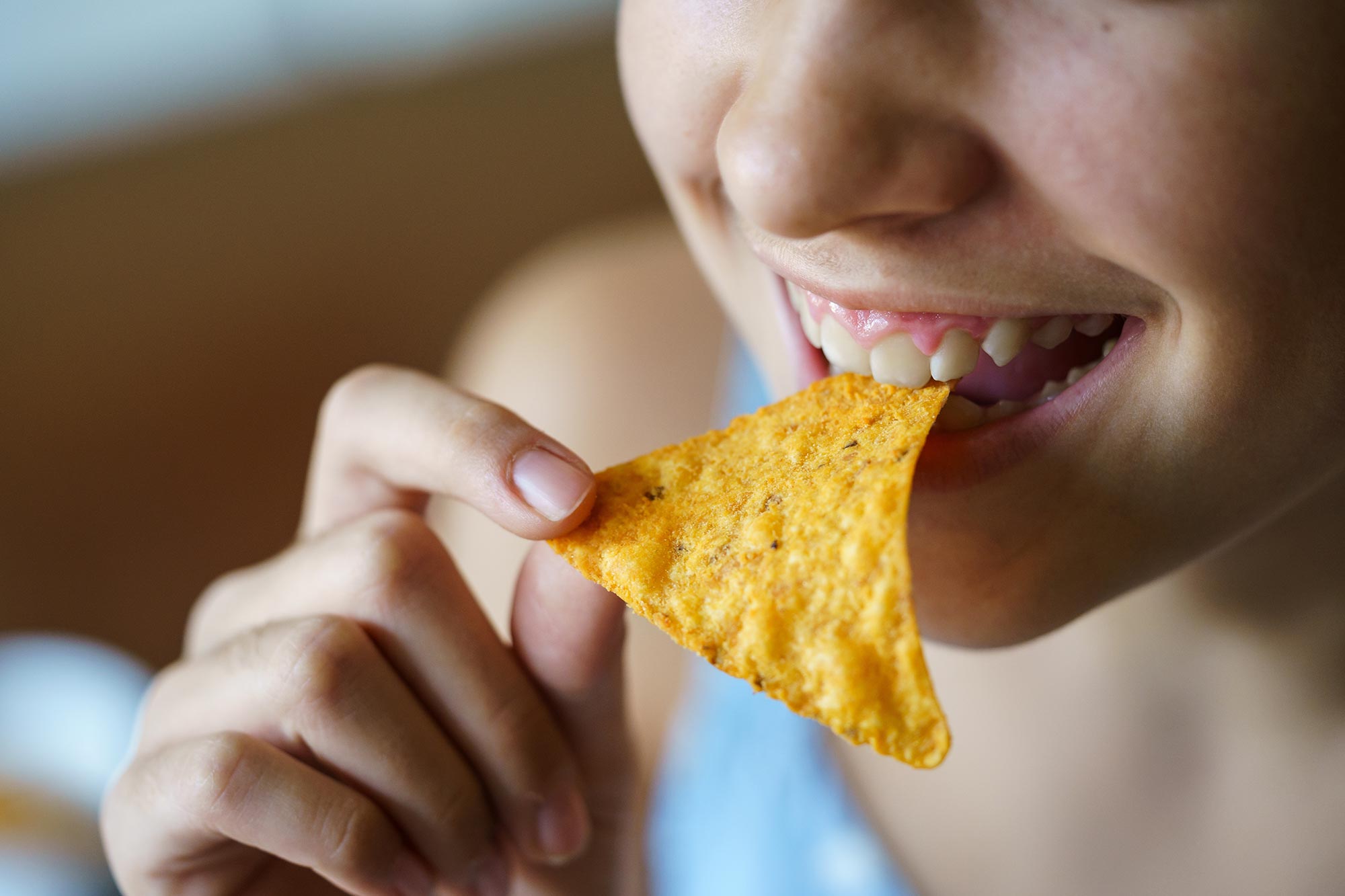
A long-term study links salty snacks during adolescence to a higher risk of chronic bowel disease, suggesting that opportunities for prevention may begin earlier in life.
Cases of inflammatory bowel disease (IBD) are rising around the world alongside the growing adoption of Western-style diets and lifestyles. Understanding how the foods children eat influence their long-term health could help researchers identify opportunities to prevent the disease before it develops.
A large Scandinavian study published online in the journal Gut found that teenagers who consumed high amounts of salty snacks had a greater risk of developing IBD in young adulthood. Eating more fruit and fish during childhood was associated with a lower risk of Crohn’s disease, although the relationship between diet and intestinal health varied depending on age and the form of IBD.
Inflammatory bowel disease encompasses conditions that cause chronic inflammation in the digestive tract, including Crohn’s disease, ulcerative colitis, and cases with characteristics of both. Previous research suggests that diets low in fruits and vegetables and high in sugar during early childhood can influence the developing immune system and gut microbiome, the community of microorganisms living in the digestive tract. These changes may increase susceptibility to IBD. Less is known, however, about the influence of nutrition during later childhood and adolescence.
Tracking diets from childhood to adulthood
To investigate, researchers combined data from 111,999 participants enrolled in three large population-based birth cohort studies: the Norwegian Mother, Father and Child Cohort Study (MoBa), the Danish National Birth Cohort (DNBC), and All Babies in Southeast Sweden (ABIS). Participants were followed from pregnancy in Norway (1999–2008) and Denmark (1996–2002) or from birth in Sweden (1997–1999).
Dietary information was collected through detailed food frequency questionnaires at two stages of development, at ages 7 and 13–15 in Norway, 7 and 14 in Denmark, and 8 and 11 in Sweden. The questionnaires covered fruit, vegetables, dairy products, meat, fish, sugar-sweetened drinks, and snacks. Consumption of salty snacks, including potato chips, corn chips, and popcorn, was assessed only during adolescence.
Using national patient registries through 2024, the researchers identified 653 cases of IBD over average follow-up periods ranging from 12 to 17 years. Their analysis accounted for sociodemographic characteristics, factors surrounding birth, and early-life exposures, including parental IBD and maternal smoking.
Salty snacks, fruit, and contrasting risks
Teenagers with a high intake of salty snacks had a 32% higher risk of developing IBD than those with a low intake. The association was particularly pronounced for ulcerative colitis, for which the risk was 51% higher.
Fruit consumption showed a more complicated pattern. Children with a high fruit intake had a 34% lower risk of Crohn’s disease and a 54% higher risk of ulcerative colitis compared with those who ate less fruit. During adolescence, higher fruit consumption was associated with a 64% lower risk of Crohn’s disease, with no significant association observed for ulcerative colitis.
How nutrients may influence gut inflammation
The researchers suggest that some of these findings may be explained by the relationship between nutrition and the microorganisms that inhabit the gut.
“Fruits are thought to exert favorable effects on the gut microbiome by promoting microbial diversity and increasing the production of short-chain fatty acids, which have been proposed to have anti-inflammatory effects,” they explain.
People with Crohn’s disease appear to be more susceptible to imbalances in the gut microbiome than those with ulcerative colitis.
“The inverse association between higher fruit intake and [Crohn’s disease] risk may therefore be partly explained by its high dietary fiber content,” they add.
Although dietary fiber is known to support microbial diversity, further research is needed to determine which types of fiber offer the greatest benefits.
A high intake of fish during childhood was also associated with a 35% lower risk of Crohn’s disease compared with a low intake. No similar association was observed during adolescence. The findings may be related to the types of fats found in fish.
Regarding this association, “polyunsaturated fatty acids play a central role in regulating inflammatory pathways, and the long-chain omega-3 fatty acids abundant in fatty fish may therefore contribute to [this],” the researchers write.
None of the other food groups showed statistically significant associations with IBD risk. The results also remained largely unchanged after the researchers accounted for additional factors that could influence the early development of the gut microbiome, including antibiotic exposure during the first year of life and the duration of breastfeeding.
Can healthier diets help prevent IBD?
Although the findings are consistent with previous research in adults, the observational nature of the study means that it cannot establish whether particular foods directly increase or decrease IBD risk. The researchers were unable to account for physical activity and antibiotic use later in life. They also could not determine whether the associations reflected the effects of individual foods or the broader dietary patterns and lifestyle habits of participants.
“If our findings are confirmed in other cohorts and by other study designs, promoting healthy dietary habits could be a potential strategy for IBD prevention,” the researchers conclude.
Reference: “Food group intake during childhood and adolescence and risk of IBD: a pooled study of three Scandinavian birth cohorts” by Annie Guo, Ida Sigvardsson, Sabine Jansson, Henrik Imberg, Anne Lise Brantsæter, Vibeke Wewer, Johnny Ludvigsson, Mikkel Malham, Ketil Størdal and Karl Mårild, 23 November 2026, Gut.
DOI: 10.1136/gutjnl-2026-339600
Funding: Primarily Norwegian Ministry of Health and Care Services; Ministry of Education and Research; Danish Medical Research Council
Never miss a breakthrough: Join the SciTechDaily newsletter.
Follow us on Google and Google News.