

During a 2012 expedition to Antarctica, a team of Japanese and Belgian researchers picked up a small rock that appeared coal black against the snow white. Now known as meteorite Asuka 12236, it was roughly the size of a golf ball.
Despite its modest size, this rock from space was a colossal find. As it turns out, Asuka 12236 is one of the best-preserved meteorites of its kind ever discovered. And now, NASA scientists have shown that it contains microscopic clues that could help them solve a universal mystery: How did the building blocks of life flourish on Earth?
So, when astrobiologists at NASA’s Goddard Space Flight Center in Greenbelt, Maryland, got their (carefully gloved) hands on a teeny sliver of this primitive meteorite, they quickly took to decoding the information inside. Under the glare of the fluorescent lights and accompanied by the whir of analytical tools running in the background, the NASA Goddard team first crushed a 50-milligram pinch of Asuka 12236 in their lab with a mortar and pestle. Then they suspended the amino acids from the ancient dust in a water solution and sent the liquid through a powerful analytical machine that separated the molecules inside by mass and identified each kind.
The Goddard researchers found that an abundance of amino acids was locked up inside Asuka 12236, double the concentration seen in a space rock called Paris, which was previously thought to be the best-preserved meteorite of the same class. These primordial molecules included aspartic and glutamic acids, which are among the 20 amino acids that form themselves into countless arrangements, making up millions of proteins. Proteins then go on to power the chemical gears of life on Earth, including essential bodily functions in animals.
Led by Goddard astrobiologist Daniel P. Glavin, the team also found that Asuka 12236 had more left-handed versions of some amino acids. There’s a right-handed and left-handed mirror-image version of each amino acid, like your hands are mirror images of each other. All known life uses only left-handed amino acids to build proteins. Increasingly, Glavin and his colleagues are finding that meteorites are chock-full of these left-handed chemical precursors to life.
“The meteorites are telling us that there was an inherent bias toward left-handed amino acids before life even started,” Glavin said. “The big mystery is why?”
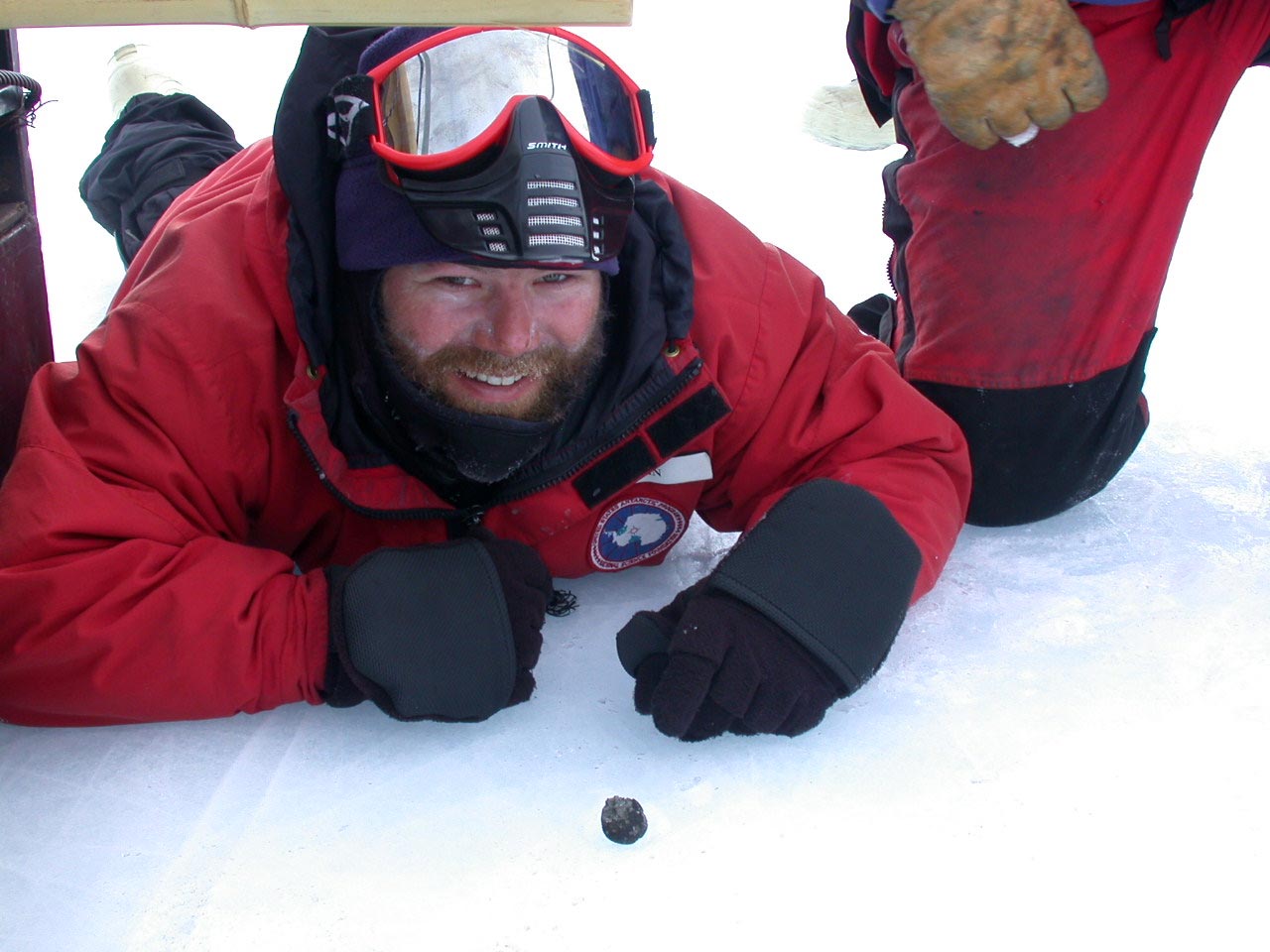
To get to the bottom of what makes left-handedness so special, Glavin and his team probe hundreds of meteorites. The greater variety of origins, chemistries, and ages, the better. Differences in the types and amounts of amino acids preserved in these rocks allow scientists to build a record of how these molecules evolved through time and circumstances, including exposure to water and heat inside their parent asteroids.
On the timeline of the solar system, Asuka 12236 fits in toward the very beginning – in fact, some scientists think that tiny pieces of the meteorite predate the solar system. Several lines of evidence suggest that Asuka 12236’s original chemical makeup is the best preserved in a category of carbon-rich meteorites known as CM chondrites. These are among the most interesting rocks to study for scientists who focus on the origin of life since many contain a highly complex mixture of organic compounds associated with living things.
Scientists have determined the interior of Asuka 12236 is so well-preserved because the rock was exposed to very little liquid water or heat, both when it was still a part of an asteroid and later, when it sat in Antarctica waiting to be discovered. They can tell based on the types of minerals found inside. A dearth of clay minerals is one clue, given that these types of minerals are formed by water. Another clue is that Asuka 12236 has lots of iron metal in it that hasn’t rusted, an indication that the meteorite hasn’t been exposed to the oxygen in water. The rock also contains an abundance of silicate grains with unusual chemical compositions that indicate they formed in ancient stars that died before the Sun began to form. Since these silicate minerals are typically easily destroyed by water, scientists don’t find them in meteorites less pristine than Asuka 12236.
“It’s fun to think about how these things fall to Earth and happen to be full of all this different information about how the solar system formed, what it formed from, and how the elements built up in the galaxy,” said Conel M. O’D. Alexander, a scientist at the Carnegie Institution for Science in Washington, D.C., who collaborated with Glavin’s team on the Asuka 12236 analysis, which was published on August 20, 2020, in the journal Meteoritics and Planetary Science.
Meteorites like Asuka 12236 are pieces of much larger asteroids. These fragments were flung into the solar system during asteroid collisions more than 4.5 billion years ago and ultimately made their way to Earth’s surface after surviving a fiery descent through our atmosphere. For Alexander and Glavin, these rocks are like history books that fall from the sky and deliver chemical information about the early solar system. Space rocks are the only source of this information, because erosion and plate tectonics on Earth have wiped away the chemical history of our planet.
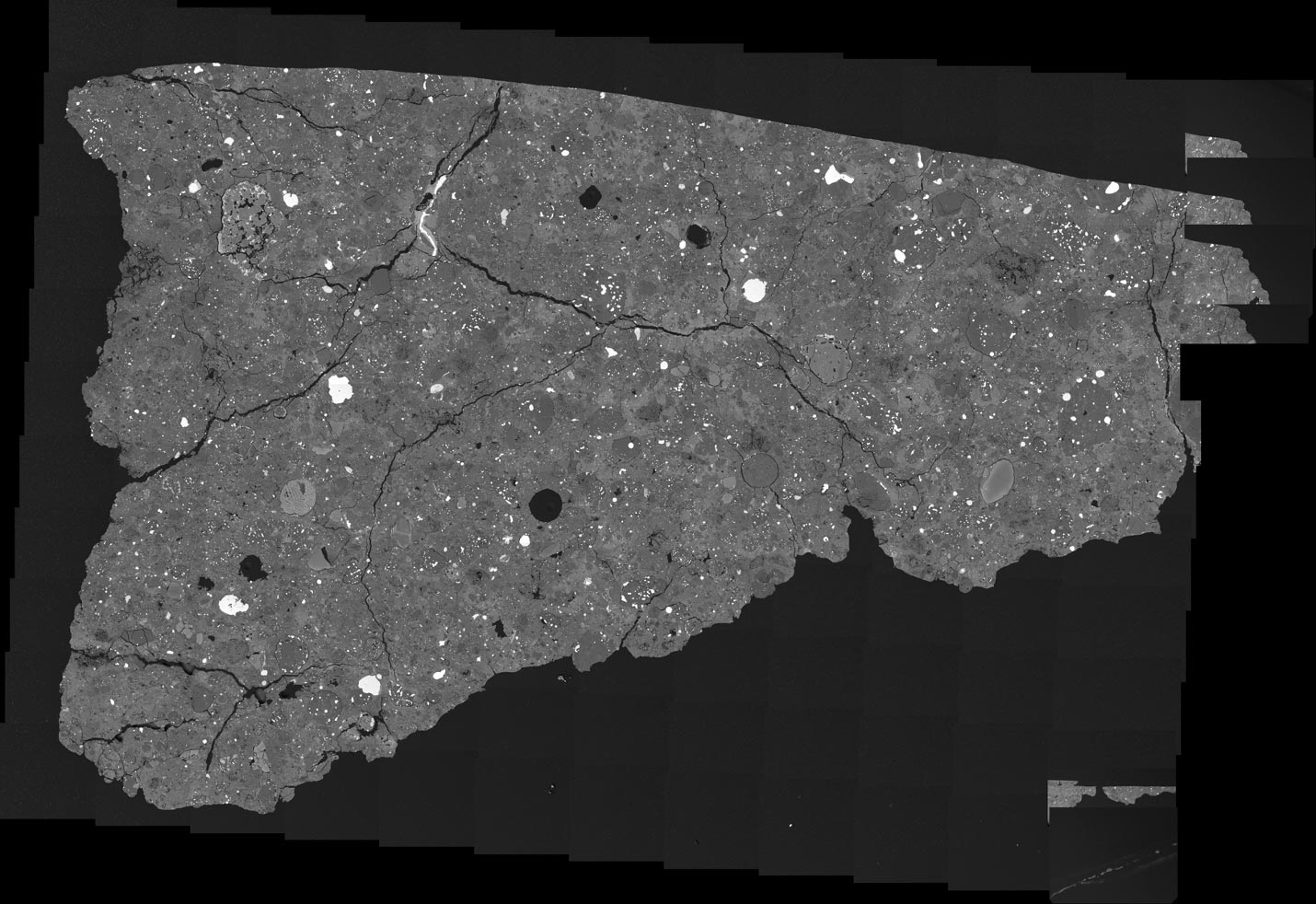
With Asuka 12236, scientists are getting a peek at the very first amino acids produced in the solar system and the conditions that led to the variety and complexity of these molecules. “Asuka 12236 is showing us that there’s this ‘Goldilocks’ thing going on,” Glavin said.
Glavin and his team are learning that the key for amino acids, when it comes to forming and multiplying, is exposure to the perfect conditions inside asteroids. “You need some liquid water and heat to produce a variety of amino acids,” he said. “But if you have too much, you can destroy them all.”
The water would have been produced inside the asteroid that Asuka 12236 came from, as heat from the radioactive decay of certain chemical elements melted the ice that condensed with rock when the asteroid first formed. Given that Asuka 12236 is so well-preserved, it could have come from a cooler outer layer of the asteroid where it would have come in contact with little heat, and thus, water. Though that’s just conjecture for now, Glavin said: “There’s still a lot we don’t know about this meteorite.”

The one factor that doesn’t jibe with that explanation is this: Glavin’s team found more left-handed molecules than right-handed ones in some protein-building amino acids in Asuka 12236. These left-handed molecules would have needed to be processed in a lot more water than this ancient rock seems to have been exposed to. “It is pretty unusual to have these large left-handed excesses in primitive meteorites,” Glavin said. “How they formed is a mystery. That’s why it’s good to look at a variety of meteorites, so we can build a timeline of how these organics evolve over time and the different alteration scenarios.”
While it’s possible that scientists are seeing these life-related molecules because of earthly contamination, Glavin’s team is confident for a variety of reasons that Asuka 12236 is untainted. One sign is that a high concentration of amino acids in Goddard’s sample were free-floating; if scientists had been looking at Earth life, the amino acids would have been bound up in proteins, Glavin said. Still, scientists can’t be 100% sure they’re not looking at contamination when dealing with rocks that fall to Earth’s surface.
For this reason, Glavin and his team are looking forward to analyzing a decidedly pristine sample from a primitive asteroid unexposed to Earth biology. They will get their chance after NASA’s OSIRIS-REx spacecraft delivers a sealed cache of dirt and rocks from the asteroid Bennu in 2023. OSIRIS-REx will collect the sample of Bennu on October 20, 2020.
“Understanding the kinds of molecules, and their handedness, that were present in the earliest days of the solar system puts us closer to knowing how the planets and life formed,” said Jason P. Dworkin, a Goddard astrobiologist who helped analyze Asuka 12236 and serves as project scientist for the OSIRIS-REx mission.
Reference: “Abundant extraterrestrial amino acids in the primitive CM carbonaceous chondrite Asuka 12236” by Daniel P. Glavin, Hannah L. McLain, Jason P. Dworkin, Eric T. Parker, Jamie E. Elsila, José C. Aponte, Danielle N. Simkus, Chad I. Pozarycki, Heather V. Graham, Larry R. Nittler and Conel M.O’D. Alexander, 20 August 2020, Meteoritics and Planetary Science.
DOI: 10.1111/maps.13560
Never miss a breakthrough: Join the SciTechDaily newsletter.
Follow us on Google and Google News.
2 Comments
The collection and analysis of the new SAMPLES from OSiris SHOULD BE DONE offsite in space with Robots — rather than being brought back to planet Earth.
Only information from the rresearch of the samples should reach us. Meaningfull information and theory of understanding carbon based life forms can be better understood only if the research findings are 100% contamination proof from other carbon based life forms.
All research should have , should be done:Off Terra Gaia in Space, at the Space Station, Robotically, in a θ Gravity, Cleaned Sterile environment…anything sub-bar is Irresponsible and Unprofessional…GiGi. sr. Statistical Theoretical Analyst