
Close Menu
    Facebook X (Twitter) Instagram
    SciTechDaily
    • Biology
    • Chemistry
    • Earth
    • Health
    • Physics
    • Science
    • Space
    • Technology
    Facebook X (Twitter) Pinterest YouTube RSS
    SciTechDaily
    Home»Space»Progress Continues on NASA’s Massive SLS Rocket Ahead of Artemis I Launch
    Space

    Progress Continues on NASA’s Massive SLS Rocket Ahead of Artemis I Launch

    By NASAFebruary 12, 20221 Comment2 Mins Read
    Facebook Twitter Pinterest Telegram LinkedIn WhatsApp Email Reddit
    Share
    Facebook Twitter LinkedIn Pinterest Telegram Email Reddit
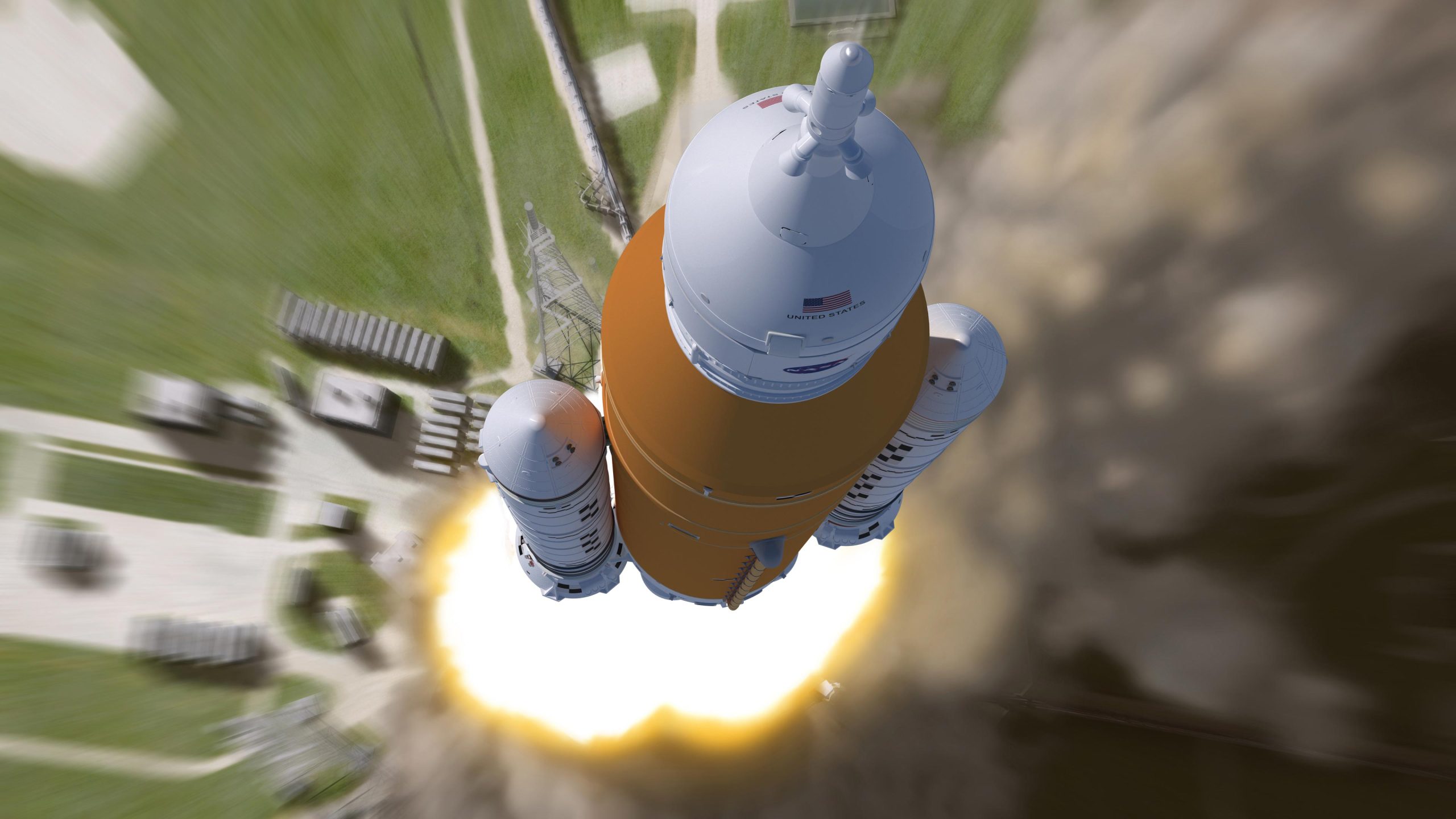
    Space Launch System (SLS) Rocket Liftoff
    This artist’s rendering shows an aerial view of the liftoff of NASA’s Space Launch System (SLS) rocket. Credit: NASA/MSFC

    Work continues inside the Vehicle Assembly Building (VAB) at NASA’s Kennedy Space Center in Florida in preparation for the Artemis I wet dress rehearsal test, currently targeted for next month. Teams have been installing the flight termination system on the rocket and working on the first of a two-part test of the system.

    For safety, all rockets are required to have a flight termination system that the Space Launch Delta 45 can use to terminate the flight if necessary. Once the rocket and spacecraft systems are verified during wet dress rehearsal testing, the 322-foot-tall (98-meter-tall) rocket will roll back into the VAB for final inspections and checkouts, including the second part of the flight termination system test, ahead of returning to the pad for launch.
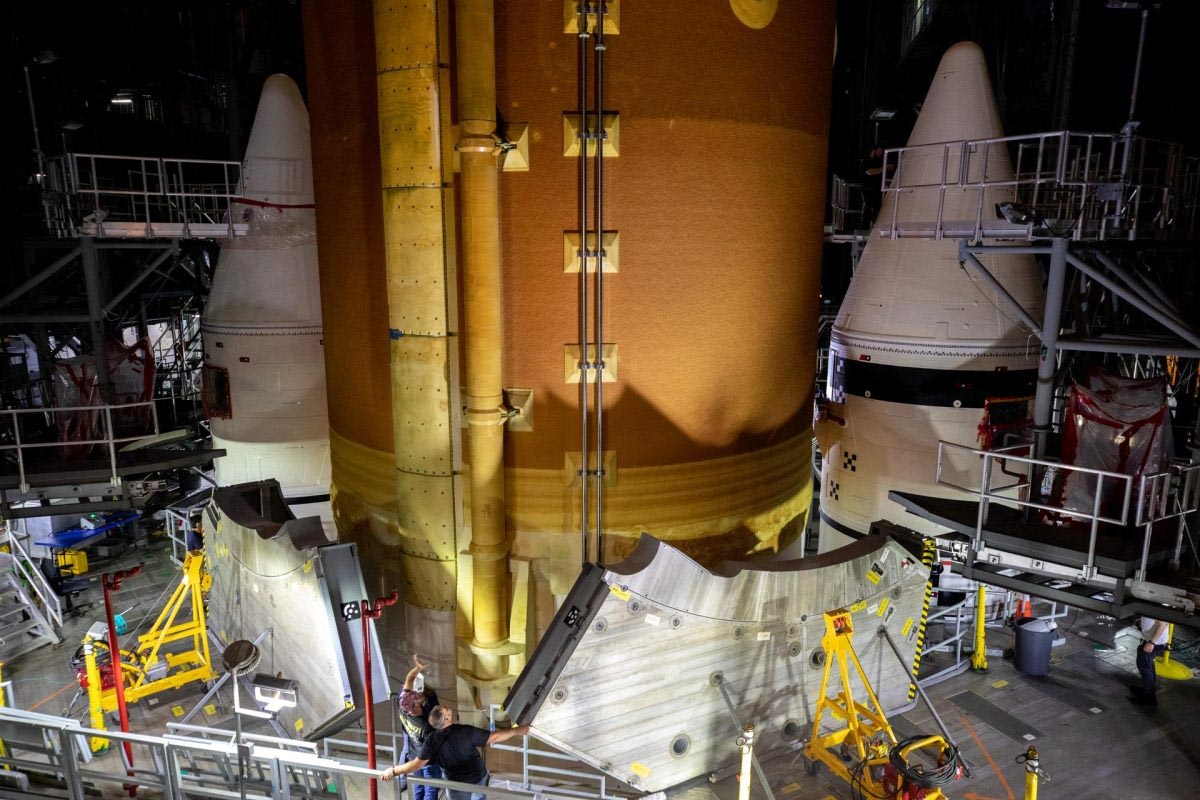
    Teams Lower Space Launch System Core Stage
    Teams with NASA’s Exploration Ground Systems and contractor Jacobs lower the Space Launch System core stage – the largest part of the rocket – onto the mobile launcher, in between the twin solid rocket boosters, inside High Bay 3 of the Vehicle Assembly Building at NASA’s Kennedy Space Center in Florida on June 12, 2021. Credit: NASA/Cory Huston

    In addition to working on the flight termination system, the team is installing instrumentation on the twin solid rocket boosters and core stage, as well as instrumentation needed for the wet dress rehearsal rollout.

    Artemis I is a flight test, and engineers will capture as much data as possible on the performance of all the systems that are part of the Space Launch System (SLS) rocket and the Orion spacecraft as well as the Kennedy ground systems that support the vehicle during rollout, wet dress rehearsal, and launch. Not only will this be the first integrated flight for SLS and Orion, but it will be the first use of many new ground systems.

    Thousands of sensors and special instruments will monitor the rocket and spacecraft as they make the four-mile journey to Launch Complex 39B next month. The team is also working to inspect and install thermal blankets on the core stage engine section.

    Up next, the team plans to power up the Orion spacecraft as part of testing the flight termination system and then close the spacecraft’s hatch after powering it down.

    Never miss a breakthrough: Join the SciTechDaily newsletter.
    Follow us on Google and Google News.

    ARTEMIS Mission NASA Rocket Space Launch System
    Share. Facebook Twitter Pinterest LinkedIn Email Reddit

    Related Articles

    NASA’s Artemis II Is on the Launch Pad and the Moon Is Next

    NASA Fires Up RS-25 at 111% Power for Artemis Moon Launches

    NASA Artemis I Space Launch System (SLS) Rocket and Orion Spacecraft Integrated Testing Update

    NASA Awards Artemis Contract for Future SLS Mega Moon Rocket Boosters

    NASA to Roll Out Artemis Mega Moon Rocket for First Time

    NASA’s Powerful SLS Rocket Fully Stacked for Artemis I Moon Mission – Liftoff for Deep Space in February 2022

    One Step Closer: Orion Spacecraft Stacked on Top SLS Rocket for NASA’s Artemis I Mission

    Final Piece of Rocket Hardware Added to Artemis I Stack

    NASA Readies for Future Artemis Moon Missions With SLS Rocket Engine Test Series

    1 Comment

    1. Greg on February 13, 2022 3:18 am

      A complete waste of money. NASA should be focused on reusing as many parts of their launch vehicals as possible

      Reply
    Leave A Reply Cancel Reply

    • Facebook
    • Twitter
    • Pinterest
    • YouTube

    Don't Miss a Discovery

    Subscribe for the Latest in Science & Tech!

    Trending News

    Scientists Warn That This Common Pet Fish Can Wreck Entire Ecosystems

    Scientists Make Breakthrough in Turning Plastic Trash Into Clean Fuel Using Sunlight

    This Popular Supplement May Interfere With Cancer Treatment, Scientists Warn

    Scientists Finally Solved One of Water’s Biggest Mysteries

    Could This New Weight-Loss Pill Disrupt the Entire Market? Here’s What You Should Know About Orforglipron

    Earth’s Crust Is Tearing Open in Africa, and It Could Form a New Ocean

    Breakthrough Bowel Cancer Trial Leaves Patients Cancer-Free for Nearly 3 Years

    Natural Compound Shows Powerful Potential Against Rheumatoid Arthritis

    Follow SciTechDaily
    • Facebook
    • Twitter
    • YouTube
    • Pinterest
    • Newsletter
    • RSS
    SciTech News
    • Biology News
    • Chemistry News
    • Earth News
    • Health News
    • Physics News
    • Science News
    • Space News
    • Technology News
    Recent Posts
    • Kratom Use Explodes in the US, With Life-Changing Consequences
    • Scientists Uncover Fatal Weakness in “Zombie Cells” Linked to Cancer
    • World-First Study Reveals Human Hearts Can Regenerate After a Heart Attack
    • Why Your Dreams Feel So Real Sometimes and So Strange Other Times
    • Scientists Debunk 100-Year-Old Belief About Brain Cells, Rewriting Textbooks
    Copyright © 1998 - 2026 SciTechDaily. All Rights Reserved.
    • Science News
    • About
    • Contact
    • Editorial Board
    • Privacy Policy
    • Terms of Use

    Type above and press Enter to search. Press Esc to cancel.