
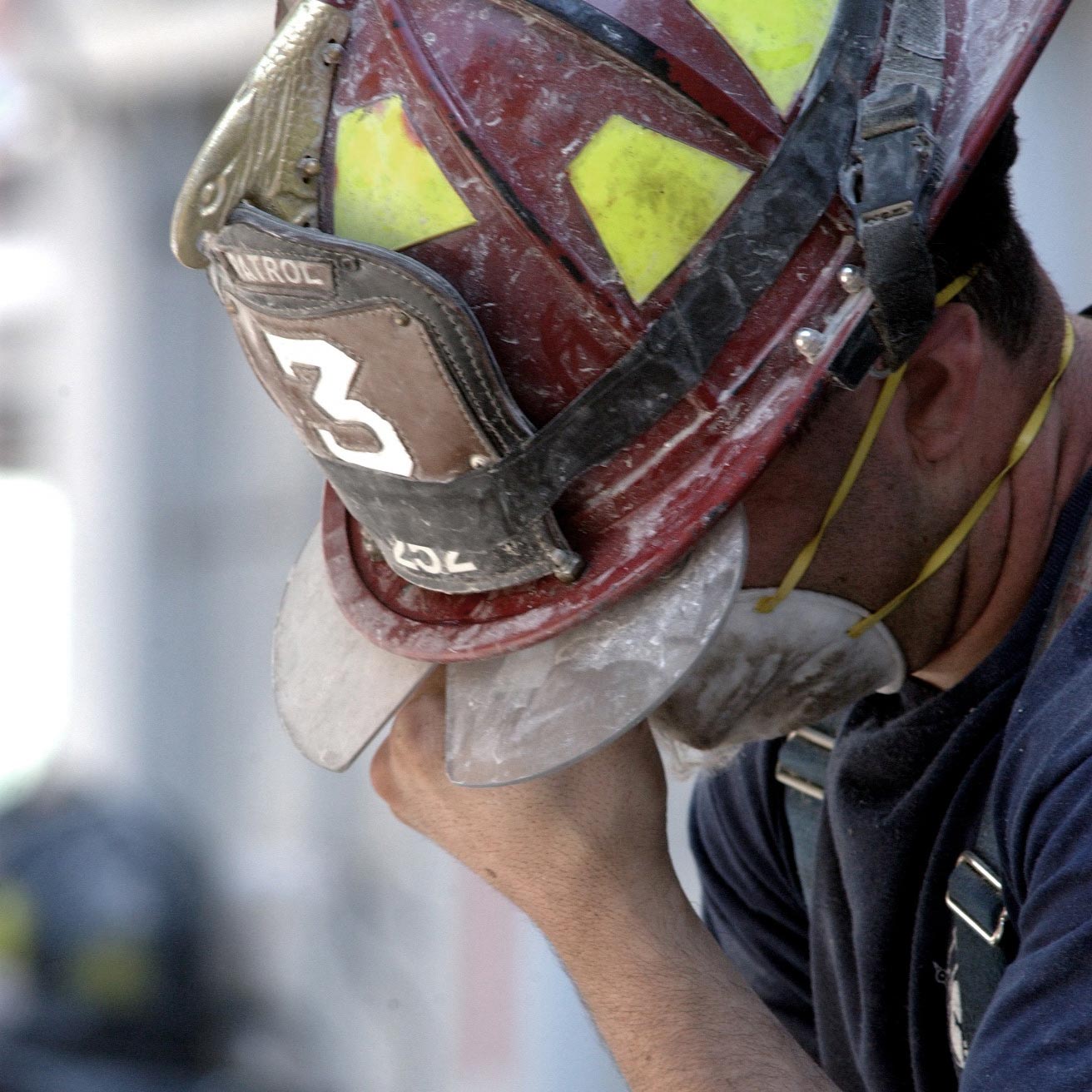
Greatest risk seems to be among earliest responders on day of attack.
The risk of prostate cancer was 24% higher among 9/11 rescue and recovery workers after the attacks on the World Trade Center in 2001, with the highest risk among the earliest responders, finds research published online in the journal Occupational & Environmental Medicine.
The findings indicate a shorter latency period from occupational exposure to disease development than that reported in other studies of men not involved in 9/11 recovery/rescue work, although the impact of screening practice can’t be ruled out, say the researchers.
The World Trade Center attacks on 11 September 2001 created a hazardous environment with known and suspected cancer-causing agents. Previous studies have indicated a heightened risk of prostate cancer among responders at the scene compared with men in the general population.
But the length of time between exposure to the toxins at the disaster site and a cancer diagnosis isn’t known.
The researchers therefore wanted to know if there were specific time periods after the attacks during which prostate cancer risk might be significantly higher.
They tracked the health of 69,102 rescue/recovery workers from three groups of World Trade Center responders: the New York City Fire Department; the General Responder Cohort; and participants from the World Trade Center Health Registry.
Responders included firefighters, emergency medical services, police, construction and communication workers, volunteers, and those involved in the clean-up.
Exposure levels to cancer-causing agents, such as asbestos, sulfuric acid, benzo(a)pyrene, benzene, and arsenic, were estimated by time of arrival at the World Trade Center site: on the day of the attacks or being caught in the dust cloud resulting from the collapse of the twin towers; on the following day; any other time from September 13, 2001 to June 30, 2002.
Cancer diagnoses were tracked via linkage with 13 state cancer registries across the US up to the end of the study period in 2015.
Prostate Cancer Diagnoses and Demographics
The final analysis included 54,394 men, 1120 of whom were diagnosed with prostate cancer between March 12, 2002, and December 31, 2015. The average age at diagnosis was 60.
Compared with the responders who didn’t develop prostate cancer, those who did were more likely to be current or former smokers. They were also more likely to have another type of cancer diagnosed within the study period.
More than 3 out of 4 prostate cancer cases (867; 77%) were early stage and localized; just over 15% (171) had spread locally; and 2.5% (28) had spread to other parts of the body.
The average latency period from exposure to diagnosis was 9.4 years, with two thirds of cases (734) diagnosed between 2009 and 2015, but starting in 2006, just five years after the attacks.
This is shorter than that reported in other studies, not involving World Trade Center responders, and may reflect the type of exposure experienced at the site, say the researchers.
The World Trade Center cases were compared with those among men in New York State during the same period, and using the same inclusion criteria, but who weren’t involved in rescue/recovery work at the World Trade Center following the 9/11 attacks.
Relative to rates among these men, 207,252 of whom developed prostate cancer, the risk of the disease among World Trade Center rescue/recovery workers was 24% higher, from 2007 through to the end of 2015, after accounting for potentially influential factors, such as smoking.
Dose–Response and Intensity of Exposure
Further analysis revealed a dose–response trend in both the early (2002–06) and later (2007–15) periods of monitoring, with the largest risk estimated in the early period.
“The increased hazard among those who responded to the disaster earliest or were caught in the dust cloud suggests that a high intensity of exposure may have played some role in premature oncogenesis,” explain the researchers.
“Relative to [the New York State group], however, a lower relative risk was observed in the initial period, particularly among those responders who arrived at the [World Trade Center] disaster site latest.”
Occupational Risks Beyond WTC Exposure
Certain jobs may pose an additional risk of prostate cancer, irrespective of World Trade Center exposure, say the researchers, by way of a possible explanation for the heightened risk observed in the later period.
This is an observational study, and as such, can’t establish cause. Higher than average screening for prostate cancer among the World Trade Center responders may also have influenced the findings, point out the researchers.
Nor were they able to determine the extent to which other behavioral, occupational, and environmental exposures other than cigarette smoking might have contributed to prostate cancer risk.
Nevertheless, their “evidence suggests a relationship between [World Trade Center] exposure and prostate cancer not fully explained by random or systematic error,” they write.
“Our findings support the need for continued research evaluating the burden of prostate cancer in [World Trade Center] responders,” they conclude.
Reference: “Temporal association of prostate cancer incidence with World Trade Center rescue/recovery work” by David G Goldfarb, Rachel Zeig-Owens, Dana Kristjansson, Jiehui Li, Robert M Brackbill, Mark R Farfel, James E Cone, Janette Yung, Amy R Kahn, Baozhen Qiao, Maria J Schymura, Mayris P Webber, Christopher R Dasaro, Moshe Shapiro, Andrew C Todd, David J Prezant, Paolo Boffetta and Charles B Hall, 10 September 2021, .
DOI: 10.1136/oemed-2021-107405
Never miss a breakthrough: Join the SciTechDaily newsletter.
Follow us on Google and Google News.