

Twelve pumas in Tetons produced annual prey mass comparable to size of blue whale, the world’s largest animal, feeding hundreds of species.
Pumas may use a ‘garden to hunt’ strategy, creating nutrient-rich hotspots to attract prey and improve future hunting success. This contributes to overall ecosystem health and highlights the importance of conserving pumas across the Americas.
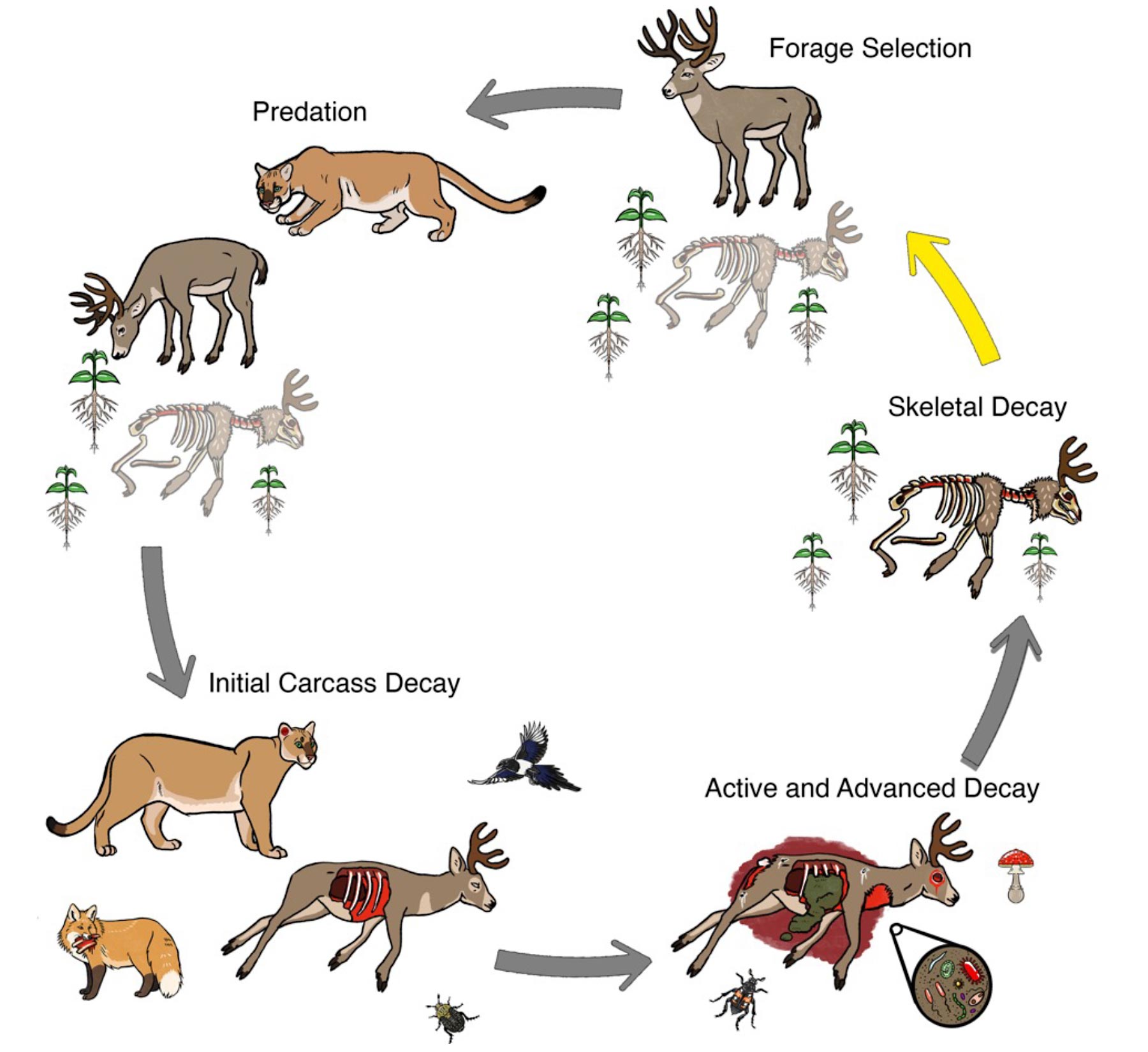
A new Panthera study published recently in the journal Landscape Ecology has found that pumas might utilize a sly hunting strategy known as ‘garden to hunt,’ by which puma kills fertilize or deposit nutrients in soil that increase plant quality and attract ungulates to feed in select habitat conducive to future stalk-and-ambush puma hunting.
In a fascinating cycle of foraging for both pumas and their prey, decomposing ungulate carcasses deposit elevated levels of nitrogen, carbon, and other valuable elements that improve the chemistry and nutrient makeup of soil and plants. These changes may even influence where ungulates, such as elk, congregate and feed, given their preference for nitrogen-rich food. Pumas, because they hunt only select areas that give them an advantage, are creating nutrient-rich hotspots that may continue to improve their future hunting success over time.
A remarkable finding, scientists also estimated that a dozen pumas produced over 100,000 kg of carrion per year, a mass equivalent to that of the world’s largest animal, the blue whale. Over a nine-year lifespan, each puma was estimated to have created approximately 482 temporary hotspots of nutrient-rich soil.

Panthera Puma Director, Dr. Mark Elbroch, stated, “Each study and glimpse into the secret lives of pumas reveals that their behaviors and contributions to nature are far more complex than imagined. Pumas contribute over a million kg of meat to ecosystems every day, improving the quality of soil and plant life, feeding hundreds of species, and supporting the health of their ecosystems and our planet’s overall web of life.”
Elbroch continued, “To those who care for the well-being of wildlife and the wild habitats sustaining all living beings, these findings yet again demonstrate the value and need to conserve the Americas’ pumas.”
Puma Habitat Preferences for Stalk-and-Ambush
Pinpointing the locations of GPS-collared pumas in the Greater Yellowstone Ecosystem, scientists identified puma kill sites to collect and analyze 1,007 soil samples from 172 ungulate carcasses and 130 plant samples from 65 sites. Along with increased nutrients in soil and plant samples, researchers found kills were concentrated to a tiny fraction of habitat (4%) favoring pumas’ preferred stalk-and-ambush strategy.
Scientists found the species was more likely to make kills in habitat home to high tree canopies, low elevations, steeper slopes and areas close to forest edges, roads and streams. In order, puma preference for hunting habitat included deciduous forest, mixed forest, grassland, shrub-steppe and riparian terrain.
Bottom to top, nutrient distribution via puma kills impacts how overall ecosystems operate, including influencing soil and plant chemistry and diversity; the distribution and variety of invertebrates; and the makeup of wildlife scavenger communities, such as fox.
Pumas as Ecosystem Engineers
Last year, Panthera and Defenders of Wildlife published a study demonstrating that pumas maintain relationships with an astounding 485 living species and play a critical role in holding ecosystems together throughout the Western Hemisphere. Previously, Panthera and partners found pumas serve as ecosystem engineers and provide habitat and food for 215 species of beetles.
Unlike other carnivores such as gray wolves that dismember their kills, pumas maintain intact carrion and experience high levels of kleptoparasitism or stealing of their kills. This results in pumas contributing a disproportionate amount of food to other wildlife, with pumas consuming approximately a third of the overall weight of their prey, on average, and the rest supports diverse scavengers, flora and fauna.
Though pumas range across 28 countries in the Americas, they are poorly understood and thought to be declining overall. The species is elusive and often mischaracterized as a vicious, solitary predator, leading to persecution and fueling human-puma conflict. In the United States, pumas are threatened by habitat loss, road mortality and disease; some populations are further impacted by legal hunting. In Latin America, the species faces the same threats, along with illegal hunting, which includes retaliatory killing by ranchers over livestock and loss of prey.
Reference: “Large carnivore foraging contributes to heterogeneity in nutrient cycling” by Michelle Peziol, L. Mark Elbroch, Lisa A. Shipley, R. Dave Evans and Daniel H. Thornton, 27 March 2023, Landscape Ecology.
DOI: 10.1007/s10980-023-01630-0
Panthera’s Puma Program protects pumas — also known as cougars or mountain lions — in western Washington state, California’s East Bay and the region surrounding Torres del Paine National Park in Chile. Program activities include conflict mitigation, education, studying puma prey selection, addressing livestock predation and studying competition with other carnivores and the impact of reintroduced wolves in different parts of the puma’s range.
Never miss a breakthrough: Join the SciTechDaily newsletter.
Follow us on Google and Google News.