
Biomass fuels derived from various types of grass could significantly mitigate global warming by reducing carbon, according to a long-term field study by researchers at Ben-Gurion University of the Negev (BGU) and Michigan State University (MSU).
In a new paper published in Environmental Science and Technology, the researchers examined a number of different cellulosic biofuel crops to test their potential as a petroleum alternative in ethanol fuel and electric light-duty vehicles which includes passenger cars and small trucks.
Climate change mitigation scenarios limiting global temperature increases to 1.5 °C (2.7 °F) rely on decarbonizing vehicle fuel with bioenergy production together with carbon capture and storage (BECCS). Carbon Capture and Storage (CCS) is a technology that can capture up to 90% of the carbon dioxide (CO2) emitted during electricity generation and industrial processes, which prevents atmospheric increase of CO2 concentration. Using both CCS and renewable biomass is one of the few carbon abatement technologies resulting in a ‘carbon-negative’ mode — actually removing carbon dioxide from the atmosphere.
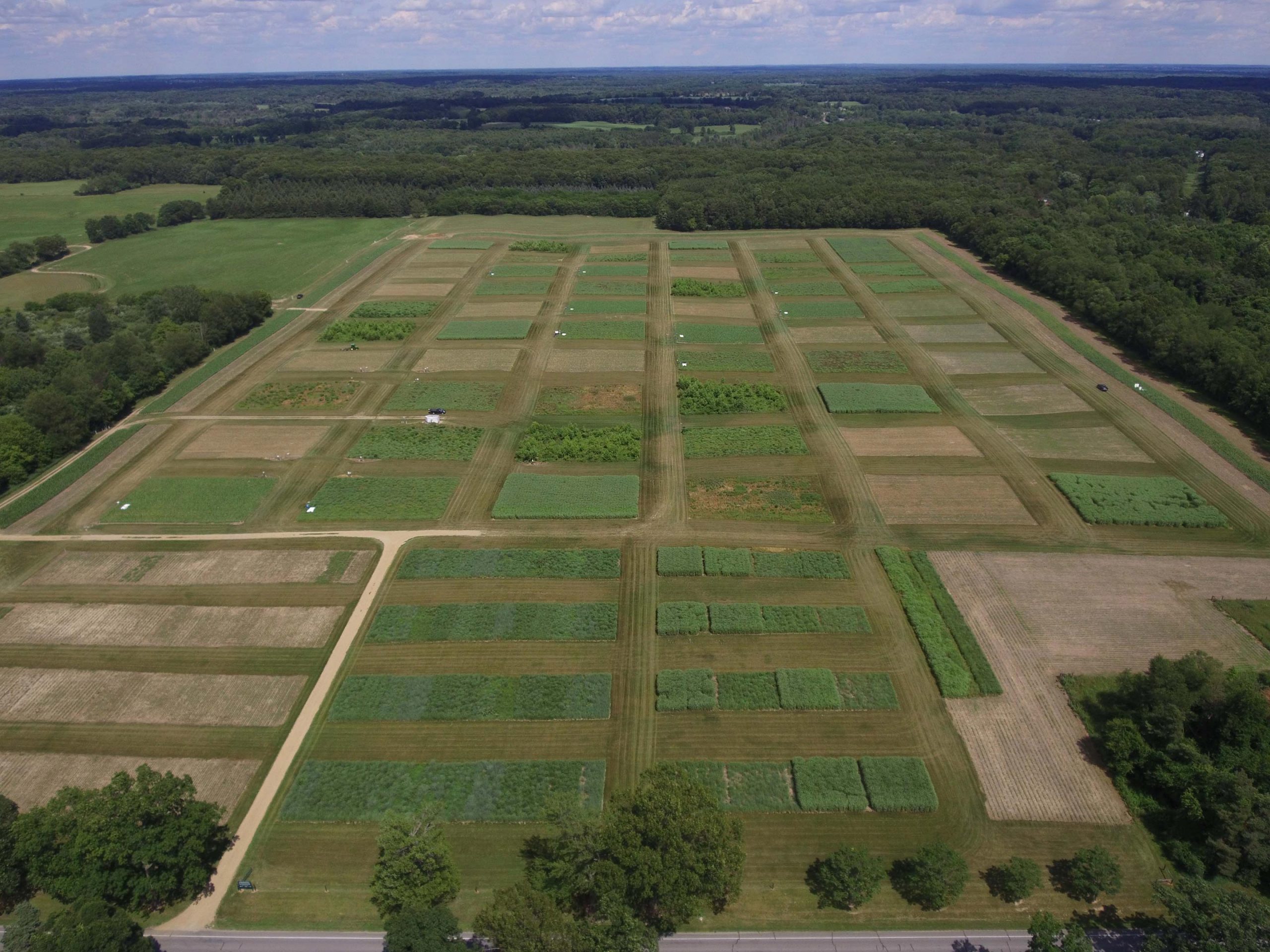
This research, for the first time, evaluates bioenergy feedstocks grown side-by-side. The seven crops included, switchgrass, giant miscanthus, poplar trees, maize residuals, restored native prairie, and a combination of grasses and vegetation that grows spontaneously following field abandonment.
“Every crop we tested had a very significant mitigation capacity despite being grown on very different soils and under natural climate variability,” says Dr. Ilya Gelfand, of the BGU French Associates Institute for Agriculture and Biotechnology of Drylands, The Jacob Blaustein Institutes for Desert Research. “These crops could provide a very significant portion of the decarbonization of U.S. light-duty vehicle transport to curb CO2 emissions and slow global warming.” Decarbonization of transportation is critical to limit rising temperatures.”
In the study, when compared with petroleum-only emissions, ethanol with bioenergy was 78-290% better in reducing carbon emissions; ethanol was 204-416% improved, biomass-powered electric vehicles powered by biomass was 74-303% cleaner, and biomass-powered electric vehicles combined with CSS was 329-558% superior.
The study was conducted at Michigan State University’s (MSU) Kellogg Biological Station and the University of Wisconsin’s Arlington Research Station which is part of the U.S. Department of Energy’s Great Lakes Bioenergy Research Center. Interestingly, the crops grown at MSU did as well as those grown at the more fertile Wisconsin site.
“This is significant because it means that we’re likely to be able to produce these crops on marginal lands and still get high productivity,” says Prof. Phil Robertson of MSU, senior author of the study. “Long-term field experiments that include weather extremes such as drought, and actual rather than estimated greenhouse gas emissions, are crucial for stress-testing models assumptions.”
The next phase of research is to assess other environmental and economic aspects of bioenergy crops. The best biofuel crops need to be economically attractive to farmers, don’t add more nitrogen or pesticides to the environment, and are conservation friendly.
Reference: “Empirical Evidence for the Potential Climate Benefits of Decarbonizing Light Vehicle Transport in the U.S. with Bioenergy from Purpose-Grown Biomass with and without BECCS” by Ilya Gelfand, Stephen K. Hamilton, Alexandra N. Kravchenko, Randall D. Jackson, Kurt D. Thelen and G. Philip Robertson, 13 February 2020, Environmental Science & Technology.
DOI: 10.1021/acs.est.9b07019
Financial support for this work was provided by the U.S. Department of Energy Office of Science (DE-FC02-07ER64494, DE-SC0018409) and Office of Energy Efficiency and Renewable Energy (DE-AC05-76RL01830), the U.S. National Science Foundation LTER program (DEB 1832042), and Michigan State University AgBioResearch.
Never miss a breakthrough: Join the SciTechDaily newsletter.
Follow us on Google and Google News.