
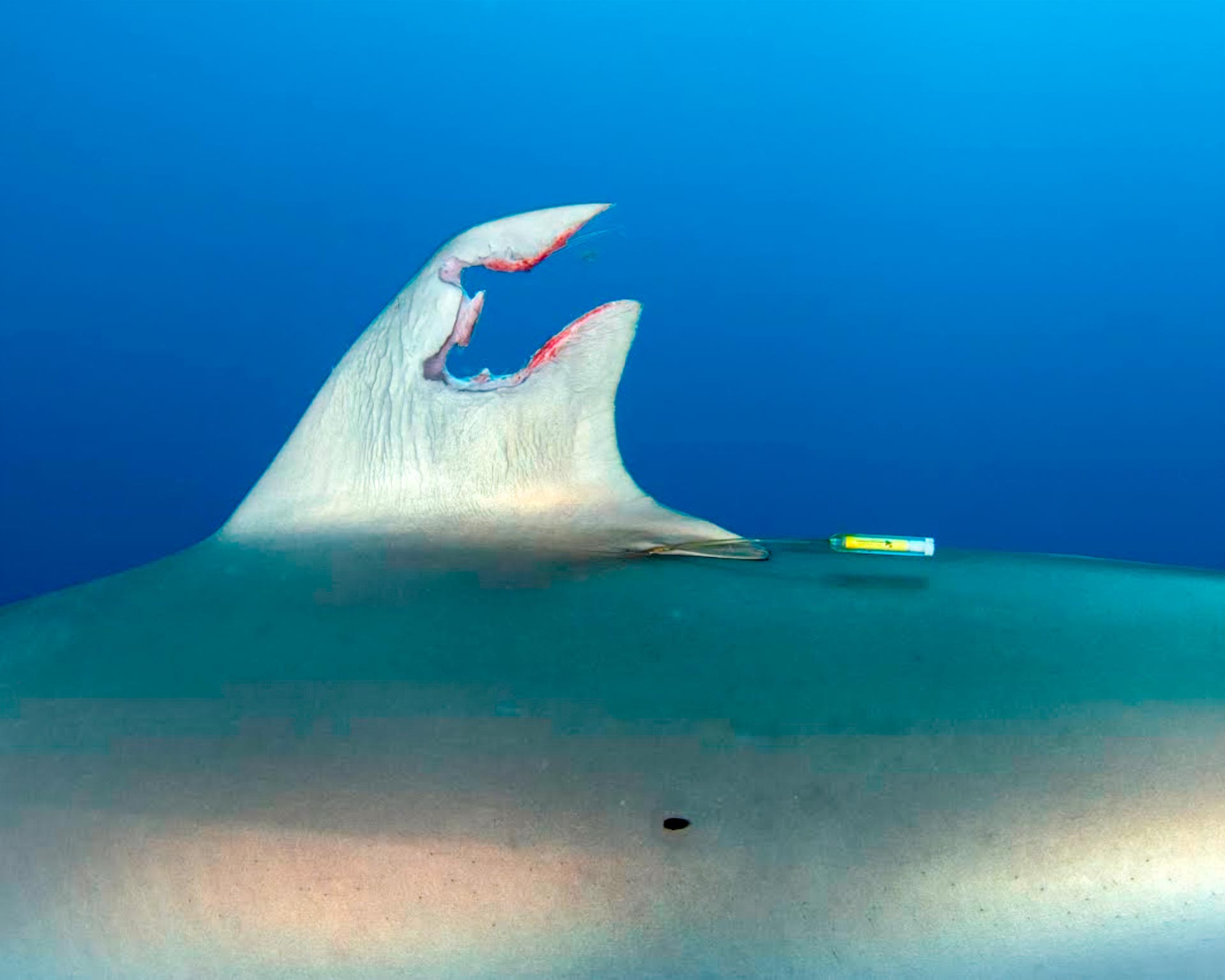
During a migration study, a researcher discovered a silky shark in Florida regenerating its dorsal fin, highlighting the species’ extraordinary healing powers.
I made an accidental and astonishing discovery while studying the movements of sharks off the coast of Jupiter, Florida. I set out to record the migration routes of silky sharks, named for their smooth skin. Instead, in a story filled with twists and turns, I ended up documenting the rare phenomenon of a shark regenerating a dorsal fin.
Tagging, Then Trauma
It all started in the summer of 2022, when my team and I tagged silky sharks (Carcharhinus falciformis) as part of my Ph.D. research. Silky sharks are commonly found in the open ocean and grow to be 10 feet long. Scientists know these sharks congregate in South Florida each summer, but where they go the rest of the year remains a mystery – one I hoped to solve.
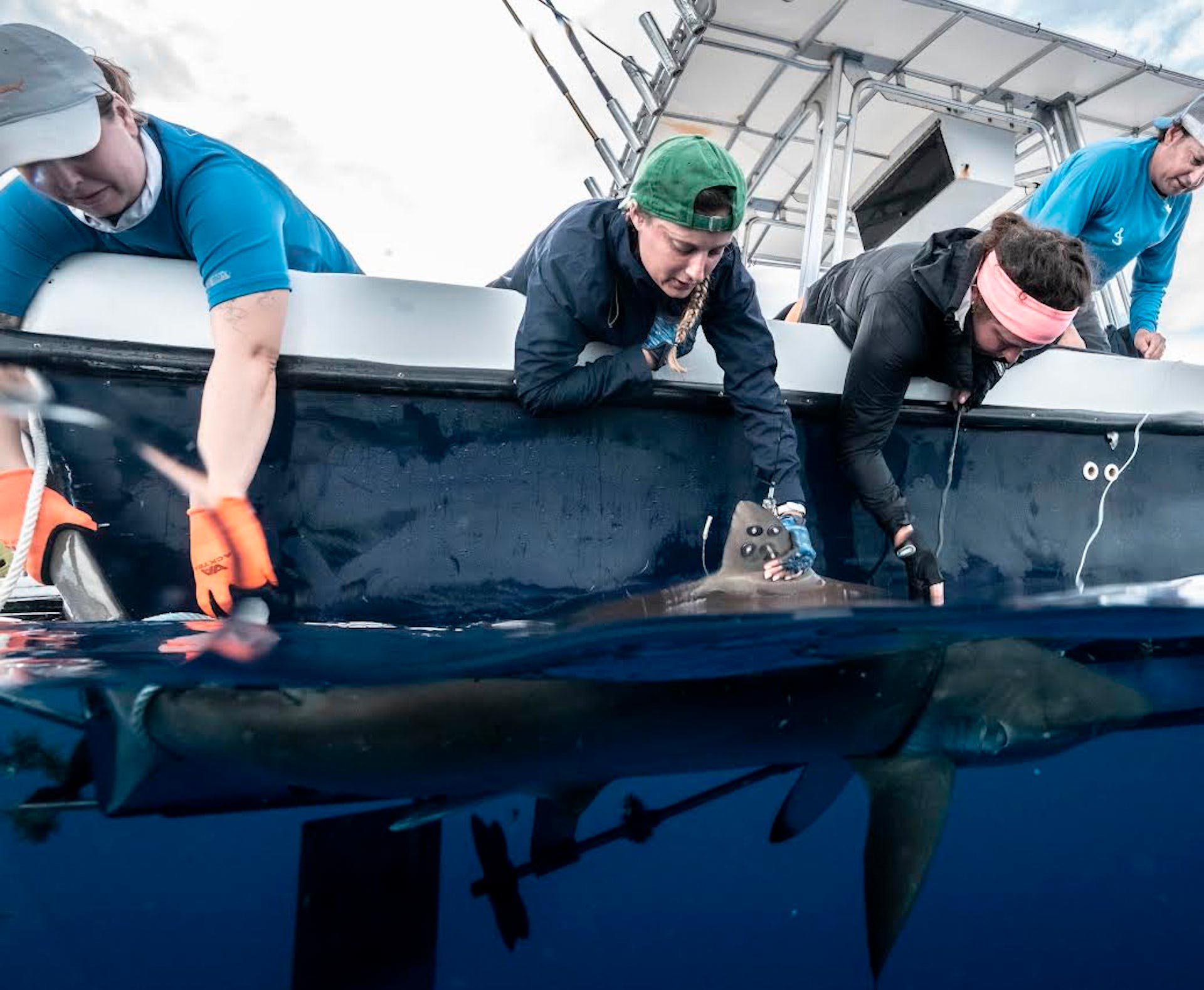
Local boat captain John Moore took us to a site where sharks are known to gather. We carefully caught and gently attached GPS trackers to the dorsal, or top, fin of 10 silky sharks.
The tags, which are attached like large earrings, do not interfere with swimming and are designed to fall off after a few years. When the tag’s antenna breaks the surface of the water, its GPS location is picked up by overhead satellites, hopefully revealing details of the shark’s secret life.
I headed home to track their travels from my laptop.
The story took an unexpected turn a few weeks later, when I received disturbing photos from an avid diver and underwater photographer, Josh Schellenberg, who knew of my work.
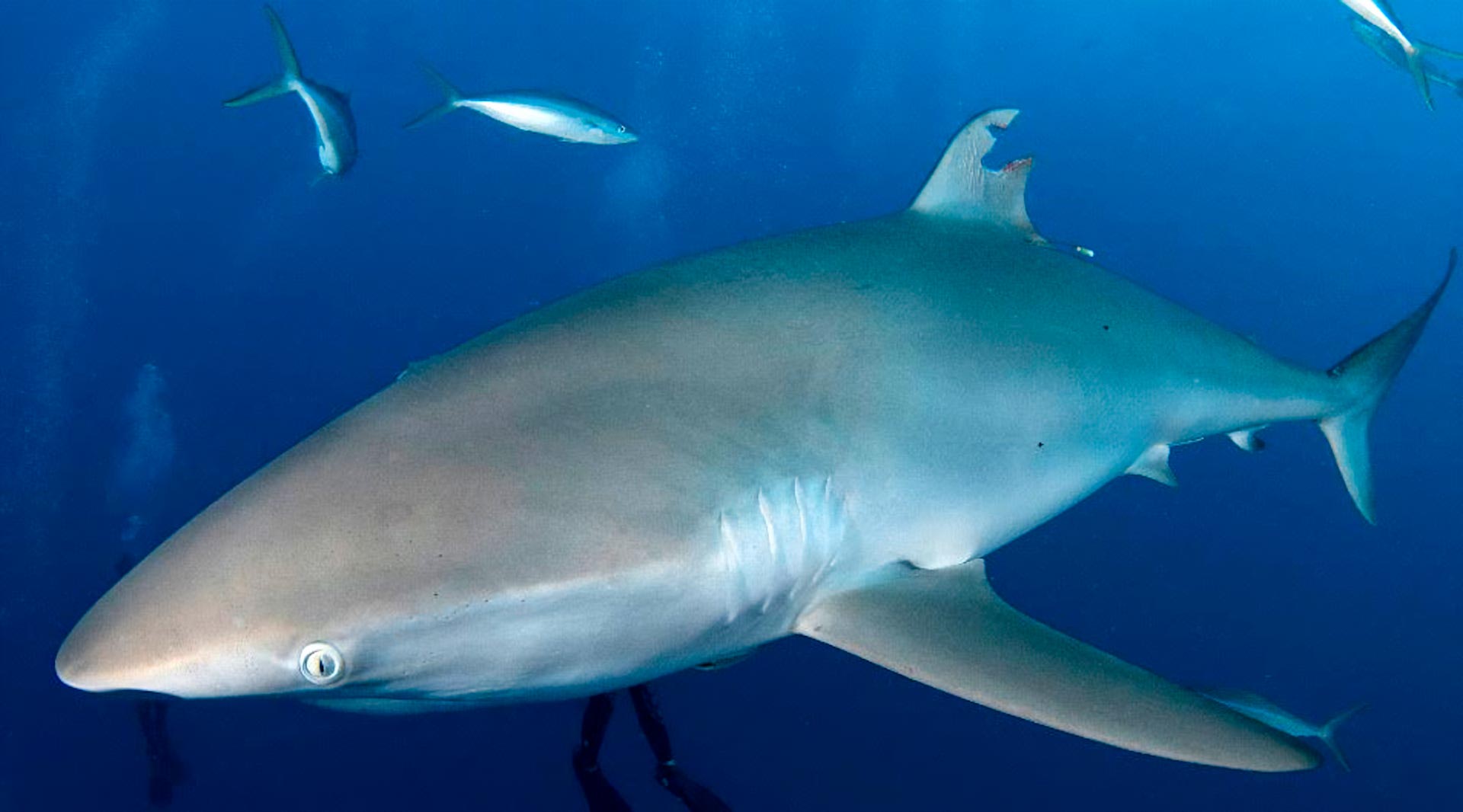
The photos showed a male silky shark with a large, gaping wound in its dorsal fin, as if someone had taken a satellite-tag-shaped cookie cutter and punched it right through. Josh wondered if this individual was one of the sharks from my study.
When placing the GPS tags, I also place a second tag beneath each shark’s dorsal fin that displays a unique ID number, so I was able to confirm the injured shark was one from my study, #409834.
I felt a mixture of relief and sadness. Relief that the shark survived this ordeal; sadness for the scientific data that would now go uncollected.
Silky sharks are often caught by local fishermen in this area but are protected in Florida and illegal to kill or retain. Josh’s photos of #409834 showed several hooks in his mouth, so I knew this animal had been captured several times since my team tagged him.
The way the satellite tag attaches means it’s impossible for it to naturally rip out of the fin and leave a wound of this shape. Why someone cut off the shark’s satellite tag remains a mystery, but perhaps they thought they could resell it or possibly wanted to interfere with research. I never expected to see that shark again.
The Return of #409834
Flash forward to one year later, the summer of 2023. I received several photos of silky sharks from John Moore, our boat captain, who is also an avid diver. John was on the lookout for any of our sharks making their seasonal return to Jupiter. In the many shark photos he sent, I noticed a silky shark with an oddly shaped dorsal fin.
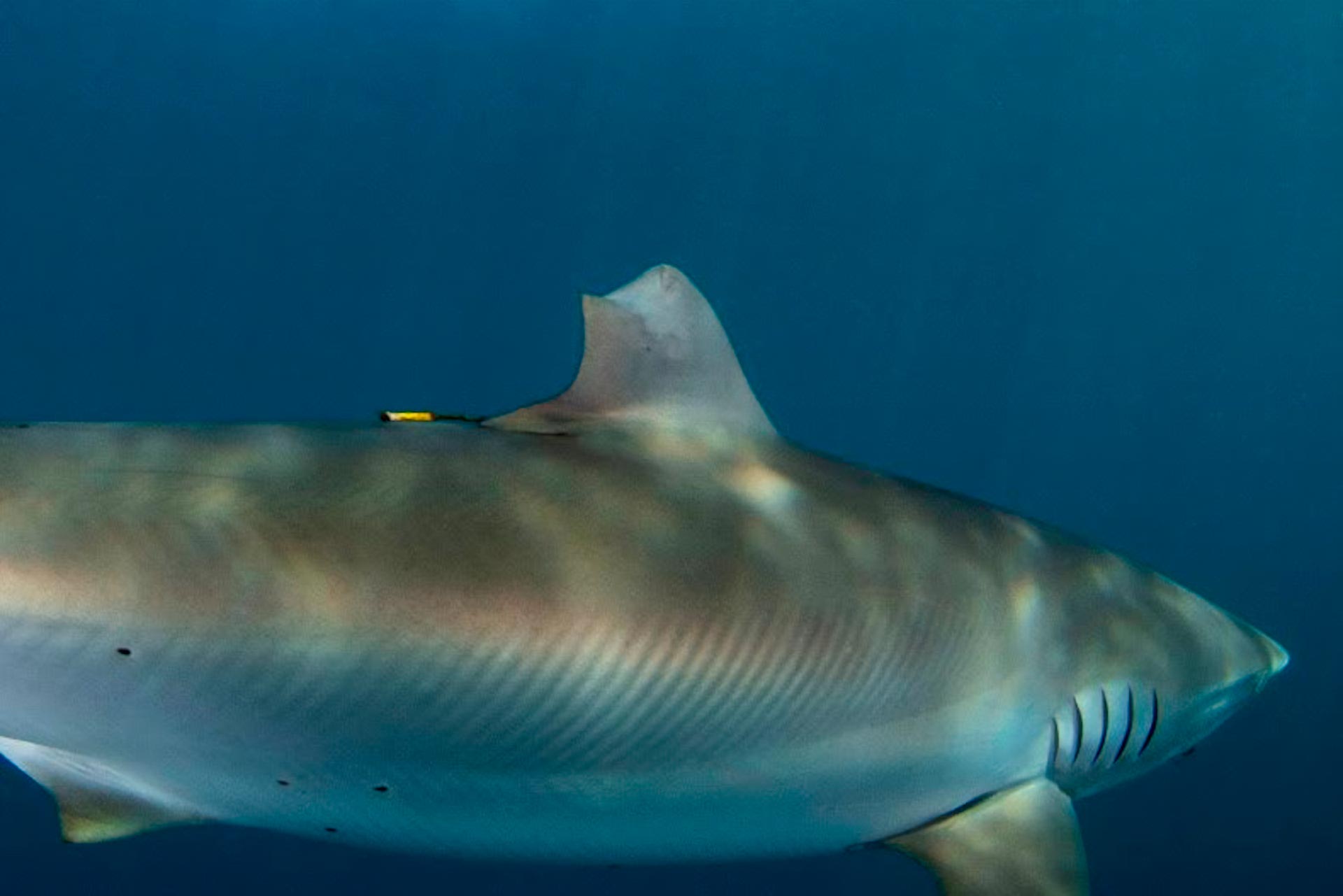
I knew immediately it had to be #409834 from the previous summer. A few days later, John was able to get close enough to photograph the ID tag to confirm my hunch. Josh Schellenberg also spotted and photographed #409834. With both John’s and Josh’s photos, I was able to compare the healed dorsal fin with the freshly injured one.
I wasn’t expecting to make a groundbreaking discovery. Simple curiosity led me to start analyzing the photos. But the revelation was astonishing: Not only had the wound completely healed, but the 2023 dorsal fin was 10.7% larger in size than it was after the injury in 2022. New fin tissue had regenerated.
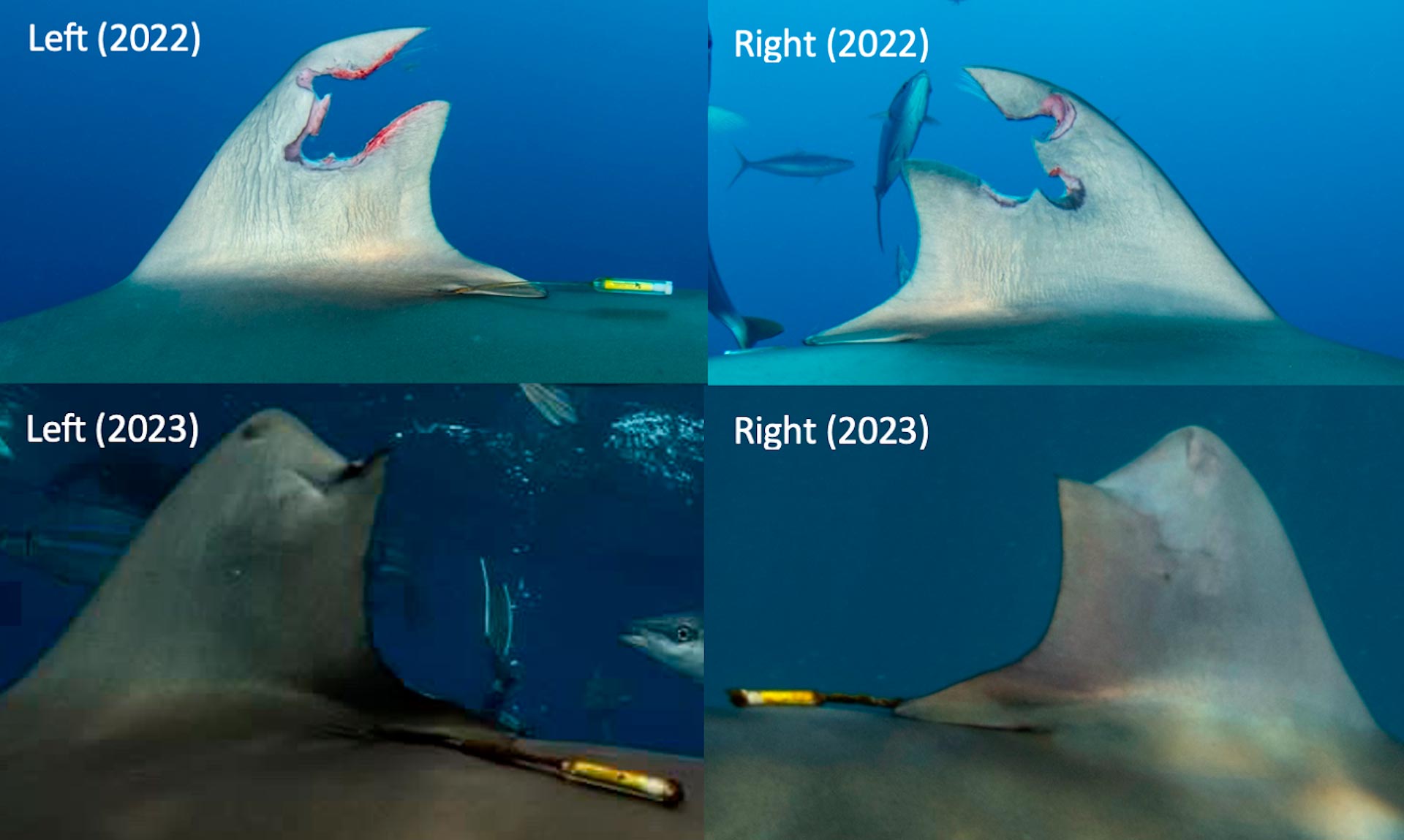
My analysis determined that within 332 days, the shark regenerated enough tissue that his dorsal fin was almost back to 90% of its original size, growing back more than half of what had been cut off in 2022.
The dorsal fin, pivotal for balance, steering, and hydrodynamics, is vital for a shark to be able to hunt and survive. Seeing no infection or any signs of malnourishment in #409834 suggests an extraordinary feat of endurance.
Scientists know that sharks have an incredible aptitude for healing – but mechanisms behind these observations are still poorly understood. While limb regeneration has been widely documented in other marine animals like starfish and crabs, there is only one other documented case of dorsal fin regeneration in a shark – a whale shark in the Indian Ocean that regrew its dorsal fin after a boat accident in 2006.
400 Million Years of Resilience
There’s a reason sharks have been on Earth longer than trees and have survived multiple mass extinction events that wiped out other species. They are a product of 400 million years of evolutionary adaptations that demonstrate their remarkable resilience and have primed them for survival.
To be able to pinpoint an ability that helps make them so resilient is a major scientific advance – especially considering scientists are still questioning where silky sharks spend most of their time in the Atlantic.
One person’s attempt to undermine shark science and harm a shark ultimately proved futile. Instead, the shark’s toughness prevailed and led to an amazing discovery about this species. This story also shows there are countless individual people, including scientists like me and shark enthusiasts like Josh and John, who share a genuine love and respect for these animals.
While I’ll never know for certain where #409834 spends the rest of the year, I hope he continues to return to Jupiter each summer so we can further assess his progress. Based on the healing rate calculated in my study, we just might see his dorsal fin grow back to 100% its original size.
Written by Chelsea Black, Ph.D. Candidate in Marine Ecosystems and Society, University of Miami.
Adapted from an article originally published in The Conversation.
Never miss a breakthrough: Join the SciTechDaily newsletter.
Follow us on Google and Google News.