
Close Menu
    Facebook X (Twitter) Instagram
    SciTechDaily
    • Biology
    • Chemistry
    • Earth
    • Health
    • Physics
    • Science
    • Space
    • Technology
    Facebook X (Twitter) Pinterest YouTube RSS
    SciTechDaily
    Home»Science»Researchers Analyze “Lunar Effect” – Does Crime Increase When the Moon Is Full?
    Science

    Researchers Analyze “Lunar Effect” – Does Crime Increase When the Moon Is Full?

    By New York UniversityOctober 29, 20191 Comment2 Mins Read
    Facebook Twitter Pinterest Telegram LinkedIn WhatsApp Email Reddit
    Share
    Facebook Twitter LinkedIn Pinterest Telegram Email Reddit

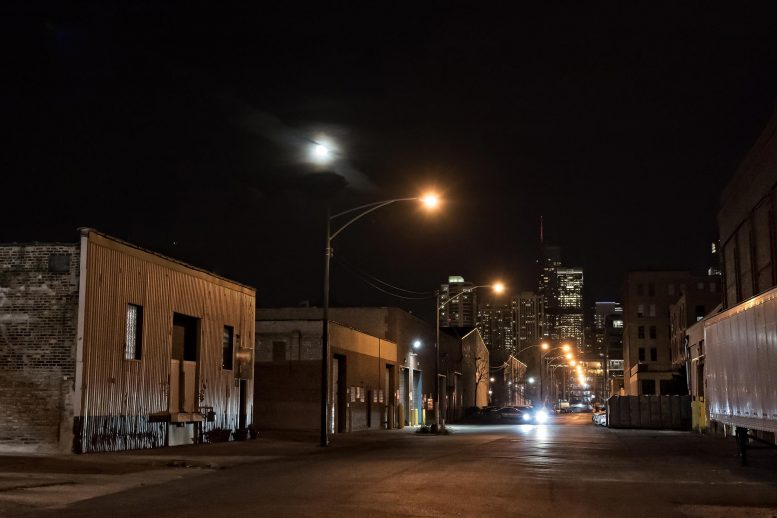
    Full Moon Crime

    NYU researchers test whether ‘lunar hypothesis’ is founded on superstition or empirical data.

    Just in time for Halloween, the BetaGov team at NYU’s Marron Institute of Urban Management is releasing a three-country study on the “lunar effect.”

    Betagov, which carries out randomized controlled trials for, and collaborates with, stakeholders in the field, looked into the purported relationship between crime and the full moon. The investigation resulted from a conversation with a police official in Vallejo, CA, and an article on the phenomenon he pointed out from Australia.

    To start out, BetaGov researchers conducted a review of the overall research literature on the “lunar effect,” which, surprisingly, is mixed. Some studies have found evidence of a lunar effect on crime and negative behavior, and others show none at all.

    The Vallejo police official, meanwhile, pulled together his agency’s crime data from January 2014 through May 2018. He researched phases of the moon for each crime event, and sent BetaGov his data for analysis. According to the analysis, the data demonstrated that there’s no association between crime events and full moon. In Vallejo, California, at least, people don’t commit more crimes when there is a full moon.

    Other police departments heard about this analysis and were curious whether there was evidence for the lunar hypothesis in their own data. To make sure North America was represented, BetaGov teed up replication studies with the Barrie (Ontario) Police Service in Canada and the Irapuato Citizen Safety Secretariat in Mexico. The team merged moon-phase data into their calls-for-service and crime data.

    What was found? Again, nothing.

    “Although these kinds of analyses are fun, the findings have practical implications for policing such as in developing staffing assignments and distribution of other law-enforcement resources. The bottom line is be vigilant in questioning your assumptions and use your data to explore. It might just surprise you,” said BetaGov director Angela Hawken (Ph.D.), a professor of public policy at the NYU Marron Institute.

    Never miss a breakthrough: Join the SciTechDaily newsletter.
    Follow us on Google and Google News.

    Behavioral Science Crime Moon New York University
    Share. Facebook Twitter Pinterest LinkedIn Email Reddit

    Related Articles

    Report Finds Police Use-of-Force Policies Fall Short of Human Rights Standards

    Police Inspector Warns: Extra Police Powers During COVID-19 Could Affect Legitimacy

    COVID-19: Domestic Violence Up, Traffic Stops and Burglaries Down

    False Memories of Crime Appear Real to Others When Told

    Nonviolent Crime Increase Connected to Sale of Recreational Marijuana in Denver

    Researchers Uncover the Truth About Super Bowl Sex Trafficking

    Troubling Trends in Suicide Attempts Seen Among Black High School Students

    Study Finds Children Associate White, but Not Black, Men With ‘Brilliant’ Stereotype

    “Fascinating and Scary” – Is Something Literally in the Air Causing Violent Crime?

    1 Comment

    1. Bonnie Davis on October 31, 2019 6:31 am

      In my days in a busy inner city hospital emergency room we had one totally bloody and horrifying 3 days of hell. Mother’s Day (welfare checks), the weekend (always a trial) ad the full moon all hit at the same time.

      Now, I will say that we thought the full moon just gave people the illusion of safety. If there was more light outside, less crime was likely. Therefore they ventured out to parties instead of staying at home. In some neighborhoods that simply allows a better aim to settle grudges.

      Reply
    Leave A Reply Cancel Reply

    • Facebook
    • Twitter
    • Pinterest
    • YouTube

    Don't Miss a Discovery

    Subscribe for the Latest in Science & Tech!

    Trending News

    Researchers Have Found a Dietary Compound That Increases Longevity

    Scientists Baffled by Bizarre “Living Fossil” From 275 Million Years Ago

    Your IQ at 23 Could Predict Your Wealth at 27, Study Finds

    320 Light-Years Away, a Planet Confirms a Fundamental Cosmic Assumption

    The Crown Jewel of Dentistry? Breakthrough Tech Could Transform Tooth Repair

    Python Blood Could Hold the Secret to Weight Loss Without Side Effects

    Naturally Occurring Bacteria Completely Eradicate Tumors in Mice With a Single Dose

    New “Nanozyme Hypothesis” Could Rewrite the Story of Life’s Origins

    Follow SciTechDaily
    • Facebook
    • Twitter
    • YouTube
    • Pinterest
    • Newsletter
    • RSS
    SciTech News
    • Biology News
    • Chemistry News
    • Earth News
    • Health News
    • Physics News
    • Science News
    • Space News
    • Technology News
    Recent Posts
    • Scientists May Have Found the Key to Jupiter and Saturn’s Moon Mystery
    • Scientists Uncover Hidden Clues to the Origin of the Genetic Code
    • Scientists Discover Unexpected Role of Alzheimer’s Protein in Cell Division
    • Scientists Uncover Brain Changes That Link Pain to Depression
    • A New Chapter in Chemistry? Scientists Uncover New Way Metals Bind Oxygen
    Copyright © 1998 - 2026 SciTechDaily. All Rights Reserved.
    • Science News
    • About
    • Contact
    • Editorial Board
    • Privacy Policy
    • Terms of Use

    Type above and press Enter to search. Press Esc to cancel.