
Close Menu
    Facebook X (Twitter) Instagram
    SciTechDaily
    • Biology
    • Chemistry
    • Earth
    • Health
    • Physics
    • Science
    • Space
    • Technology
    Facebook X (Twitter) Pinterest YouTube RSS
    SciTechDaily
    Home»Science»Researchers Discover Ancient Corn in Peru
    Science

    Researchers Discover Ancient Corn in Peru

    By Grobman, A., Bonavia, D., Dillehay, T.D., Piperno, D.R., Iriarte, J., Holst, I., Smithsonian InstitutionJanuary 18, 2012No Comments3 Mins Read
    Facebook Twitter Pinterest Telegram LinkedIn WhatsApp Email Reddit
    Share
    Facebook Twitter LinkedIn Pinterest Telegram Email Reddit
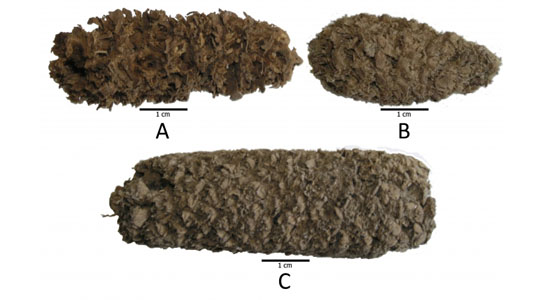
    Peruvian Corn Cobs from 6,500-4,000 years ago
    Cobs date roughly from 6,500-4,000 years ago from the “A” to the “C”. A is Proto-Confite Morocho race; B, Confite Chavinense maize race; C, Proto-Alazan maize race. Credit: Tom D. Dillehay, Vanderbilt University

    A recent discovery shows that people living along the coast of Peru were eating corn in several fashions, including popcorn and flour corn, before ceramic pottery was used in that area. Researchers discovered husks, stalks, corncobs, and tassels dating from 6,700 to 3,000 years old at two sites on Peru’s northern coast along with corn microfossils.

    People living along the coast of Peru were eating popcorn 1,000 years earlier than previously reported and before ceramic pottery was used there, according to a new paper in the Proceedings of the National Academy of Sciences co-authored by Dolores Piperno, curator of New World archaeology at the Smithsonian’s National Museum of Natural History and emeritus staff scientist at the Smithsonian Tropical Research Institute.

    Some of the oldest known corncobs, husks, stalks, and tassels (male flowers), dating from 6,700 to 3,000 years ago were found at Paredones and Huaca Prieta, two mound sites on Peru’s arid northern coast. The research group, led by Tom Dillehay from Vanderbilt University and Duccio Bonavia from Peru’s Academia Nacional de la Historia, also found corn microfossils: starch grains and phytoliths. Characteristics of the cobs—the earliest ever discovered in South America—indicate that the sites’ ancient inhabitants ate corn in several ways, including popcorn and flour corn. However, corn was still not an important part of their diet.

    “Corn was first domesticated in Mexico nearly 9,000 years ago from a wild grass called teosinte,” said Piperno. “Our results show that only a few thousand years later corn arrived in South America where its evolution into different varieties that are now common in the Andean region began. This evidence further indicates that in many areas corn arrived before pots did and that early experimentation with corn as a food was not dependent on the presence of pottery.”

    Understanding the subtle transformations in the characteristics of cobs and kernels that led to the hundreds of maize races known today, as well as where and when each of them developed, is a challenge. Corncobs and kernels were not well preserved in the humid tropical forests between Central and South America, including Panama—the primary dispersal routes for the crop after it first left Mexico about 8,000 years ago.

    “These new and unique races of corn may have developed quickly in South America, where there was no chance that they would continue to be pollinated by wild teosinte,” said Piperno. “Because there is so little data available from other places for this time period, the wealth of morphological information about the cobs and other corn remains at this early date is very important for understanding how corn became the crop we know today.”

    Never miss a breakthrough: Join the SciTechDaily newsletter.
    Follow us on Google and Google News.

    Corn Discovery News Peru Smithsonian Institution Smithsonian Tropical Research Institute Vanderbilt University
    Share. Facebook Twitter Pinterest LinkedIn Email Reddit

    Related Articles

    “Missing Link” Uncovered: The Secret History of Corn Revealed Through RNA

    Decoding the Past – Scientists Uncover the Origin of Mysterious Giant Extinct Marine Reptile Graveyard

    Why Did Russia Invade Ukraine?

    The Science of Gift Wrapping Explains Why Sloppy Is Better Than Neat

    Corn’s Rich Genetic Diversity on Display in New Genome Mapping Study

    Researchers Discover Simple Way Sweet Corn Growers Could Dramatically Increase Yield

    Scientists Discover a Hidden Threat to Corn

    Smithsonian Ecologists Study the Realtionship Between Fungi-Filled Forests and Endangered Orchids

    Archaeologists Inch Closer to Understanding Stonehenge

    Leave A Reply Cancel Reply

    • Facebook
    • Twitter
    • Pinterest
    • YouTube

    Don't Miss a Discovery

    Subscribe for the Latest in Science & Tech!

    Trending News

    The Universe Is Expanding Too Fast and Scientists Can’t Explain Why

    “Like Liquid Metal”: Scientists Create Strange Shape-Shifting Material

    Early Warning Signals of Esophageal Cancer May Be Hiding in Plain Sight

    Common Blood Pressure Drug Shows Surprising Power Against Deadly Antibiotic-Resistant Superbug

    Scientists Uncover Dangerous Connection Between Serotonin and Heart Valve Disease

    Scientists Discover a “Protector” Protein That Could Help Reverse Hair Loss

    Bone-Strengthening Discovery Could Reverse Osteoporosis

    Scientists Uncover Hidden Trigger Behind Stem Cell Aging

    Follow SciTechDaily
    • Facebook
    • Twitter
    • YouTube
    • Pinterest
    • Newsletter
    • RSS
    SciTech News
    • Biology News
    • Chemistry News
    • Earth News
    • Health News
    • Physics News
    • Science News
    • Space News
    • Technology News
    Recent Posts
    • Scientists Create Improved Insulin Cells That Reverse Diabetes in Mice
    • Scientists Stunned After Finding Plant Thought Extinct for 60 Years
    • A Common Diabetes Drug May Hold the Key to Stopping HIV From Coming Back
    • Ancient “Syphilis-Like” Disease in Vietnam Challenges Key Scientific Assumptions
    • Drinking Alcohol To Cope in Your 20s Could Damage Your Brain for Life
    Copyright © 1998 - 2026 SciTechDaily. All Rights Reserved.
    • Science News
    • About
    • Contact
    • Editorial Board
    • Privacy Policy
    • Terms of Use

    Type above and press Enter to search. Press Esc to cancel.