
Close Menu
    Facebook X (Twitter) Instagram
    SciTechDaily
    • Biology
    • Chemistry
    • Earth
    • Health
    • Physics
    • Science
    • Space
    • Technology
    Facebook X (Twitter) Pinterest YouTube RSS
    SciTechDaily
    Home»Chemistry»Researchers Have Developed a Fully Automated Analyzer That Could Help Detect Signs of Extraterrestrial Life
    Chemistry

    Researchers Have Developed a Fully Automated Analyzer That Could Help Detect Signs of Extraterrestrial Life

    By American Chemical SocietySeptember 21, 2020No Comments3 Mins Read
    Facebook Twitter Pinterest Telegram LinkedIn WhatsApp Email Reddit
    Share
    Facebook Twitter LinkedIn Pinterest Telegram Email Reddit
    Device Detect Signs of Extraterrestrial Life
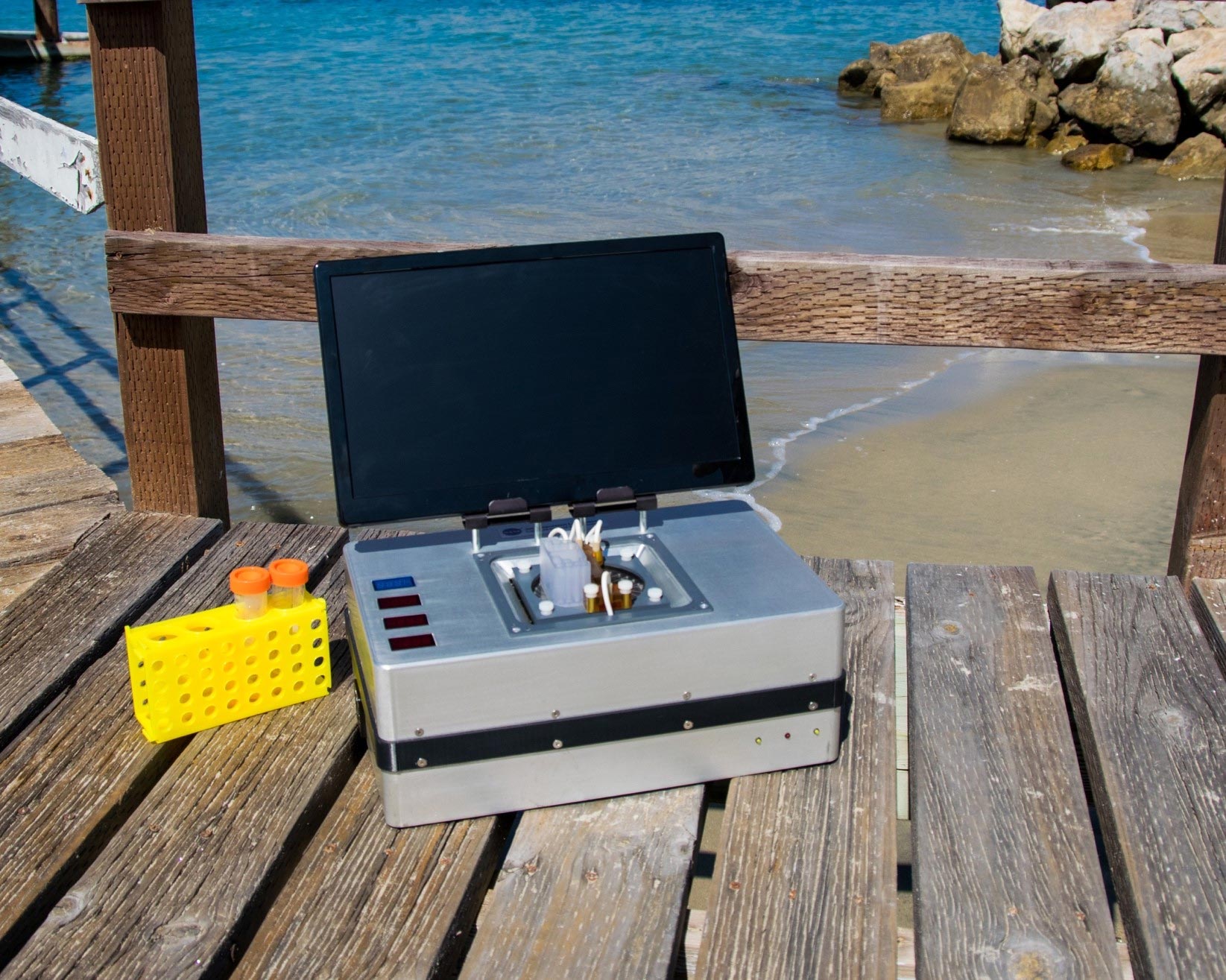
    A fully automated microchip electrophoresis analyzer could someday be deployed in the search for life on other worlds. Credit: Adapted from Analytical Chemistry 2020, DOI: 10.1021/acs.analchem.0c01628

    Although Earth is uniquely situated in the solar system to support creatures that call it home, different forms of life could have once existed, or might still exist, on other planets. But finding traces of past or current lifeforms on other worlds is challenging. Now, researchers reporting in ACS’ Analytical Chemistry have developed a fully automated microchip electrophoresis analyzer that, when incorporated into a planetary rover, could someday detect organic biosignatures in extraterrestrial soil.

    One critical piece of evidence for life beyond Earth is the presence of certain organic molecules. Previous missions to Mars have relied on gas chromatography coupled to mass spectrometry (GC-MS) to separate and detect compounds. However, the technique has limitations for the analysis of some molecules, such as organic acids, especially when water, minerals or salts are also in the sample. Microchip electrophoresis (ME)-based separations, followed by laser-induced fluorescence (LIF) detection, would be ideal, but current instruments are only partially automated, which wouldn’t work for interplanetary missions.

    Peter Willis and colleagues wanted to develop a portable, battery-powered ME-LIF instrument that could accept a sample and perform labeling, separation, and detection of organic molecules, all in a fully automated fashion.

    The researchers made a device that included two microchips — one for processing and labeling a liquid sample, and the other (the ME chip) for separating compounds — and an LIF detection system.

    After optimizing the device, the researchers put it to the test in a simulated Mars mission in a Chilean desert. The team coupled the analyzer to a portable subcritical water extractor on a remotely deployed rover system. The rover drilled into the soil to collect samples, which were delivered to the extractor. Then, water was added to the soil samples, and they were heated to extract compounds for analysis. The device detected parts per billion levels of amino acids in soil from three of four drilling locations.

    Importantly, the sensitivity was three orders of magnitude higher than that reported for GC-MS-based methods. Although more work is needed to ready the instrument for spaceflight and extraterrestrial conditions, this research lays the foundation for developing ME-LIF instruments for missions seeking signs of life beyond Earth, the researchers say.

    Reference: “Fully Automated Microchip Electrophoresis Analyzer for Potential Life Detection Missions” by Maria F. Mora, Florian Kehl, Eric Tavares da Costa, Nathan Bramall and Peter A. Willis, 25 August 2020, Analytical Chemistry.
    DOI: 10.1021/acs.analchem.0c01628

    The authors acknowledge funding from NASA.

    Never miss a breakthrough: Join the SciTechDaily newsletter.
    Follow us on Google and Google News.

    American Chemical Society Astrobiology Bioinformatics Biotechnology Nanotechnology
    Share. Facebook Twitter Pinterest LinkedIn Email Reddit

    Related Articles

    Stretchable Conductive Hydrogel Developed That Could Help Repair Damaged Nerves

    A New Twist on DNA Origami: Meta-DNA Structures Transform the DNA Nanotechnology World

    COVID-19 Coronavirus Breathalyzer Test Developed

    Machinery of Photosynthesis Supercharges Solar Energy to Hydrogen Fuel Conversion

    Remarkable New Fabric Efficiently Transfers Heat – Could Help Keep You Cool Even Without A/C

    Scientists Rewire Photosynthesis to Fuel Our Future

    Diagnostic Biosensor Detects SARS-CoV-2 From Nasopharyngeal Swab in Less Than a Minute

    Using Fish Scales to Make Wearable Electronics More Sustainable

    Human Cells Made Magnetic With Engineered Protein Crystals

    Leave A Reply Cancel Reply

    • Facebook
    • Twitter
    • Pinterest
    • YouTube

    Don't Miss a Discovery

    Subscribe for the Latest in Science & Tech!

    Trending News

    Researchers Warn Widely Prescribed Blood Pressure Drugs Could Be Harming Diabetic Kidneys

    James Webb Spots Something Strange Between Day and Night on an Alien Planet

    How Ancient People Moved a 6-Ton Stone 700 Kilometers to Stonehenge

    The Unexpected Gut Health Risk of Cutting Out Sugar

    Popular Weight-Loss Drugs Like Ozempic Linked to Lower Breast Cancer Risk

    AI Learned the Rules of the Universe and That Became a Problem

    Scientists Found a Hidden Brain Signal That Predicts Social Behavior

    Even GPT-5 Failed This Human Attention Test

    Follow SciTechDaily
    • Facebook
    • Twitter
    • YouTube
    • Pinterest
    • Newsletter
    • RSS
    SciTech News
    • Biology News
    • Chemistry News
    • Earth News
    • Health News
    • Physics News
    • Science News
    • Space News
    • Technology News
    Recent Posts
    • 68 Quadrillion Miles: Scientists Map Earth’s Vast Hidden Fungal Network for the First Time
    • Breakthrough Fentanyl Vaccine Could Neutralize Designer Drugs and Prevent Overdoses
    • Researchers Expected Ozempic Weight Loss to Boost Exercise. It Didn’t
    • Hidden Damage From Youth May Explode Into Disease Later in Life
    • Scientists Say a New Universe Could Form Inside a Dying Star
    Copyright © 1998 - 2026 SciTechDaily. All Rights Reserved.
    • Science News
    • About
    • Contact
    • Editorial Board
    • Privacy Policy
    • Terms of Use

    Type above and press Enter to search. Press Esc to cancel.